Why Do Some Patients Struggle to Sit Up in Bed?
Why Do Some Patients Struggle to Sit Up in Bed?
Sitting up in bed requires more than simply lifting the upper body.
The person needs sufficient trunk control, strength, balance and coordination to move from lying down into a supported sitting position.
After a stroke, surgery, neurological illness or prolonged immobility, these abilities may be reduced.
Common difficulties include:
- Needing someone to help lift the upper body.
- Sliding down when supported by pillows.
- Difficulty maintaining an upright position.
- Feeling uncomfortable while resting on a flat bed.
- Requiring assistance to change positions.
These challenges vary from one patient to another.
Some people can move their arms and legs but struggle to sit upright. Others require significant assistance with turning, transfers and personal care.
Understanding the patient's actual limitations is the first step towards selecting suitable equipment.
How Can a Conventional Bed Make Daily Care More Difficult?
A standard flat bed may be comfortable for sleeping but less convenient when a patient requires regular assisted positioning.
For example, a caregiver may arrange several pillows behind the patient's back to support sitting.
As the patient moves, the pillows may shift, and the caregiver may need to rearrange them repeatedly.
Other challenges can include:
- Helping the person sit more upright during appropriate daily activities.
- Changing between reclining and supported sitting positions.
- Maintaining comfortable upper-body support.
- Supporting the legs in an individually appropriate position.
- Repeatedly adjusting the resting arrangement throughout the day.
These activities may become physically demanding, particularly when one family member provides most of the care.
However, difficulty sitting upright does not automatically mean the patient needs a hospital bed.
The most useful equipment depends on the movements and assistance required.
How Can an Adjustable Bed Help a Patient at Home?
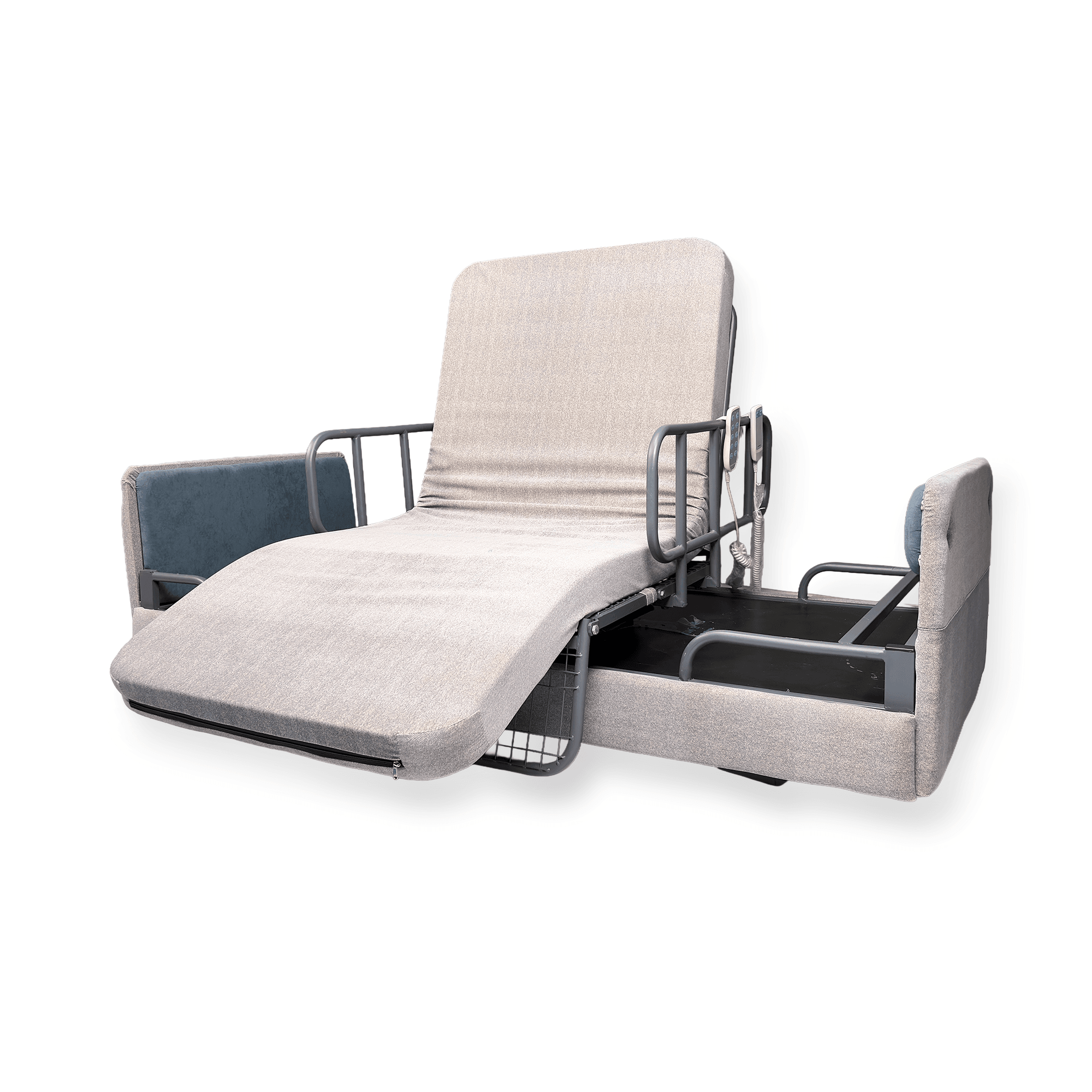
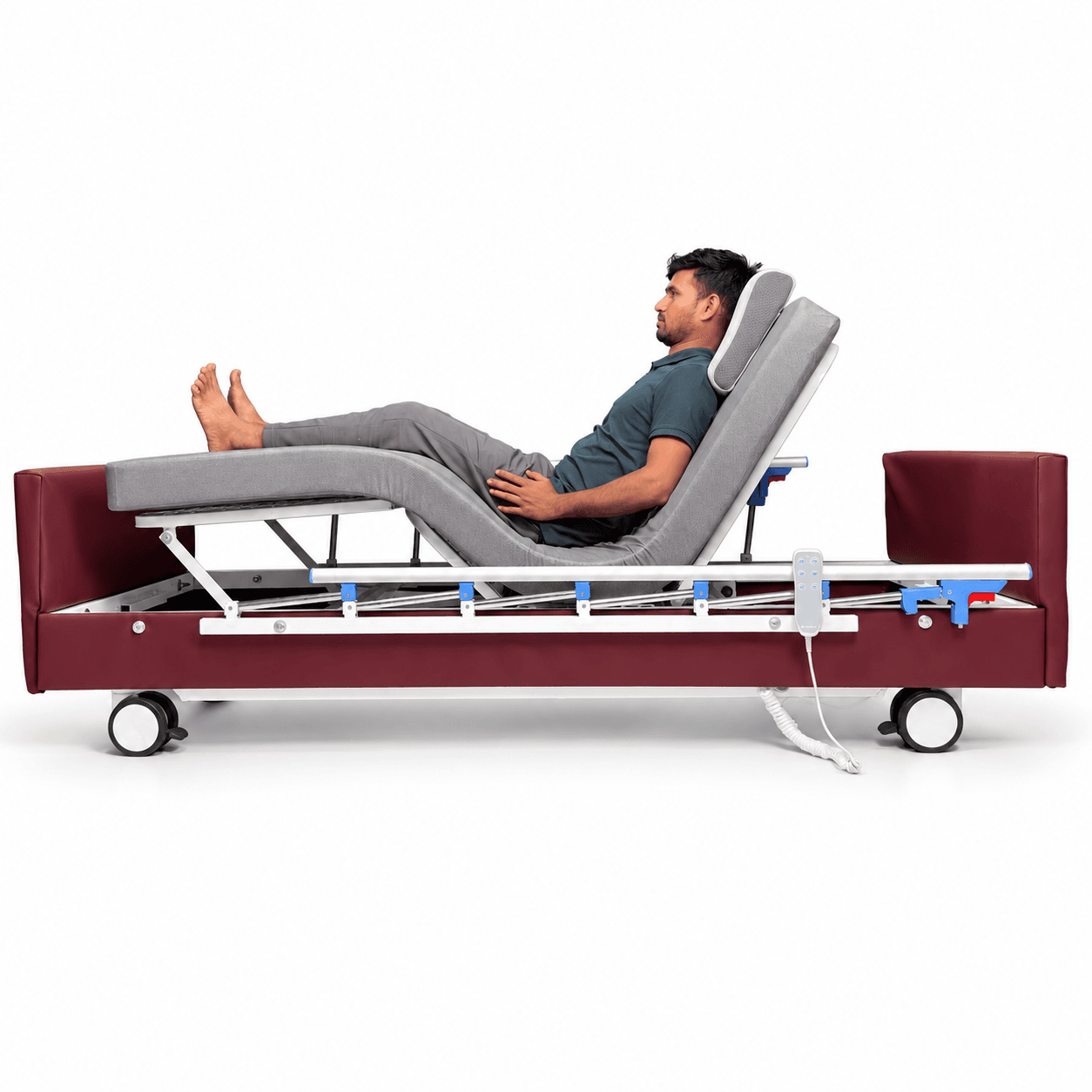
An adjustable bed allows selected sections of the resting surface to change position.
For patients who need help moving between lying down and supported sitting, an electrically adjustable backrest may be useful.
Potential advantages include:
Supported sitting
The backrest can be raised to an individually appropriate angle, reducing the need to manually lift the bed section.
Easier resting-position adjustments
Patients or caregivers can change the backrest angle without repeatedly rearranging multiple pillows.
Adjustable knee support
A motorized knee section provides additional positioning options where suitable.
Caregiver convenience
Powered adjustment may reduce some manual work involved in changing the bed's position.
However, an adjustable bed does not automatically turn a patient, lift them out of bed or ensure that they can sit safely without assistance.
Patients with poor trunk control, swallowing difficulties, pressure-injury risks or specific postoperative restrictions may require additional positioning support and professional guidance.
Do You Need to Replace Your Existing Bed?
Many families assume that motorized positioning means purchasing a complete hospital-style bed.
That is not always necessary.
If the primary requirement is adjusting the backrest and knee position, a compatible existing bed may be suitable for an electric positioning system.
The Morecare BedMate Motorized Back & Knee Rest is designed for this purpose.
It adds motorized back and knee positioning to a compatible existing bed, allowing selected resting angles to be adjusted through a wired handset.
For a family caring for someone who needs regular supported sitting, this may provide useful flexibility without replacing the entire bed frame.
Before considering BedMate, check:
- Internal bed dimensions and available installation space.
- Structural stability of the existing bed.
- Mattress and mechanism compatibility.
- The patient's height, weight and positioning needs.
- Whether bed-height adjustment or assisted transfers are required.
BedMate does not provide automatic turning, patient lifting or overall bed-height adjustment.
If those functions are necessary, a complete nursing bed or additional transfer equipment may be more appropriate.
How Do You Know Which Bed Is Right for Your Patient?
Instead of starting with the type of bed, start with the patient's daily care routine.
Ask these questions:
Can the patient sit up independently?
If not, determine what support is needed and whether an adjustable backrest could assist with positioning.
Can the patient change positions in bed?
Someone who cannot turn or reposition may need additional care equipment beyond a motorized backrest.
Does the patient require assisted transfers?
If transferring between bed and wheelchair requires height adjustment or lifting equipment, a complete nursing setup may be more suitable.
How much assistance can caregivers provide?
Consider the physical effort involved in daily positioning, personal care and transfers.
Is the existing bed suitable?
An electric positioning system must be compatible with the bed's structure, dimensions and mattress arrangement.
For selected patients who mainly require supported back and knee positioning, an existing-bed upgrade may meet their needs.
For people requiring extensive nursing assistance, specialized pressure care or height-adjustable transfers, a complete hospital-style bed may be necessary.
The best bed is the one that supports the patient's daily needs while making caregiving safe and manageable.