Why Can an Elderly Person Sit Upright but Struggle to Get Out of Bed?
Sitting upright in bed is only one part of getting out of bed.
To leave the bed, a person may need to move towards the edge, bring their legs into position, maintain sitting balance and safely transfer their body weight towards a wheelchair or standing position.
These activities require different physical abilities.
Common difficulties include:
- Leg weakness: Difficulty moving the legs towards the bed's edge.
- Poor trunk control: Difficulty maintaining balance without back support.
- Reduced coordination: Trouble combining upper-body and leg movements.
- Joint stiffness: Restricted or uncomfortable movement.
- Fear of falling: Hesitation when sitting near the bed's edge or attempting to stand.
For example, a parent may sit comfortably when the backrest is raised but still need two people to help them turn and move their legs over the side.
This distinction matters because an ordinary adjustable backrest may not address the entire bed-exit difficulty.
Why Can Getting Out of Bed Become Difficult for Caregivers?
When someone cannot move towards the bedside independently, a caregiver may need to assist with several separate movements.
These can include helping the person sit, repositioning their legs, supporting their trunk and preparing for a safe transfer.
Repeated assistance can become physically demanding, particularly when the person has limited mobility or cannot reliably bear weight.
Common challenges include:
- Repeatedly helping the person move towards the bed's edge.
- Supporting the upper body while repositioning the legs.
- Managing poor sitting balance.
- Preparing a wheelchair or walking aid.
- Preventing unsafe pulling or sudden loss of balance.
Caregivers should not attempt to lift a dependent adult manually without appropriate assessment and training.
An occupational therapist or physiotherapist can recommend suitable moving and handling techniques, equipment and the number of helpers required.
The goal is to reduce unnecessary physical effort without compromising patient safety.
Why Isn't an Ordinary Adjustable Bed Always Enough?
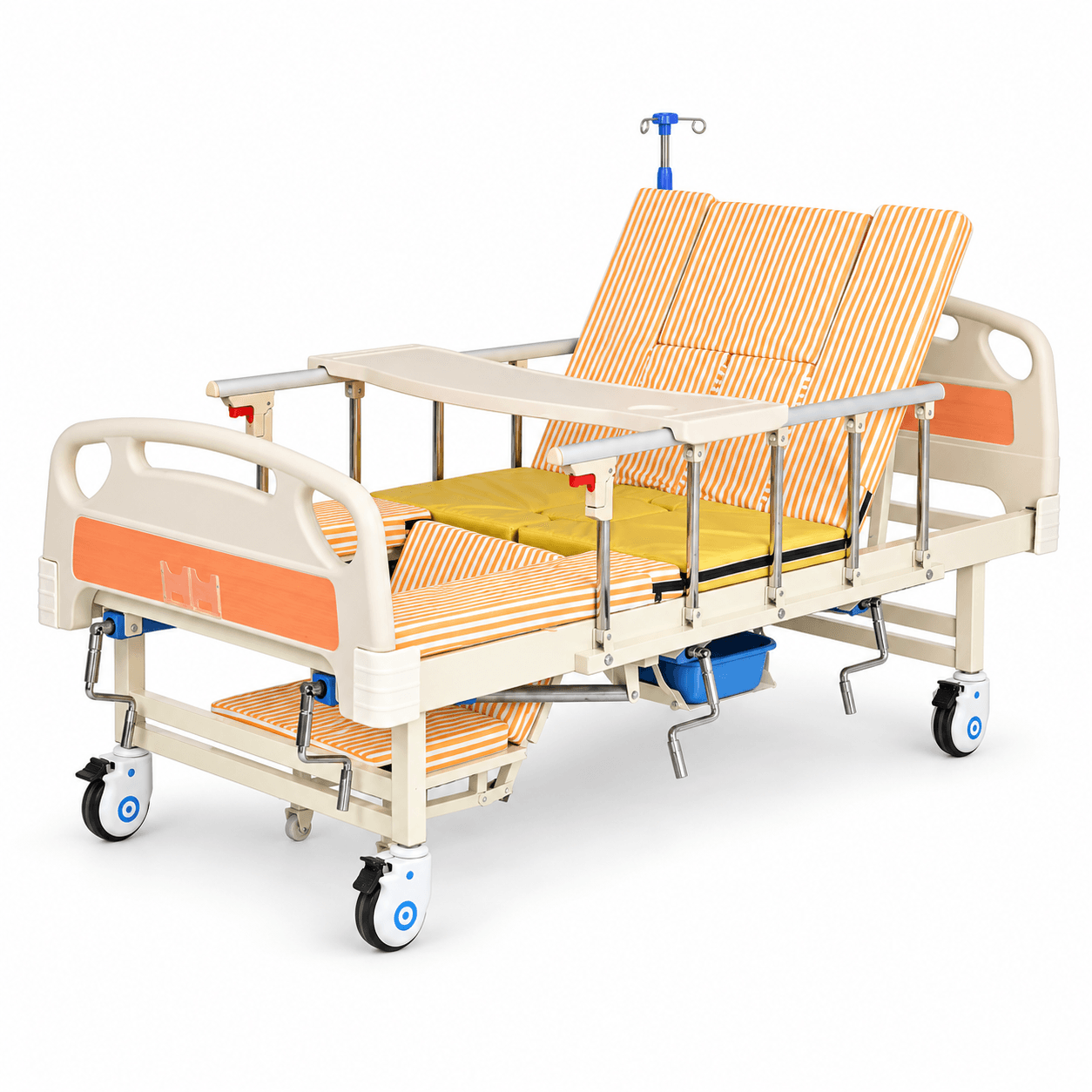
An electrically adjustable bed can raise the upper body and, depending on its design, adjust the knee section.
These functions may make resting and supported sitting more convenient.
However, raising the backrest does not automatically move a person's legs towards the floor or position them for a transfer.
A person may still need help with:
- Moving towards the side of the bed.
- Bringing both legs over the edge.
- Maintaining balance while sitting unsupported.
- Placing their feet in a stable position.
- Standing or transferring to a wheelchair.
For selected patients, a rotating chair-position bed offers another approach.
Instead of relying only on backrest elevation, the bed changes the person's orientation towards a bedside sitting position.
This can reduce some of the manual repositioning needed before an assessed transfer.
However, the patient must still be able to tolerate the sitting position, and appropriate assistance remains necessary.
How Can Morecare Coral Help With Bed-Exit Preparation?
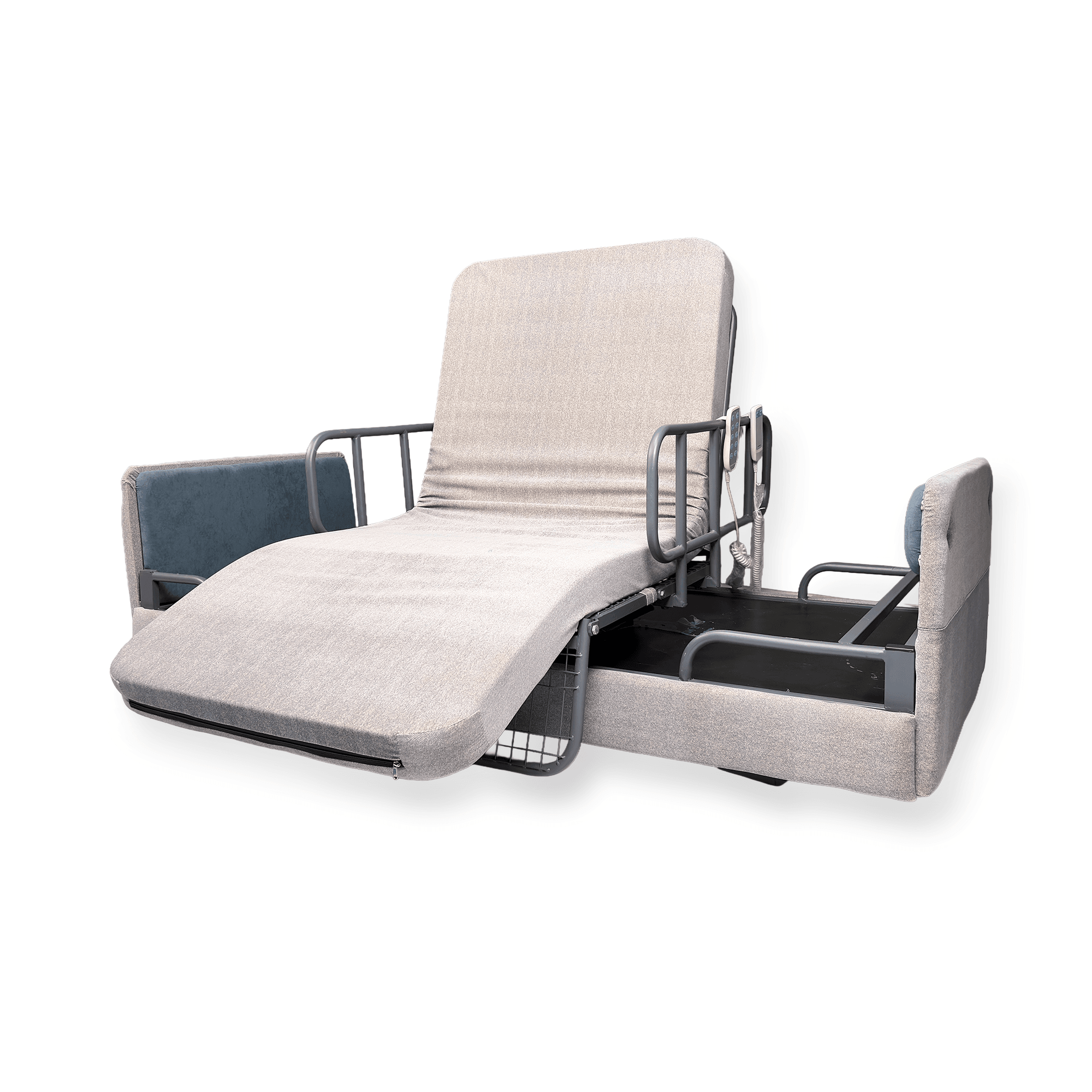
The Morecare Coral Electric Rotating Homecare Bed combines motorized positioning with a 90° chair rotation function.
It is designed to help selected adults move from a lying position towards a supported, outward-facing sitting position for bed-exit preparation.
Coral provides four powered functions:
- Backrest adjustment: Raises the upper body into supported sitting.
- Knee adjustment: Changes lower-limb positioning.
- 90° chair rotation: Rotates the bed's seating section towards a bedside chair-like position.
- Hi-Low height adjustment: Changes the bed height to suit an assessed transfer arrangement.
Together, these functions may reduce some of the manual movements needed to prepare a person for standing or wheelchair transfer.
For example, a caregiver may adjust the backrest, configure the chair position, rotate the bed and set an appropriate height before assisting the user with the remaining transfer.
Coral does not automatically lift the person to standing or transfer them into a wheelchair.
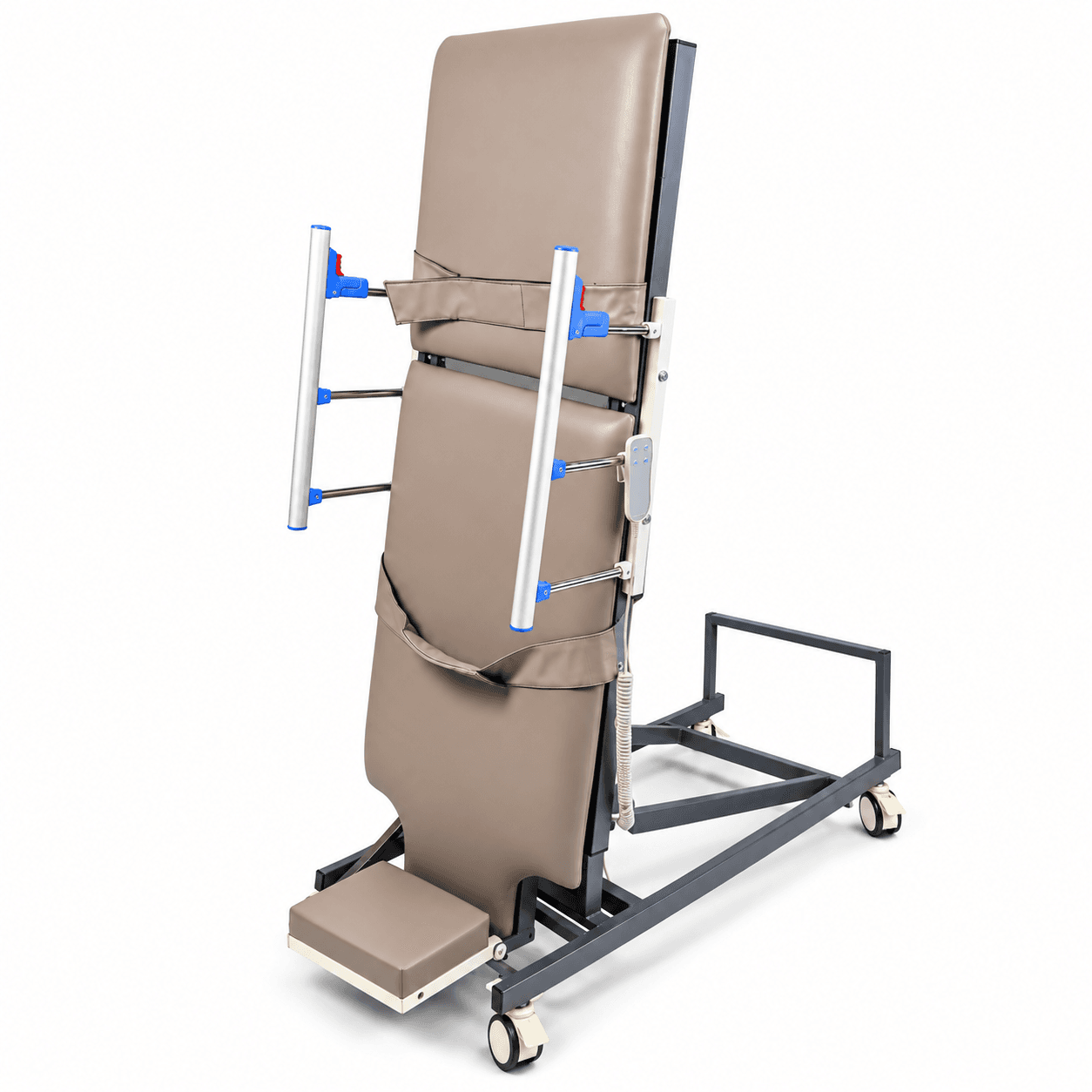
Users who cannot support their sitting posture, cannot safely bear weight or require full lifting assistance may need additional positioning support, a transfer aid or a patient hoist.
A professional transfer assessment should determine whether Coral is appropriate.
How Do You Know Whether a Rotating Homecare Bed Is Suitable?
A rotating bed may be worth considering when the main difficulty is moving from lying down towards a supported bedside sitting position.
Before selecting one, consider these questions.
Can the person maintain a supported sitting position?
The individual must be able to tolerate the chair-like position safely, with appropriate assistance if required.
Can they bear weight or participate in transfers?
A rotating bed does not automatically enable standing. Some users may need a walker, transfer board, standing aid or patient hoist.
How much caregiver assistance is required?
The transfer plan should identify whether one or more caregivers are necessary and what tasks they must perform.
Is there sufficient bedroom space?
The room must accommodate the bed's rotating movement, wheelchair positioning and caregiver access.
Will the person use the equipment safely?
Body dimensions, cognition, comfort, movement limitations and any medical restrictions should be considered.
Is the bed suitable for long-term care?
Consider mattress requirements, electrical operation, maintenance and the possibility that the person's care needs may change.
A rotating homecare bed may simplify part of the bed-exit process, but it does not replace an individualized transfer plan.
The right solution should help the person participate in daily movement while providing the support and assistance they genuinely need.