Why Does the Bedroom Environment Matter During Recovery?
A bedroom is more than a place to sleep. It is often associated with privacy, familiarity, personal routines and a sense of belonging.
When illness or reduced mobility makes homecare necessary, changes to this environment can affect how the person experiences daily life.
Some patients may appreciate keeping their familiar bed, furniture and surroundings. Others may feel reassured when specialized equipment provides additional safety and support.
Important psychological considerations include:
- Familiarity: Maintaining recognizable surroundings and daily routines.
- Dignity: Respecting personal preferences and privacy.
- Identity: Helping the person continue to feel at home rather than defined only by their illness.
- Control: Allowing involvement in decisions about resting positions and care.
These factors do not replace medical requirements. They are additional considerations when planning a supportive home environment.
Can a Hospital-Style Bed Change How a Patient Feels at Home?
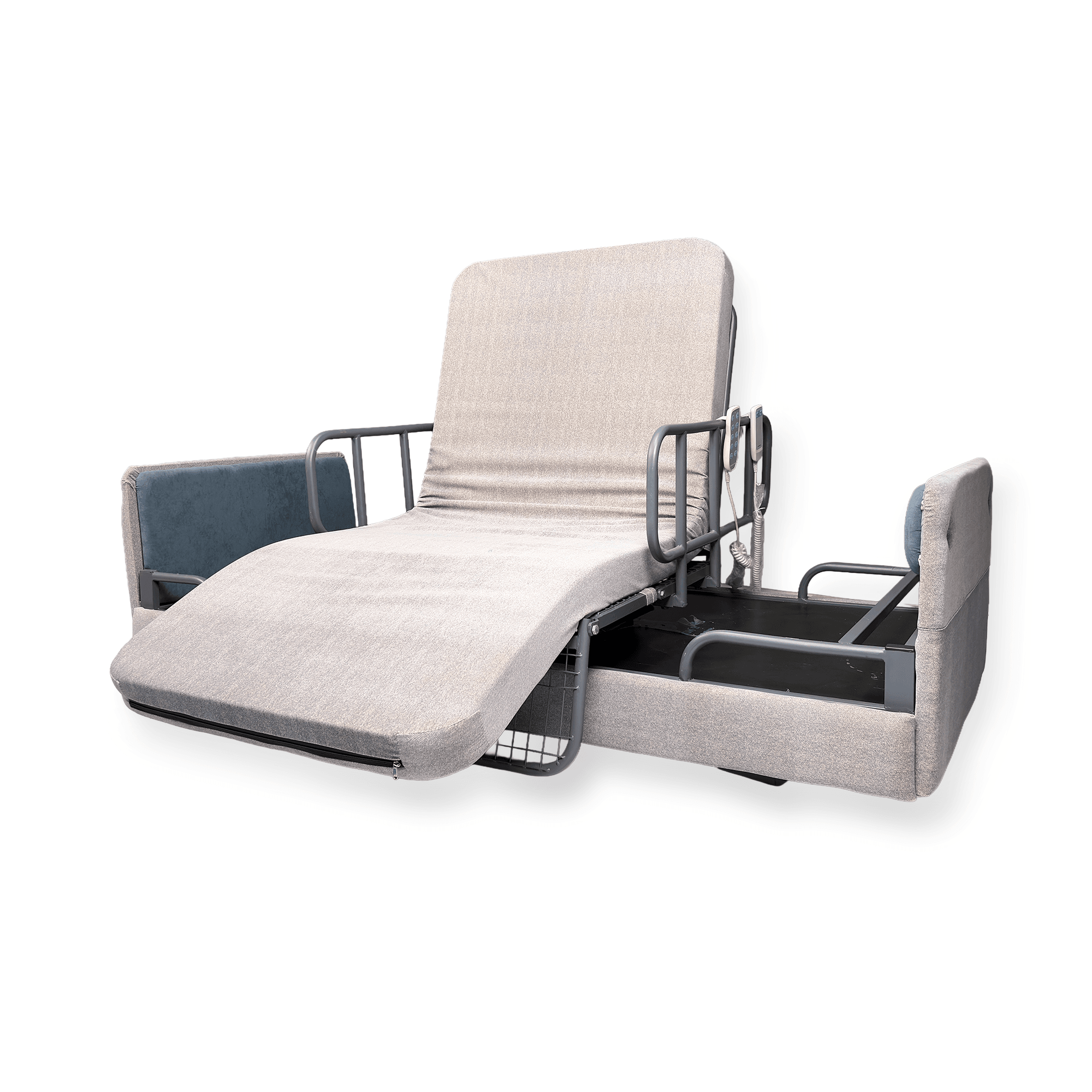
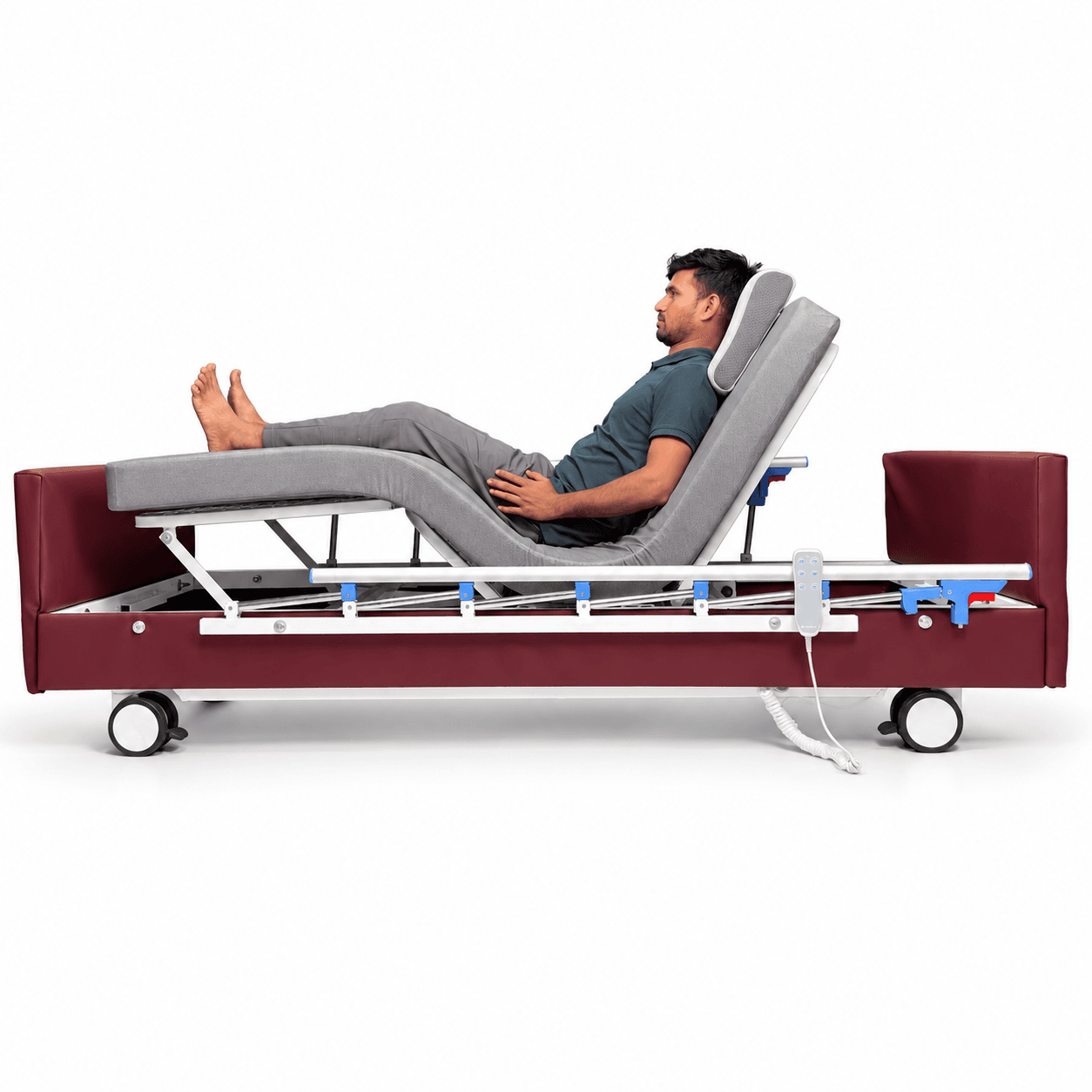
A hospital-style bed may introduce equipment such as side rails, wheels, adjustable mechanisms and clinical-looking components into a familiar bedroom.
For some patients, this can make the room feel more like a care environment. They may feel uncomfortable with visible reminders of illness or increased dependence.
For others, the same bed may provide reassurance because it makes caregiving, transfers and positioning more manageable.
Neither reaction should be assumed.
Families can involve the patient in decisions about bed placement, room arrangement and personal belongings wherever possible.
The aim is not to avoid medical equipment. It is to help the patient feel respected and comfortable while receiving necessary care.
A hospital-style bed should not be rejected merely because it looks clinical when its functions are important for safety.
Why Do Dignity, Independence and Personal Control Matter?
Illness, injury or reduced mobility can make people increasingly dependent on others for everyday activities.
Even small opportunities to make personal choices may remain meaningful.
For example, some people may prefer to choose their resting position, adjust their back support or decide when to sit more upright.
An adjustable bed with accessible controls may allow selected users to make these changes themselves. Others may require assistance from a caregiver.
Patient preferences should also influence how care is provided, including:
- Asking before changing the person's position.
- Respecting privacy during personal care.
- Explaining equipment adjustments.
- Maintaining familiar routines where possible.
- Providing support without unnecessarily restricting movement.
Independence does not always mean completing every activity without help. It can also mean retaining a voice in daily decisions.
Care equipment should support these goals where safely possible.
Can an Existing Bed Provide Some Homecare Functions?
Not every person receiving care at home needs a complete hospital-style bed.
Some primarily require the ability to raise the upper body or adjust knee positioning during rest and daily activities.
In these situations, an existing-bed adjustment system may be worth considering.
The Morecare BedMate Motorized Back & Knee Rest is designed to fit compatible existing beds and provide electrically adjustable back and knee positioning.
This may allow families to retain their current bed frame while introducing selected motorized positioning functions.
Potential practical advantages include:
- Keeping a familiar bed and bedroom arrangement.
- Adjusting back and knee positions using powered controls.
- Reducing repeated manual adjustments to supporting pillows.
- Supporting selected resting and sitting positions.
- Avoiding replacement of the entire bed when additional nursing functions are unnecessary.
BedMate is not equivalent to a complete hospital bed.
It does not provide overall bed-height adjustment, automatic turning or patient lifting. Compatibility and individual care requirements must be assessed before installation.
Preserving a familiar bed may be personally meaningful, but it should not be presented as a guaranteed psychological or medical benefit.
When Is a Full Hospital-Style Bed the Better Choice?
Psychological comfort is important, but it must be considered alongside the patient's actual care requirements.
A complete hospital-style homecare bed may be more suitable when someone needs:
- Bed-height adjustment for assisted care or transfers.
- Specific nursing access around the bed.
- Additional positioning functions unavailable on their existing bed.
- A specialized mattress or pressure-care system.
- Safety features assessed for their individual circumstances.
- A care setup that cannot be safely achieved using an existing-bed attachment.
Bed rails also require careful consideration. They are not automatically appropriate for every patient and may introduce entrapment or fall risks if poorly selected or fitted.
Before choosing equipment, families should discuss mobility, transfers, positioning needs and caregiver requirements with the treating healthcare team.
The right bed is not necessarily the most medical-looking or the least medical-looking option. It is the one that provides the required care while respecting the patient's comfort, dignity and preferences.