Why Can Lying Flat Feel Uncomfortable With COPD?
COPD is a long-term lung condition that affects airflow and can make breathing more difficult.
Some people experience increased breathlessness while lying flat, particularly at night.
This can happen because COPD may cause air trapping and changes in how efficiently the breathing muscles work. Body position can also affect breathing comfort.
Common concerns include:
- Feeling short of breath when lying flat.
- Needing several pillows to rest comfortably.
- Waking during the night because of breathing discomfort.
- Preferring a more upright position while resting.
- Becoming tired when repeatedly changing positions.
However, not everyone with COPD experiences these difficulties.
New or worsening breathlessness when lying down can also indicate another medical problem, including heart-related conditions, and should not automatically be attributed to COPD.
Which Sleeping Positions May Be More Comfortable for COPD Patients?
The most comfortable position depends on the person's symptoms, body support requirements and medical advice.
Supported upper-body elevation
Some patients feel more comfortable when their head, shoulders and upper body are elevated instead of lying completely flat.
Supported side-lying
Side-lying with appropriate pillows may provide another resting option. The upper body can be elevated if needed and tolerated.
Upright sitting during breathlessness
When breathlessness occurs, sitting upright or leaning slightly forward with the arms supported may help some people manage the sensation while following their prescribed breathing plan.
These positions are not interchangeable for every patient.
Avoid prescribing one bed angle for everyone. A respiratory professional can help identify suitable resting positions, particularly when the person uses oxygen therapy or breathing-support equipment.
If breathlessness becomes sudden, severe or significantly worse than usual, seek urgent medical assistance rather than relying on positioning alone.
Why Can a Conventional Bed Be Inconvenient?
A standard flat bed may be comfortable for many people, but it offers limited adjustment when a patient frequently prefers an elevated resting position.
Families may use several pillows to raise the upper body. These pillows can move, flatten or require rearrangement during the night.
Common challenges include:
- Repeatedly adjusting pillows behind the back.
- Difficulty maintaining a comfortable elevated position.
- Needing caregiver assistance to sit more upright.
- Switching between resting and supported sitting.
- Finding a stable arrangement for the upper body.
An adjustable backrest provides another way to change the resting surface without depending entirely on loose pillows.
It does not eliminate the need for additional cushions, nor does it address the underlying cause of breathlessness.
How Can Morecare BedMate Help With COPD Homecare?
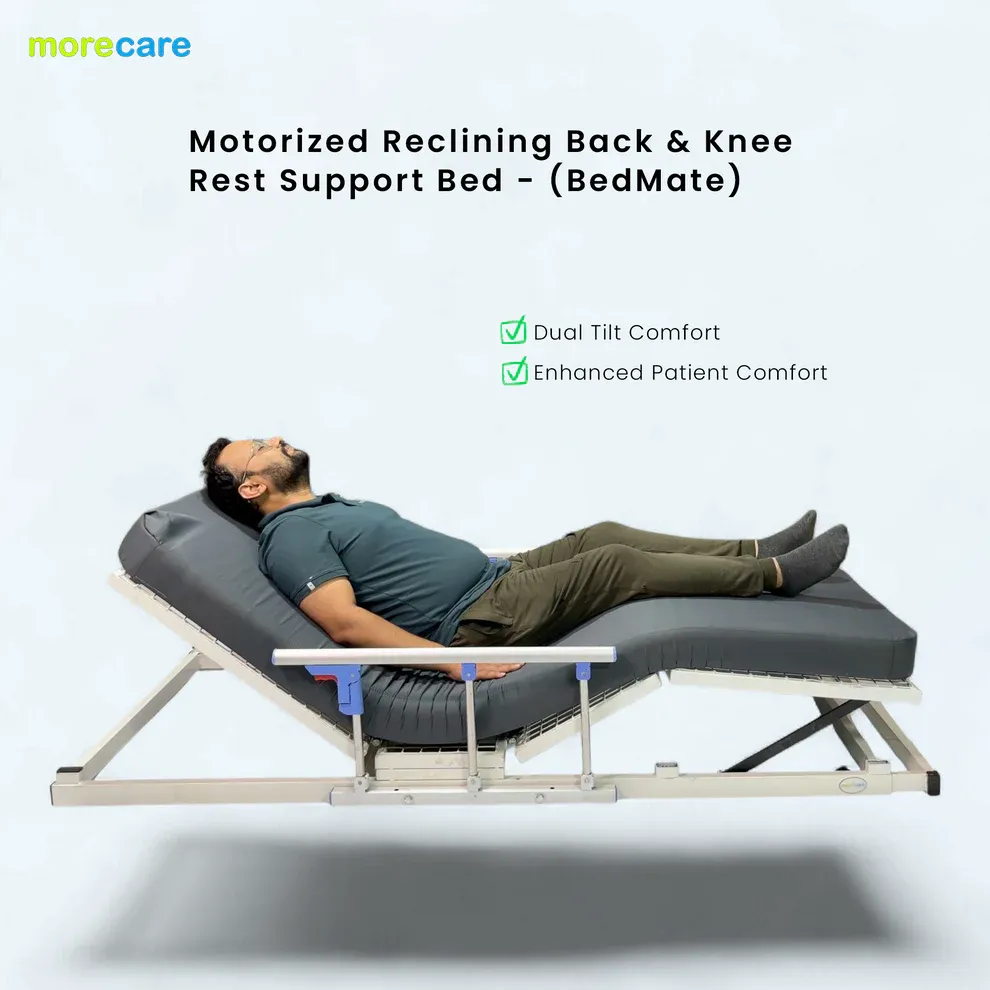
The Morecare BedMate Motorized Back & Knee Rest is designed to convert a compatible existing home bed into an electrically adjustable resting surface.
Its motorized backrest allows the upper body to be raised or lowered through a wired control, while the knee-rest section offers additional positioning adjustment.
For selected people with COPD, BedMate may be useful for:
- Creating a supported elevated resting position.
- Adjusting the backrest without repeatedly stacking pillows.
- Moving between prescribed reclining and supported sitting positions.
- Making routine positioning adjustments more convenient for caregivers.
- Providing knee support when individually appropriate.
BedMate's main advantage is adjustable positioning on an existing compatible bed.
It is not a respiratory treatment device. It does not deliver oxygen, provide ventilation, prevent COPD exacerbations or guarantee better sleep or breathing.
Patients should continue their prescribed medicines, oxygen or ventilation therapy and respiratory rehabilitation programme.
What Should You Check Before Choosing an Adjustable Bed?
Before buying an adjustable bed for someone with COPD, consider the person's respiratory and general homecare requirements.
Preferred resting position: Does the person regularly need an elevated upper-body position?
Medical guidance: Has their respiratory clinician advised particular sleeping or resting positions?
Movement ability: Can the person reposition themselves or operate the bed controls independently?
Existing bed compatibility: Is the current bed suitable for an electrical positioning attachment?
Equipment requirements: Is there enough room for prescribed oxygen or ventilation equipment and its safe arrangement?
Other homecare needs: Does the person also require height adjustment, transfer assistance or specialized nursing support?
Morecare BedMate may be appropriate when motorized back and knee positioning is the main requirement and the existing bed is compatible.
For patients with complex medical or mobility needs, a complete homecare bed may be more suitable.
The final choice should consider comfort, safety, medical instructions and caregiver requirements.