Why Does Parkinson's Make Movement in Bed Difficult?
Parkinson's disease can affect movement speed, muscle stiffness, balance and coordination.
These symptoms may make activities that once felt simple increasingly challenging.
Common difficulties include:
- Muscle rigidity: Stiffness that can make changing positions uncomfortable.
- Bradykinesia: Slower movement when turning, sitting up or adjusting posture.
- Reduced bed mobility: Difficulty rolling from one side to another.
- Postural difficulties: Needing additional support to maintain a comfortable sitting position.
- Fluctuating mobility: Movement may become harder at certain times, including when medication effects wear off.
Not everyone with Parkinson's experiences the same difficulties.
Some people remain independently mobile, while others need regular help from family members or caregivers.
Understanding these differences helps determine whether simple positioning aids, an adjustable bed or more extensive homecare equipment may be appropriate.
What Problems Can a Conventional Bed Create?
A conventional flat bed may be suitable during the earlier stages of Parkinson's disease. However, it can become less convenient when movement and positioning difficulties increase.
For example, a person may need help moving from lying flat into a supported upright position.
Caregivers may repeatedly arrange pillows or assist with posture changes throughout the day.
Common challenges include:
- Difficulty sitting upright from a lying position.
- Repeated adjustments to pillows and back support.
- Difficulty finding a comfortable resting position.
- Physical effort when caregivers assist with movement.
- Difficulty getting into and out of bed safely.
A flat bed is not necessarily unsafe, and replacing it is not always required.
An occupational therapist or physiotherapist can help identify whether bed positioning equipment, transfer aids or other changes would be useful.
How Can an Adjustable Bed Help Someone With Parkinson's?
An adjustable bed allows selected parts of the resting surface to change position.
For people with Parkinson's disease, this may provide practical assistance during everyday homecare routines.
Supported sitting: Raising the backrest can help create a more upright resting position when clinically appropriate.
Position adjustments: Motorized controls allow caregivers to change the backrest angle without repeatedly lifting or rearranging the supporting bed sections.
Knee positioning: An adjustable knee section provides another option for comfort and positioning, subject to individual needs.
Caregiver convenience: Powered adjustments may reduce some manual positioning work, although helping the person turn or transfer may still require physical assistance.
The goal is greater positioning flexibility—not treatment of Parkinson's symptoms.
An adjustable bed does not automatically improve muscle stiffness, prevent falls or ensure independent movement.
How Does Morecare BedMate Support Parkinson's Homecare?
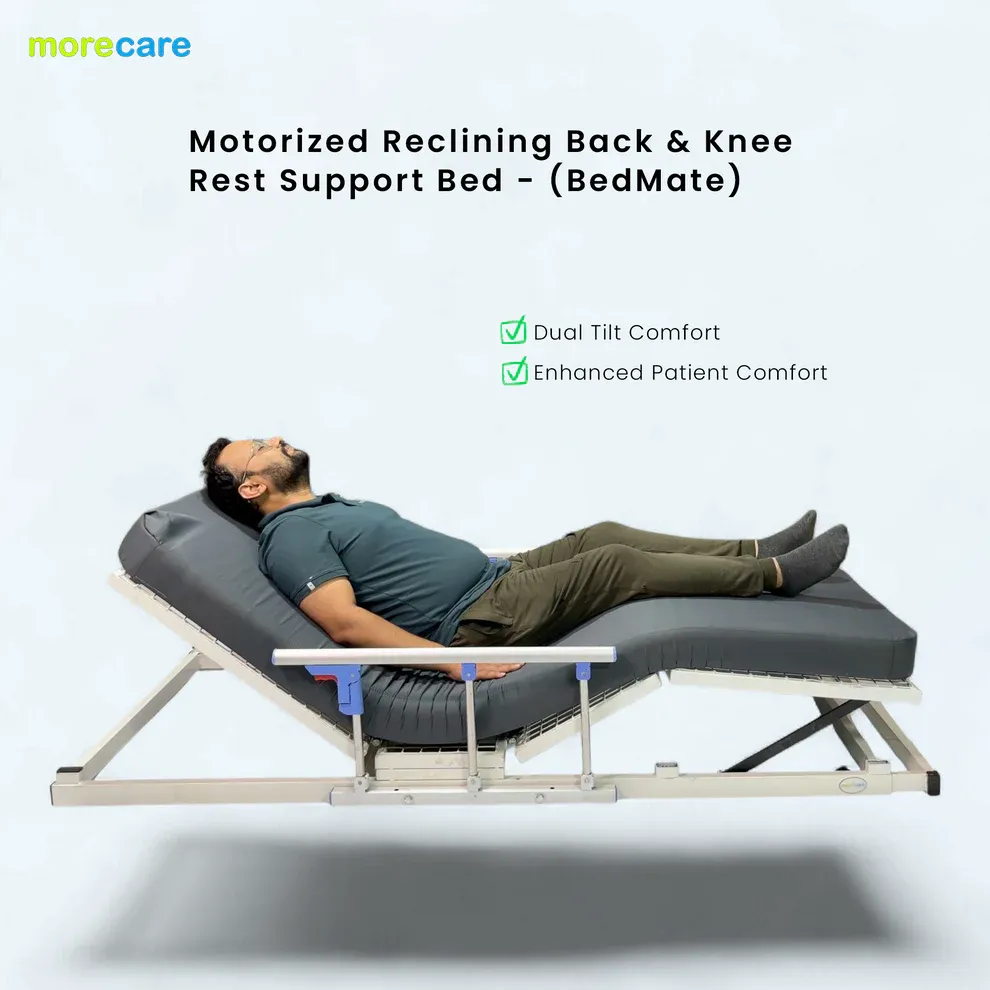
The Morecare BedMate Motorized Back & Knee Rest is designed to convert a compatible existing bed into an electrically adjustable resting surface.
It provides motorized backrest and knee-rest positioning, allowing caregivers to make controlled adjustments without manually lifting the bed sections.
For selected people with Parkinson's disease, BedMate may assist with:
- Raising the upper body into a supported sitting position.
- Adjusting the resting position during daily routines.
- Providing adjustable knee support when appropriate.
- Reducing repeated manual pillow arrangements.
- Making routine backrest adjustments more convenient for caregivers.
BedMate is intended for positioning assistance on a compatible existing bed.
It does not automatically turn the person, raise the overall bed height, lift someone to standing or provide a complete patient transfer system.
People with significant mobility limitations may require additional equipment or a full nursing bed. A clinician or occupational therapist should help determine the appropriate setup.
What Should Families Check Before Choosing an Adjustable Bed?
Before selecting an adjustable bed for someone with Parkinson's disease, consider their current movement abilities and daily care needs.
Bed mobility: Can the person roll, reposition and sit up independently?
Transfer assistance: Do they need help moving between the bed, wheelchair or standing position?
Positioning requirements: Would adjustable back and knee sections be useful for resting or supervised daily activities?
Existing bed compatibility: Can the equipment be installed securely on the current bed?
Caregiver involvement: Will someone be available when the person needs assistance?
Safety and comfort: Can the person use the controls safely, and is there a risk of sliding or becoming trapped during adjustments?
BedMate may be suitable when motorized back and knee positioning is the primary requirement.
If the person also needs height adjustment, extensive transfer assistance or complex nursing care, a full homecare bed may be more appropriate.
The best solution should reflect the person's functional abilities and professional assessment, rather than the Parkinson's diagnosis alone.