Why Do Elderly Stroke Patients Struggle to Get Out of Bed?
For an older adult recovering from stroke, getting out of bed can be more difficult than sitting upright.
A stroke may affect strength, balance, coordination and the ability to move one side of the body.
Age-related weakness, joint stiffness or reduced endurance can make these movements even more challenging.
Common difficulties include:
- Moving from lying down into sitting.
- Bringing the affected leg towards the bedside.
- Maintaining balance without back support.
- Placing both feet in a suitable position.
- Bearing weight through the legs.
- Standing or turning towards a wheelchair.
A person may sit comfortably with the backrest elevated but still need assistance preparing for a transfer.
This is why families should assess the entire bed-exit process rather than focusing only on sitting or walking ability.
The appropriate transfer method depends on the person's current strength, balance, cognition and ability to participate safely.
Wheelchair, Walker or Sit-to-Stand: Which Transfer Solution Is Appropriate?
Different mobility aids serve different purposes.
Bed-to-wheelchair transfer
A wheelchair may be necessary when the person cannot walk safely or requires seated mobility.
Depending on their abilities, the transfer may involve an assisted standing pivot, lateral transfer board or patient hoist.
The wheelchair should be positioned according to the assessed transfer method, with brakes secured and footrests moved out of the transfer path.
Sit-to-stand assistance
Some stroke survivors can bear weight through their legs but struggle to rise from sitting.
A suitable standing aid may help selected users participate in an assisted sit-to-stand transfer.
However, people unable to bear sufficient weight or maintain the required posture may need a different lifting solution.
Transfer towards a walker
A walker provides support during selected standing and walking activities. It is not a lifting device.
The person must first achieve an appropriately supported standing position before using a walker, as directed by their physiotherapist.
Full assisted lifting
When a person cannot safely participate in standing or lateral transfers, a patient hoist with a suitable sling may be necessary.
No single transfer method is appropriate for everyone after stroke.
The safest approach should be selected and demonstrated by a physiotherapist or occupational therapist.
Why Can Transfers Remain Difficult Even With an Electric Hospital Bed?
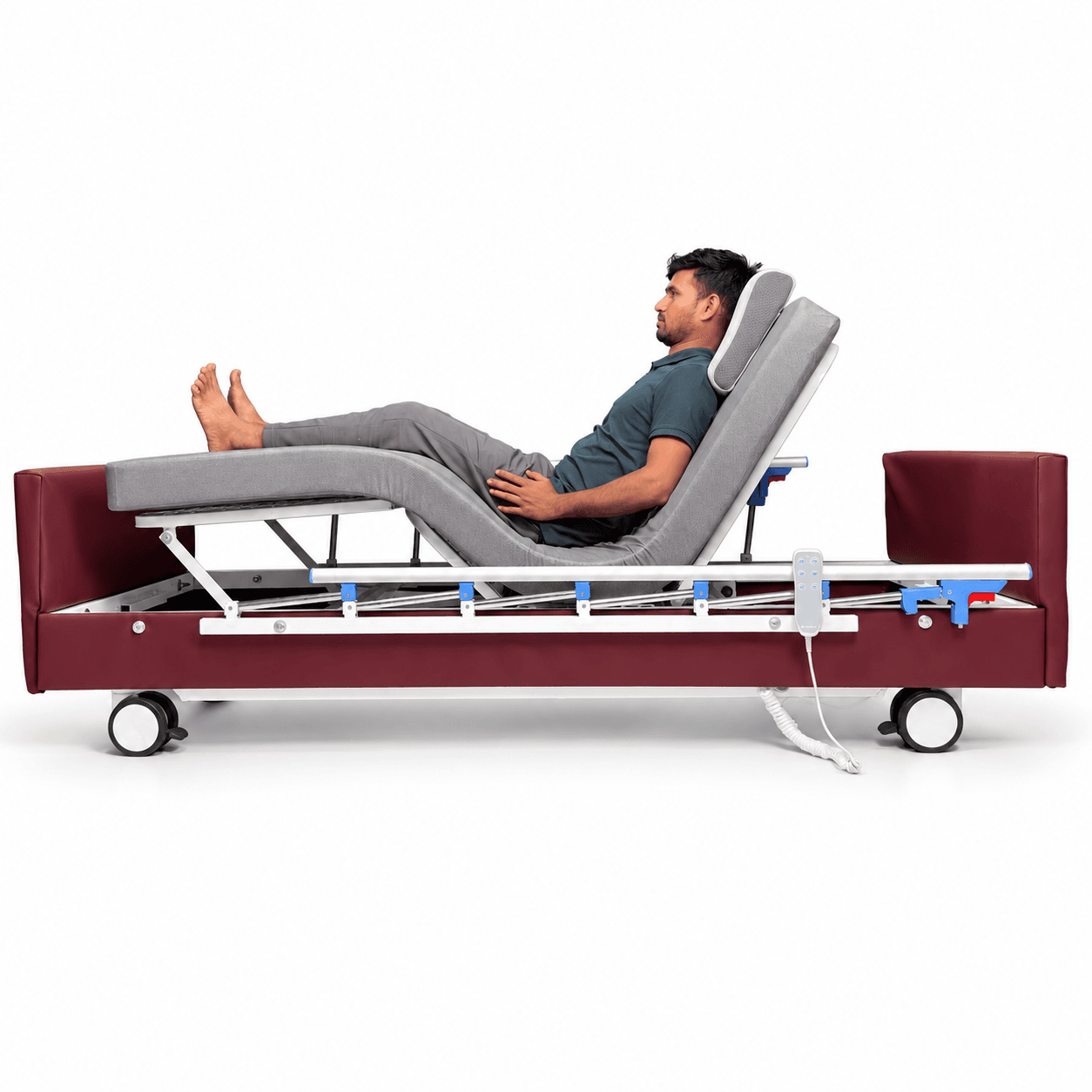
A conventional electric hospital bed may raise the backrest and adjust knee position, allowing the patient to sit more upright.
However, the person may still need help moving towards the bed's edge, bringing the legs over the side and preparing to stand or transfer.
For an older stroke survivor with one-sided weakness, these movements may require considerable assistance.
Caregivers may need to:
- Reposition the patient's body.
- Assist with leg movement.
- Support sitting balance.
- Prepare the wheelchair or standing aid.
- Help the person complete the assessed transfer.
An electric backrest alone does not resolve all these challenges.
For selected patients, a rotating chair-position bed may reduce some of the repositioning required before the final transfer.
The important distinction is between preparing the patient for a transfer and completing the transfer itself.
How Can Morecare Coral Make Bed-to-Wheelchair and Walker Transfers More Manageable?
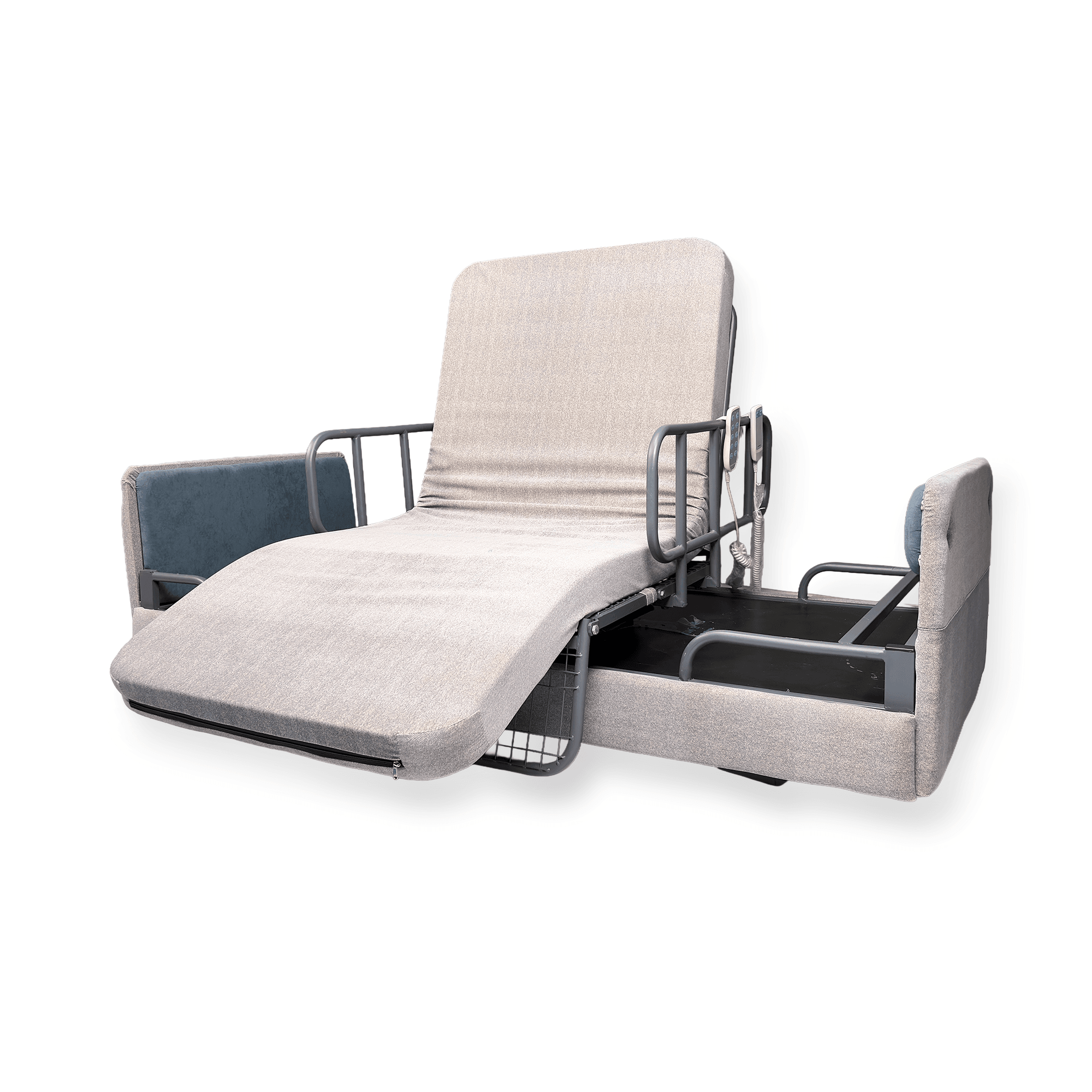
The Morecare Coral Electric Rotating Homecare Bed combines powered positioning with a 90° chair rotation function.
Unlike a conventional adjustable backrest, Coral can reposition the supported user into an outward-facing chair-like position at the side of the bed.
Its four electric functions include:
- Backrest adjustment: Supports movement towards an upright sitting position.
- Knee adjustment: Changes lower-limb positioning during bed adjustment.
- 90° chair rotation: Reorients the seating section towards a bedside exit position.
- Hi-Low adjustment: Changes bed height from a published 18 to 30 inches.
These functions may support three common homecare situations.
Preparing for a wheelchair transfer
Coral can position a selected user towards the bedside, where a wheelchair can be arranged according to the therapist-approved transfer plan.
Preparing for assisted standing
For a patient who can safely participate in weight-bearing, the chair-like position and adjustable height may help establish a suitable starting position for assisted standing.
Preparing to use a walker
Once the patient has completed an assessed sit-to-stand movement and is stable, a suitable walker may be introduced according to their rehabilitation plan.
Coral does not automatically lift a patient to standing, move them into a wheelchair or enable independent walking.
Caregiver supervision, correct positioning and suitable transfer equipment remain essential.
What Should Families Check Before Choosing a Rotating Bed?
A rotating homecare bed may be worth considering when an elderly stroke survivor needs help moving from lying down towards a bedside sitting position.
Before selecting one, check:
Sitting balance: Can the person tolerate an upright chair-like position with the support available?
Weight-bearing ability: Can they participate in standing, or is a hoist or other transfer method required?
Affected-side support: Are additional precautions needed for the weak arm, shoulder or leg?
Wheelchair compatibility: Can the wheelchair be positioned safely with adequate access and a suitable transfer height?
Caregiver assistance: How many people are needed, and have they been trained in the transfer method?
Bedroom clearance: Is there adequate space for bed rotation, wheelchair positioning and caregiver movement?
Individual suitability: Are the person's height, weight, cognition, comfort and medical restrictions compatible with the equipment?
A rotating bed may simplify part of the daily transfer routine, but it cannot replace safe moving-and-handling practices.
For elderly stroke survivors, the goal is to make transfers more manageable while maintaining safety, dignity and appropriate participation in movement.
The right solution should support the movement the patient can perform and provide appropriate assistance for the movement they cannot.