Why Is Bed Positioning Important After a Stroke?
Stroke can affect strength, movement, balance and the ability to change positions independently.
A patient may struggle to turn in bed, sit upright or maintain a comfortable posture without assistance. Weakness on one side can also make the shoulder, arm and leg more difficult to position correctly.
Good positioning aims to:
- Support the affected arm and shoulder.
- Maintain comfortable body alignment.
- Reduce prolonged pressure on vulnerable areas.
- Make resting and supervised daily activities more manageable.
- Support the patient's individual rehabilitation plan.
The appropriate position depends on the patient's abilities, comfort and medical instructions. No single sleeping or resting position is best for everyone.
Which Bed Positions May Be Suitable After a Stroke?
Different positions may be used throughout the day, depending on the patient's condition and care plan.
Lying on the back: Support the head and shoulders appropriately, place the affected arm on a pillow and keep the legs comfortably aligned.
Side-lying: Carefully position the affected shoulder and support the arms, back and legs with pillows. Avoid trapping the weak arm beneath the body.
Supported upright sitting: Some patients may benefit from short periods of sitting upright in bed, with appropriate support behind the body and beneath the arms.
Remaining in one position for too long may increase discomfort and pressure-related risks, especially for patients with limited mobility.
A physiotherapist or nurse should demonstrate safe positioning and an appropriate repositioning schedule. Keep the bed angle consistent with the patient's care instructions rather than assuming that higher elevation is always better.
What Makes an Ordinary Bed Difficult During Stroke Homecare?
A standard flat bed may provide adequate sleeping space but can be inconvenient when a patient requires frequent changes between resting and supported sitting.
Common challenges include:
- Difficulty helping the patient sit upright.
- Repeatedly arranging pillows behind the back.
- Difficulty maintaining a supported sitting position.
- Physical effort required from caregivers.
- Limited options for adjusting the back and knees.
For some families, an electrically adjustable bed system can simplify these routine changes.
However, patients requiring extensive transfers, medical monitoring, pressure management or additional safety features may need a more comprehensive nursing bed rather than a basic positioning attachment.
How Can Morecare BedMate Help With Stroke Homecare?
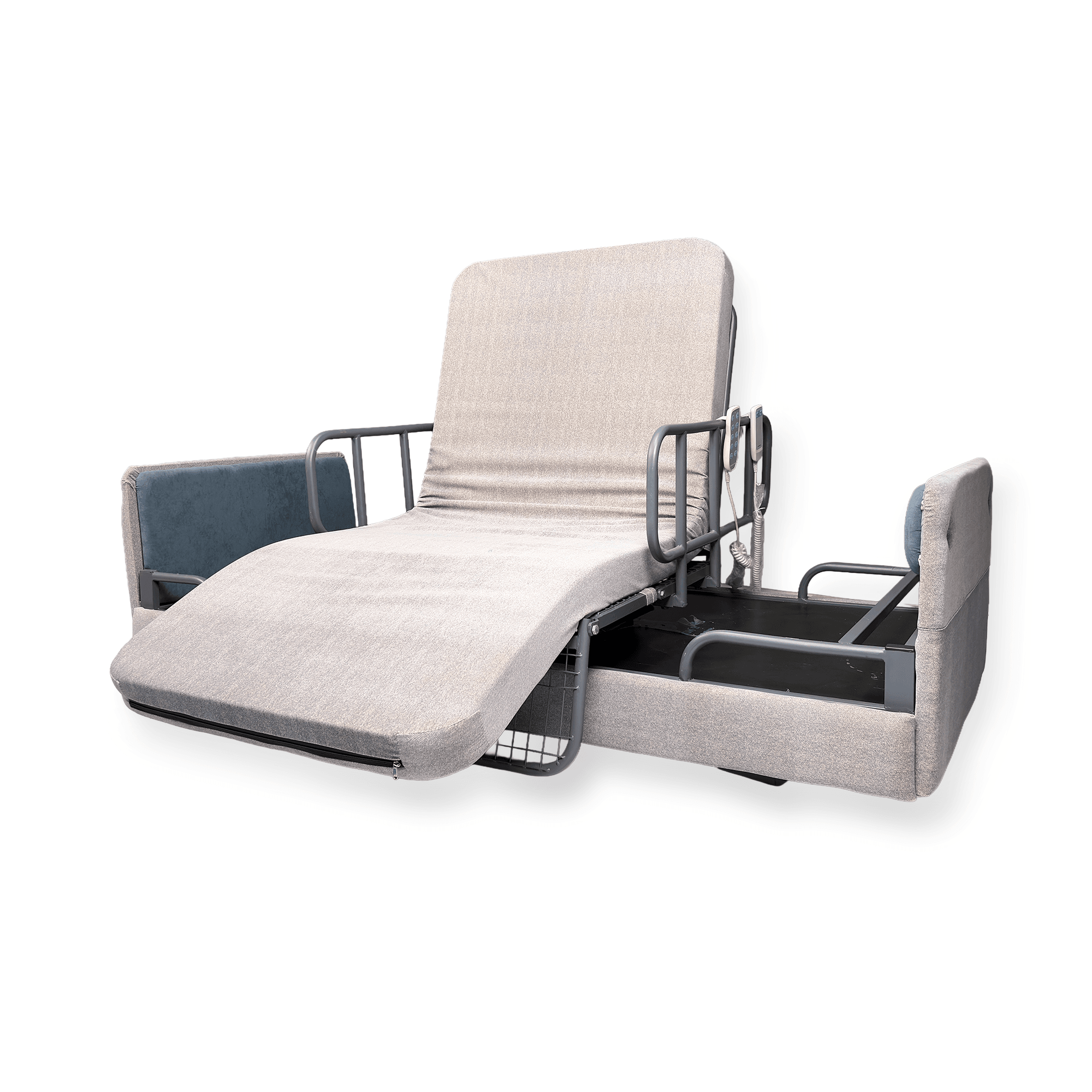
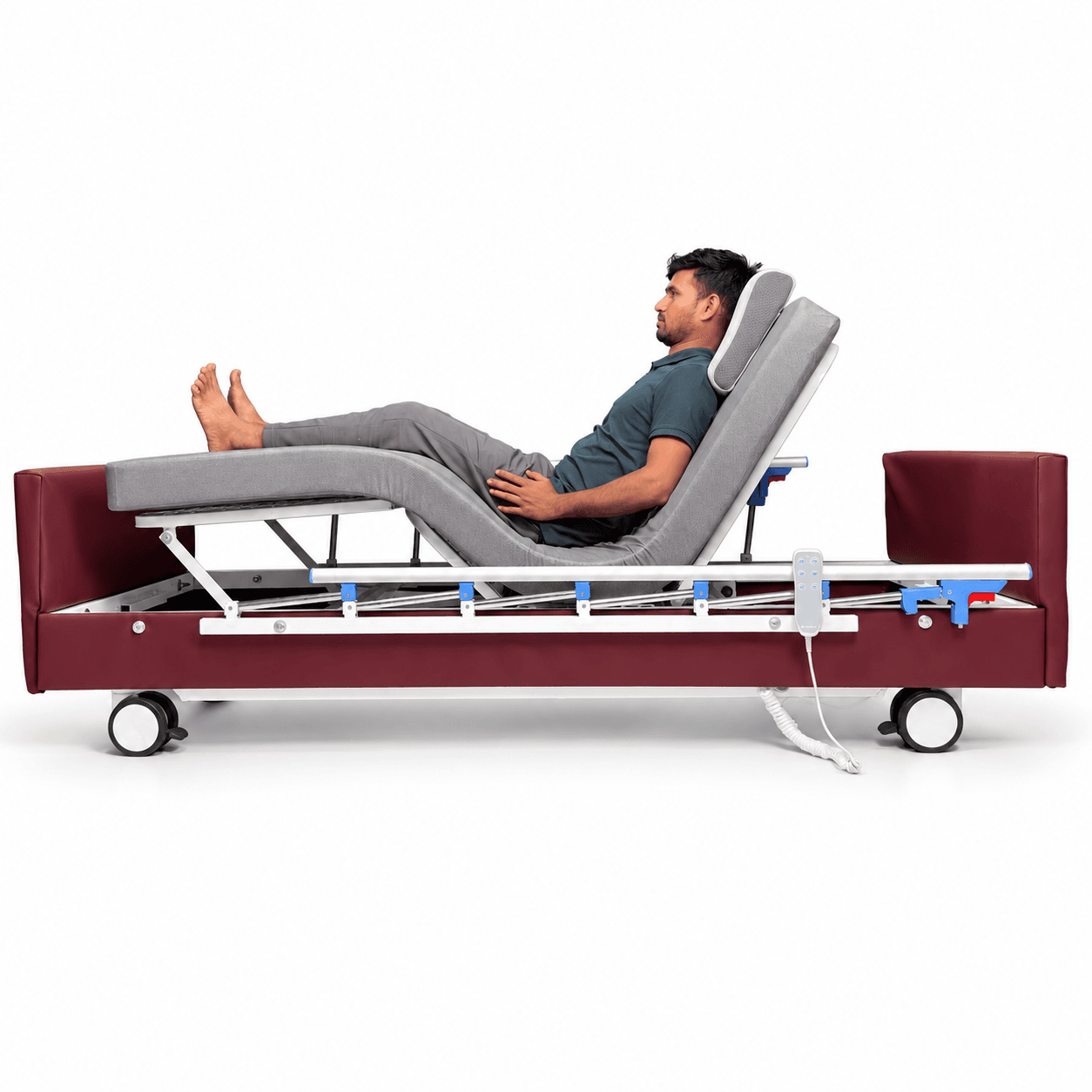
The Morecare BedMate Motorized Back & Knee Rest converts a compatible existing bed into an electrically adjustable resting surface.
Its motorized system allows caregivers to change the backrest and knee-rest positions without manually lifting the bed sections.
For selected stroke patients, this may be useful for:
- Adjusting the upper body into a supported sitting position.
- Returning from supported sitting to a prescribed resting position.
- Making routine positioning adjustments more convenient.
- Reducing the need to repeatedly arrange multiple pillows behind the back.
- Providing adjustable knee support when appropriate.
BedMate is designed for homecare positioning convenience. It does not lift the patient out of bed, turn the patient automatically, prevent pressure injuries or replace physiotherapy.
Patients with swallowing difficulties, poor trunk control or specific positioning restrictions require an individualized care plan. Electrical adjustments should be made with attention to comfort, alignment and the risk of sliding.
What Should Families Check Before Choosing an Adjustable Bed?
Before purchasing an adjustable bed system for stroke homecare, consider:
- Patient mobility: Can the person sit, turn or reposition independently?
- Body support: Are additional pillows, cushions or positioning aids required?
- Bed compatibility: Can the attachment be fitted safely to the existing bed?
- Caregiver needs: How frequently are adjustments required?
- Medical requirements: Are there prescribed positions, swallowing precautions or pressure-care needs?
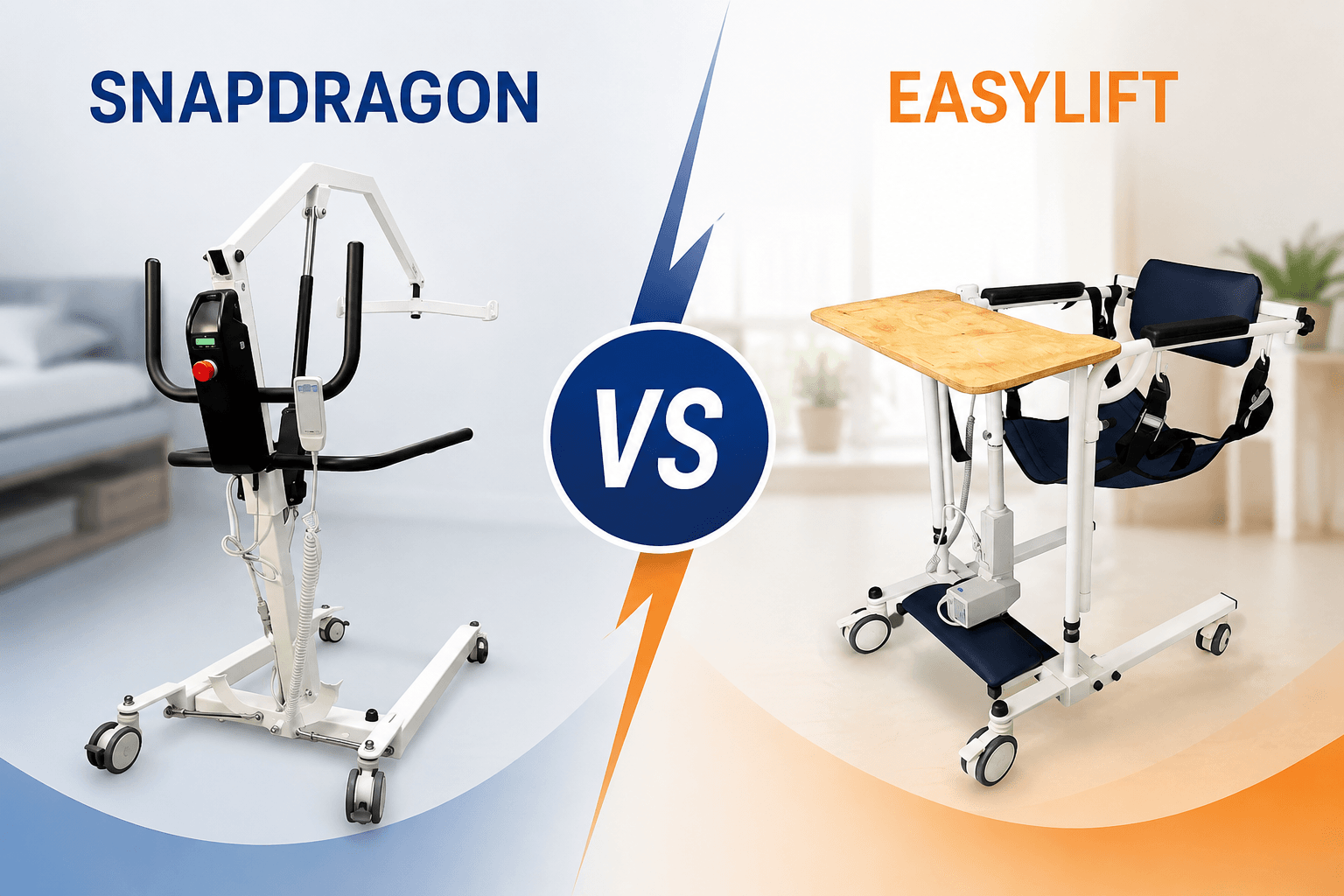
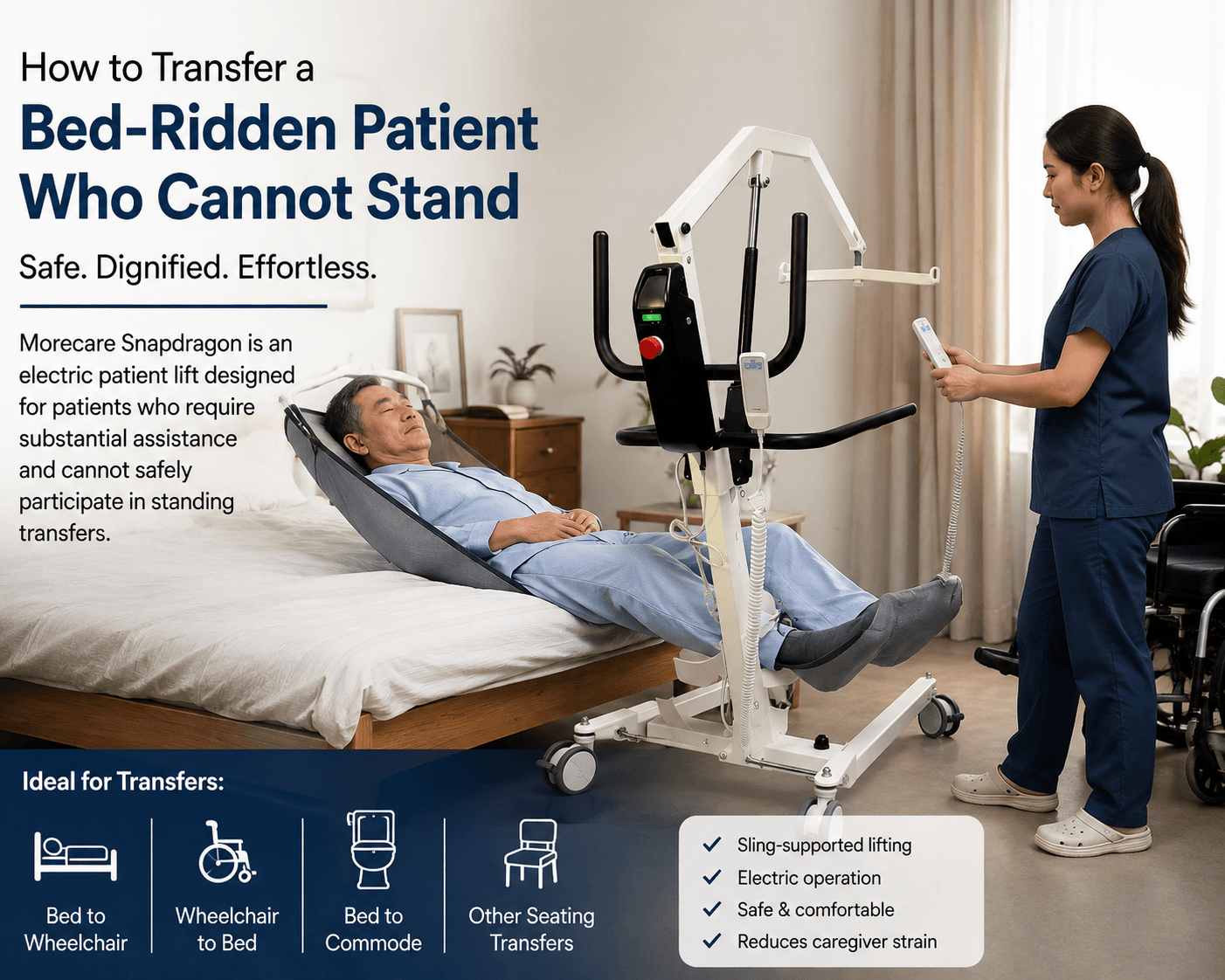
- Transfer requirements: Does the patient need a hoist, height-adjustable bed or nursing bed instead?
Morecare BedMate may suit families who primarily need motorized back and knee positioning on an existing compatible bed.
For patients needing frequent full-body repositioning, height adjustments or more complex nursing functions, a complete homecare bed may be more appropriate.
The best choice is the one that matches the patient's care requirements—not simply the number of adjustable features.