Start with the standing task
Describe what makes getting up difficult and how much assistance is currently needed. Include the usual chair or bed and the person’s ability to participate. Diagnosis alone does not show whether a powered standing system is appropriate.
Powered assistance, planned positioning
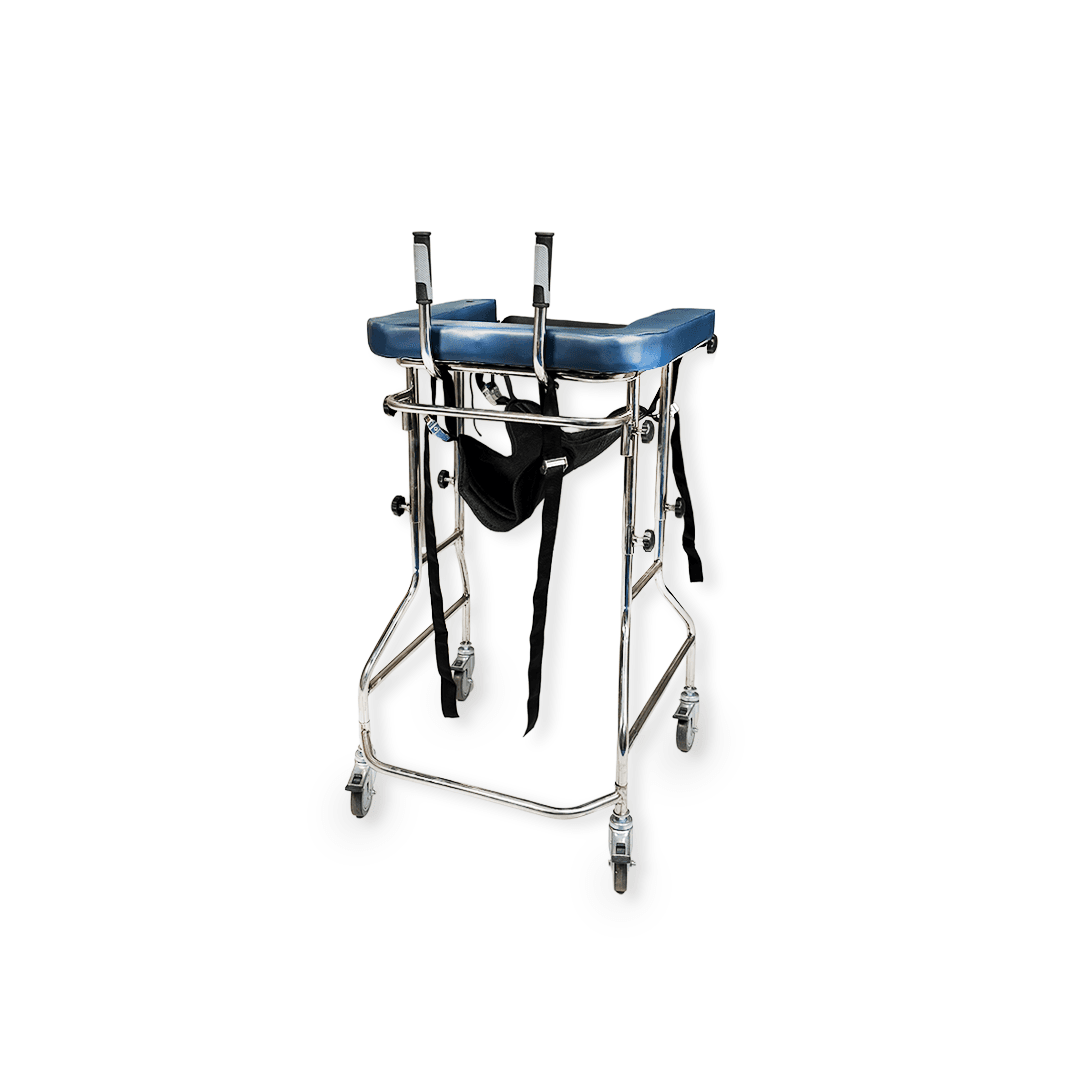
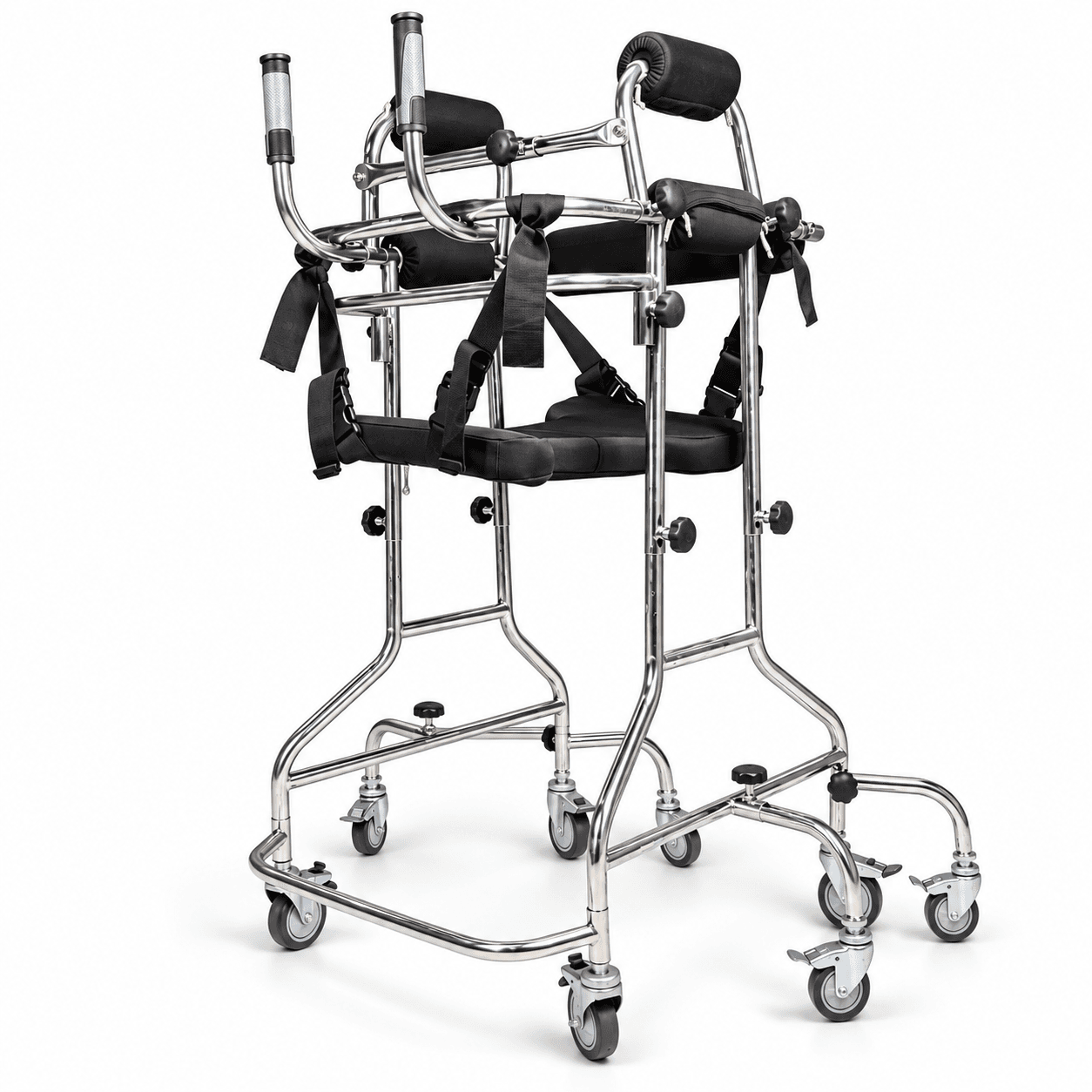
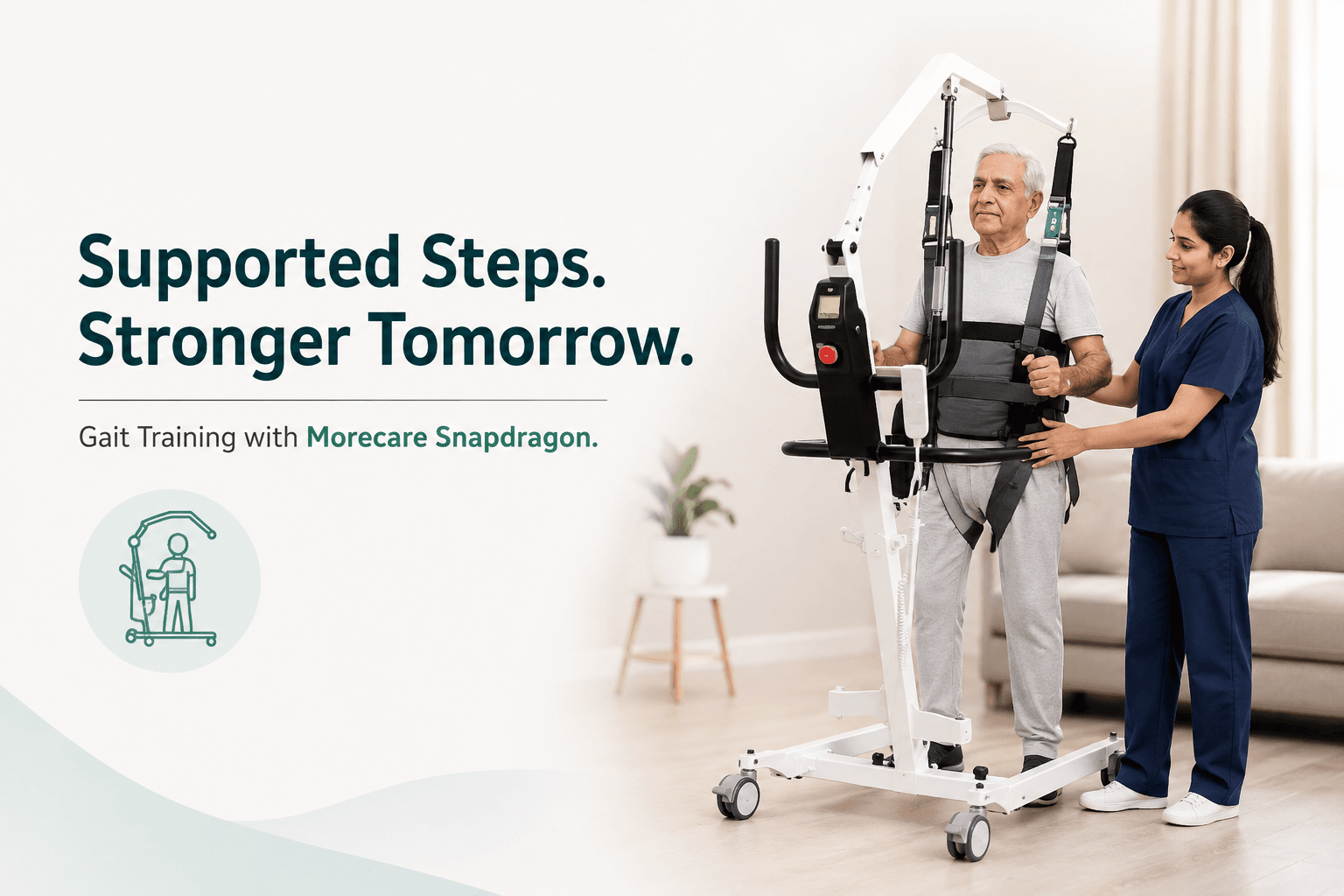
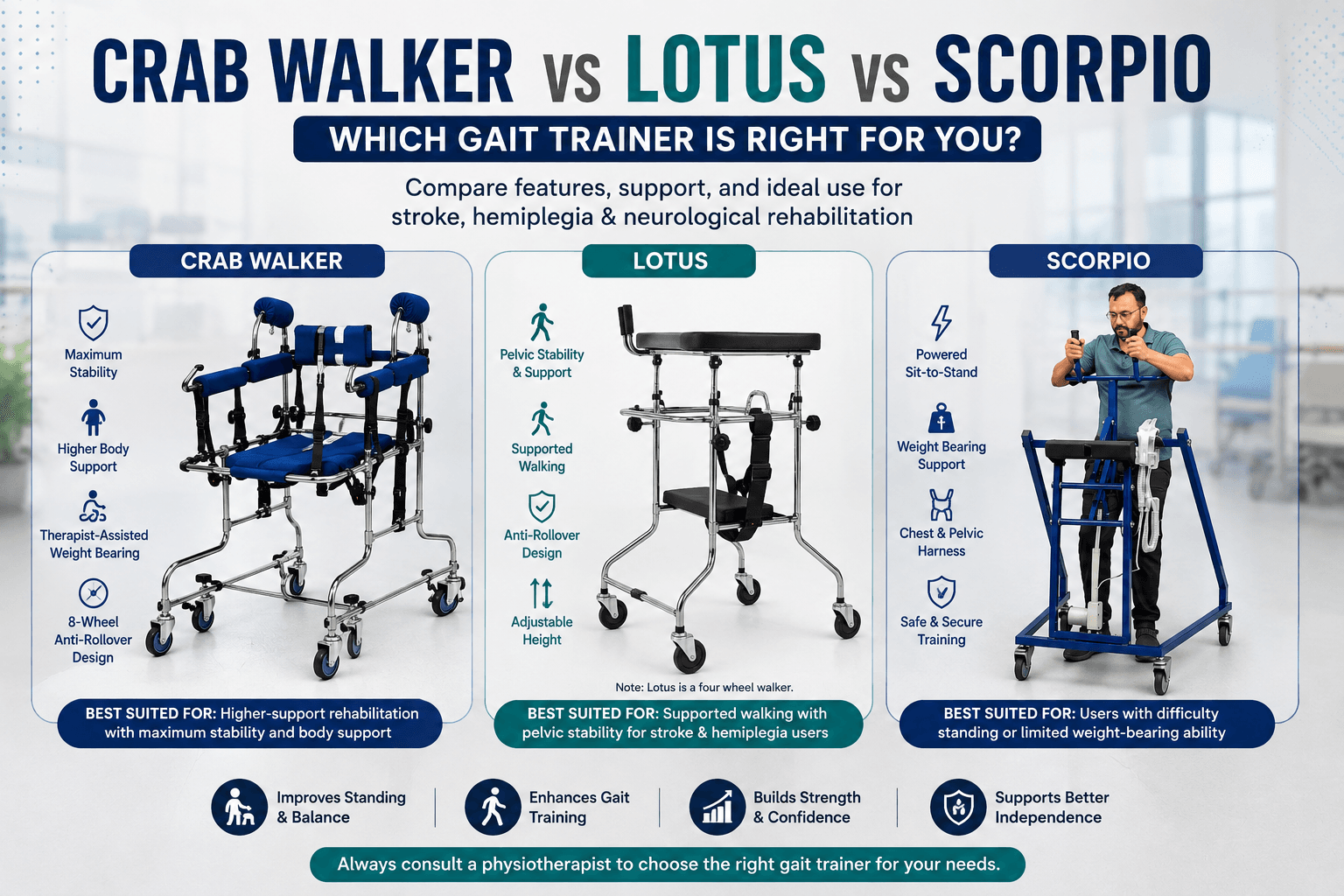
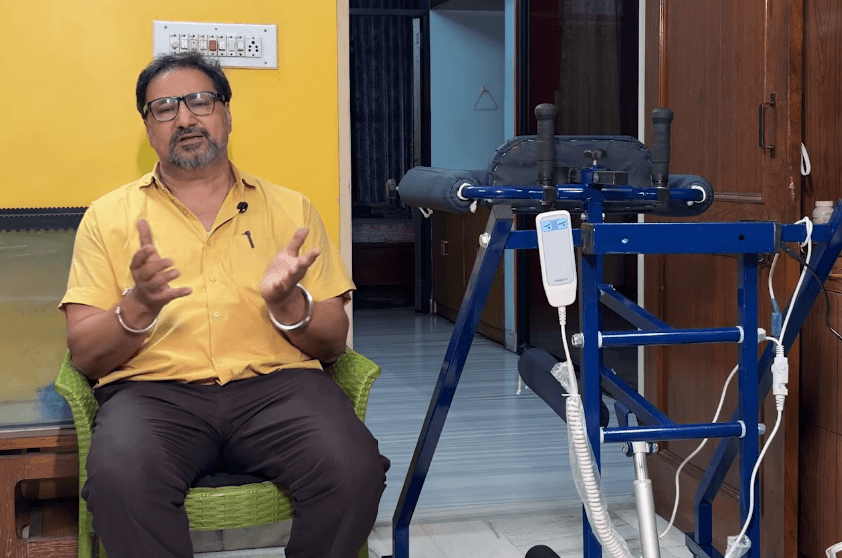
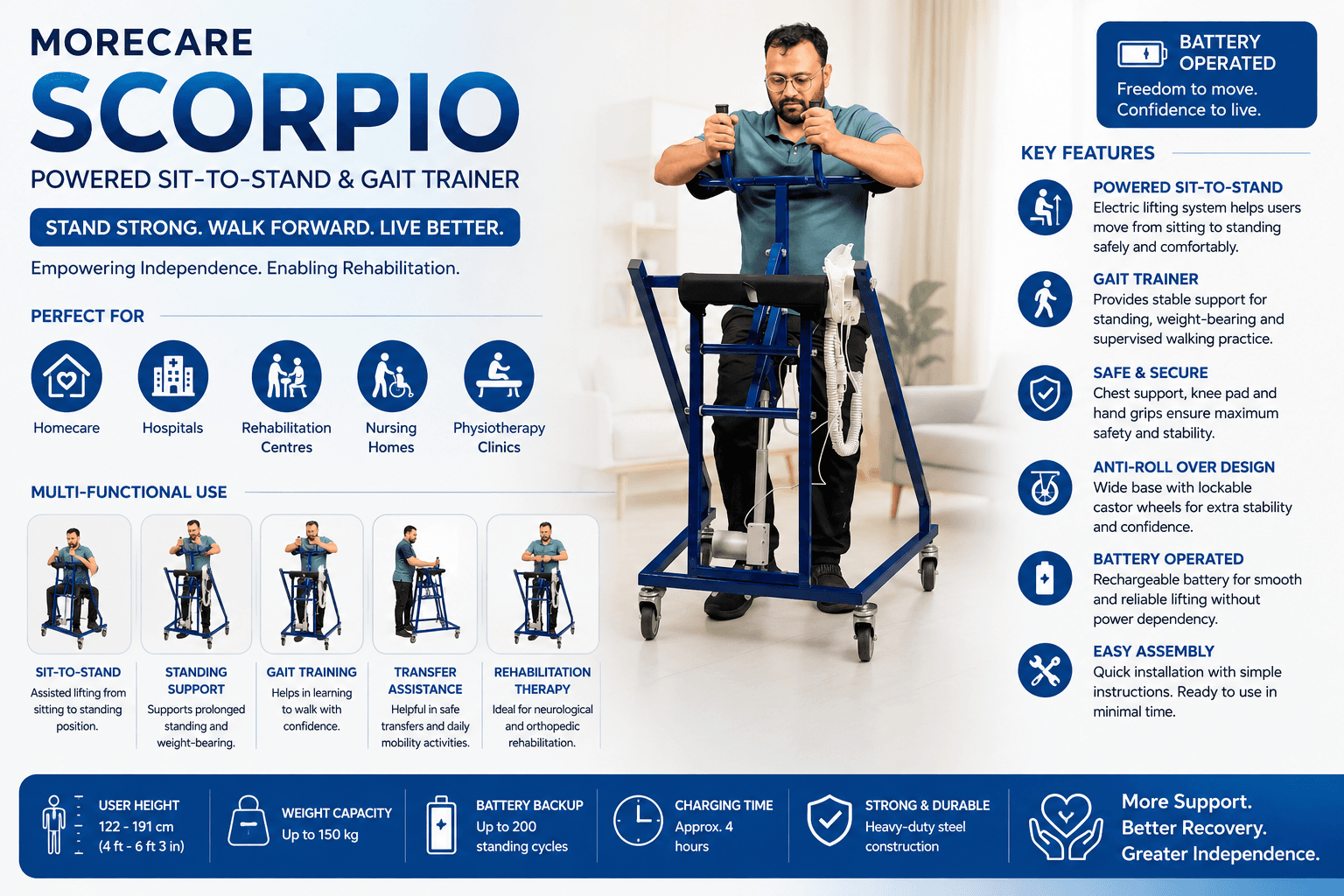
Scorpio uses battery-powered electric assistance controlled by a wired handset. Its support arrangement includes chest and pelvic harnesses with adjustable arm and knee supports. A trained professional should establish positioning for the specific person and task.
Standing and stepping are different
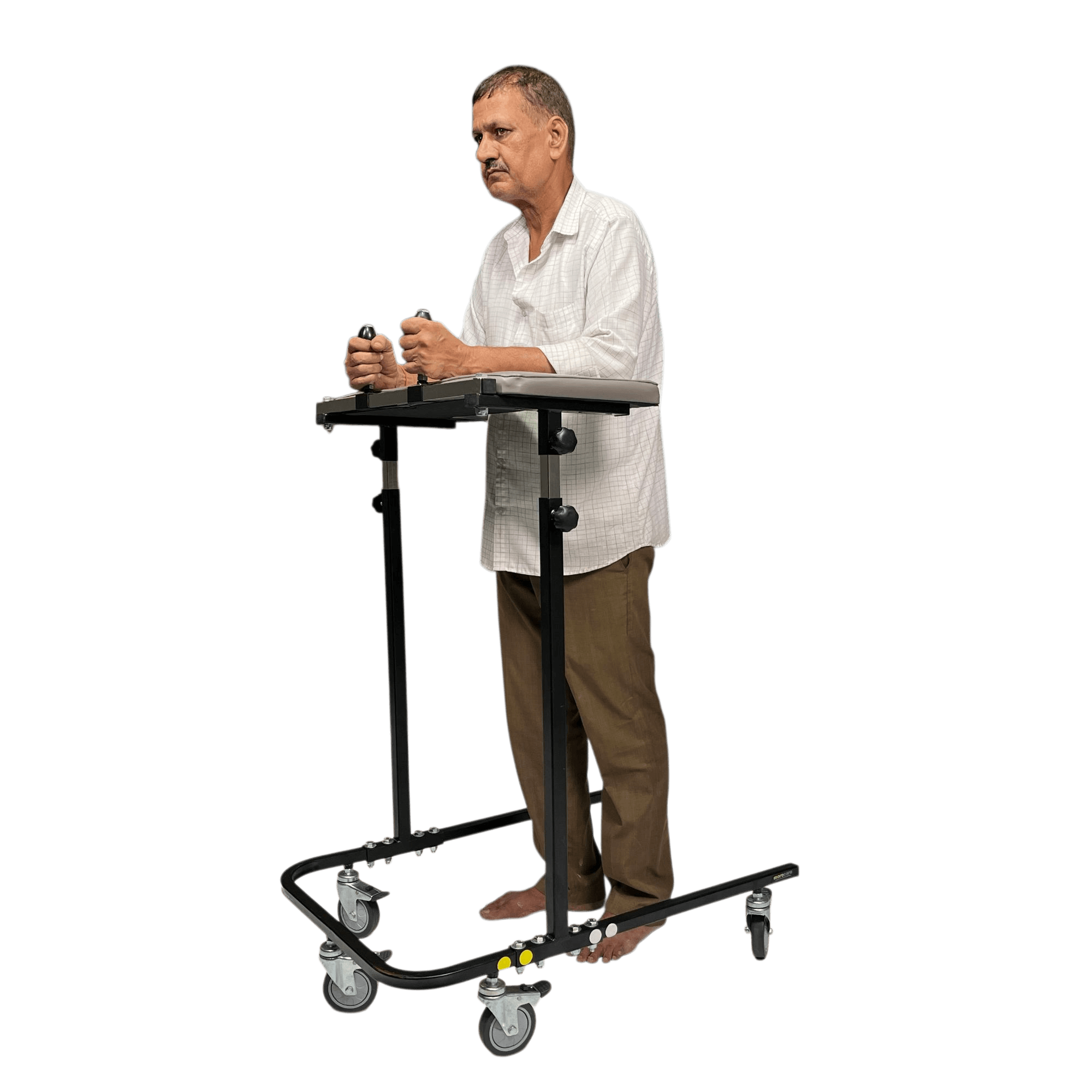
Supported standing may be one goal; walking practice may be another. Do not assume that completing a powered transition makes stepping appropriate. The rehabilitation plan should identify the intended activity, assistance and limits for that person.
Check fit before choosing
Check body measurements against the proposed configuration rather than relying on age or diagnosis. Ask how supports will be adjusted and whether they remain appropriate through the intended movement. Confirm the current model’s permitted load in writing.
Plan space and caregiver access
Measure the setup area and the route for any prescribed walking practice. Include access for the assisting person, nearby furniture and the return to sitting. Storage dimensions alone do not establish that a room is usable.
Review the complete routine
Request instruction covering entry, positioning, controls, the planned activity and returning to rest. Confirm battery care and the approved response to interruption. Review the arrangement when the person’s comfort, participation or support needs change.
Practical points to discuss
Bring the usual seating details to the discussion: seat height, armrests and approach space can affect how the session begins.
Ask the therapist to define the task. A standing session and a stepping session may need different positioning and assistance.
Include the person who will help at home in the demonstration. Do not assume that a powered mechanism removes all physical assistance.
Check the whole route with the proposed equipment dimensions. Include turns, thresholds and room for the caregiver.
Request written instructions for the exact supplied version, including which supports and brake settings apply to each activity.
Keep claims about battery cycles, assembly time and load capacity out of the purchase decision until the current configuration is confirmed.