Check 1: Can the Patient Move and Change Positions Independently?
Start by understanding how much movement the person can manage without assistance.
Can they sit up, turn onto their side, move their legs or change their resting position independently?
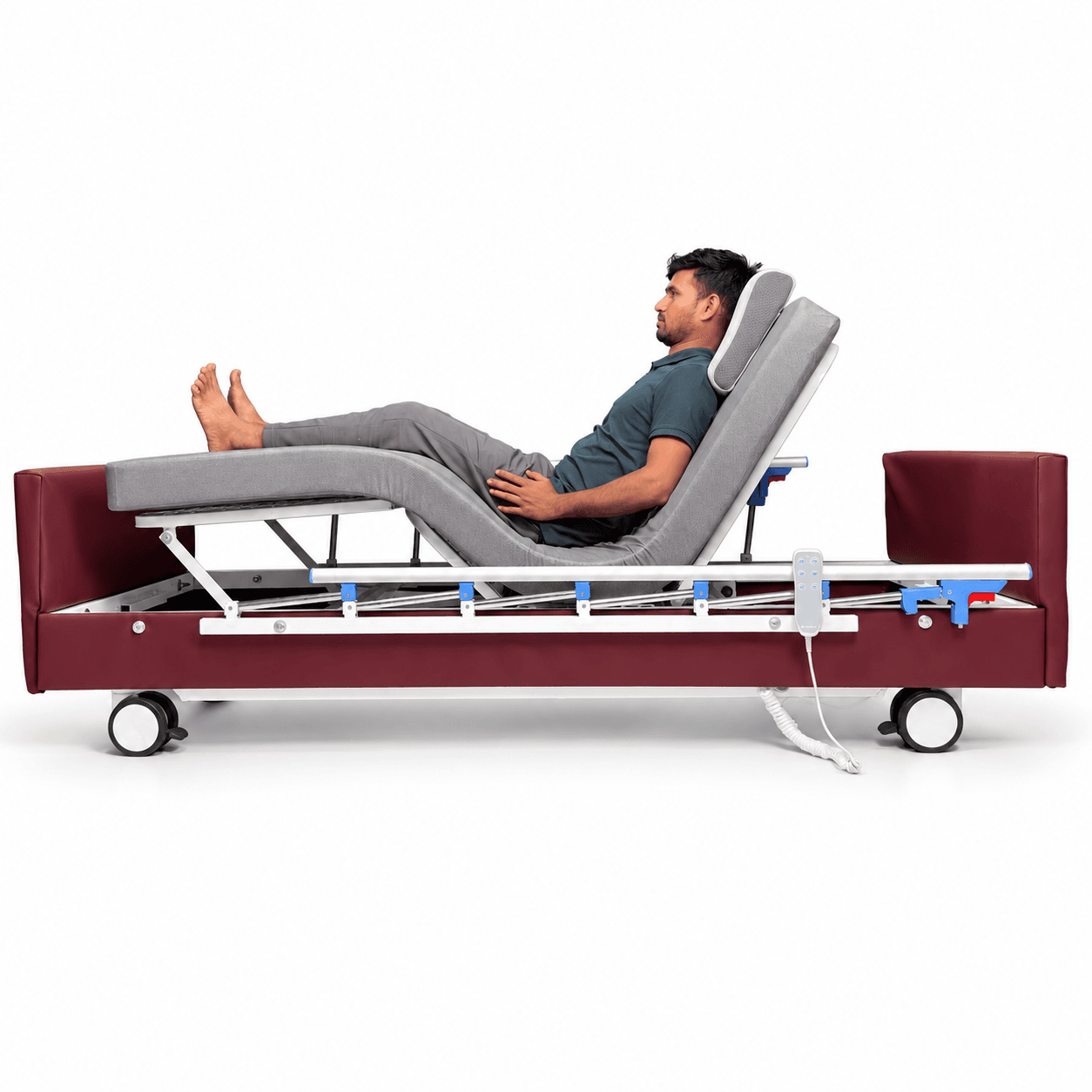
A person who can reposition themselves but finds sitting upright difficult may only need an adjustable backrest.
Someone who cannot turn or reposition independently may require more extensive caregiver assistance and positioning equipment.
Consider:
- Ability to move from lying to sitting.
- Ability to turn and change positions.
- Trunk control and sitting balance.
- Need for assistance during daily activities.
A motorized backrest may simplify supported sitting, but it does not automatically turn, lift or reposition the entire body.
The patient's actual mobility should guide the selection, rather than their diagnosis alone.
Check 2: Will the Patient Need Help Getting In and Out of Bed?
Transfers are an important consideration when selecting a homecare bed.
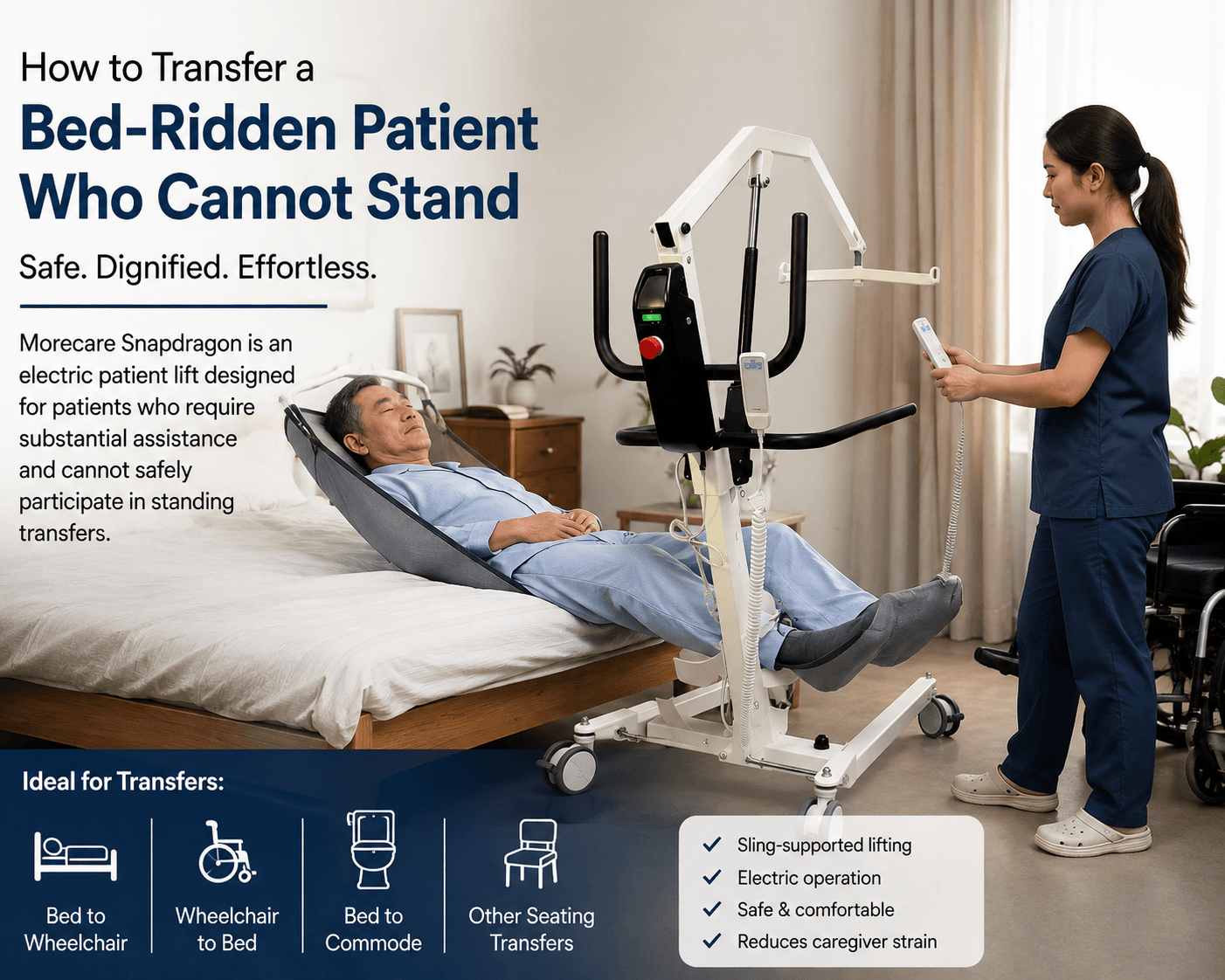
A patient who can stand or transfer with limited assistance may have different requirements from someone who needs a wheelchair, transfer board or patient hoist.
A height-adjustable nursing bed may help caregivers achieve an appropriate working height or align the bed with certain transfer equipment.
Before buying, consider:
- Can the patient stand or bear weight?
- Is a wheelchair or transfer chair used?
- Is a patient hoist required?
- Does the bed need to be raised or lowered?
- Can caregivers assist safely at the existing bed height?
If adjustable bed height is essential, a back-and-knee adjustment attachment alone will not meet that requirement.
A physiotherapist or occupational therapist should assess difficult transfers before equipment is selected.
Checks 3 and 4: How Long Will Care Be Needed, and Is Pressure Care Required?
Section 3 — Checks 3 and 4: How Long Will Care Be Needed, and Is Pressure Care Required?
Check 3 — Expected duration of homecare
A patient recovering from a short-term procedure may need relatively simple support, while someone with progressive mobility limitations may require long-term nursing equipment.
Consider whether the person's care needs are expected to remain stable or change over time.
However, short-term care does not automatically mean that a simpler bed is sufficient. The required functions matter more than recovery duration alone.
Check 4 — Pressure-injury risk
Patients who spend prolonged periods in bed, particularly those unable to reposition themselves, may be at risk of pressure injuries.
They may require:
- An individualized repositioning schedule.
- A clinically appropriate pressure-redistributing mattress.
- Regular skin assessment.
- Caregiver assistance with turning and repositioning.
- A bed compatible with the prescribed care plan.
An adjustable backrest may support comfort and positioning, but it does not replace pressure-relieving equipment or regular repositioning.
Caregivers should discuss pressure-injury prevention with a qualified healthcare professional before selecting the bed and mattress.
Checks 5 and 6: Can Caregivers Manage Daily Care, and Is There Enough Space?
Check 5 — Caregiver workload
Think about the activities caregivers will perform every day.
These may include helping the patient sit upright, assisting with personal care, changing bed linen, repositioning or transferring the patient.
Motorized back and knee adjustment can reduce the need to manually lift those bed sections.
However, if caregivers need adjustable working height or extensive access around the patient, a complete nursing bed may be more suitable.
Check 6 — Bedroom space and accessibility
Before purchasing equipment, check:
- Available space around the bed.
- Doorway and passage clearance.
- Room for wheelchairs or lifting equipment.
- Access to a safe electrical connection.
- Space for caregivers to work.
- Compatibility with the existing bed and mattress.
A full hospital-style bed may require replacing or moving existing furniture.
An existing-bed conversion system may be more practical where adequate space and a compatible bed are already available, provided it meets the patient's care requirements.
Check 7: Can Your Existing Bed Be Upgraded Instead?
If the primary requirement is raising the backrest or adjusting knee position, replacing the entire bed may not be necessary.
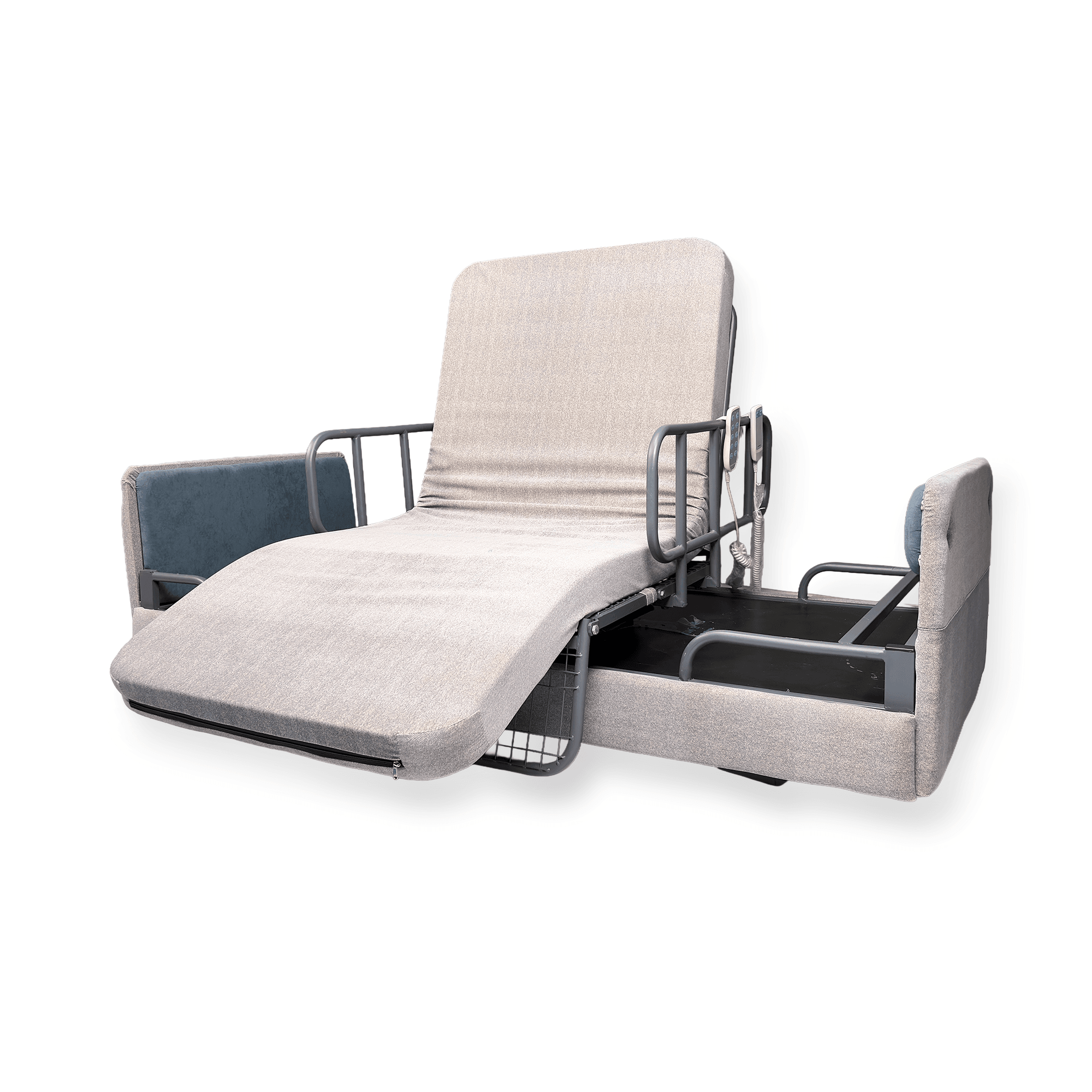
The Morecare BedMate Motorized Back & Knee Rest is designed to convert a compatible existing bed into an electrically adjustable resting surface.
It offers:
- Motorized backrest positioning.
- Motorized knee adjustment.
- Wired handset operation.
- A supplied mattress.
- Installation on compatible existing beds.
This may be a practical solution for selected patients who require adjustable resting positions but do not need the additional functions of a complete hospital-style bed.
BedMate may be worth considering when:
- The existing bed is structurally suitable.
- Back and knee positioning are the main requirements.
- Bed-height adjustment is unnecessary.
- Transfers and personal care can be managed safely.
A full hospital-style bed may be more appropriate when:
- The patient needs overall bed-height adjustment.
- Assisted transfers require a different bed configuration.
- Complex nursing or pressure-care needs cannot be met by the existing setup.
- The existing bed is unsuitable or incompatible.
Before purchasing, discuss the patient's care requirements with their healthcare team and confirm the intended bed's dimensions and compatibility.
The goal is not to buy the most complicated bed. It is to provide the functions the patient and caregiver genuinely need.