What Is a Therapeutic Corner Chair?
A therapeutic corner chair is a specialized seating system designed to provide additional support around a child's trunk while sitting.
Many corner chairs use a backrest and angled side supports to help establish a defined seated position.
They may also include pelvic belts, chest harnesses, headrests or lower-limb positioning accessories.
Unlike ordinary household chairs, therapeutic corner seats are designed for children who need assistance maintaining sitting posture.
They may be considered for children with cerebral palsy, hypotonia, developmental delay or other conditions affecting postural control.
A floor-level corner seat can be useful for selected activities such as:
Supervised floor play.
Looking at books and pictures.
Reaching for toys.
Interactive activities with siblings.
Physiotherapy and occupational therapy.
Supported sitting practice within an individualized programme.
The Morecare Sunflower is an example of this category.
Its padded three-sided structure, adjustable headrest, butterfly chest harness and pelvic belt provide different positioning options.
However, a corner chair does not automatically teach independent sitting or strengthen trunk muscles.
It provides external support that may help children participate in appropriate activities.
What Is an Adaptive Seating Chair?
An adaptive seating chair is designed to accommodate children who need additional positioning support during everyday activities.
Unlike a basic floor-level corner seat, many adaptive chairs provide elevated seating with adjustable components.
Depending on the model, these may include:
Lateral trunk supports
Help provide support around the sides of the upper body.
Pelvic positioning system
Helps maintain the intended seated pelvic position.
Adjustable headrest
Provides additional support for children who need help maintaining head position.
Footrests
Support lower-limb positioning when correctly adjusted.
Activity tray
Provides a surface for suitable play, learning and functional activities.
Reclining backrest
Allows the backrest angle to be adjusted when clinically appropriate.
Some adaptive chairs also include lockable wheels for indoor repositioning.
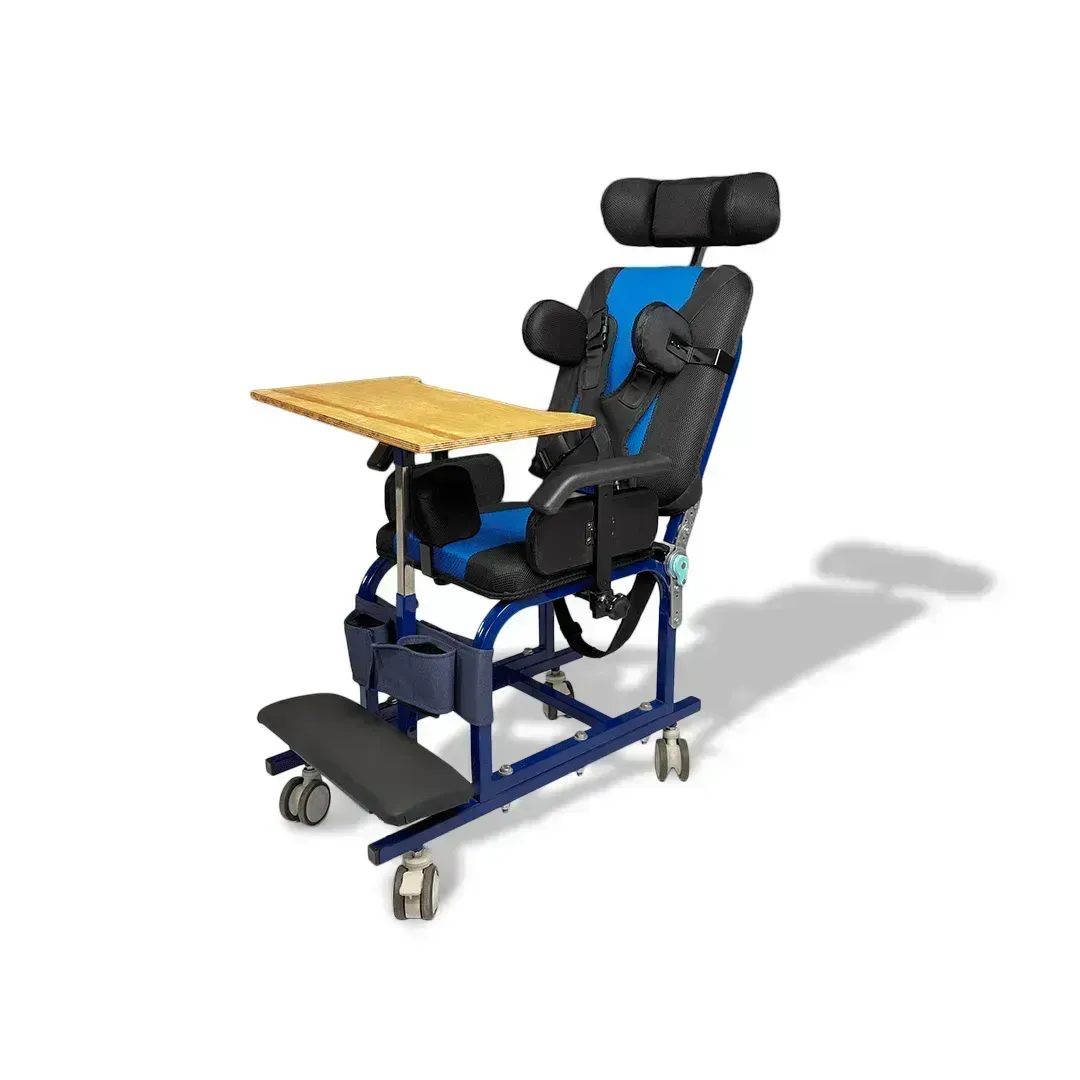
The Morecare Nesta is an example of an elevated pediatric adaptive seating chair.
It includes adjustable lateral supports, a headrest, a four-point pelvic harness, split footrests, an activity tray and a manually reclining backrest.
These additional features can make an adaptive chair more practical for selected classroom, home and therapy activities.
However, more adjustability does not automatically make a chair appropriate for a child with complex positioning needs.
Professional fitting remains essential.
Corner Chair vs Adaptive Seating Chair – Important Differences
The main differences relate to seating height, positioning components, intended activities and adjustability.
Feature
Therapeutic Corner Chair
Adaptive Seating Chair
Seating position
Commonly floor level
Usually elevated
Main purpose
Supported floor sitting
Supported daily activities
Trunk support
Corner and optional harness supports
Often adjustable lateral supports
Pelvic positioning
May include pelvic belt
Often includes adjustable pelvic support
Head support
Model-dependent
Model-dependent
Footrests
Generally not included
Often included
Activity tray
Optional or unavailable
Often included
Backrest recline
Model-dependent
Available on selected models
Best use
Floor play and selected therapy activities
Learning, activities and individualized daily routines
Neither type is automatically better.
For example, a young child who primarily participates in floor-based activities may benefit from an appropriately fitted corner seat.
An older child requiring an elevated activity surface, foot positioning and additional adjustability may be better served by an adaptive seating chair.
A child with substantial postural instability or complex physical needs may require specialist seating beyond either basic category.
The final choice should be based on functional assessment, not product appearance.
Which Chair Is More Appropriate for Different Activities?
Parents often focus on the child's diagnosis when choosing seating equipment.
However, the activities the child needs to perform are equally important.
Floor play and social interaction
A therapeutic corner seat may allow selected children to participate in supervised activities near floor level.
This may be useful for playing with toys or interacting with family members.
Learning and classroom activities
An elevated adaptive chair with an appropriately positioned tray may provide easier access to books, drawing materials or adapted communication equipment.
Feeding and mealtimes
Some children require specialized positioning during meals.
An adaptive chair with suitable support may be considered, but feeding safety depends on the child's swallowing abilities and individualized clinical recommendations.
No chair should be assumed to prevent choking or aspiration.
Occupational therapy and physiotherapy
Both corner seats and adaptive chairs may be used during selected rehabilitation activities.
The therapist should determine which positioning arrangement best supports the intended task.
Crawling and early mobility activities
Some multifunctional seating systems incorporate a separate configuration for crawling-related therapy.
These features may be useful when crawling or prone positioning forms part of the child's rehabilitation programme.
The important principle is to select the chair according to the child's actual activities and physical requirements rather than expecting one device to perform every function.
Comparing Morecare Sunflower, Pentas and Nesta
Morecare offers several pediatric seating solutions for different rehabilitation and everyday activity needs.
Morecare Sunflower – Dedicated Floor Seating
The Sunflower is a therapeutic corner floor-seating system designed for selected children requiring external head, trunk and pelvic positioning support.
Its main features include:
Three-sided padded corner structure.
Height-adjustable headrest.
Four-point butterfly chest harness.
Pelvic positioning belt.
Removable abductor.
Customizable seating dimensions.
The Sunflower is generally recommended for children aged 2–7 years.
It may be considered when the primary requirement is supported floor-level sitting for supervised play, therapy and everyday interaction.
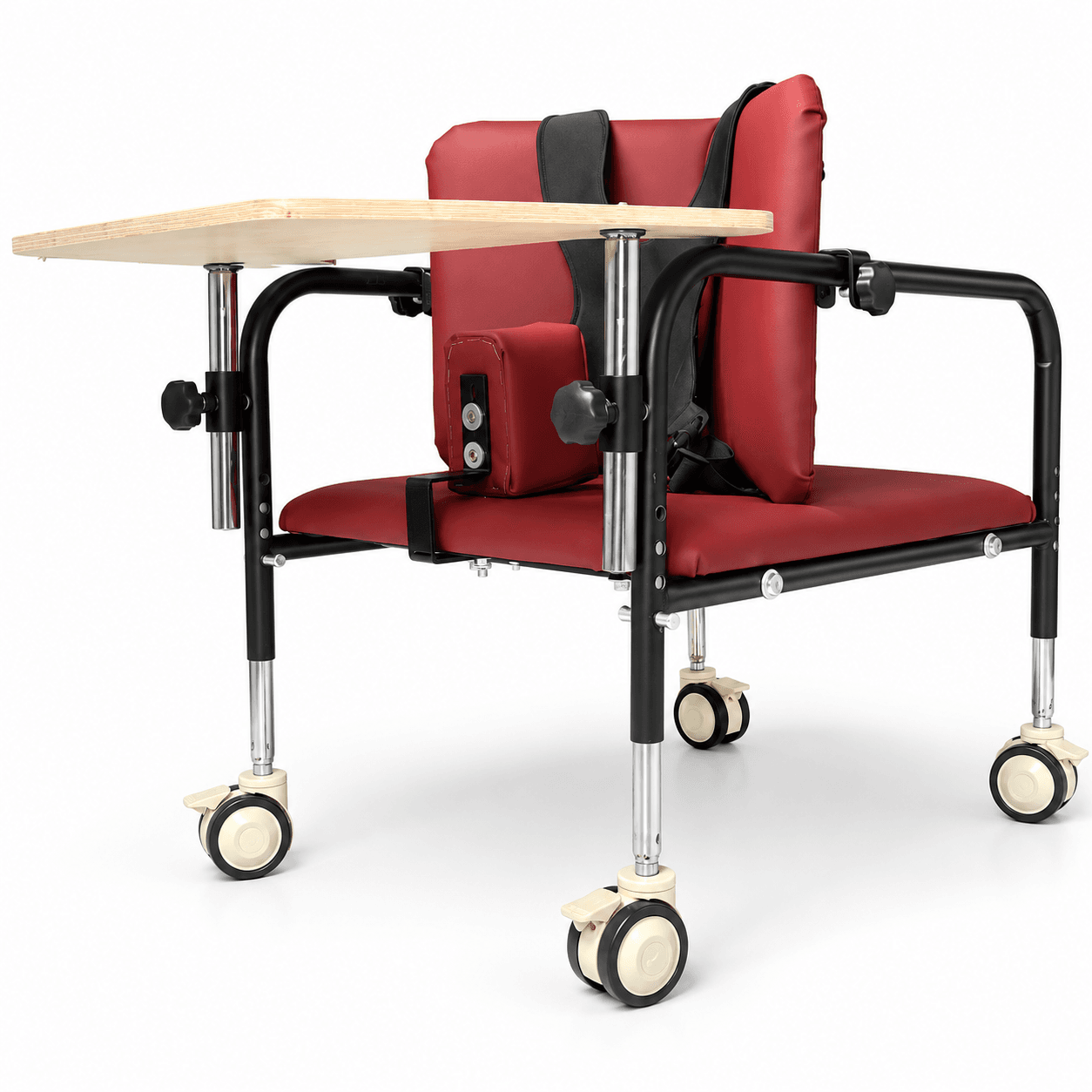
Morecare Pentas – Seating and Crawling Therapy
The Pentas combines a corner seating arrangement with a convertible prone crawling therapy configuration.
Its key features include:
Therapeutic corner seating.
Convertible crawling therapy arrangement.
Adjustable seat dimensions and height.
Butterfly chest harness.
Four-point pelvic positioning belt.
Adjustable abduction pommel.
Lockable wheels.
Optional head support and activity tray.
Pentas is generally recommended for children aged 3–10 years.
It may be considered when a rehabilitation programme includes both supported sitting and therapist-guided prone or crawling activities.
Its crawling mode should be used only when appropriate for the child's physical abilities and rehabilitation plan.
Morecare Nesta – Elevated Adaptive Seating
Nesta is designed for children who require supportive seating during activities at an elevated height.
Its main features include:
Adjustable headrest.
Independent lateral trunk supports.
Four-point pelvic harness.
Removable abductor.
Adjustable split footrests.
Height-adjustable activity tray.
Manual reclining backrest.
Lockable caster wheels.
Nesta is generally recommended for children aged 6–15 years.
It may be considered for selected children who need an elevated activity surface and additional positioning adjustments for learning, therapy and daily routines.
Quick Product Comparison
Feature
Sunflower
Pentas
Nesta
Primary function
Floor sitting
Sitting + crawling therapy
Elevated adaptive seating
Recommended age
2–7 years
3–10 years
6–15 years
Maximum user weight
50 kg
40 kg
50 kg
Head support
Included
Optional
Included
Chest or trunk support
Butterfly harness
Butterfly harness
Adjustable lateral supports
Pelvic support
Included
Included
Included
Crawling function
No
Yes
No
Activity tray
Not standard
Optional
Included
Reclining backrest
No
Not specified
Yes
Starting listed price
₹14,000
₹14,000
₹18,000
Prices and configurations should be confirmed before ordering, particularly for customized products.
The products are not interchangeable simply because they have similar weight ratings or overlapping recommended ages.
A therapist should assess whether the selected model provides adequate support for the child's specific posture, physical condition and activities.
Seven Questions to Ask Before Buying a CP Seating Chair
Before choosing a therapeutic corner seat or adaptive chair, families should gather information about their child's needs.
- Can the child hold their head upright?
Children with limited head control may require additional or specialized head support.
- Can the child maintain trunk stability?
Observe whether the child leans forward, falls sideways or requires continuous physical assistance while sitting.
- Does the child need pelvic positioning support?
A therapist should assess pelvic alignment, joint mobility and the need for positioning belts or other supports.
- What activities will the chair be used for?
Floor play, studying, therapy and mealtimes may require different equipment.
- Does the child need foot support?
An elevated chair should provide suitable lower-limb positioning when this is clinically necessary.
- Can the chair accommodate the child's measurements?
Seat width, seat depth, backrest height and positioning accessories should match the child's body.
- Can caregivers use the equipment safely?
Consider transfers, adjustment mechanisms, supervision requirements, cleaning and available space.
A rehabilitation professional should also review any pain, spinal deformity, hip instability, pressure-related skin concerns or breathing difficulties.
Children with complex positioning requirements may need specialist seating beyond standard product configurations.
The most appropriate choice is the system that supports comfort, safety and meaningful participation in the child's daily activities.