How Is a Sling-Supported Lift Different From a 180° Split-Seat Transfer Chair?
Patient transfer equipment may look similar, but the way it supports and moves a person can be different.
Sling-supported electric lift
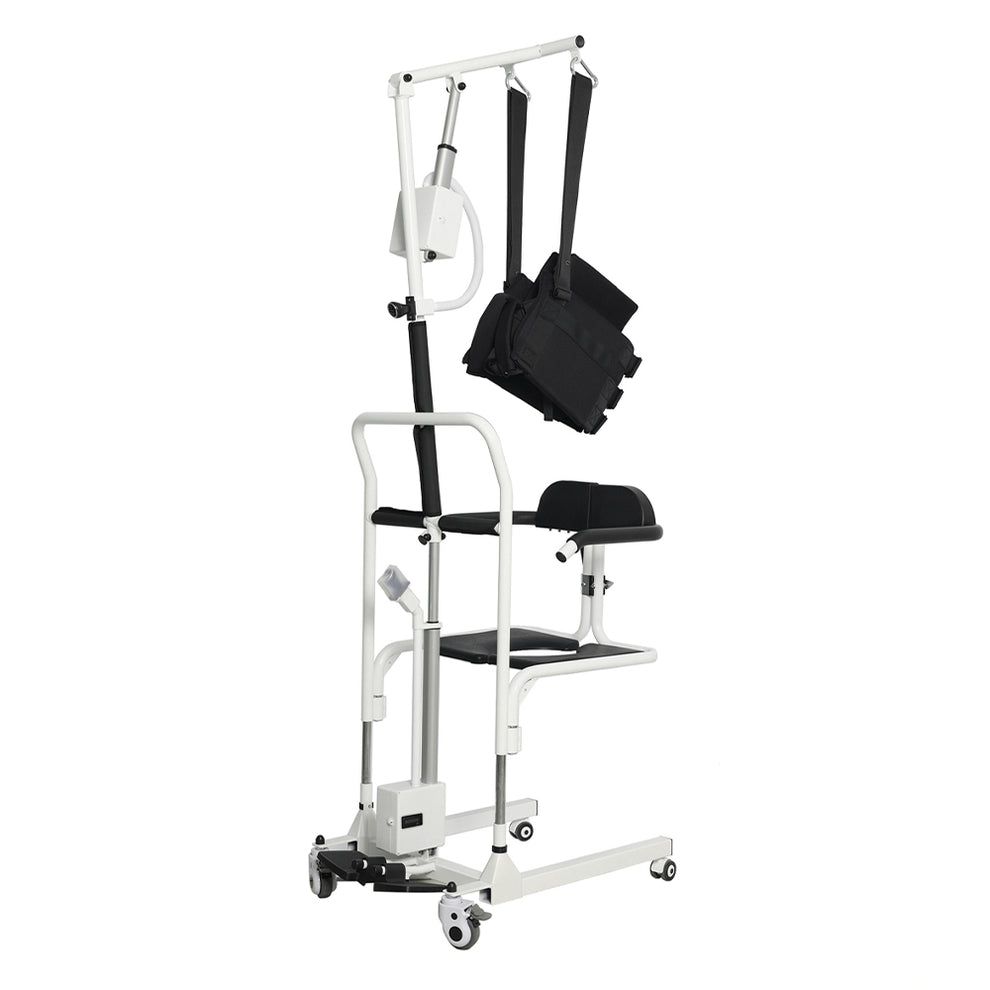
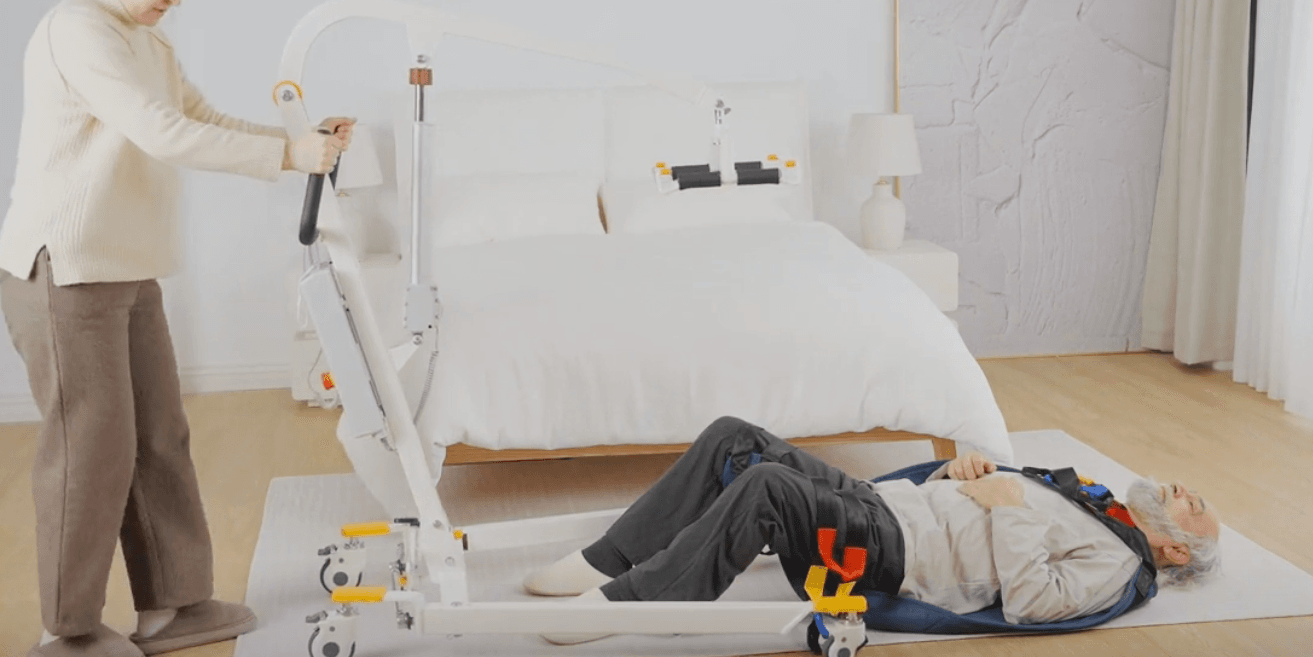
A sling-supported lift uses a fitted fabric sling connected to a powered lifting mechanism.
The sling supports the patient during the lifting movement, allowing a caregiver to raise or lower the person according to the equipment's approved operating method.
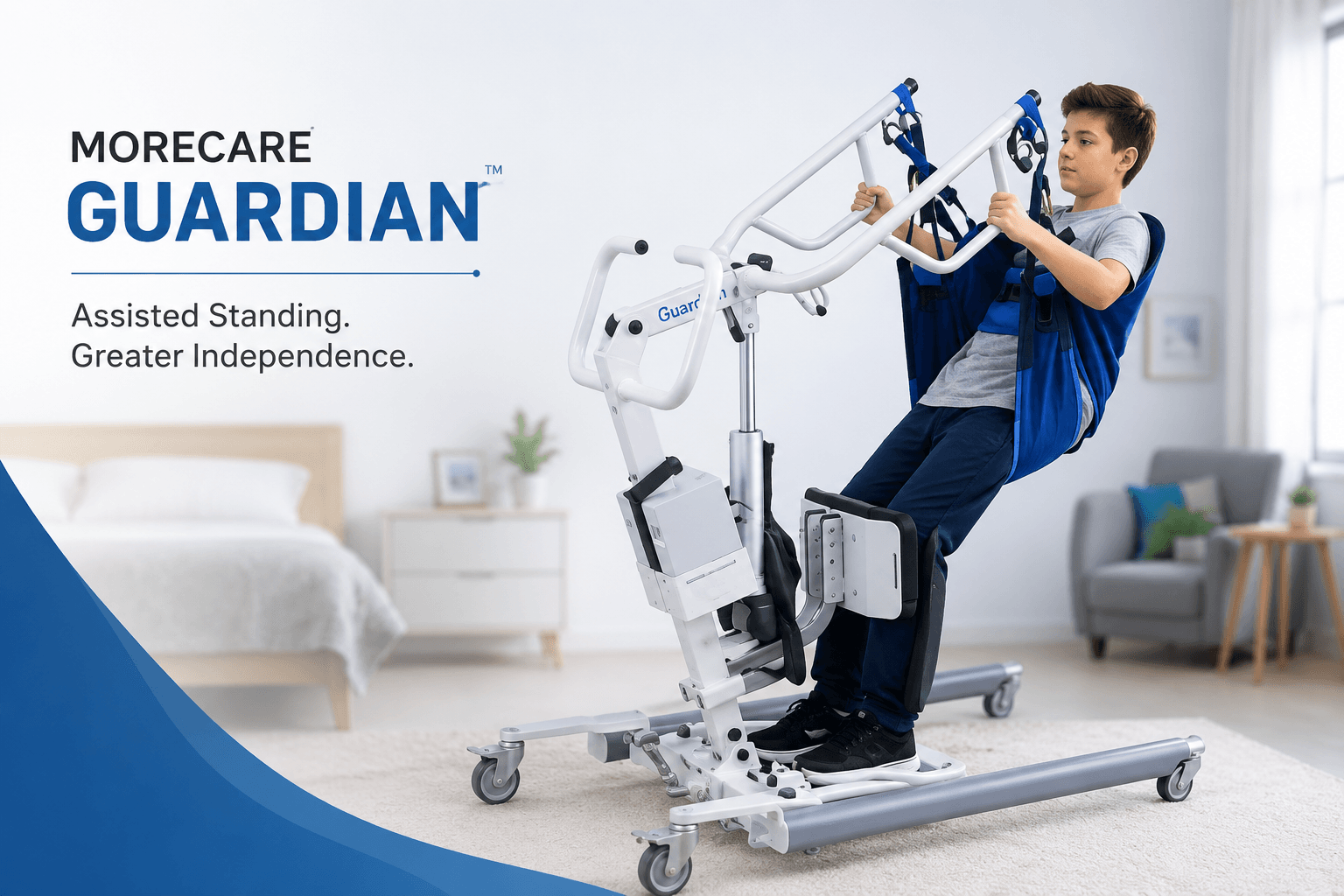
A person does not necessarily need to stand before a sling-supported lift can be used.
However, the sling must provide adequate support for the person's head, trunk and pelvis, and the equipment must be appropriate for the intended transfer.
180° split-seat transfer chair
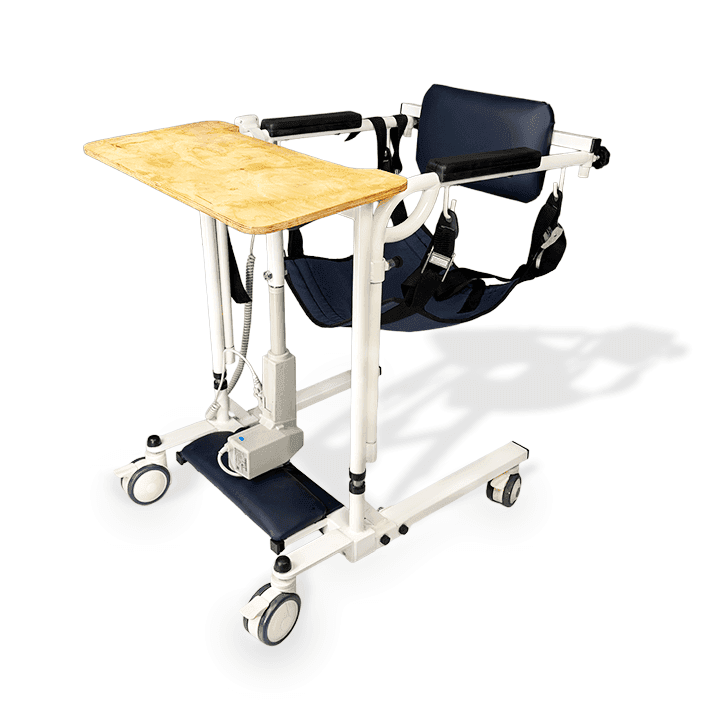
A split-seat transfer chair has a seating arrangement that opens and closes to allow positioning around a seated person.
Depending on the model, it may include manual or electric seat-height adjustment, a powered lifting sling or both.
Some designs support the patient primarily through the seat, while others combine the opening seat with sling-supported lifting.
This means a split-seat chair should not automatically be described as a standing-dependent device.
The important difference is how the person is supported during each stage of the transfer, not simply how the chair opens.
Which Design May Suit a Patient Who Cannot Stand or Bear Weight?
A person who cannot stand independently may still be able to assist with some parts of a transfer.
Others may require substantial or complete assistance.
Before selecting equipment, consider three common situations.
The patient can sit but cannot stand
Some people have sufficient supported sitting balance but cannot reliably bear weight through their legs.
A sling-supported electric lifting system may be considered when the patient cannot complete a safe standing or pivot transfer.
A split-seat system with an appropriate powered lift and compatible seating arrangement may also be suitable.
The patient has poor trunk control
Someone who leans heavily to one side or cannot maintain their seated posture may need additional upper-body support.
Neither a sling nor a split seat automatically provides adequate head and trunk positioning.
A suitable sling, additional supports or another type of patient hoist may be required.
The patient is fully dependent
For a person unable to participate in transfers, the lifting system must be capable of supporting the required weight and posture throughout the movement.
Caregivers must not assume that any transfer chair is suitable simply because it has an electric motor.
A professional handling assessment should determine the appropriate equipment, sling type, transfer method and number of caregivers.
The decision should be based on the person's present abilities, not diagnosis alone.
Which Is More Practical for Bed, Wheelchair, Toilet and Car Transfers?
The most suitable equipment may depend on where the patient needs to move.
Bed-to-wheelchair transfer
Both sling-supported lifting systems and suitable split-seat transfer chairs may assist with selected bed-to-chair transfers.
The bed height, wheelchair dimensions, available approach space and patient's positioning needs must be checked.
Wheelchair-to-toilet transfer
An opening split-seat design may offer practical access for some toileting routines.
A sling-supported lift with an appropriate toileting sling may also be considered, but toileting slings do not always provide the same body support as full transfer slings.
Chair-to-chair and sofa transfers
Seat design, cushion shape, access beneath furniture and available space can affect compatibility.
Neither system should be assumed suitable for every sofa or recliner.
Wheelchair-to-car transfers
Vehicle transfers introduce additional challenges involving the passenger doorway, seat height, headroom and transfer route.
A compact sling-supported system may be worth evaluating for selected cars, but compatibility must be confirmed for the actual vehicle.
An ordinary split-seat transfer chair should not be assumed to work inside a car simply because it performs indoor transfers.
Daily movement around the home
Doorway width, floor surfaces, turning space and storage requirements influence which design is more convenient.
The most useful choice is the equipment that accommodates the family's actual transfer destinations—not necessarily the device with the longest feature list.
How Do Morecare EasyLift and EasyShift Compare?
Morecare offers two different electric patient transfer solutions: EasyLift and EasyShift.
Both use powered lifting, but they are designed around different mechanisms.
Morecare EasyLift — Compact Sling-Supported Lifting
EasyLift uses a fitted sling connected to an electric lifting system.
Its relevant features include:
- Rechargeable 24V electric lifting operation.
- A foldable steel frame.
- Approximately 22-inch overall operating width.
- Transfer, commode and gait-training slings included.
- Published maximum user weight of 200 kg.
- A compact configuration for selected homecare transfers.
EasyLift may be considered when sling-supported lifting is the preferred assessed transfer approach, including selected transfers where the person cannot stand.
Its foldable design may also matter for families with limited storage space.
Morecare EasyShift — Electric Split-Seat Transfer System
EasyShift uses a 180° opening and closing seat arrangement.
Unlike a purely manual split-seat chair, EasyShift also includes an electric lifting sling.
Its published features include:
- 180° open-and-close split seat.
- Dual electric motors.
- Powered sling-height adjustment.
- Powered transfer-chair height adjustment.
- Detachable lifting sling.
- Foldable footrests.
- A commode-compatible seating arrangement.
EasyShift may be worth considering for families who need regular indoor transfers, particularly where an opening seat and accessible toileting arrangement are useful.
Which One Is Better?
If the person requires a compact sling-supported lifting arrangement and the intended destinations are compatible, EasyLift may be an option.
If the person requires an opening transfer-chair seat combined with powered positioning for selected indoor transfers, EasyShift may offer a more suitable configuration.
Neither product should be selected solely because the patient cannot stand.
The decision must also consider sling support, sitting balance, transfer access, body dimensions and caregiver requirements.
What Should Families Check Before Choosing a Patient Transfer System?
Before purchasing EasyLift, EasyShift or another electric transfer chair, assess the complete transfer routine.
1. Can the patient safely bear weight?
Determine whether a standing transfer is possible or whether sling-supported lifting is required.
2. Can the patient maintain supported sitting?
Consider head control, trunk balance, pelvic positioning and any movement restrictions.
3. Does the lifting system suit the patient?
Check the maximum rated capacity, sling size, sling support and attachment compatibility.
4. Which transfers are needed every day?
Make a list of the actual destinations: bed, wheelchair, sofa, toilet, bathroom or car.
5. Are the heights and clearances compatible?
Measure the bed, wheelchair, toilet and any furniture the equipment must approach.
6. Is there enough room to operate the device?
Check doorway width, floor space, manoeuvring clearance and storage.
7. Can caregivers operate it safely?
Caregivers need training in sling fitting, equipment operation, transfer positioning and handling emergencies.
8. What happens during a power failure?
Confirm the equipment's power-failure behaviour, emergency procedures and available backup arrangements before use.
The most appropriate system should provide suitable patient support while allowing caregivers to complete the required transfers without unnecessary manual lifting.
A good patient transfer system should fit the person, the environment and the daily routine—not just the product category.