What Is Low Muscle Tone, and Why Can It Affect Sitting?
Muscle tone refers to the resistance muscles provide when they are passively moved or stretched.
Hypotonia means that muscle tone is lower than expected.
Children with hypotonia may appear unusually floppy or have difficulty maintaining their body position against gravity.
Parents may notice that their child:
Slumps forward when placed in sitting.
Falls sideways without physical support.
Struggles to maintain an upright head position.
Tires quickly during seated activities.
Has difficulty stabilizing the trunk while reaching for toys.
Needs considerable assistance to remain seated.
Low muscle tone is not the same as muscle weakness, although the two can occur together.
Hypotonia can be associated with different developmental, genetic, neurological or neuromuscular conditions.
For example, some children with Down syndrome, developmental disorders or other medical conditions experience reduced muscle tone.
However, hypotonia itself does not identify the underlying diagnosis.
A pediatrician or developmental specialist should evaluate persistent low tone, particularly when it is accompanied by delayed motor development or other concerns.
When Should Parents Be Concerned About Delayed Sitting?
Children develop motor skills at different rates, but developmental milestones provide useful guidance.
According to the CDC, most children can sit without support by approximately nine months of age.
If an infant is not achieving expected milestones, parents should discuss their concerns with a pediatrician rather than waiting indefinitely.
Prematurity and individual medical circumstances may affect developmental assessment.
Persistent difficulty maintaining sitting posture can also be important in older children.
For example, a two- or three-year-old who cannot remain seated without considerable assistance may require an individualized assessment of trunk control, muscle tone, joint mobility and overall motor development.
A developmental evaluation may involve:
Reviewing the child's medical and developmental history.
Assessing head and trunk control.
Observing movement and postural responses.
Evaluating muscle strength and tone.
Assessing joint flexibility and skeletal alignment.
Identifying appropriate therapy and equipment needs.
Children who lose previously acquired motor skills should receive prompt medical assessment.
Early evaluation can help identify appropriate intervention rather than relying only on seating equipment.
How Does Corner Sitting Provide Additional Support?
A therapeutic corner seat is designed to provide external support around a child during floor-level sitting.
Its back and side surfaces create a defined seating space that can help limit excessive leaning.
Some systems also include pelvic belts, chest supports and headrests.
For a child with low muscle tone, this arrangement may help establish a more stable seated position for selected activities.
For example, a child who frequently falls sideways may be able to participate in a toy activity while using appropriately fitted trunk support.
However, supportive seating should not be confused with strengthening exercises.
The chair provides external assistance; it does not automatically train the child's muscles to maintain independent posture.
A physiotherapist or occupational therapist should determine how much support is appropriate.
Too little support may leave the child unstable, while excessive restraint may restrict useful movement.
The seating arrangement should also allow suitable positioning of the pelvis, hips and lower limbs.
A child should never be forced into an uncomfortable posture simply to appear upright.
How Can Active Therapy Complement Supported Sitting?
Children with developmental delay or hypotonia may benefit from individualized programmes encouraging appropriate active movement and participation.
Depending on the child's condition, therapists may recommend activities in lying, supported sitting, standing or other positions.
The aim is to create opportunities for the child to explore movement and develop or use functional abilities.
Examples of activities that may be incorporated into a therapy programme include:
Supported reaching
Encouraging the child to reach for accessible toys while receiving appropriate postural assistance.
Head and trunk movement
Using suitable activities to encourage controlled movement within the child's abilities.
Floor play
Providing opportunities for active exploration using age-appropriate positioning and toys.
Weight shifting
Practising small, supervised postural adjustments when recommended by the therapist.
Interactive play
Encouraging communication, hand use and participation with caregivers or siblings.
The selected activities should reflect the child's developmental level, movement abilities and medical needs.
Importantly, supportive seating should not replace opportunities for active movement.
Children need appropriate changes in position, supervised activity and rest according to their individual rehabilitation plan.
The goal is to combine useful postural assistance with opportunities for participation rather than keeping a child continuously restrained in a chair.
How Can the Morecare Sunflower Support Children With Low Muscle Tone?
Some children with hypotonia or developmental delay need additional positioning assistance to participate in seated activities.
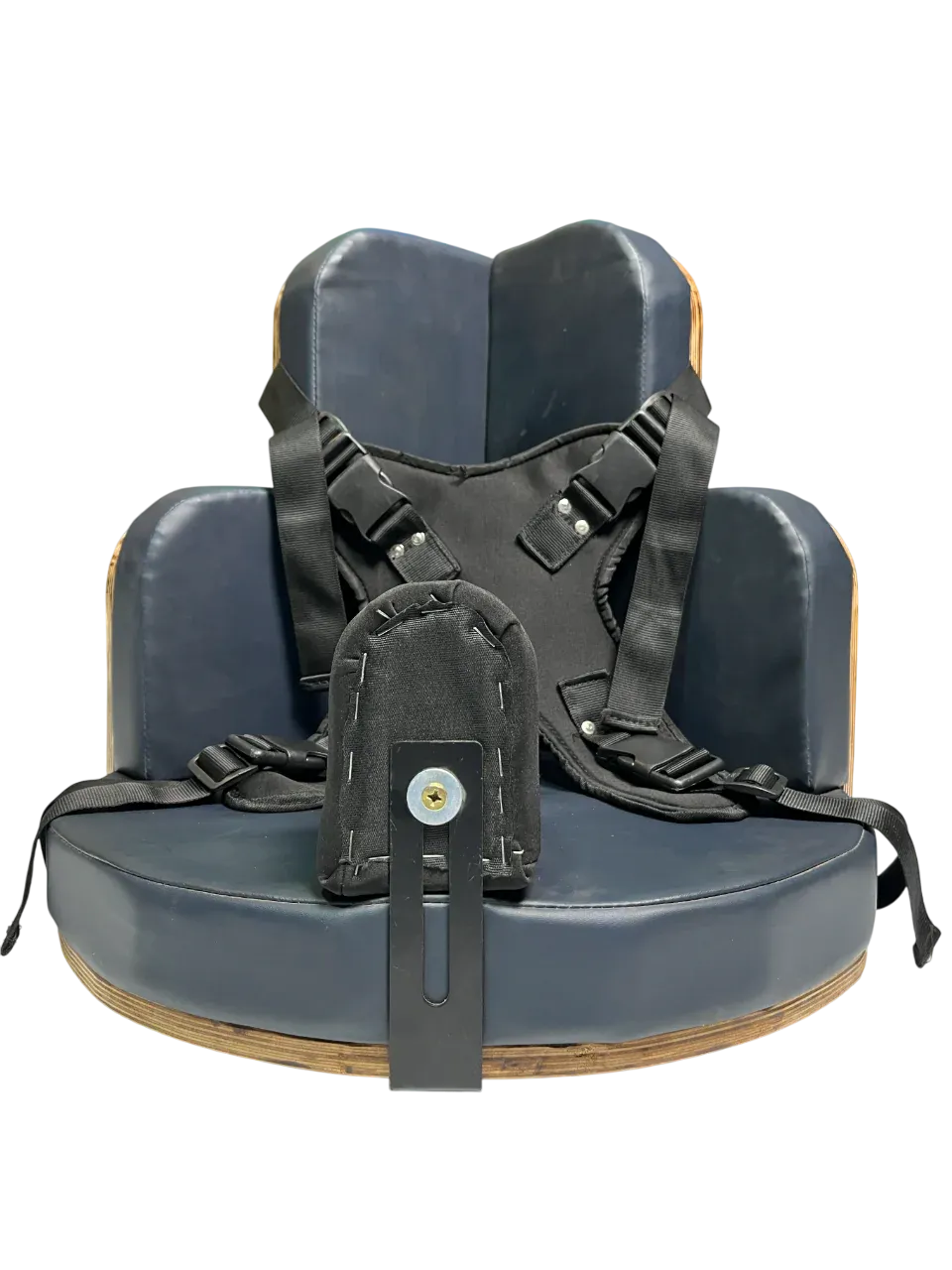
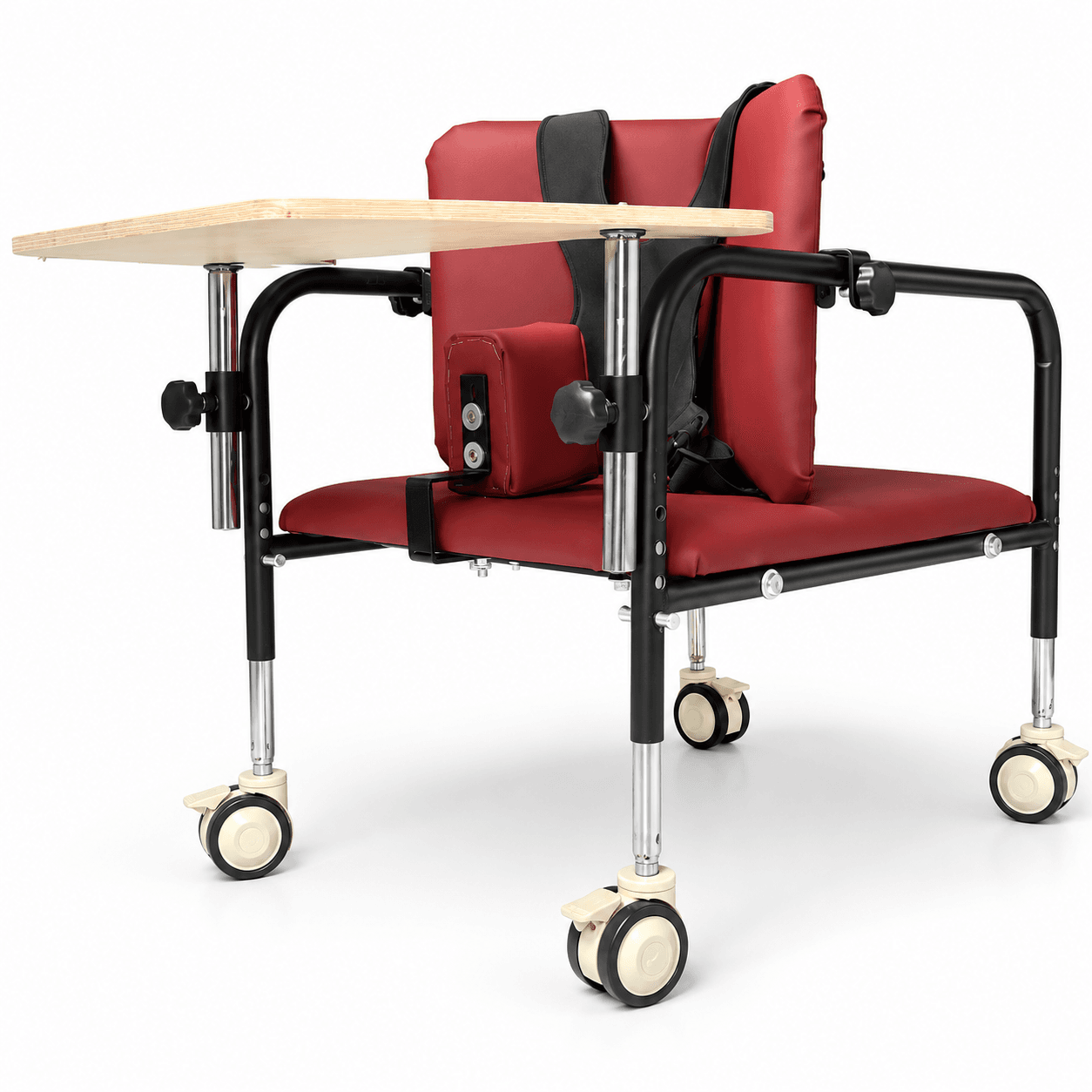
The Morecare Sunflower Therapy Corner Floor Seating System is designed for selected children who require supported sitting near floor level.
Its three-sided corner structure provides padded support around the back and sides.
Additional positioning components include:
Height-adjustable headrest
Offers additional head positioning assistance when appropriately fitted.
Four-point butterfly chest harness
Provides external upper-body positioning support for children who require it.
Pelvic positioning belt
Helps maintain the intended seated pelvic position.
Removable abductor
Provides an additional lower-limb positioning option when recommended by a therapist.
Cushioned seating structure
The padded seating surfaces are intended to provide support during supervised sitting activities.
Customizable dimensions
Morecare offers customization of seat dimensions, backrest height and selected positioning components according to individual requirements.
Sunflower is generally recommended for children aged 2–7 years, subject to physical measurements and clinical suitability.
It may be considered for children with developmental delay, hypotonia and other conditions affecting seated postural control.
However, not every child with low muscle tone requires a therapeutic corner seat.
Some children need less assistance, while others require more comprehensive adaptive seating or specialized medical equipment.
The Sunflower does not treat the underlying cause of hypotonia, restore muscle tone or guarantee independent sitting.
How Should Parents Choose Supportive Seating for a Child With Developmental Delay?
The appropriate seating system depends on the child's functional abilities and the activities the family wants to support.
Before purchasing, discuss the following with a pediatric physiotherapist or occupational therapist.
Head control
Can the child maintain a comfortable head position, or is additional support required?
Trunk stability
Does the child lean forward, fall sideways or require continuous assistance?
Pelvic alignment
Can the child sit with the hips and pelvis comfortably positioned?
Lower-limb position
Are there joint restrictions, discomfort or positioning concerns that require assessment?
Activity requirements
Will the seat primarily be used for floor play, learning, therapy or other supervised activities?
Comfort and tolerance
Can the child remain in the selected position without pain, breathing difficulty, excessive pressure or fatigue?
Seat measurements
Does the equipment fit the child's body, including seat width, depth and back height?
The child may require different positioning systems for different activities.
A therapeutic floor seat is not automatically suitable for feeding, prolonged sitting or use during sleep.
Professional assessment should determine whether Sunflower or another adaptive seating solution is more appropriate.