How Does a 180° Split-Seat Patient Transfer Chair Work?
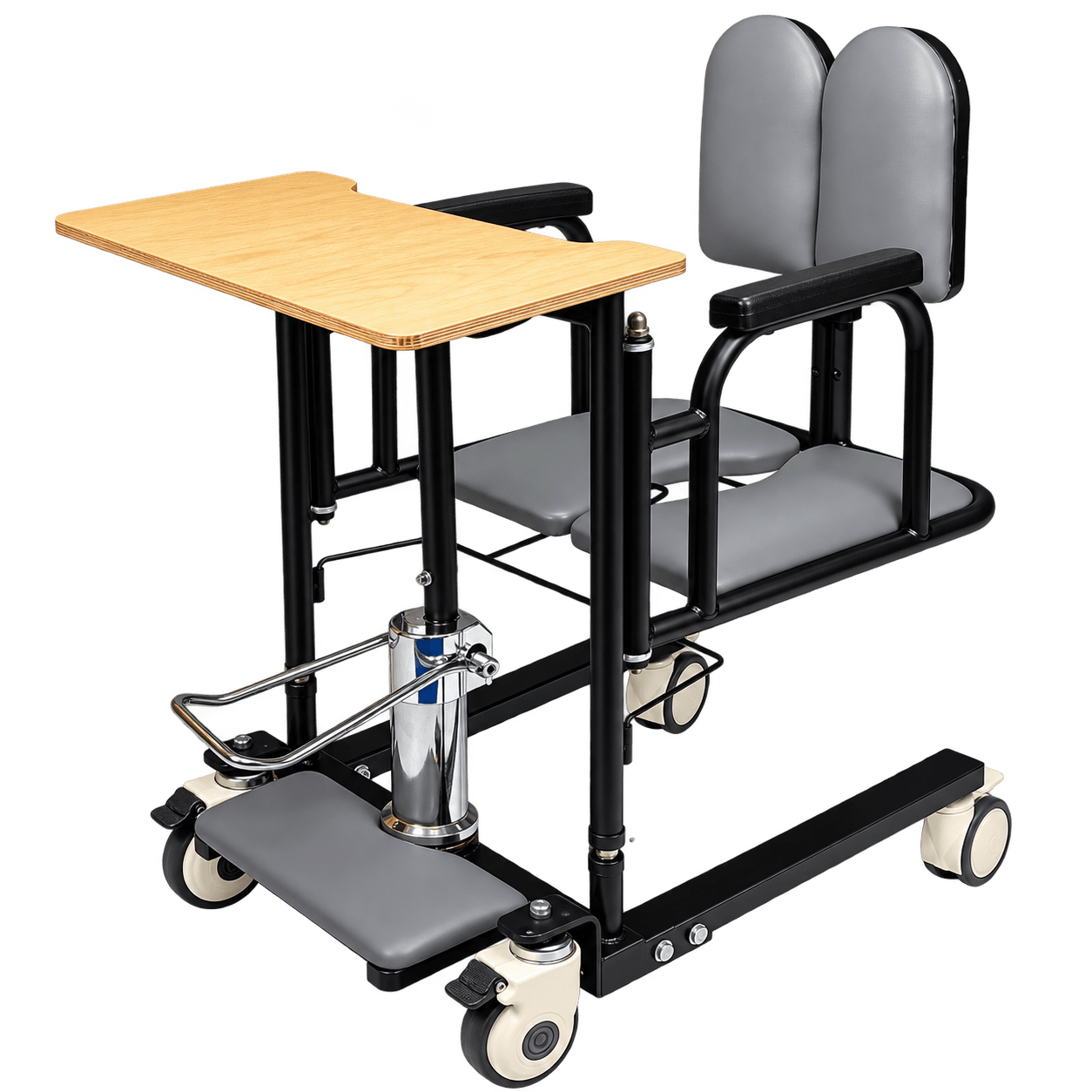
A 180° split-seat transfer chair has a seating mechanism that opens to help position the equipment around a person who is already seated.
Once the chair has been appropriately positioned, its seating components are brought together according to the manufacturer's operating instructions.
The arrangement may allow caregivers to move a suitable patient between compatible surfaces without performing a conventional standing or pivot transfer.
However, split-seat chairs are not all designed in the same way.
Some provide manually adjusted seat height. Others use electric motors to raise or lower the seating system. Certain models also include a separate lifting sling to support the person during part of the transfer.
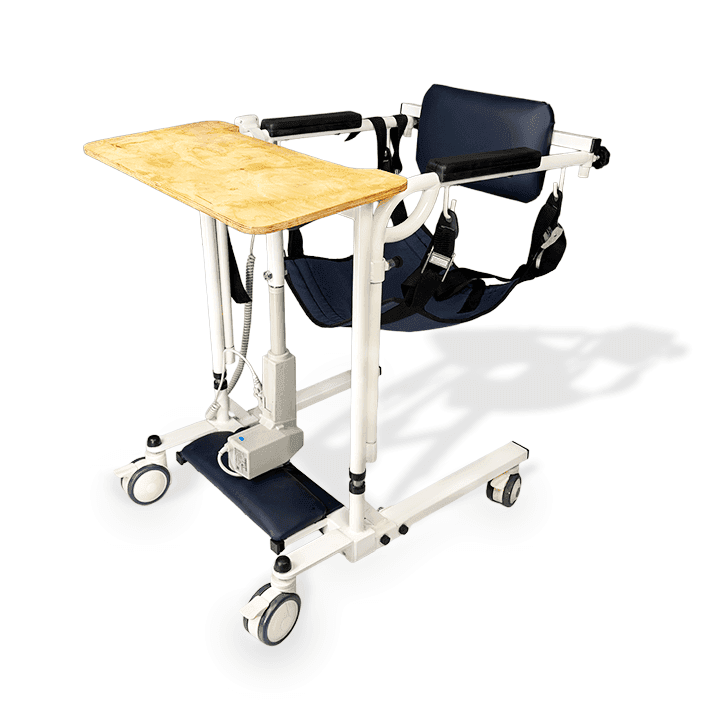
For example, Morecare EasyShift combines a 180° opening seat with electric height adjustment and a detachable lifting sling.
This is different from assuming that the person must always stand before using a split-seat chair.
The important questions are:
- What supports the person while the seat is being positioned?
- Does the patient need to maintain any sitting balance?
- Is the lifting movement powered or manual?
- Can the equipment approach the intended furniture?
- What happens during the transition between the original seat and transfer chair?
The answers depend on the exact model.
A split-seat mechanism can be useful, but it is only one component of a complete patient transfer system.
Why Can Poor Sitting Balance or Restricted Movement Make Transfers Difficult?
One of the most important considerations is how much support the patient needs before, during and after a transfer.
Poor trunk control
A patient recovering from a major stroke or living with a progressive neuromuscular condition may lean heavily to one side.
If the chair does not provide appropriate lateral support or its sling arrangement is unsuitable, positioning the person may be difficult.
Limited head control
Some patients cannot maintain a stable head position without assistance.
A transfer chair's backrest or sling may not provide sufficient support for those individual needs.
Restricted hip or knee movement
The patient may be unable to move their legs or hips into the position required by the equipment.
Trying to force the person into the seat can cause pain or injury.
Involuntary movements or increased muscle tone
Sudden extension, spasms or unpredictable movements can affect sling positioning and transfer stability.
Skin sensitivity or pain
Seat edges, slings and positioning components may create pressure or discomfort, particularly for people with fragile skin.
None of these conditions automatically rules out every split-seat chair.
They indicate that the seating and lifting arrangement needs closer assessment.
For some patients, a properly fitted full-support sling or a more specialized patient hoist may be necessary.
The aim should always be to support the person's existing posture and movement limitations rather than force them to adapt to an unsuitable chair.
Why Might a Split-Seat Chair Not Fit Every Bed, Sofa or Toilet?
Even when the patient's posture is suitable, the home environment can prevent a transfer chair from being positioned correctly.
Consider an elderly person sitting on a low sofa.
The split-seat chair may need to approach from behind or around the seating surface, depending on its design.
If the sofa has a solid base, wide armrests or limited surrounding space, the chair may not be able to reach the required position.
Similar challenges can occur with other furniture.
Beds
Check mattress height, bed-frame clearance, side rails and whether the chair can approach from the necessary direction.
Wheelchairs
Seat cushions, armrests, rear wheels and frame geometry may affect access.
Sofas and recliners
Deep cushions, low seating surfaces and obstructed bases can make the transfer path difficult.
Toilets
Bathroom doorway width, toilet height, wall clearance and turning space must be compatible with the equipment.
Cars
An opening split-seat chair designed primarily for indoor transfers should not be assumed suitable for transferring someone into a conventional passenger seat.
The vehicle doorway, seat and available space create separate requirements.
A chair that works well beside a hospital bed may be impractical in a small home bathroom.
Before purchasing, families should measure the actual furniture and environment rather than relying only on the chair's overall dimensions.
A demonstration or practical compatibility assessment may be needed.
When Could Morecare EasyLift Be an Alternative?
When a split-seat arrangement does not suit the patient's transfers, a different lifting method may be worth considering.
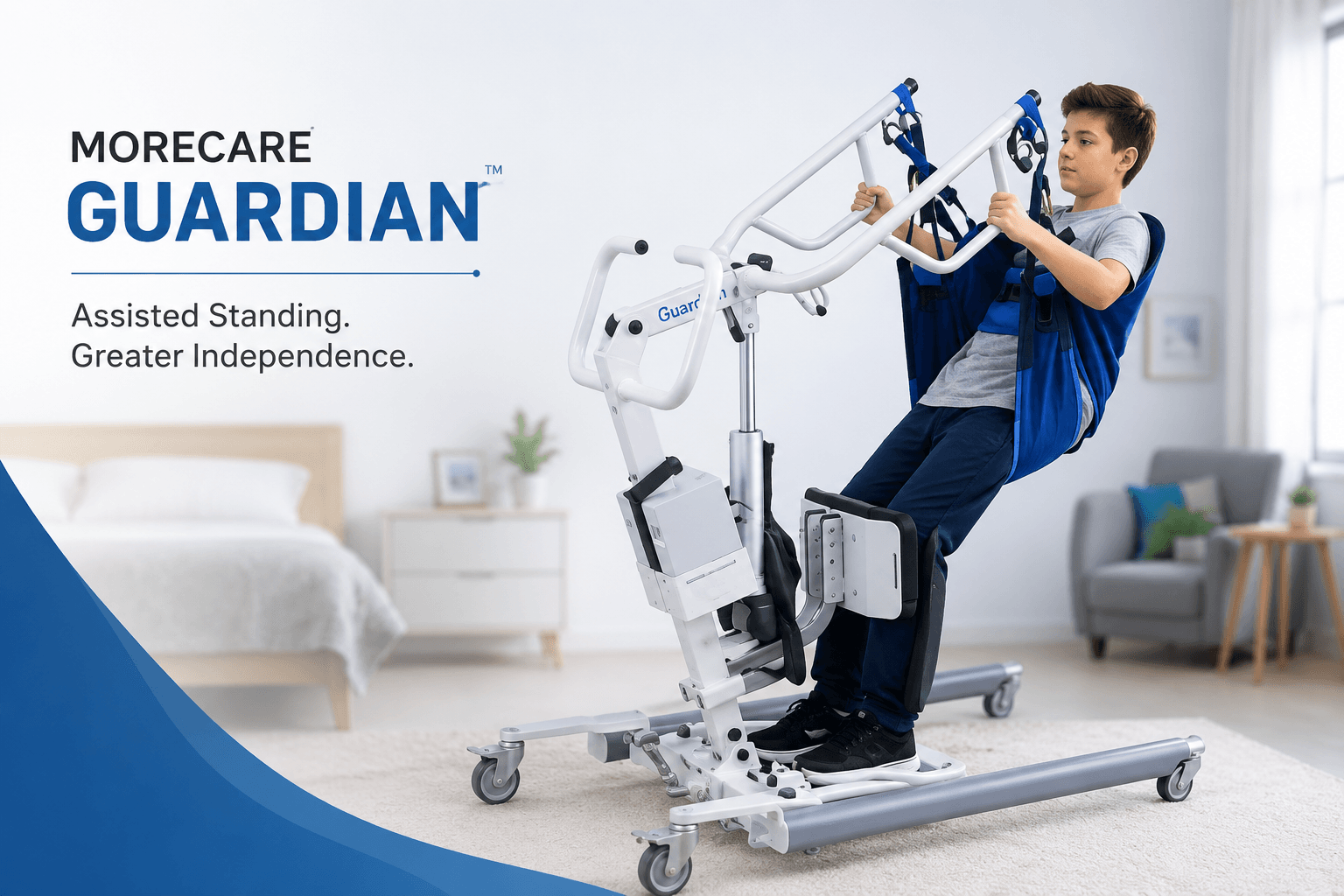
The Morecare EasyLift Electric Patient Transfer System uses a fitted sling and powered lifting mechanism.
Its main distinction is that patient lifting is provided through the sling-supported arrangement rather than an opening split-seat mechanism.
This may be useful for selected individuals who cannot reliably stand or pivot.
EasyLift includes:
- A 24V rechargeable electric lifting system.
- Wired handheld lift controls.
- A compact foldable steel frame.
- A transfer sling.
- A commode sling.
- A gait-training sling.
- A published maximum user weight of 200 kg.
EasyLift's published overall operating width is approximately 22 inches, with a folded width of approximately 11 inches.
These measurements may be relevant to home access and storage, but they do not establish that the lift can approach every bed, wheelchair, sofa or vehicle.
An appropriately selected sling may provide an alternative way to support the patient's weight during an assessed transfer.
However, this does not mean EasyLift is automatically better for every person with poor head or trunk control.
Some patients may require a full-body sling with specialist head support, a different lifting geometry or a conventional full-support hoist.
The supplied commode sling may also provide less postural support than a more supportive transfer sling.
Families should therefore compare the complete patient-support system—not only the lifting motor, weight capacity or seat mechanism.
EasyLift and an electric split-seat chair solve different handling problems. The right choice depends on which design accommodates the patient's actual transfer requirements.
How Should Families Choose Between a Split-Seat Chair and a Sling Lift?
Before ordering patient transfer equipment, begin with the person and their daily care routine.
1. Assess the patient's sitting ability
Can they maintain supported sitting? Do they need assistance controlling their head, trunk or pelvis?
2. Identify their movement limitations
Check hip movement, knee positioning, muscle tone, pain and any restrictions that affect transfers.
3. List the daily transfer destinations
Include the bed, wheelchair, sofa, commode, bathroom and car, if relevant.
4. Measure the environment
Record furniture heights, doorway widths, clearance under furniture and available operating space.
5. Check the support method
For a split-seat chair, understand how the patient is supported while the seat opens and closes.
For a sling lift, verify sling size, type, support level and compatibility with the lifting system.
6. Understand caregiver responsibilities
Electric operation does not remove the need for correct positioning, supervision or trained handling.
7. Review emergency procedures
Ask what happens if the battery runs out or the equipment stops during lifting. Confirm the manufacturer's documented emergency and recovery procedures.
8. Arrange a suitable assessment or demonstration
An occupational therapist, physiotherapist or appropriately trained moving-and-handling professional can help assess the required method.
The same patient may also need different equipment for different destinations.
For example, an indoor transfer chair may work well for regular toileting, while another system may be required for a difficult wheelchair-to-car transfer.
Choose the equipment that can safely perform the family's actual transfers—not the one with the most impressive opening mechanism or longest feature list.