How Does a Spinal Cord Injury Affect Standing and Walking?
The spinal cord carries signals between the brain and different parts of the body.
When it is injured, communication with the muscles may be partially or severely disrupted.
The resulting movement limitations depend on the location and severity of the injury.
In a complete spinal cord injury, motor and sensory function are absent in the lowest sacral segments. In an incomplete injury, some sensory or motor function remains.
However, an incomplete injury does not automatically mean a person can stand or walk.
Some people retain voluntary leg movement, while others have very limited muscle control.
Spasticity, impaired sensation, weakness, reduced endurance and poor trunk stability may further complicate rehabilitation.
A rehabilitation specialist should assess the person's neurological classification and functional abilities before recommending walking equipment.
Can Someone With Paraplegia Practise Walking Again?
Paraplegia affects motor and/or sensory function in the trunk and lower limbs, with the upper limbs generally preserved.
Some individuals with paraplegia can participate in walking practice, particularly when they retain useful lower-limb motor function.
Others may require orthoses, substantial body-weight support, therapist assistance or specialized rehabilitation systems.
For people with motor-incomplete spinal cord injuries, walking training may help develop or maintain functional walking abilities.
Possible rehabilitation goals include practising:
Upright posture and supported standing
Weight shifting between the legs
Initiating and repeating steps
Coordinating lower-limb movements
Maintaining balance during supported mobility
Walking endurance, when clinically appropriate
Walking practice should not be confused with guaranteed neurological recovery.
Some patients may progress towards greater independence, while others may use supported activities primarily for therapeutic participation.
How Can a Supported Gait Trainer Help During SCI Rehabilitation?
A supported gait trainer provides a structured environment for practising standing and stepping.
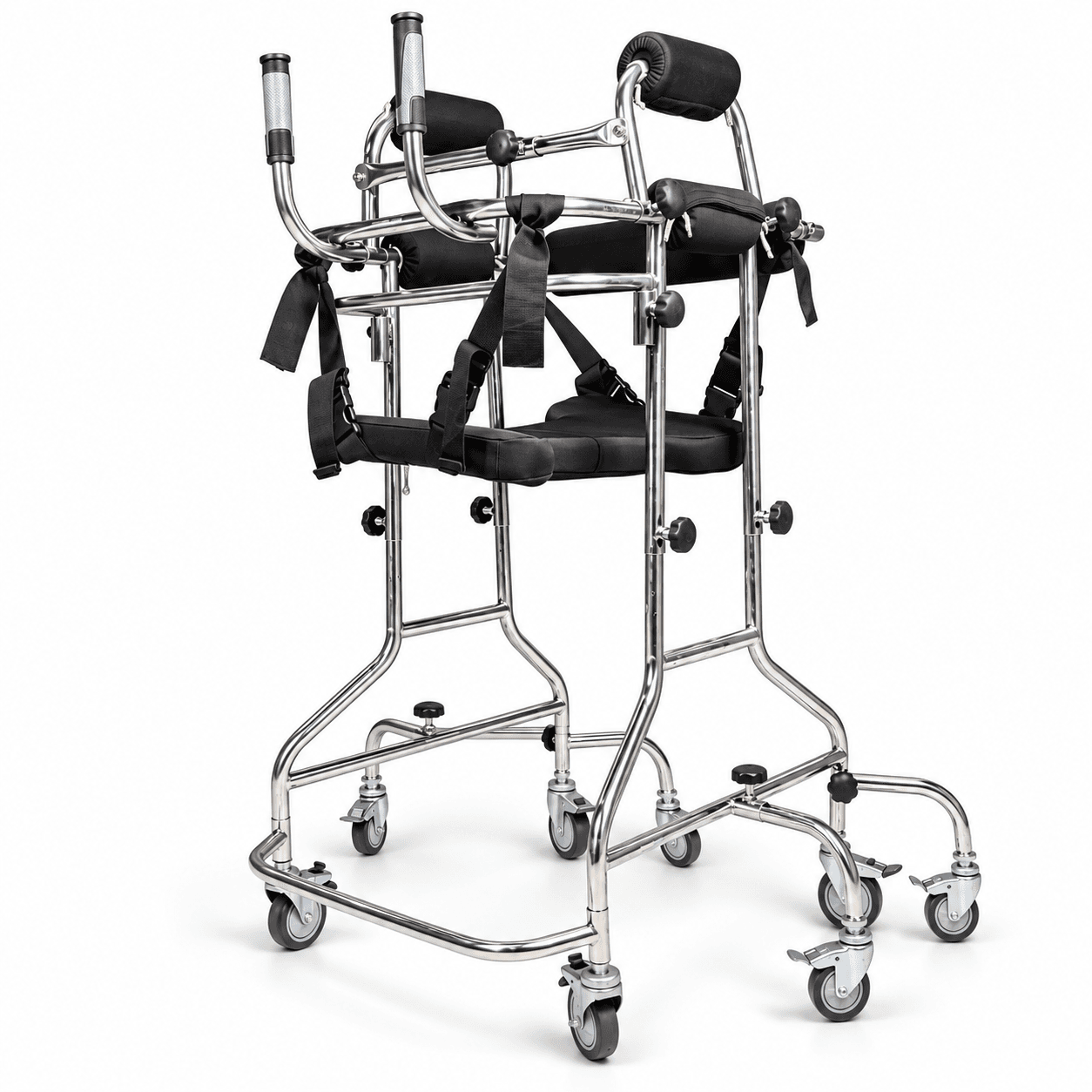
Unlike a conventional walking frame, a supportive gait trainer may include additional contact points around the trunk, arms and pelvis.
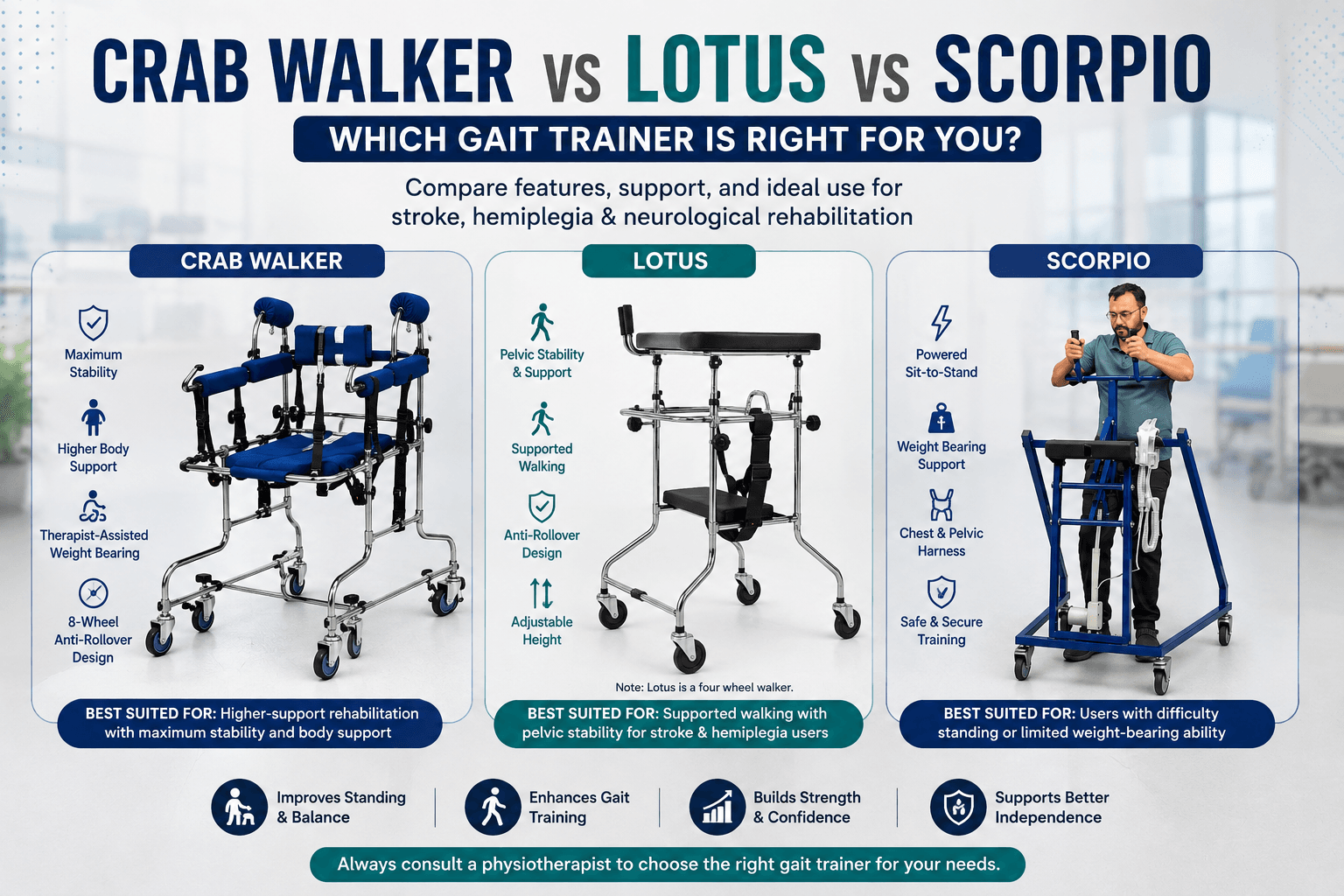
The Morecare Crab Walker includes adjustable chest support, padded arm supports, a pelvic sling and an eight-wheel frame.
These features are intended to provide additional positioning and partial body-weight assistance.
For an appropriately assessed patient, they may allow supported practice of upright posture, weight shifting and stepping.
The pelvic sling is not designed to lift the patient's complete body weight.
The patient must retain sufficient weight-bearing ability to use the walker safely.
A gait trainer also does not automatically produce stepping movements. The person must be able to participate, with whatever manual or orthotic assistance their rehabilitation programme requires.
Which SCI Patients May Be Suitable for the Crab Walker?
The Crab Walker may be considered for selected adults with incomplete spinal cord injury who need additional body support beyond a conventional walker.
Potential candidates may include people who:
Have some voluntary movement in their legs
Can bear an assessed portion of their body weight
Need additional chest or upper-limb support
Can participate in assisted stepping
Require supervised standing and balance practice
Have a rehabilitation plan that includes supported overground walking
Suitability should not be determined only by a diagnosis such as paraplegia, incomplete SCI or lower-limb weakness.
A physiotherapist should also evaluate muscle strength, joint stability, spasticity, orthostatic tolerance, skin integrity and transfer requirements.
For a person who cannot safely bear sufficient weight through the legs, a pelvic-sling walker may not provide adequate support.
An overhead body-weight-support system or another rehabilitation approach may be more appropriate.
Crab Walker vs Other Walking Rehabilitation Equipment
Different rehabilitation devices address different levels of physical assistance.
A conventional walker may suit someone who already has enough balance and trunk control to support themselves through their arms and legs.
The Morecare Crab Walker adds chest, arm and partial pelvic support for people who require more assistance with positioning.
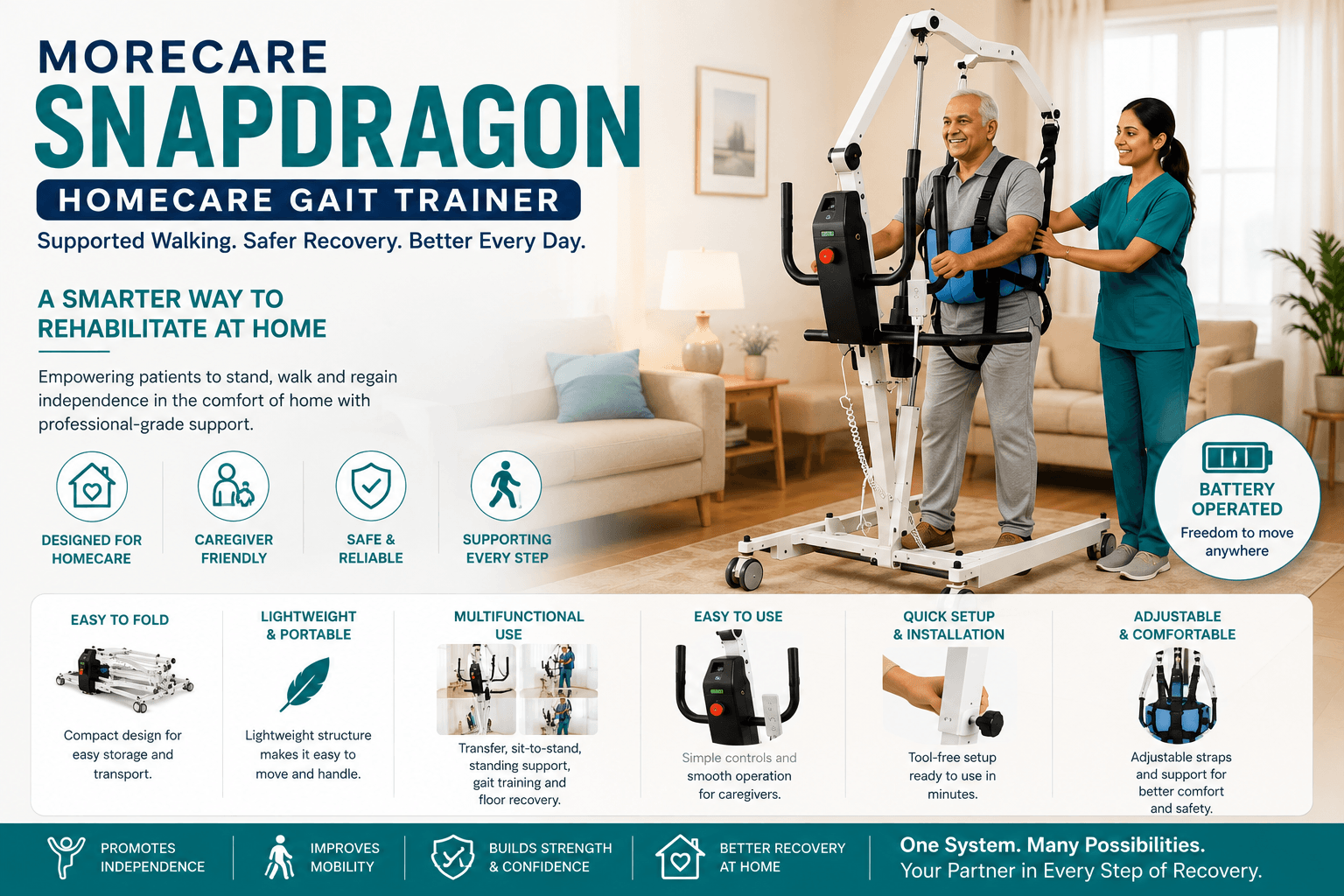
An overhead body-weight-support system can provide controlled unloading when a patient needs substantial weight assistance during stepping practice.
Orthoses may also be recommended when additional support is required at the ankle, knee or other joints.
The important question is not simply whether a person has a spinal cord injury.
It is whether the selected equipment provides adequate support for the individual's current abilities without introducing unnecessary risk.
A rehabilitation programme may use different devices as a person's needs change.
What Should Families Check Before Starting Home Gait Training?
Home walking practice after spinal cord injury requires careful preparation.
The patient's rehabilitation team should first establish whether overground supported walking is appropriate.
The home should have adequate space, firm flooring, clear walking pathways and suitable doorway clearance.
The Morecare Crab Walker is designed for adult users approximately 5 to 6.2 feet tall, subject to individual fitting.
Its adjustable support structure and individually lockable castors allow configuration for selected users, but correct adjustment and supervision remain essential.
Before purchasing, families should discuss the patient's weight-bearing status, standing tolerance, stepping ability, transfer method and caregiver availability.
Additional SCI-specific concerns, including orthostatic hypotension, pressure-related skin injury, osteoporosis or fracture risk, and autonomic dysreflexia in susceptible individuals, may require medical assessment before standing training.
Never attempt to lift or completely suspend a patient using the Crab Walker's pelvic sling.
At Morecare, we believe spinal cord injury rehabilitation equipment should be chosen according to a person's functional abilities rather than the diagnosis alone.
For selected adults with incomplete SCI who retain useful lower-limb movement and weight-bearing capacity, the Morecare Crab Walker may provide additional chest, arm and pelvic support during therapist-guided standing and stepping practice.
Patients who require substantial unloading or complete assistance may need a different rehabilitation system.
Before recommending equipment, our team encourages families to share the patient's injury details, height, weight, standing ability, current transfer method and physiotherapist's assessment.
The objective is to select appropriate equipment that supports safe participation in rehabilitation.