
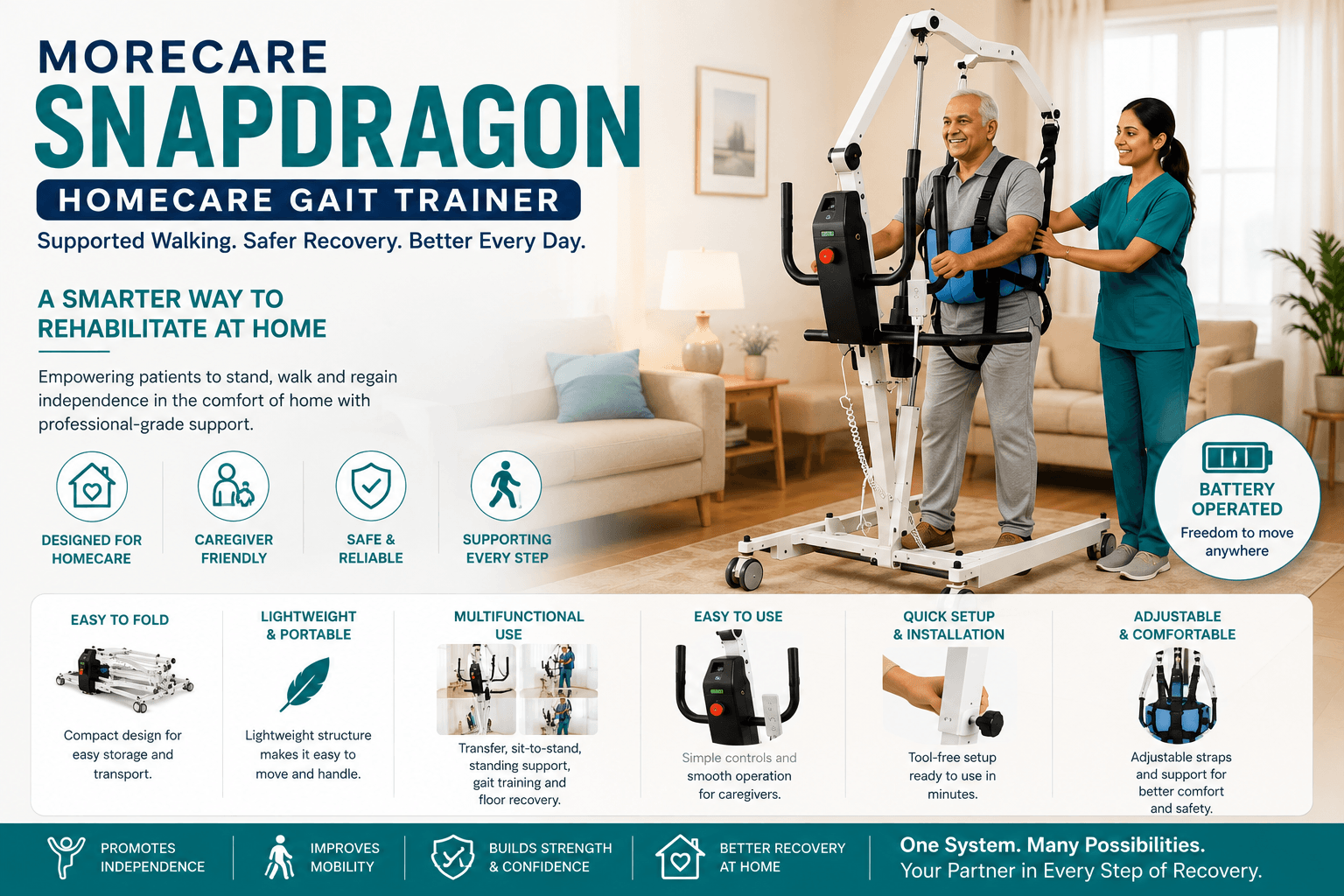
Begin with the intended task
List the main difficulty: transferring from bed, reaching standing or practising steps. The equipment may have several functions, but each activity needs its own assessment. Ask which tasks the proposed configuration can support for the actual person.
Choose support for the activity
A transfer sling and a walking sling have different purposes. Confirm compatibility, fit, attachment method and permitted loading for the supplied arrangement. Do not assume that a sling suitable for lifting also provides the positioning needed during stepping.
Source: HSE: equipment and sling selection.
Measure the whole practice route
Check clear doorways, turning areas, floor conditions and access around furniture. Include overhead clearance and room for assistance. A folding feature may help storage but does not establish that the device can operate in a small room.
Prepare the caregiver
Include the actual caregivers in instruction on the approved setup and handling plan. Confirm how many people are needed for each task rather than assuming one operator is enough. Keep the plan available for anyone who will assist.
Plan power and recovery
Snapdragon is battery-operated. Its emergency stop must not be confused with emergency lowering, which is not provided. Obtain the approved recovery procedure for the supplied system and confirm what assistance is needed if powered movement becomes unavailable.
Source: Morecare Snapdragon specifications.
Review comfort and fit
Check whether the support arrangement remains appropriate as needs change. Report discomfort, poor fit or equipment damage before further use. Agree maintenance and review arrangements so the equipment remains part of a manageable care routine.
Practical points to discuss
- Before ordering: provide measurements, the intended care surfaces and basic room dimensions, along with the treating professional’s recommendations.
- For lifting: request a demonstration of the approved transfer, including applying and removing the sling and positioning at the destination.
- For gait practice: obtain separate confirmation that the person, sling and proposed activity are appropriate. The lift does not generate a walking pattern.
- For storage and transport: confirm actual product weight, folding method and handling needs; avoid treating “foldable” as meaning easy to carry.
- For ongoing use: keep the supplied manual and inspection guidance available. Follow product-specific brake instructions rather than general advice to lock every wheel throughout every activity.
- For comparison: assess competing options by the task they serve. A dedicated gait system and a transfer hoist are not interchangeable simply because both use harness support.
