What Kind of Wheelchair Does a Child With Severe CP Need?
Children with significant cerebral palsy-related mobility difficulties may require more than a conventional wheelchair or special-needs stroller.
Some cannot maintain sitting balance without external support. Others have poor head control, increased muscle tone, involuntary movements or asymmetrical posture.
A suitable adaptive wheelchair should be selected around these individual difficulties.
For example:
- A child whose head falls sideways may need coordinated trunk and head support.
- A child who slides forward may need improved pelvic positioning and seat fit.
- A child who cannot maintain upright sitting may benefit from an appropriately configured tilt-in-space wheelchair.
- A child with fixed joint restrictions may require specialized seating dimensions or positioning.
The Gross Motor Function Classification System (GMFCS) describes children's gross motor abilities. Children at Levels IV and V often require substantial assistance with mobility and positioning, but their seating needs can still differ considerably.
A diagnosis or GMFCS level alone cannot determine the right wheelchair.
Before choosing a model, a pediatric physiotherapist or occupational therapist should evaluate the child's sitting posture, body measurements, movement limitations and everyday activities.
Which Body Supports Are Most Important?
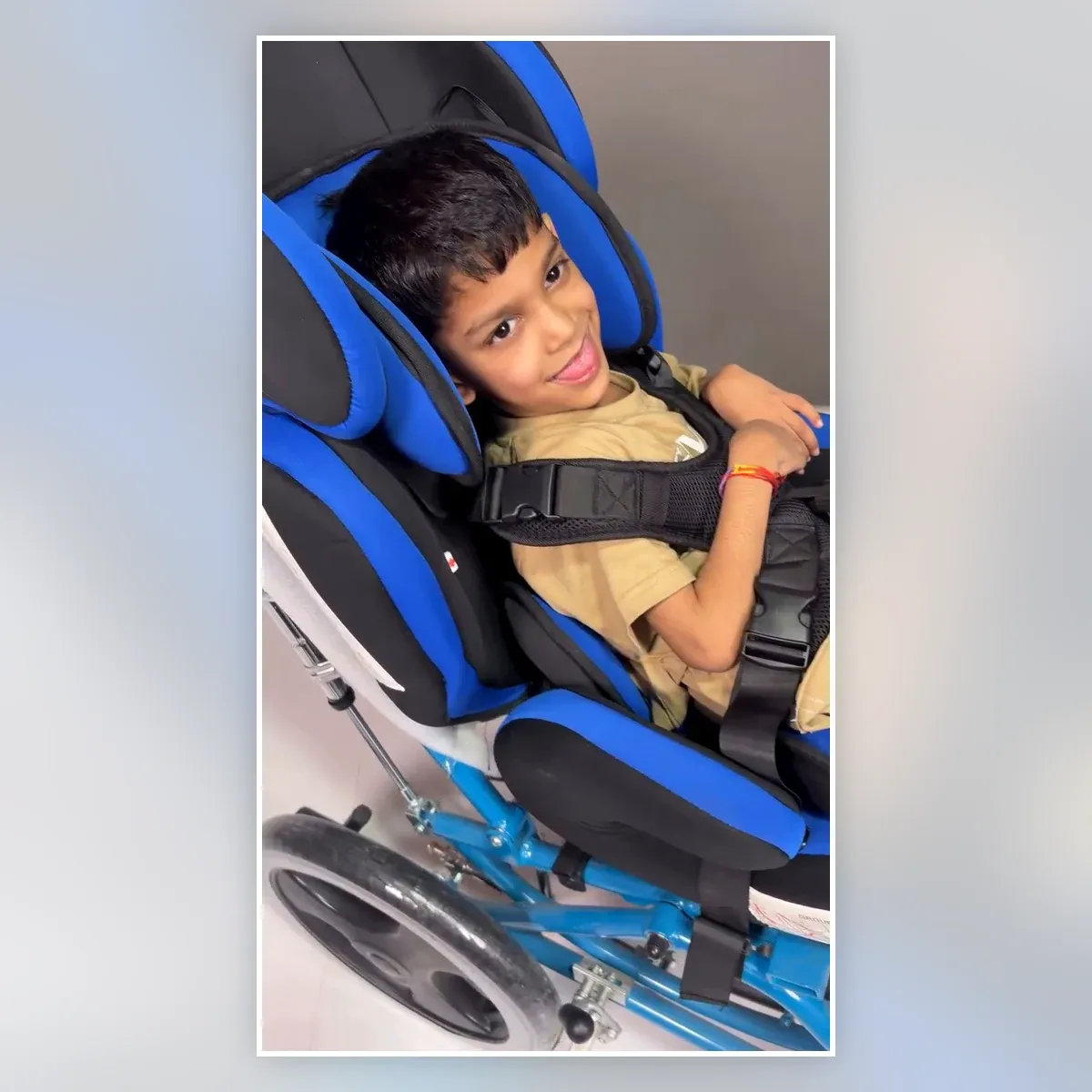
For a child who cannot sit independently, seating support should be considered as a complete system.
Pelvic positioning
The pelvis forms the foundation of the child's seated posture.
An appropriately fitted cushion and pelvic positioning belt may help maintain the assessed pelvic alignment.
Trunk support
Some children need lateral trunk supports to reduce excessive sideways leaning and help maintain supported sitting.
Head and neck support
An adjustable headrest may provide support, but children with pronounced forward head drop or complex neck positioning needs may require a specialist head-support system.
Seat depth and width
A seat that is too large may make stable positioning difficult. A seat that is too small may create discomfort or unwanted pressure.
Foot support
Footrests should position the lower limbs appropriately and avoid unsupported feet or excessive pressure.
Chest harness
A correctly fitted chest harness may provide additional upper-body positioning assistance. It should not replace proper pelvic support or be used to force an unsuitable posture.
The aim is not to hold the child as tightly as possible.
Good seating should provide the support required while allowing appropriate comfort, movement and participation in activities.
Why Do Tilt, Recline and Correct Wheelchair Measurements Matter?
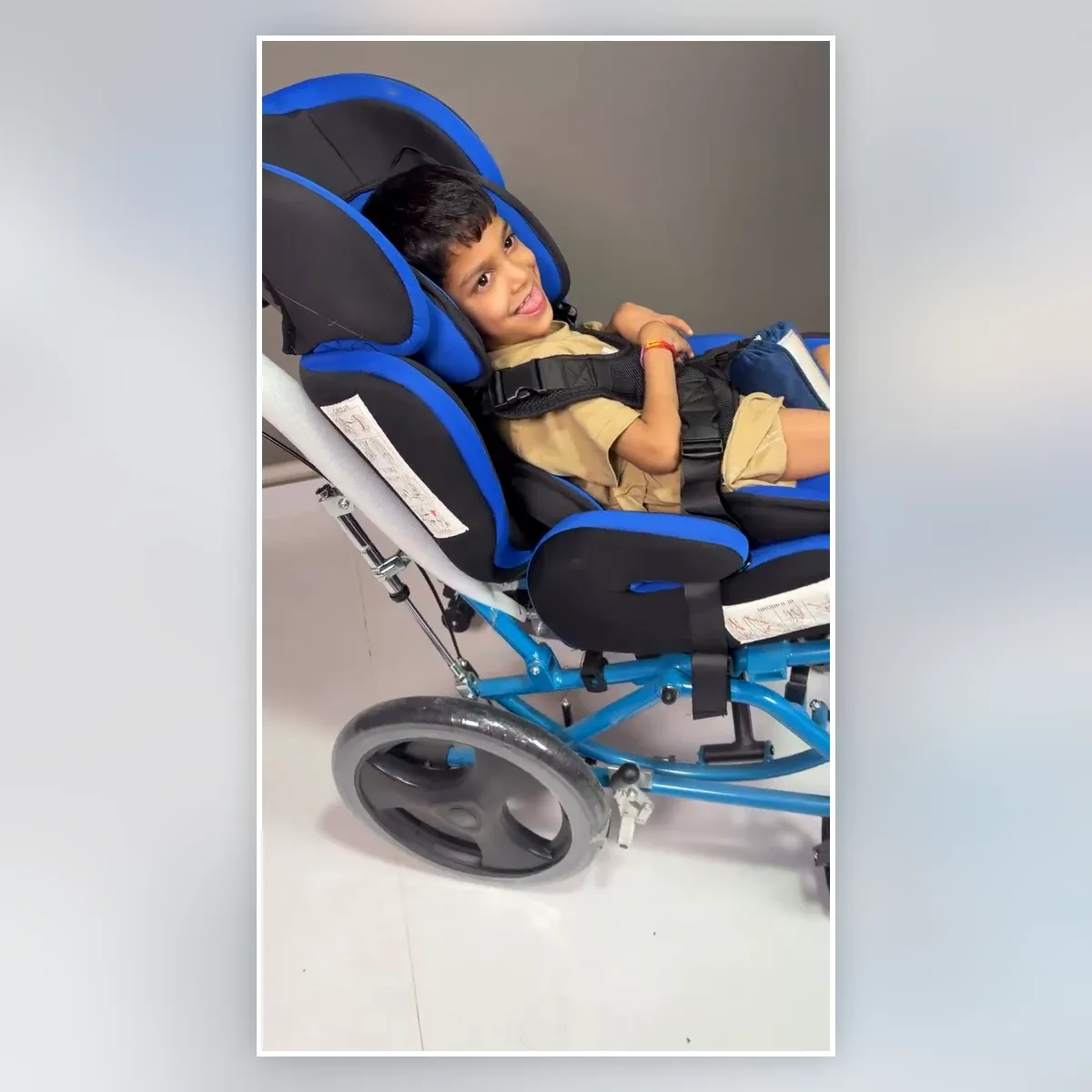
Two adjustable wheelchair features commonly discussed for children with CP are tilt-in-space and backrest recline.
Tilt-in-space moves the seat and backrest together while maintaining approximately the same angle between them.
For selected children, this may provide an alternative supported resting position without substantially changing the relationship between the pelvis and backrest.
Recline changes the angle between the seat and backrest.
It may accommodate selected resting or movement requirements, but can also affect pelvic positioning and contribute to sliding in some children.
Neither adjustment automatically corrects poor posture or prevents pressure injuries.
Correct measurements are equally important.
Before choosing a wheelchair, parents should obtain the child's:
- Hip width.
- Seated thigh length.
- Lower-leg length.
- Trunk height.
- Head and neck support requirements.
- Height and weight.
The child's hip movement, joint restrictions and postural asymmetry may also affect the appropriate seating configuration.
A wheelchair should not be purchased solely because its advertised age range includes the child's age.
A properly fitted wheelchair with appropriate supports is more useful than a larger wheelchair purchased simply to allow room for growth.
When Might Morecare Blueflax Be a Suitable Option?
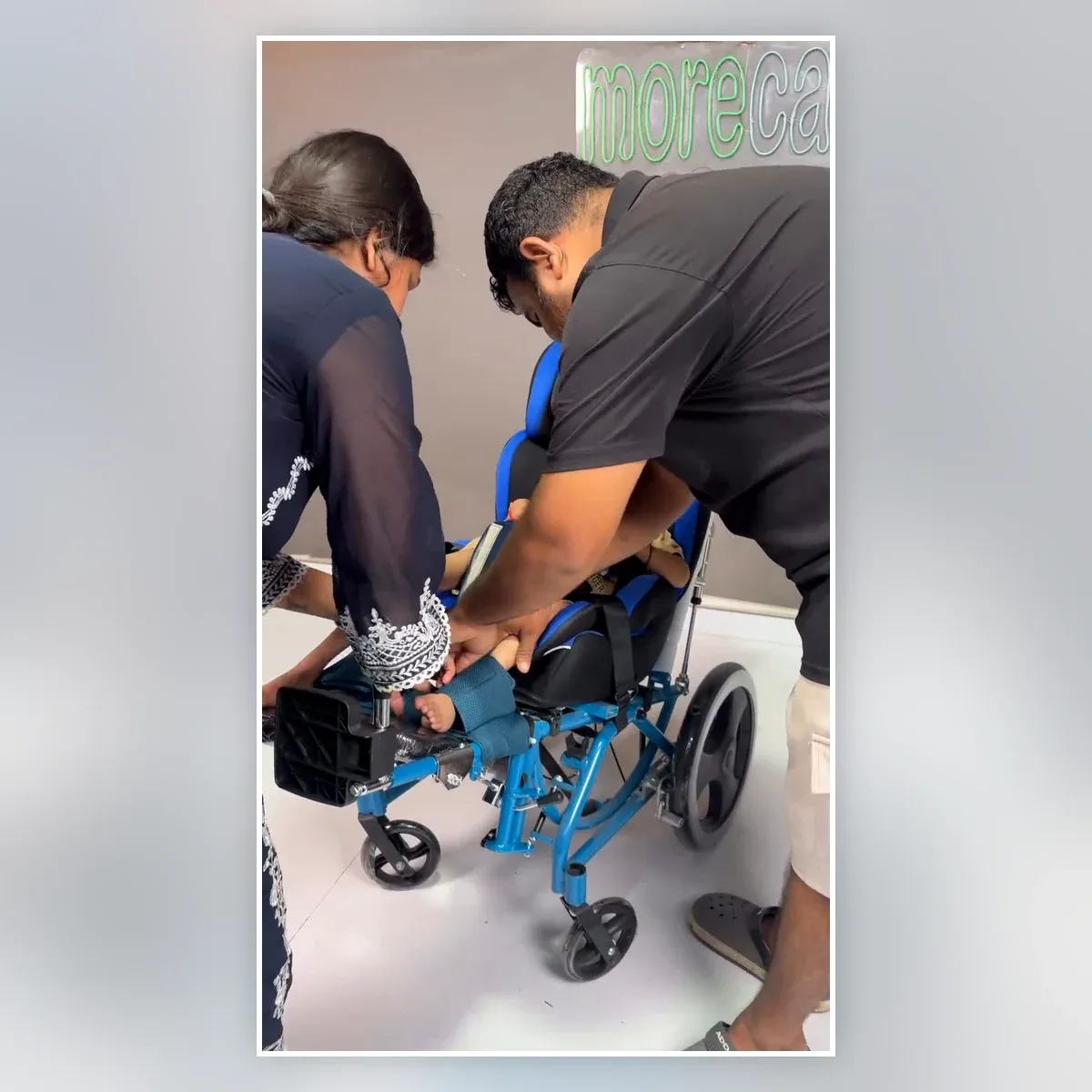
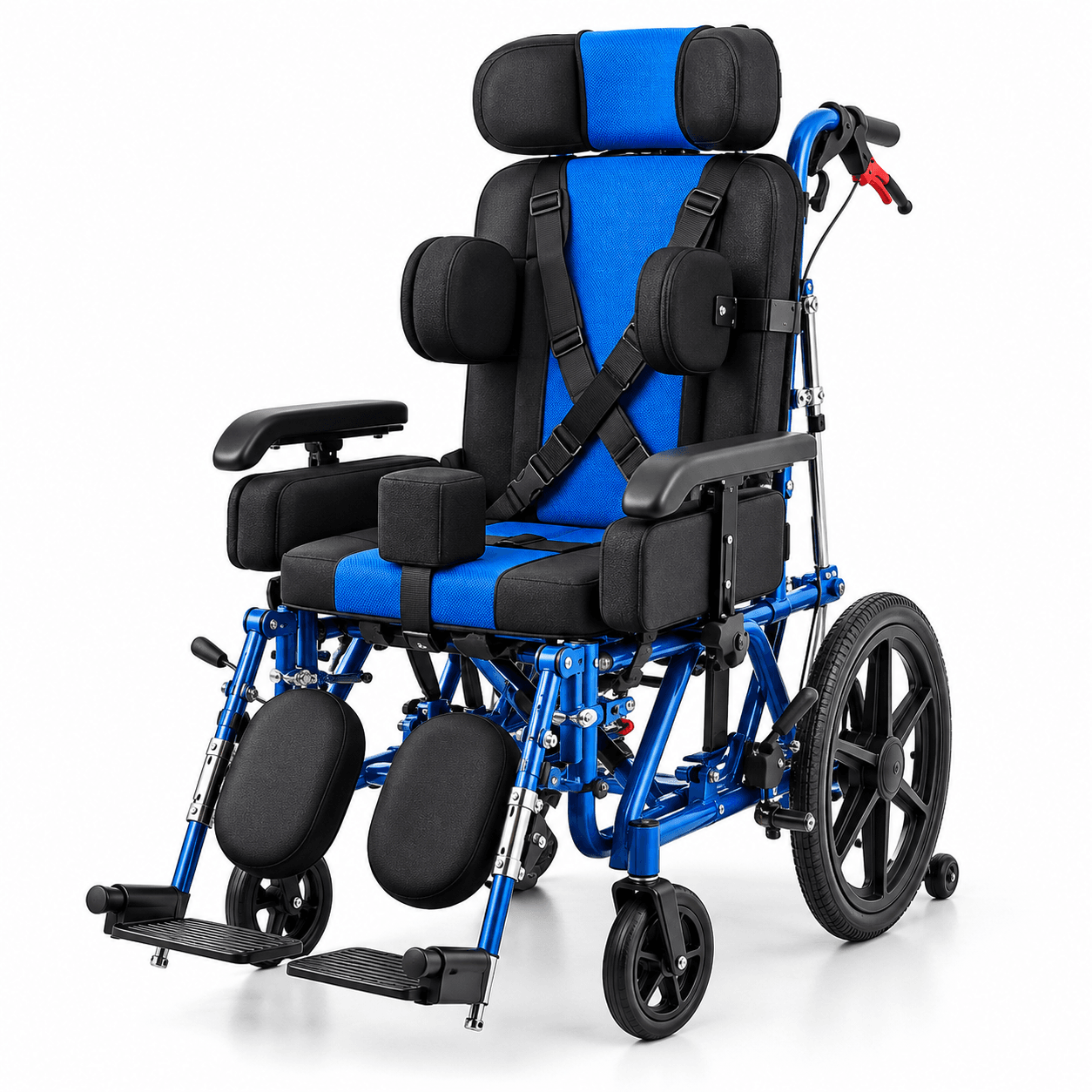
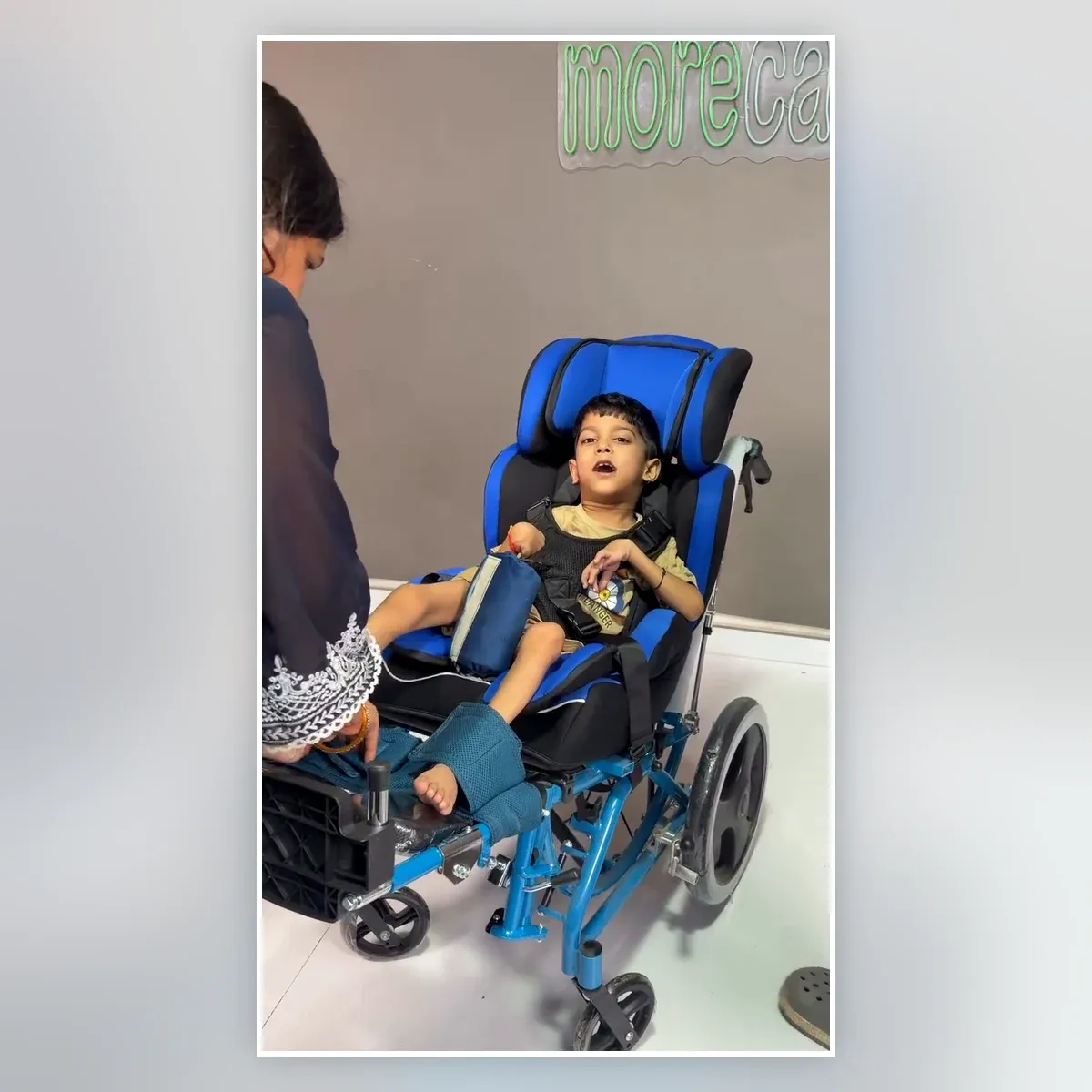
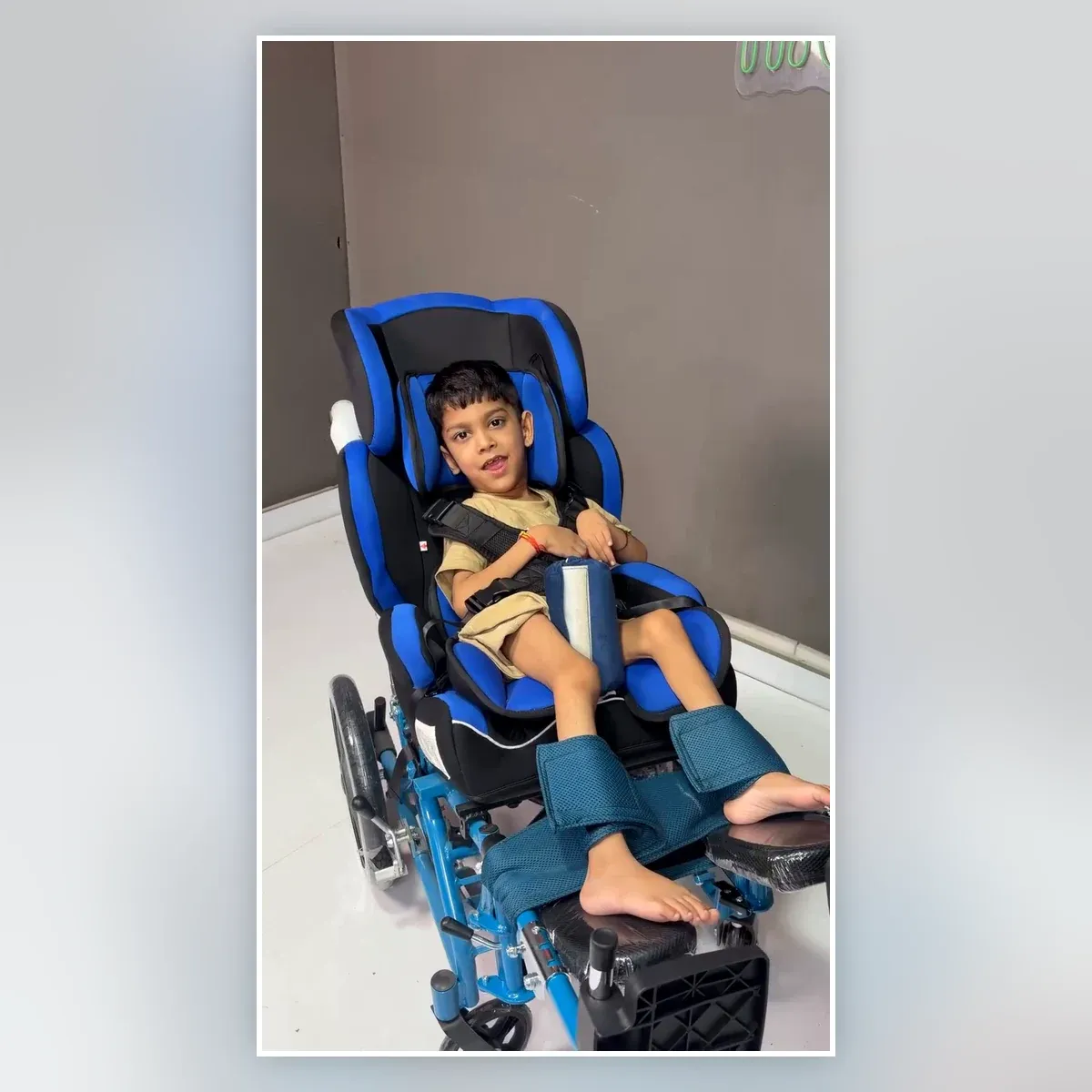
The Morecare Blueflax Tilt & Recline CP Wheelchair Cum Stroller is designed for selected children who require additional postural support during sitting and caregiver-assisted mobility.
Its seating system combines:
- An adjustable headrest.
- Trunk and pelvic positioning supports.
- Adaptive seating cushions.
- A butterfly chest harness.
- Adjustable footrests.
- Separate tilt-in-space and reclining adjustments.
- A foldable, caregiver-propelled frame.
These features may help accommodate the seating needs of selected children with poor trunk control, limited head control or difficulty maintaining a supported sitting position.
However, Blueflax has an important sizing limitation.
Its structural seat width is fixed at 18 inches. Adaptive cushions can adjust the effective seating fit within the frame, but they do not change the underlying frame width.
The published age reference is approximately 4–15 years, with a maximum user weight of 80 kg.
These figures are not a guarantee of fit.
For a smaller child, a child with significant asymmetry or someone requiring advanced customized positioning, the standard Blueflax configuration may not be suitable.
Parents should share the child's measurements, usual sitting posture and therapist's recommendations before choosing the wheelchair.
A suitable Blueflax configuration should support the child's specific needs rather than simply match the diagnosis.
What Should Parents Check Before Buying a CP Wheelchair?
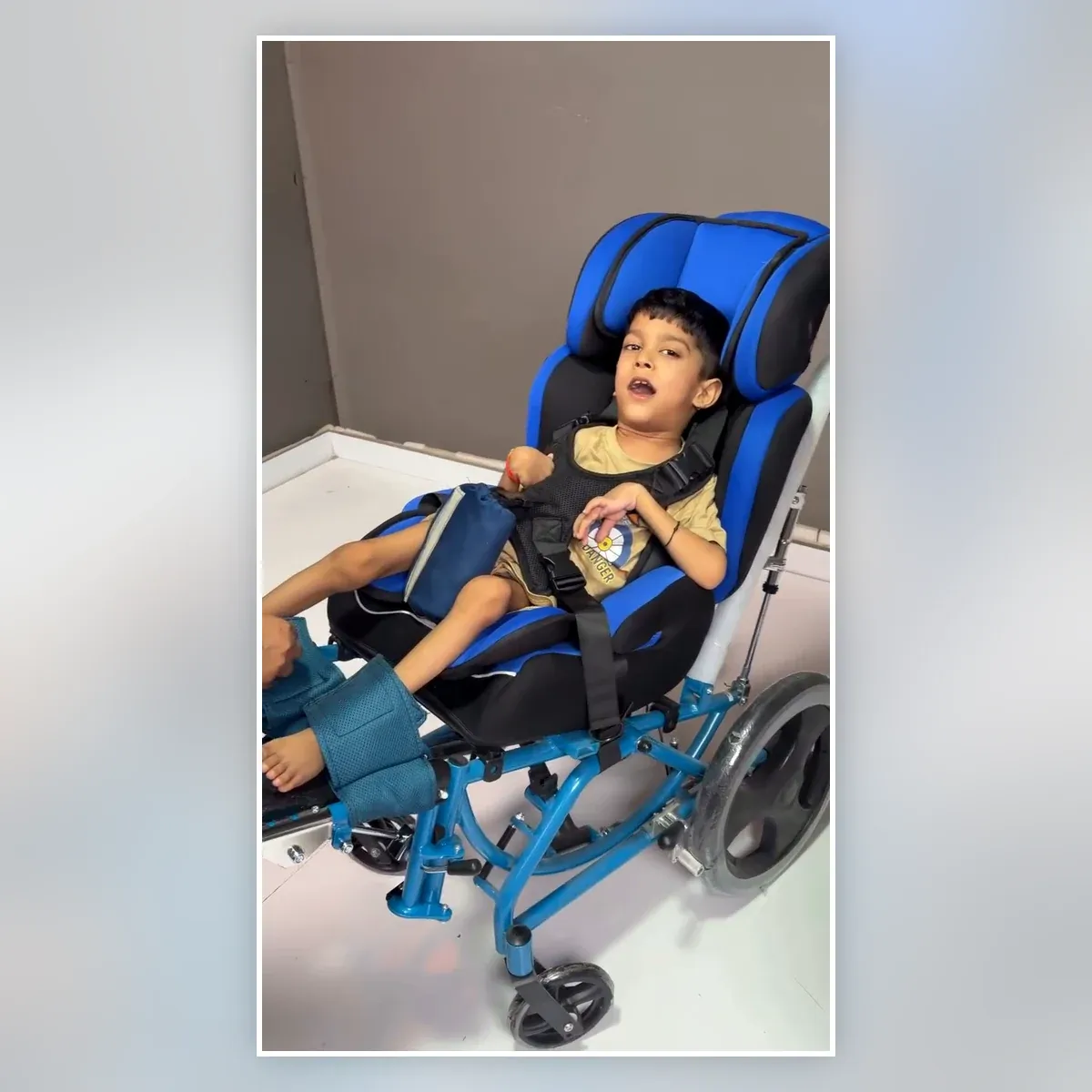
A wheelchair should support the child's daily life, not just provide a place to sit.
Use these questions before making a purchase.
1. Can my child maintain their head and trunk position?
Identify which supports are needed and whether the proposed wheelchair can accommodate them.
2. Does the seat fit my child's measurements?
Compare the child's hip width, thigh length and lower-leg length with the actual usable seating dimensions.
3. Can the wheelchair accommodate my child's muscle tone and joint movement?
Children with strong extension patterns, contractures or fixed asymmetry may require specialized adjustments.
4. Will the wheelchair be used mainly at home or outside?
Consider doorways, flooring, outdoor surfaces, school access and caregiver handling.
5. How will my child be transferred?
Some children require substantial assistance or mechanical lifting. The wheelchair must suit the assessed transfer method.
6. Can it be transported and maintained?
Check folded dimensions, vehicle storage space, cleaning, replacement cushions and availability of spare parts.
7. What happens as my child grows?
Confirm which parts can be adjusted or replaced and which structural dimensions are fixed.
A professional wheelchair assessment should consider the child's current needs and expected changes over time.
Before buying Blueflax or another adaptive wheelchair, ask for a demonstration of the seating supports, adjustment mechanisms and fitting requirements.
The best wheelchair is not necessarily the one with the most features. It is the one that supports your child's body, activities and daily mobility in an individually appropriate way.