Why Do Some Children With Cerebral Palsy Have Poor Head Control?
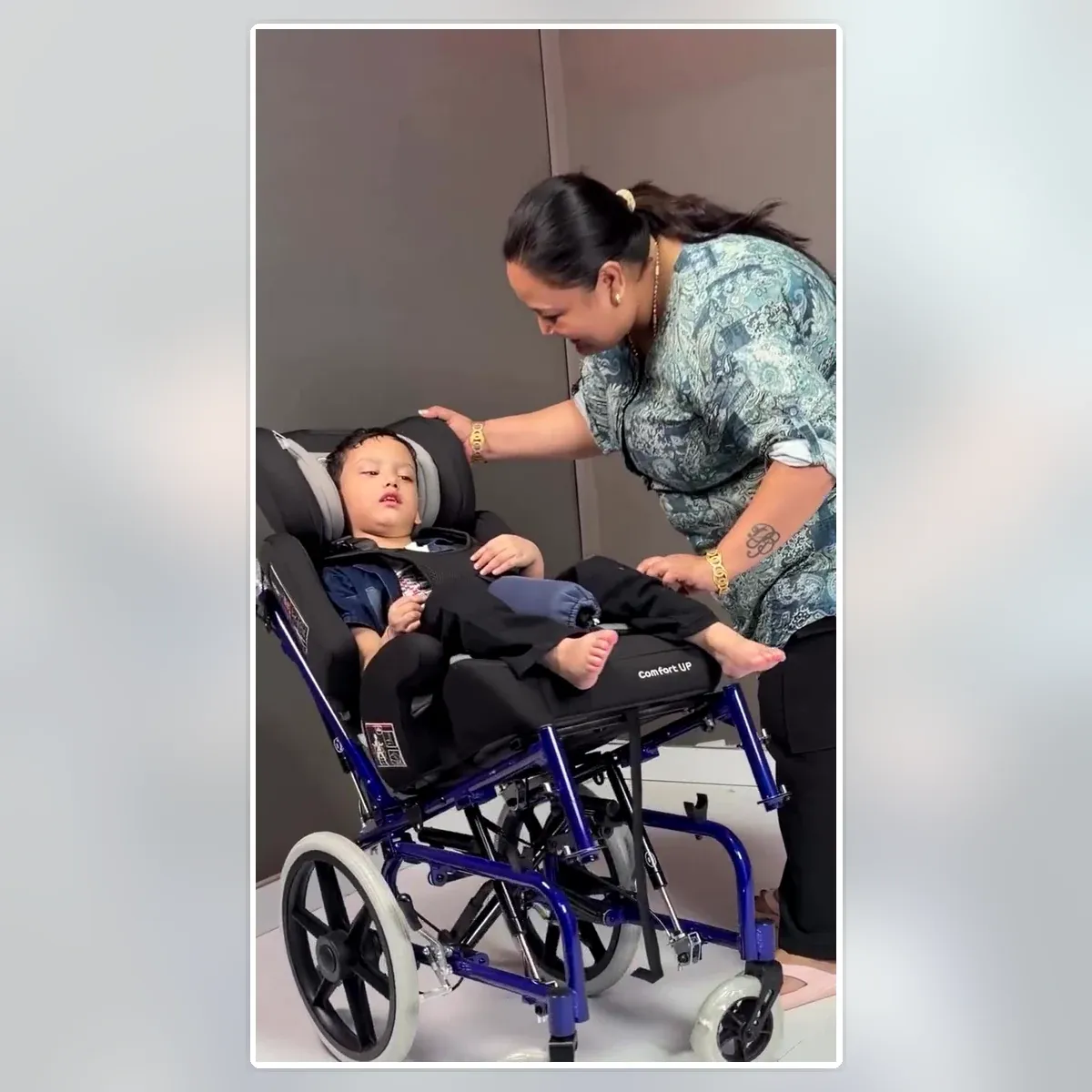
Holding the head upright requires coordination between the neck muscles, trunk and the rest of the body.
Cerebral palsy can affect muscle tone, strength, movement coordination and postural control.
Some children may struggle to maintain their head position because of:
- Reduced neck and trunk muscle control.
- Difficulty maintaining an upright sitting posture.
- Low muscle tone or fluctuating muscle tone.
- Increased muscle stiffness or involuntary movements.
- Fatigue during prolonged sitting.
- Asymmetrical posture, with the body leaning towards one side.
For example, a child may briefly lift their head while lying down but struggle to maintain the same position when sitting in a wheelchair.
This does not necessarily mean the problem lies only in the neck.
When the pelvis and trunk are poorly supported, the child may need to work harder to maintain their head position.
A seating assessment should therefore consider the child's entire sitting posture rather than focusing only on the head.
Why Isn't a Headrest Alone Enough?
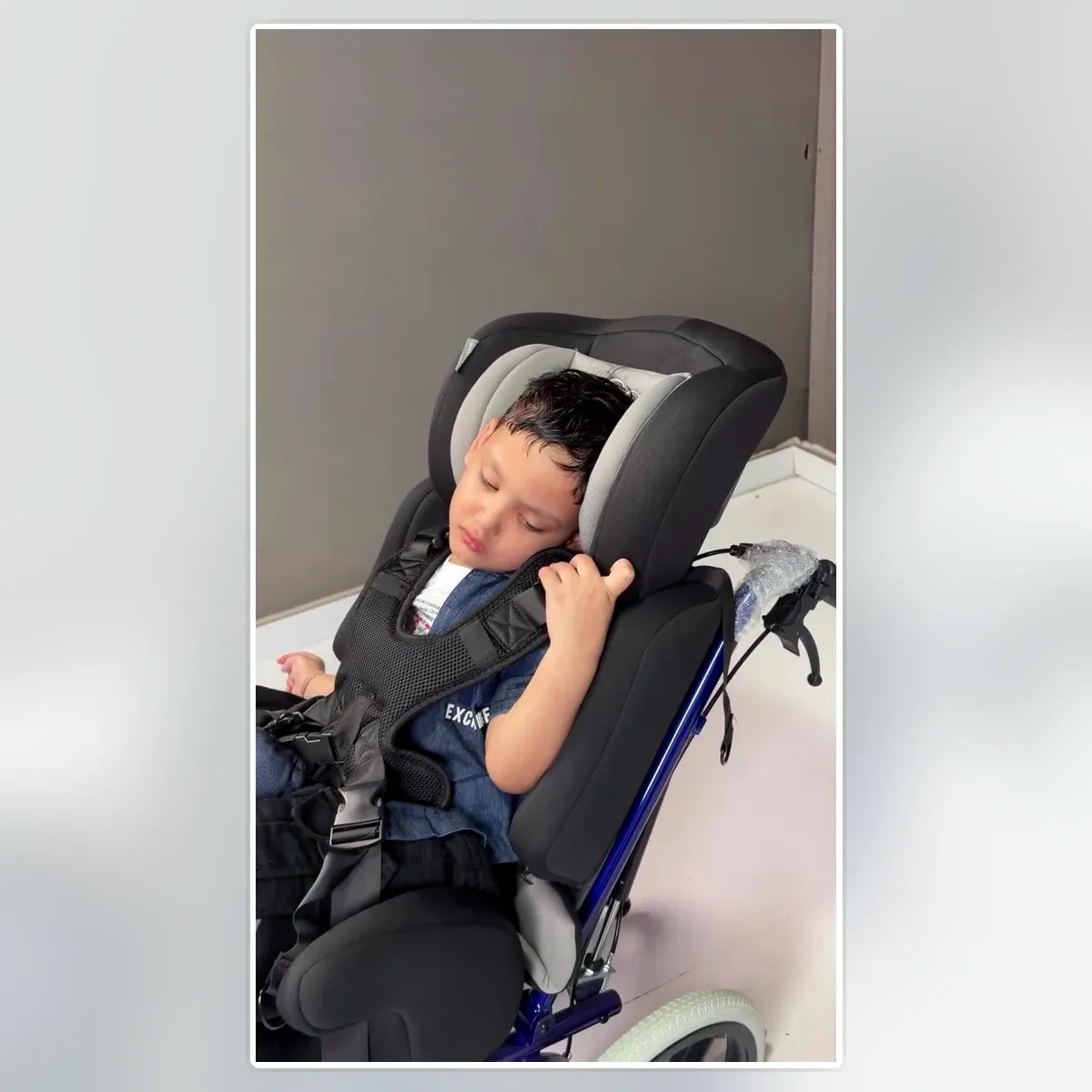
A headrest is an important positioning component for some children, but it cannot compensate for every problem with seated posture.
Imagine a child sitting in a wheelchair with their pelvis sliding forward and trunk leaning sideways.
Even if a headrest is fitted, the child's head may continue to fall forward or sideways because the body beneath it is not adequately supported.
Suitable seating begins with a stable foundation.
Pelvic positioning
The pelvis should be supported in an individually appropriate position, helping the child maintain a more stable seated base.
Trunk support
A correctly fitted backrest and lateral supports may help children who cannot maintain their trunk upright independently.
Lower-limb positioning
Appropriate seat depth, leg positioning and supported feet help establish the overall seated arrangement.
Head and neck support
Once the body is appropriately positioned, a suitable headrest or individually selected head-support system can be fitted.
Children with pronounced forward head drop, sideways collapse or complex asymmetry may require specialized head and neck positioning.
The objective is not to force the head into a fixed position. It is to provide suitable support while respecting comfort, movement, breathing and individual postural requirements.
Which Wheelchair Features Matter When a Child Cannot Hold Their Head?
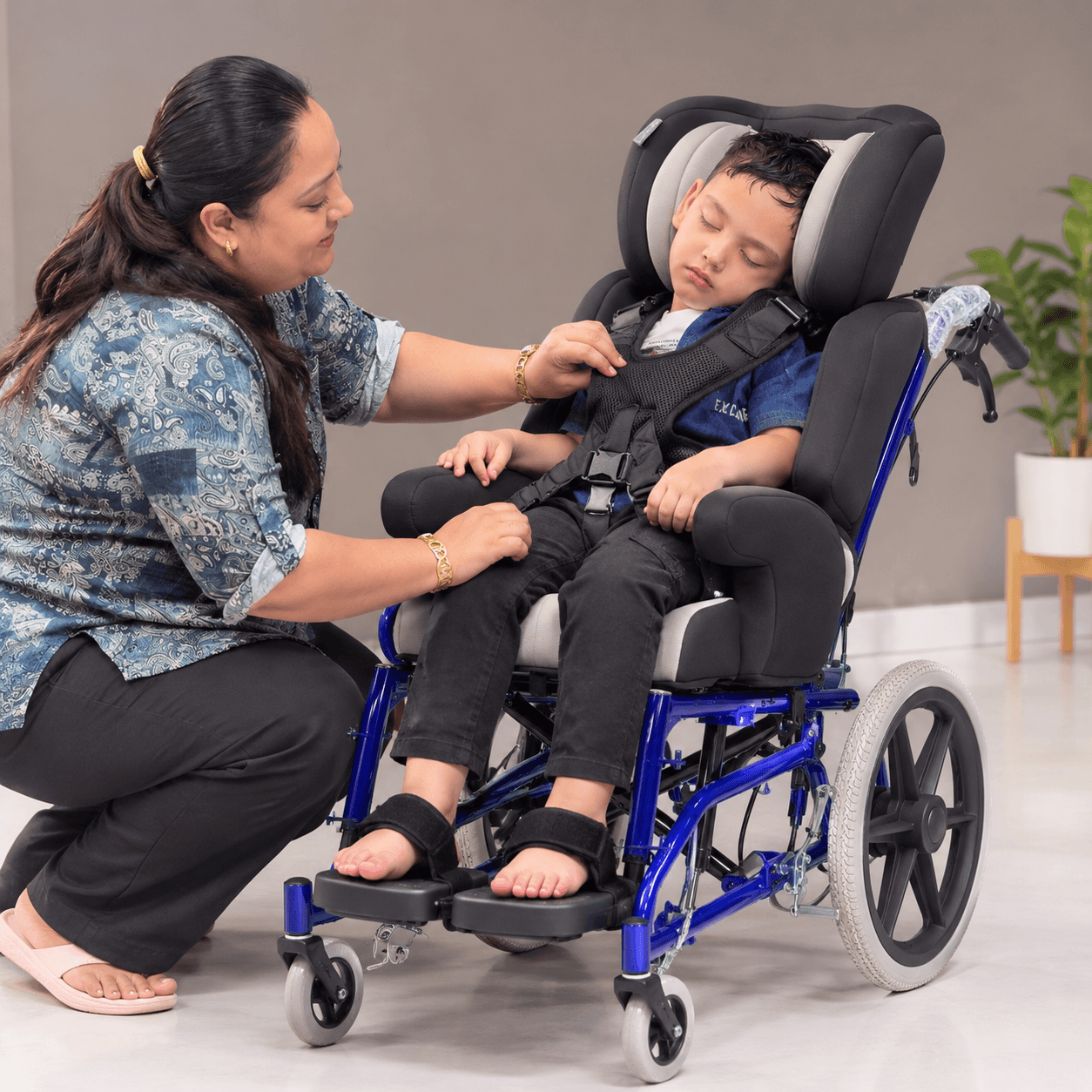
A conventional pediatric wheelchair or stroller may not provide enough positioning support for a child with significant head and trunk control difficulties.
An adaptive wheelchair may offer additional features.
Adjustable head support
A properly fitted headrest can help support the head in an appropriate resting position.
Lateral trunk supports
Side supports may help reduce excessive leaning when the child cannot maintain their trunk position independently.
Pelvic positioning
Appropriate cushions and positioning belts can help maintain the child's assessed seated alignment. Belts must be fitted safely and should not be used to force an unsuitable posture.
Tilt-in-space
Tilt-in-space changes the angle of the entire seating system while maintaining the relationship between the seat and backrest.
For selected children, a more tilted position may reduce the effort required to maintain head and trunk posture.
Backrest recline
Recline changes the angle between the backrest and seat. It is different from tilt-in-space and may affect pelvic positioning.
Adjustable footrests
Proper lower-limb support helps complete the seating arrangement.
The most suitable combination depends on the child's body measurements, movement patterns, muscle tone and daily activities.
No single seating configuration is appropriate for every child with cerebral palsy.
How Can Morecare Blueflax Support Children With Poor Head and Trunk Control?

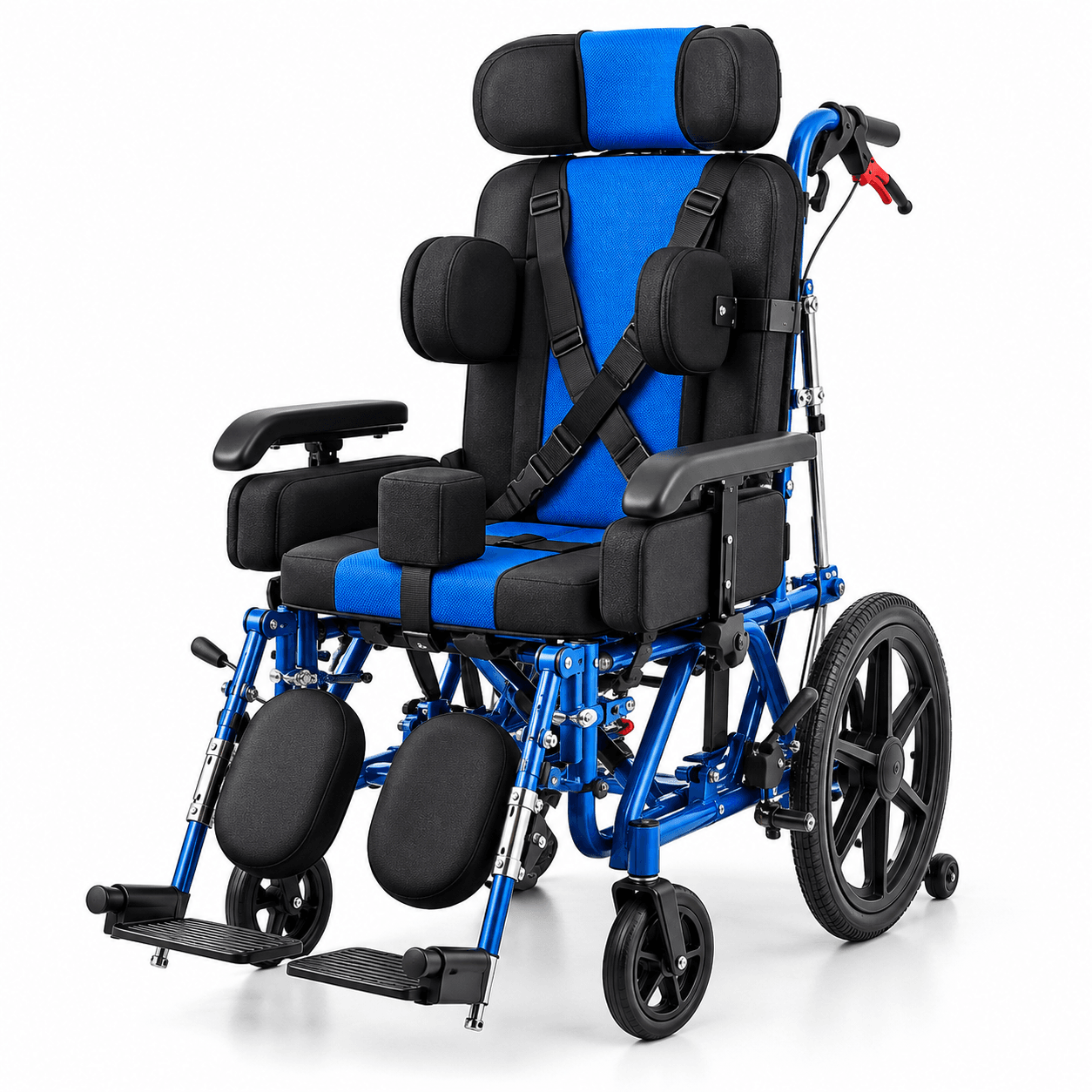
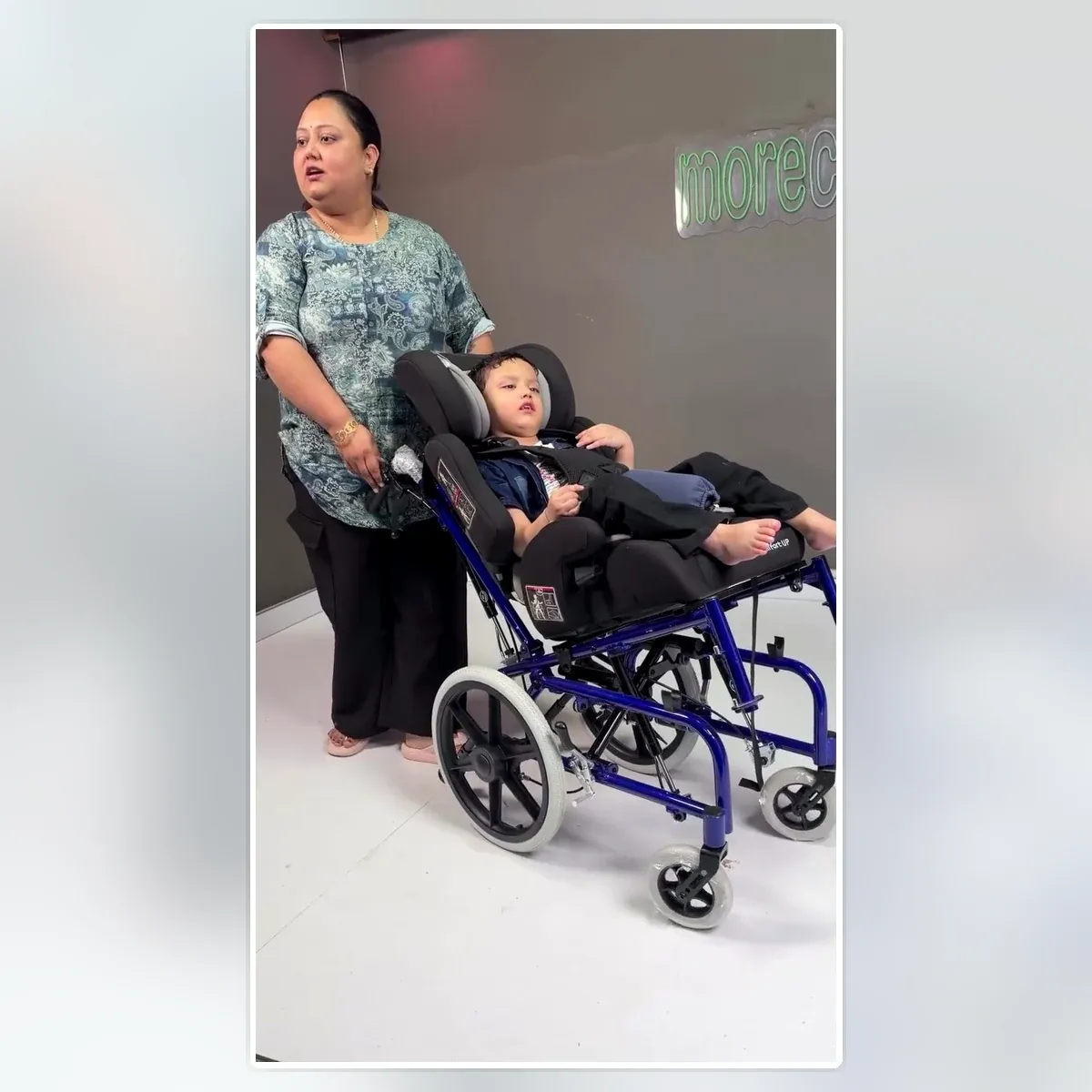
The Morecare Blueflax Tilt & Recline CP Wheelchair Cum Stroller is a caregiver-propelled pediatric wheelchair designed for children who need additional support while sitting and travelling.
It combines adjustable seating components with separate tilt-in-space and reclining functions.
Its relevant positioning features include:
- Adjustable headrest: Provides head support according to the child's assessed posture.
- Lateral trunk supports: Help configure support around the upper body.
- Adaptive seating cushions: Allow the effective seating fit to be adjusted within the chair's fixed 18-inch structural seat width.
- Pelvic positioning and five-point harness: Provide positioning support when correctly fitted.
- Independent tilt and recline: Allow caregivers to adjust the overall seat angle and backrest angle separately.
- Adjustable footrests: Help accommodate appropriate lower-limb positioning.
For a child who struggles to maintain their head upright, the combination of pelvic stability, trunk support, head positioning and suitable tilt may provide a more appropriate seating arrangement than a conventional stroller.
However, Blueflax is not suitable for every child with poor head control.
A standard headrest may be insufficient when the head repeatedly falls forward, moves strongly to one side or requires specialized neck positioning.
In such situations, additional custom support or a different specialist seating system may be necessary.
Blueflax should be selected only when the child's measurements, posture and support requirements can be safely accommodated by the configured wheelchair.
How Do Parents Choose the Right Wheelchair for Their Child?

Before buying a wheelchair, focus on how your child sits and what assistance they need throughout the day.
1. Observe the child's head position
Does the head fall forward, backward or sideways? Does this happen immediately or after some time sitting?
2. Check trunk and pelvic control
Can the child maintain an upright trunk with assistance? Do they slide forward or lean strongly towards one side?
3. Measure the child
Important measurements include hip width, seated thigh length, lower-leg length, trunk height and the position of the head relative to the backrest.
4. Consider daily activities
Will the wheelchair be used mainly at home, during therapy, for school or for family outings?
5. Assess positioning needs
Does the child require additional lateral supports, a particular pelvic position or specialized head support?
6. Understand the wheelchair's limitations
A wheelchair with tilt and recline does not automatically correct poor head control, prevent deformities or replace therapeutic positioning.
For Blueflax specifically, the structural seat width remains fixed at 18 inches. Adaptive cushions modify the usable fit within this frame, but do not make the frame itself adjustable.
Families should share their child's measurements and current seating difficulties with the equipment provider and treating therapist.
The right wheelchair is not simply one that holds the child's head upright. It is one that supports the child's entire seated posture in a safe, comfortable and individually appropriate way.