What Is Tilt-in-Space in a Pediatric Wheelchair?
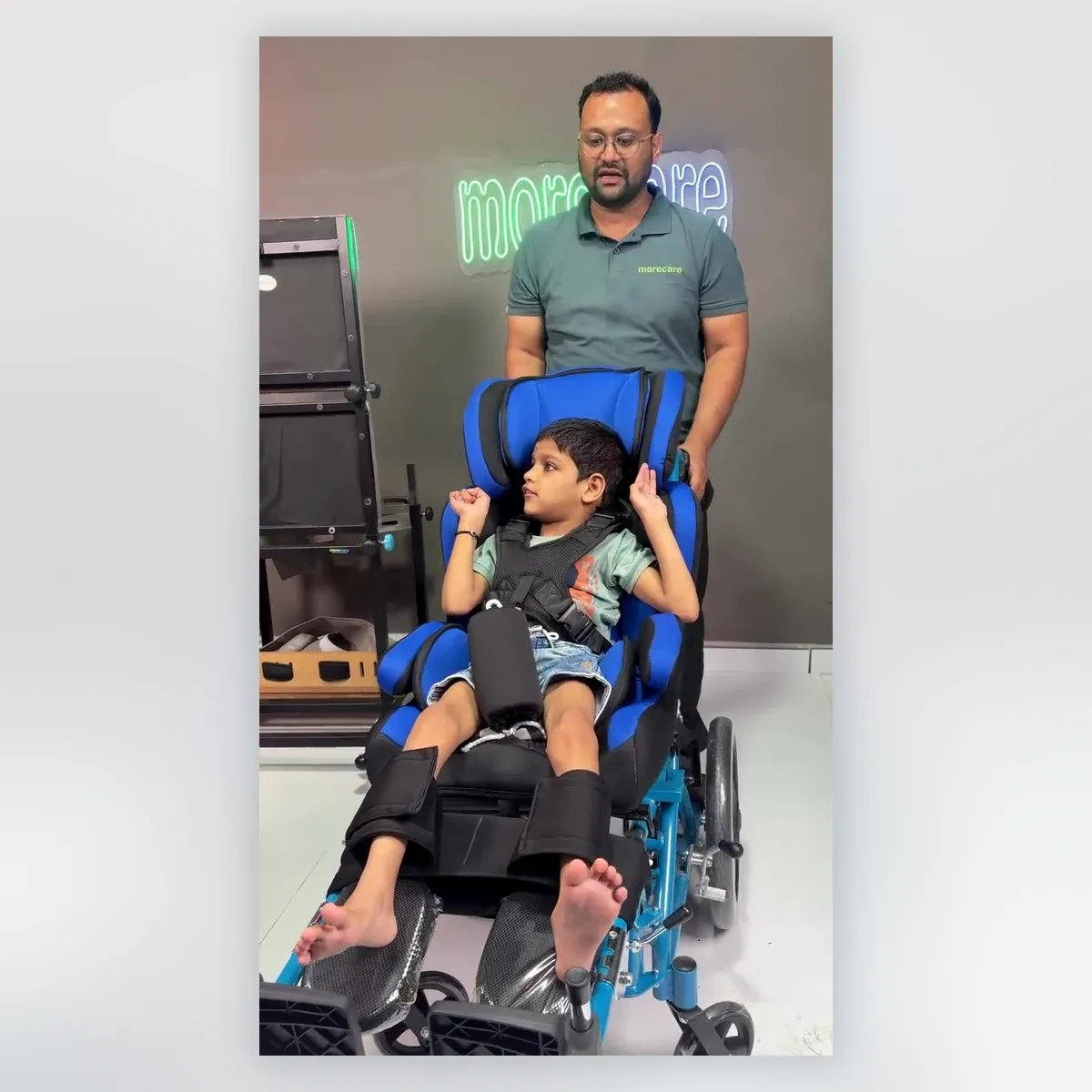
Tilt-in-space changes the orientation of the complete seating system.
When the caregiver tilts the wheelchair backward, the seat and backrest move together while maintaining approximately the same angle between them.
Imagine a child sitting in a supportive chair. Instead of changing how much the child bends at the hips, the entire seating arrangement tilts backward.
For selected children with cerebral palsy, this can provide additional positioning options when they have:
- Limited trunk control.
- Difficulty maintaining a supported upright posture.
- Fatigue during sitting.
- A need for caregiver-assisted resting-position changes.
- Difficulty tolerating one seating position for extended periods.
Tilt may also change how body weight is distributed across the seat and backrest.
However, a larger tilt angle is not automatically better. Some children may need a more upright position for communication, play, upper-limb activities or interaction.
The most appropriate position depends on the child's individual abilities and seating assessment.
What Is Recline, and How Is It Different From Tilt?
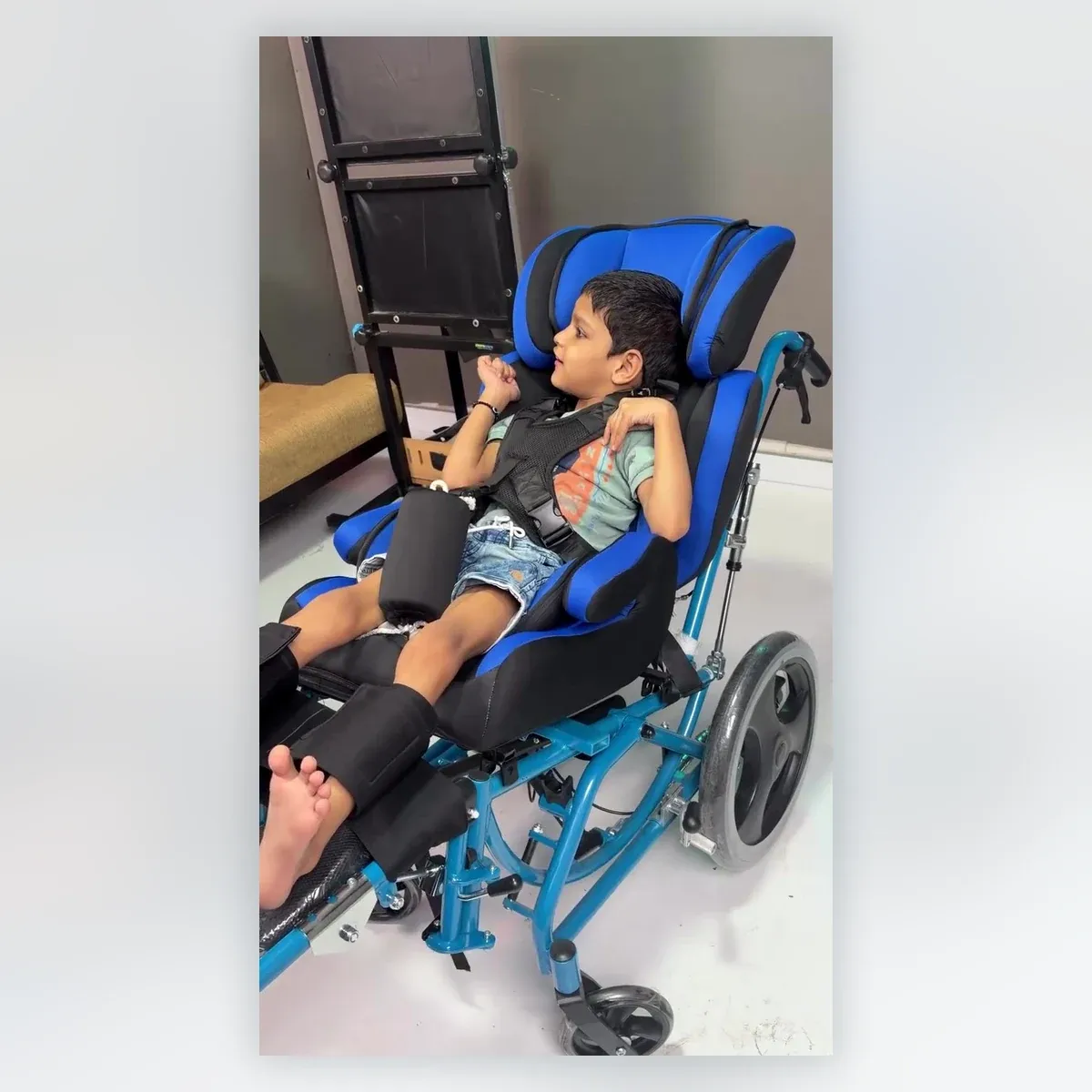
Recline changes the angle between the wheelchair's backrest and seat.
As the backrest moves backward, the child's upper body becomes more reclined relative to the thighs.
This is different from tilt-in-space, where the seat and backrest move together.
Recline may provide additional positioning options for children who need:
- Changes in their upper-body resting position.
- Accommodation of specific hip or trunk movement restrictions.
- Caregiver-assisted positioning during selected daily activities.
- A change from an upright sitting posture towards a more open hip angle.
However, reclining can also change the relationship between the child's pelvis, trunk and backrest.
Some children may slide forward, develop pressure or friction at particular contact areas, or lose their previously fitted posture when the backrest is reclined.
This is particularly important for children who already struggle with pelvic stability.
Recline should therefore not be treated simply as a more comfortable version of tilt.
It serves a different positioning purpose and should be adjusted according to the child's individual needs.
Which Is Better for Poor Head Control, Trunk Weakness or Sliding?

Parents often ask which wheelchair function is better for children who cannot sit independently.
The answer depends on the child's particular difficulty.
When the child has poor trunk control
A suitable tilt position may reduce the effort required to maintain supported sitting while preserving the established seat-to-backrest angle.
However, pelvic, lateral trunk and head supports must still be fitted correctly.
When the child's head falls forward or sideways
Neither tilt nor recline can replace appropriate head and neck support.
The child's pelvis and trunk should be assessed first, followed by the positioning of the headrest or specialist head-support system.
When the child keeps sliding forward
Reclining without adequate pelvic positioning may worsen sliding in some children.
The seating therapist should check seat dimensions, pelvic support, foot positioning and the sequence of any adjustments.
When the child becomes tired during sitting
Changing position may help some children tolerate seated activities, but the appropriate angle and duration vary.
When the child needs a more open hip angle
Recline may be useful for selected movement restrictions that cannot be accommodated comfortably in a more upright position.
There is no universally correct tilt or recline angle for every child with CP.
The best seating configuration supports the child's comfort, function and postural needs rather than relying on one standard setting.
How Does Morecare Blueflax Combine Tilt and Recline?
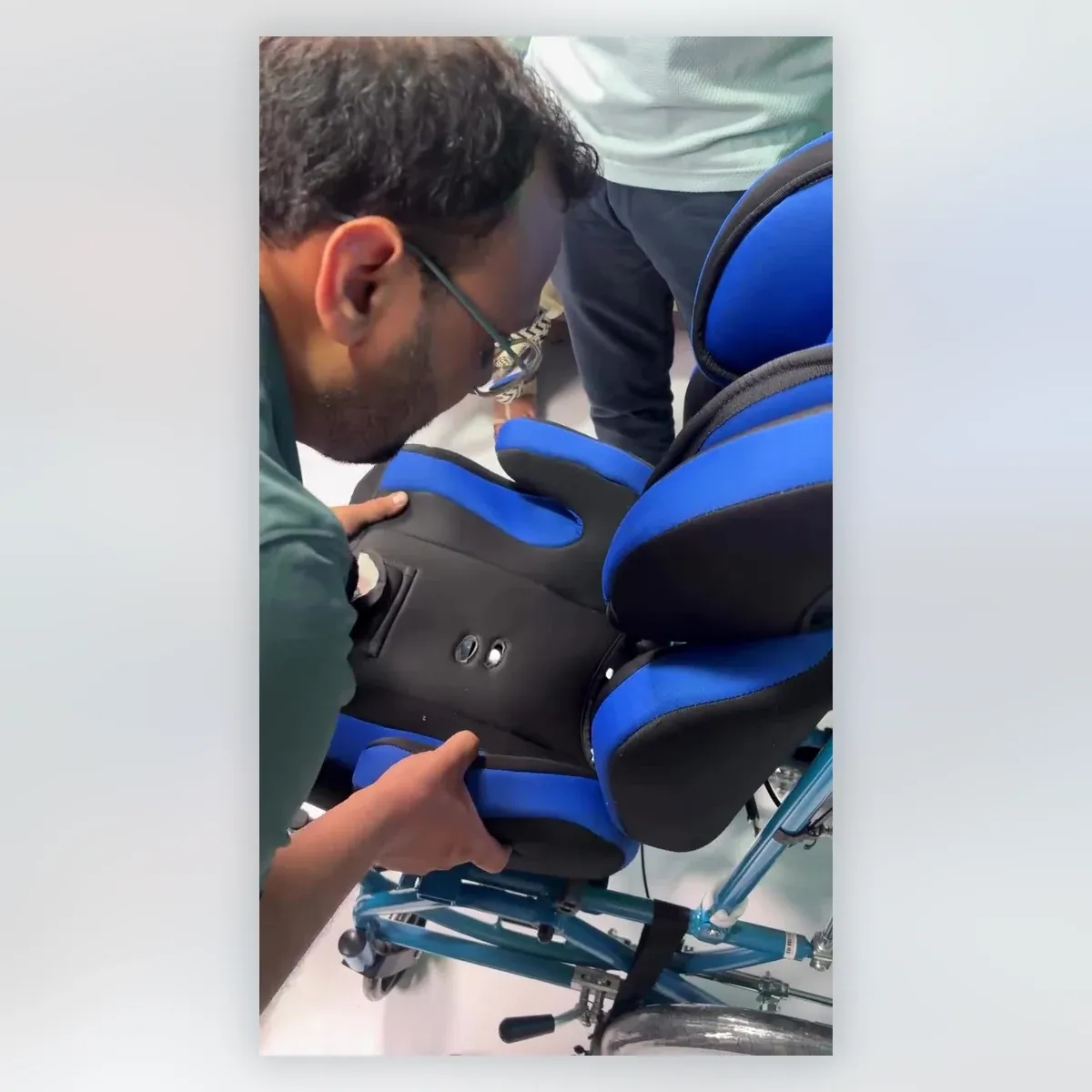
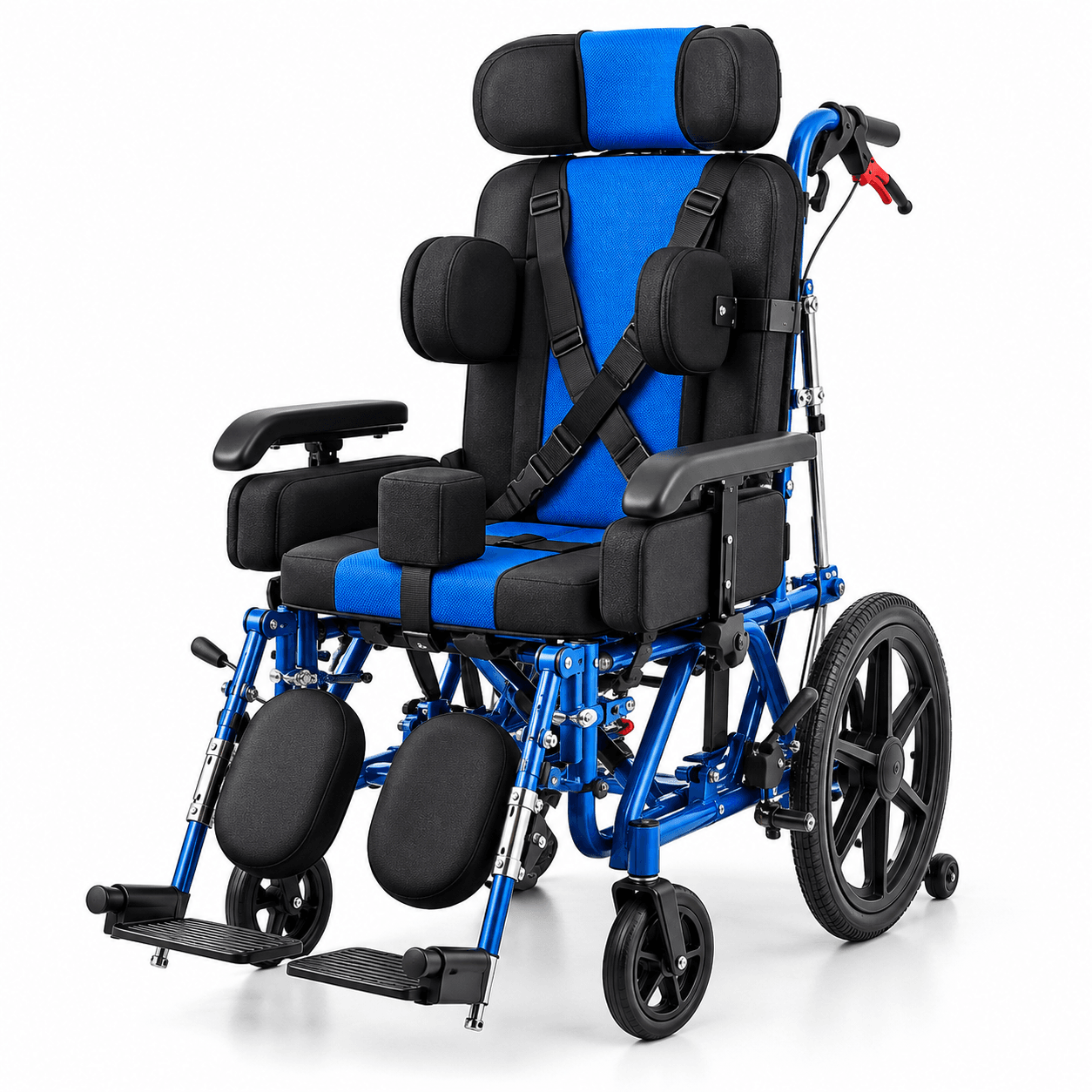
The Morecare Blueflax Tilt & Recline CP Wheelchair Cum Stroller offers separate caregiver-operated tilt-in-space and reclining adjustments.
These provide two different ways to change the child's supported sitting position.
Tilt-in-space adjustment
The complete seating arrangement tilts backward while maintaining the relationship between the seat and backrest.
This may be useful when a child requires a change in overall orientation without substantially opening the hip angle.
Backrest recline
The backrest angle changes relative to the seat.
This provides an additional positioning option for selected children whose comfort or clinical requirements call for a different seat-to-backrest angle.
Blueflax also includes configurable seating components such as:
- Adjustable head support.
- Lateral trunk and pelvic positioning supports.
- Adaptive seating cushions.
- Butterfly chest harness.
- Adjustable footrests.
- Caregiver-propelled mobility.
These features should be considered as one seating system, not as independent solutions to every posture problem.
The Blueflax structural seat width is fixed at 18 inches. Adaptive cushions can modify the effective fit within that width, but they do not change the frame width.
Blueflax may be appropriate for selected children who require both tilt and recline, provided the complete seating system fits their body and support needs.
For children with pronounced asymmetry, fixed deformities or complex head-positioning requirements, further customization or a different specialist seating system may be necessary.
How Should Parents Choose Between Tilt, Recline or Both?

Before purchasing an adaptive wheelchair, focus on the child's seating needs rather than the number of available adjustments.
1. Observe the child's usual sitting posture
Does the child lean forward, collapse sideways or slide towards the front of the seat?
2. Assess pelvic and trunk stability
Can the child maintain supported sitting, or do they require substantial external support?
3. Check hip and knee movement
Some children have movement restrictions that influence which seat-to-backrest angles are appropriate.
4. Consider daily activities
The posture needed for communication, play or school activities may differ from the posture used during supervised rest.
5. Check the wheelchair's fit
Hip width, thigh length, trunk height, head support and lower-leg positioning all matter.
6. Understand how adjustments affect the child
Ask the therapist to demonstrate what happens to the child's pelvis, head, shoulders and legs when the wheelchair tilts or reclines.
7. Confirm caregiver operation
Caregivers should understand how to operate the mechanisms, secure the wheelchair and recognize uncomfortable or unsafe positions.
For some children, tilt-in-space may provide the most useful adjustment. Others may benefit from recline, or from having both options available.
A pediatric physiotherapist or occupational therapist should help determine the appropriate configuration.
The right wheelchair is not the one that reclines the farthest. It is the one that supports your child's posture and everyday activities in a safe, individually appropriate way.