Floor Sitting and Postural Positioning
Children with cerebral palsy who have limited sitting balance may lean sideways, slump forward, or require continuous caregiver assistance to remain upright.
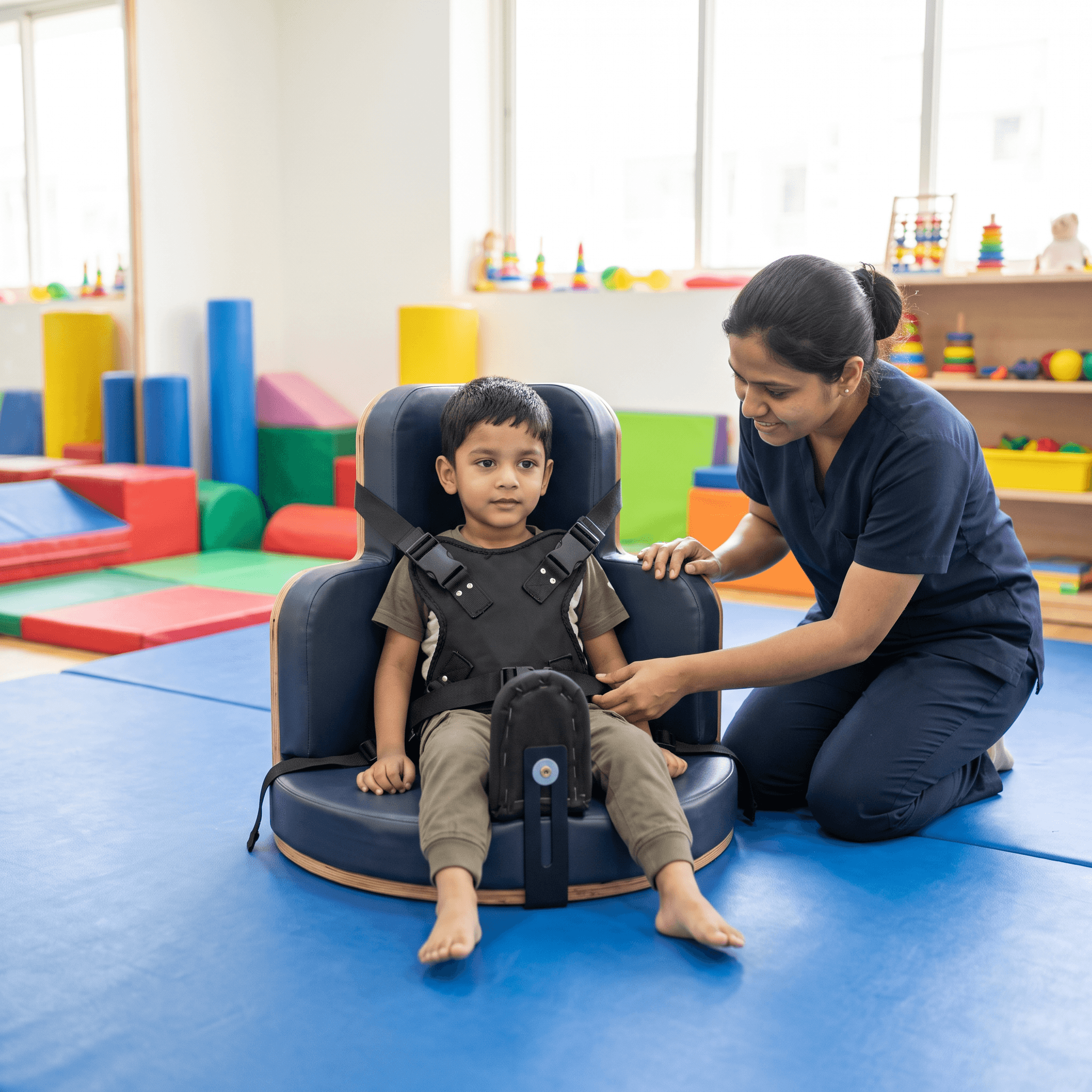
A corner seating system provides external support around the trunk, reducing the effort needed to maintain a sitting position.
The Morecare Sunflower uses a three-sided corner design, padded seating, a butterfly chest harness, and a pelvic belt to support positioning.
Practical benefit: A more stable sitting position can allow the child to participate in activities with less continuous hands-on postural assistance, although supervision remains necessary.
Feeding and Everyday Care Activities
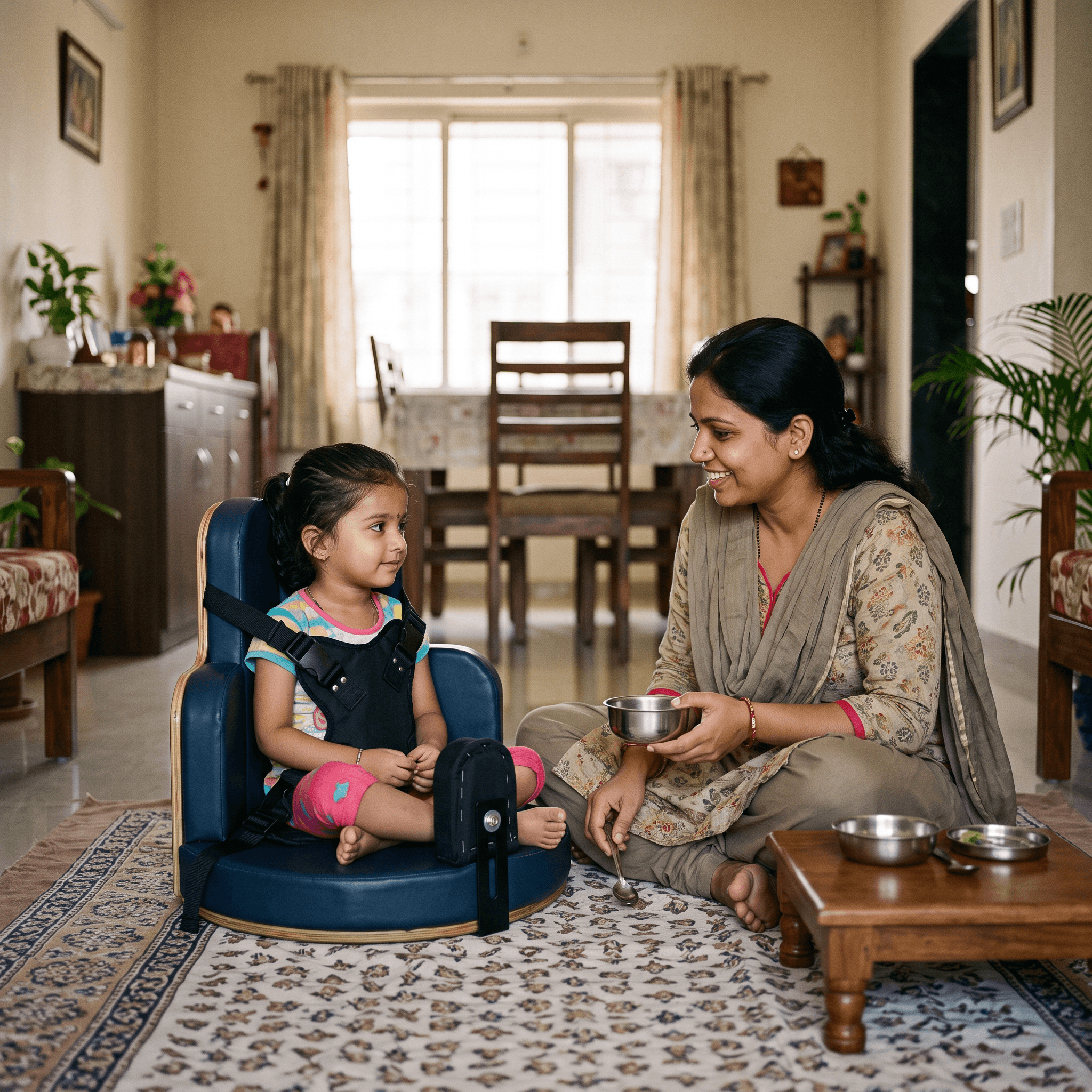
Maintaining an appropriate seated posture can be challenging during feeding, especially when a child has difficulty controlling the head and trunk.
Supportive seating helps establish a more consistent position for assisted daily activities. Sunflower's adjustable headrest, trunk harness, and pelvic belt allow positioning to be adapted to the child's needs.
Practical benefit: Caregivers may find it easier to maintain an appropriate supported position during suitable daily routines.
Feeding safety requires individual assessment. A seating system does not independently address swallowing difficulties, aspiration risk, or other feeding disorders.
Floor Play and Social Interaction
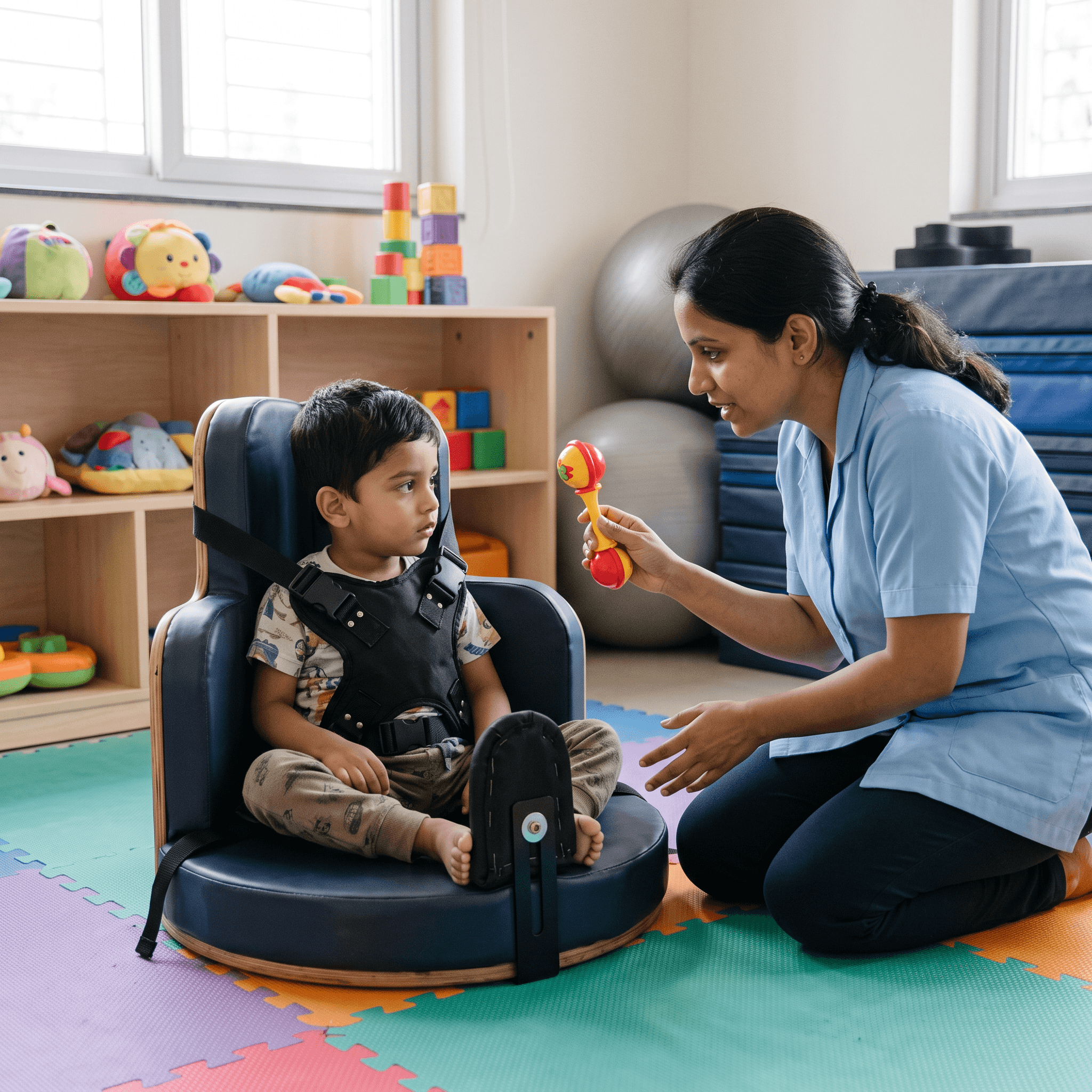
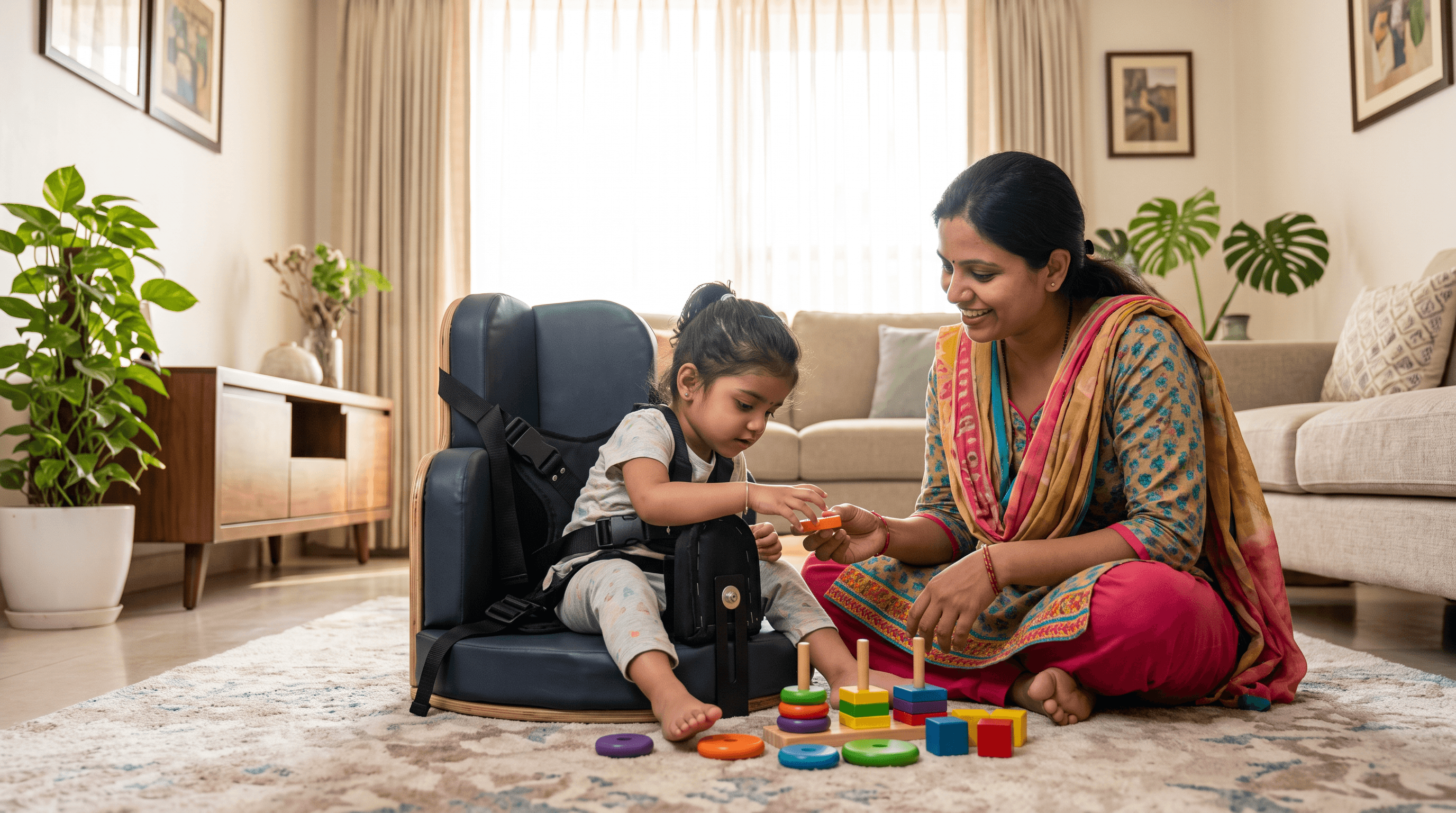
Floor play is an important part of childhood, but children with limited sitting control may need assistance to remain positioned while interacting with toys or family members.
Supported seating can help establish a stable base for supervised play.
With appropriate positioning, children may be able to focus more attention on interacting with toys, siblings, and caregivers rather than continually correcting their posture.
Practical benefit: More opportunities for meaningful participation in floor-level play and family activities.
Learning and Classroom Participation
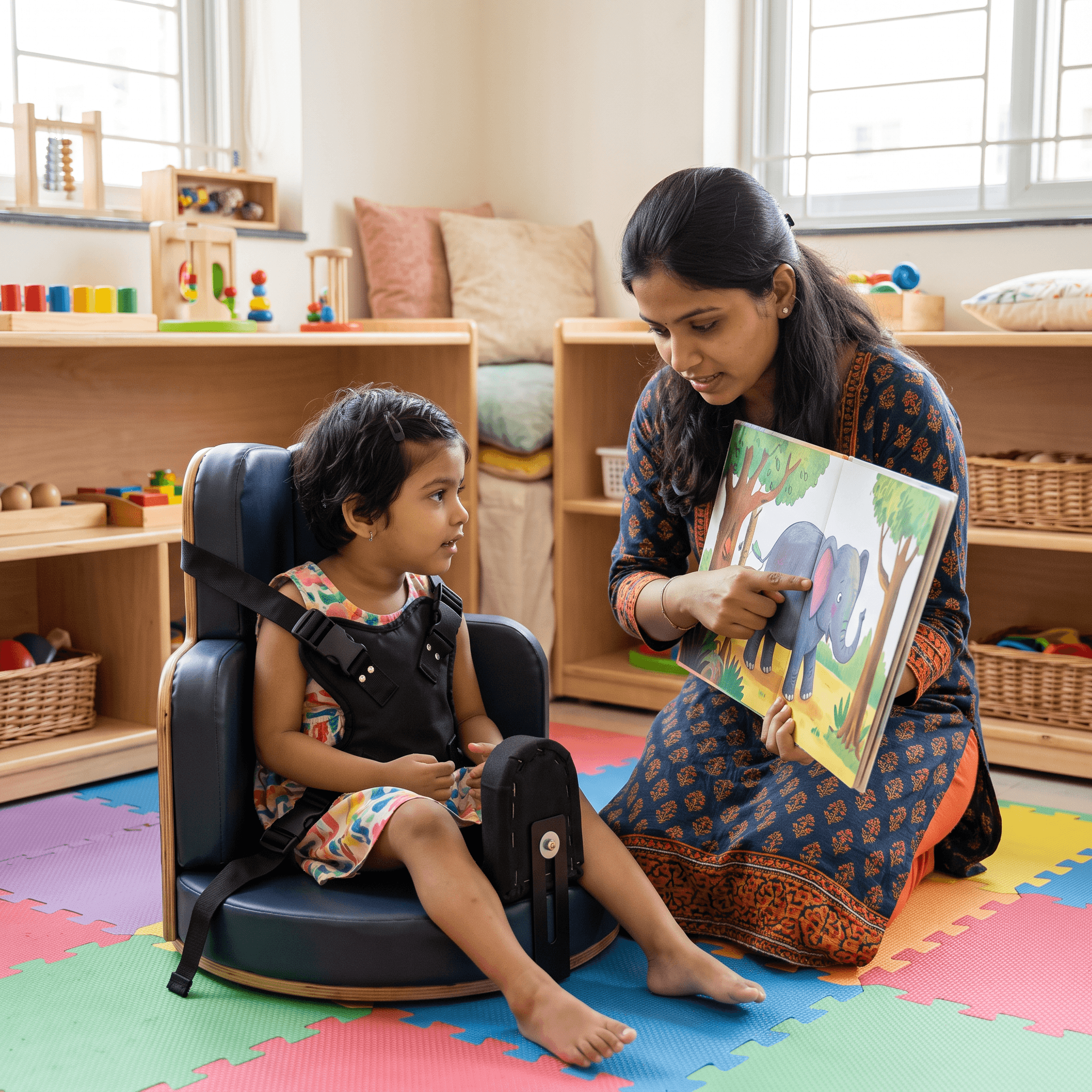
Activities such as looking at books, colouring, exploring educational toys, and participating in classroom routines require an appropriate sitting position.
Children who struggle to maintain their posture may need additional external support to participate comfortably.
Sunflower can be used for supported floor-level learning at home, in therapy environments, or in suitable educational settings.
Practical benefit: Stable positioning may help children participate in learning activities with less interruption from postural instability.
The system does not replace a suitable desk-height adaptive chair when elevated seating is required.
Early Intervention and Therapy Sessions
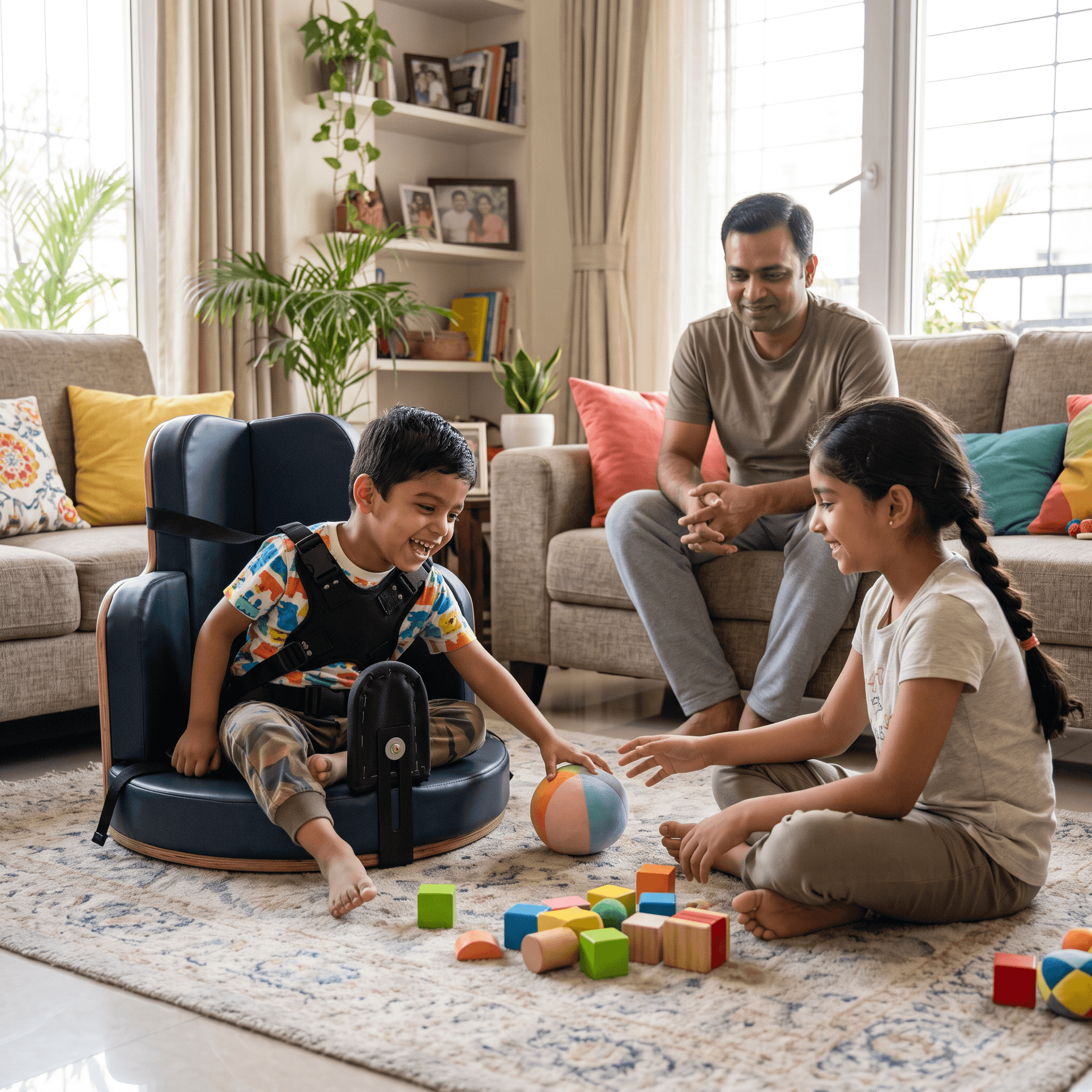
Pediatric physiotherapy and occupational therapy often include activities that encourage head control, reaching, hand use, visual attention, and participation.
Some children benefit from external postural support during these activities.
Sunflower provides a stable floor-level position that therapists can incorporate into an individualized rehabilitation program.
Practical benefit: Therapists may be able to introduce selected activities while providing appropriate trunk and pelvic support.
Supported seating is one component of therapy; it does not independently produce improvements in strength, balance, or motor development.
Hand Function, Reaching, and Functional Activities
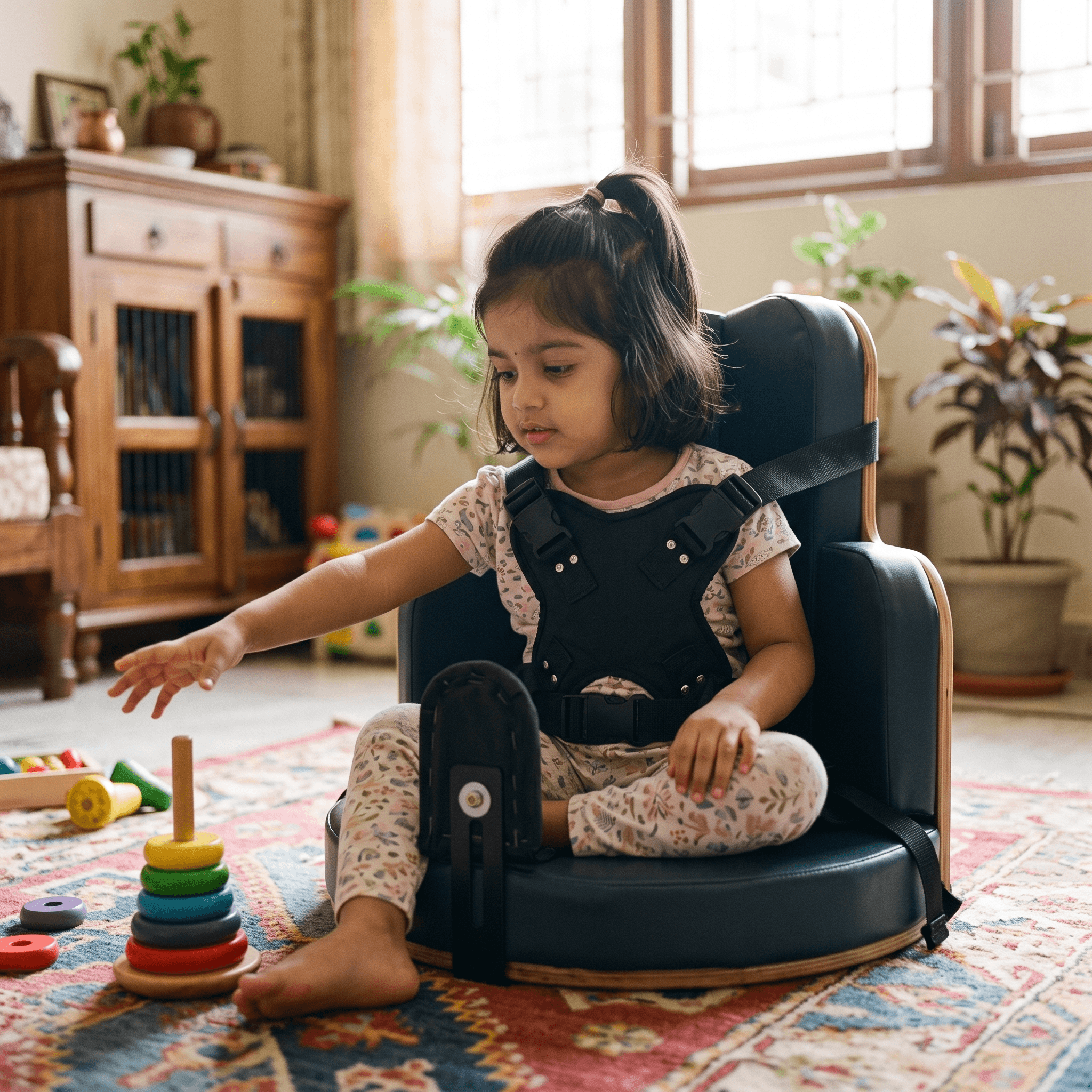
When a child has difficulty maintaining trunk balance, reaching for a toy may also be challenging.
A stable pelvis and trunk can provide a more supportive starting position for using the arms and hands.
With suitable positioning, a child may find it easier to explore objects, reach toward toys, or participate in simple hand activities.
Practical benefit: Improved positioning can create better opportunities to practise functional reaching and hand use.
The level of assistance required depends on the child's individual motor abilities.