What Is the Difference Between a Hospital Bed, Homecare Bed and Adjustable Bed?
These terms are often used interchangeably, but they do not necessarily describe the same equipment.
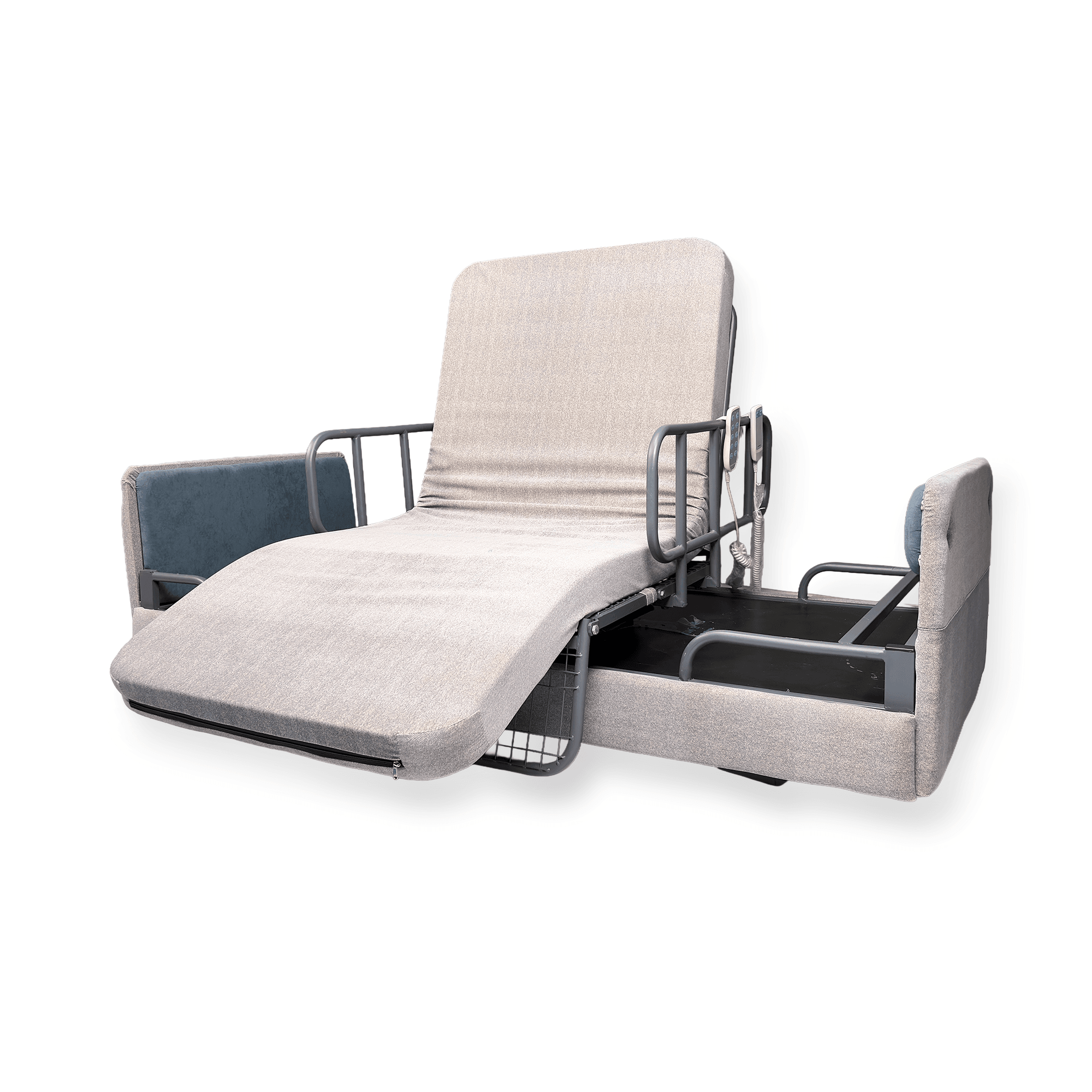
Hospital-style beds are designed for medical and nursing requirements. Depending on the model, they may offer backrest adjustment, knee positioning, adjustable bed height, wheels and specialized care functions.
Homecare beds are intended for use in homes. Some offer the same features as hospital beds, while others are simpler systems for basic positioning and caregiver assistance.
Adjustable beds primarily allow selected parts of the sleeping surface to move, usually the backrest, knee section or both. Not every adjustable bed includes medical or nursing functions.
The important difference is not the product's name or appearance. It is whether the bed provides the functions the patient and caregiver actually need.
Which Bed Features Matter Most for Homecare?
Before choosing equipment, compare the following functions.
| Feature | Why it matters |
|---|---|
| Backrest adjustment | Changes between reclining and supported sitting positions |
| Knee adjustment | Provides additional leg-positioning options |
| Bed-height adjustment | May assist caregivers and make certain transfers more manageable |
| Side rails | May provide selected support functions but require individual safety assessment |
| Wheels and brakes | Allow repositioning of suitable beds while maintaining stability when stationary |
| Mattress compatibility | Important for comfort, positioning and prescribed pressure management |
| Caregiver access | Influences assistance with personal care, positioning and transfers |
A patient who primarily needs supported sitting may require fewer functions than someone who needs frequent assisted transfers or complex nursing care.
Side rails should not automatically be treated as fall-prevention equipment. Incorrectly selected or fitted rails can introduce entrapment or injury risks.
The required features should be selected according to individual needs rather than assuming that more features always mean better care.
When Is a Complete Hospital-Style Bed Necessary at Home?
A complete hospital-style bed may be more appropriate when the patient's daily care involves functions beyond back and knee positioning.
Examples include:
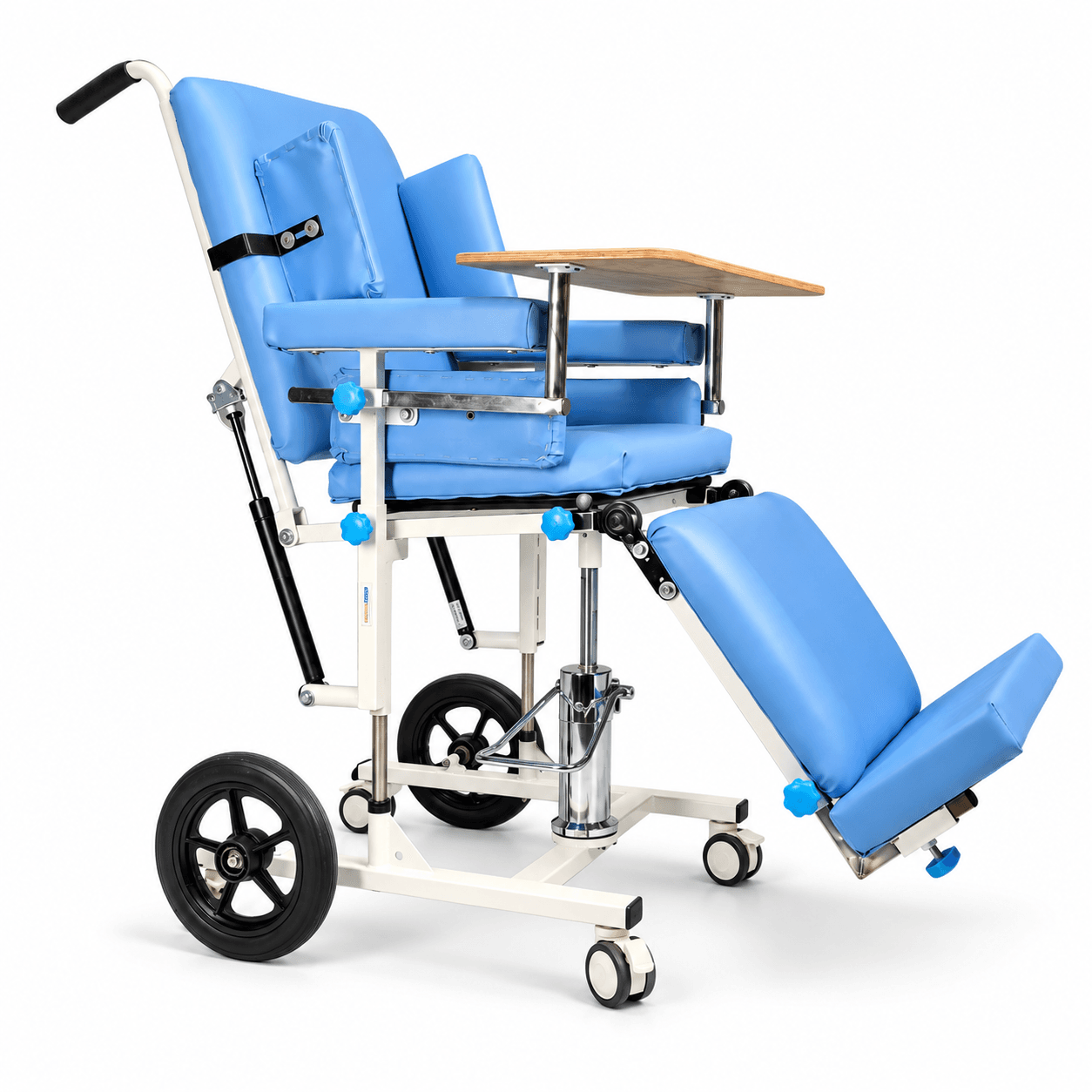
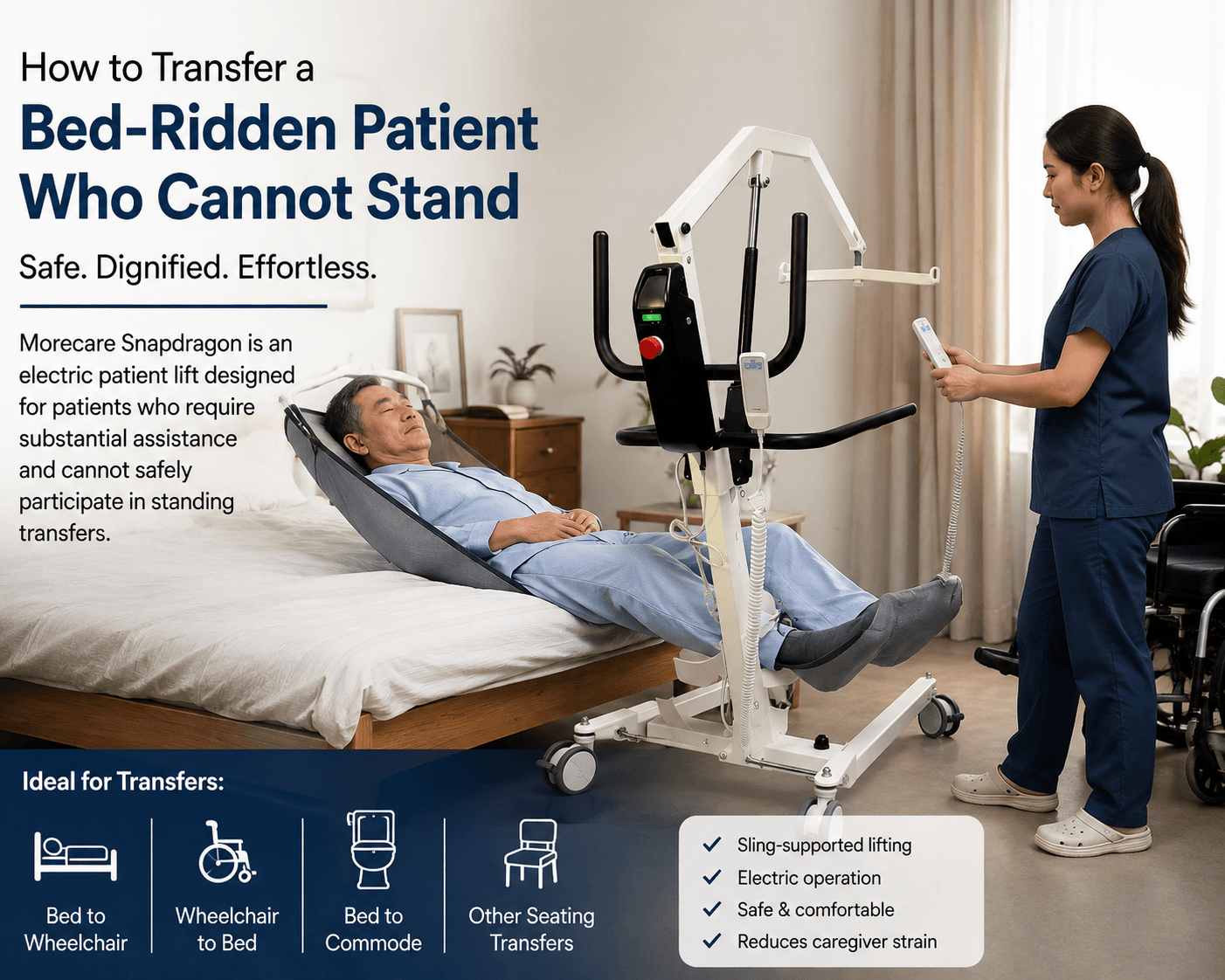
- Frequent assisted transfers between bed and wheelchair.
- Bed-height adjustment for caregiver access.
- Complex nursing and personal-care routines.
- Specialized positioning or prescribed pressure-care equipment.
- Significant mobility limitations requiring more extensive support.
- A home environment where the existing bed cannot accommodate safe care.
For instance, a patient who cannot assist with transfers may benefit from a height-adjustable bed when this is compatible with the chosen transfer method.
However, a hospital-style bed does not automatically lift or turn a patient. These functions depend on the exact model and any additional equipment.
A physiotherapist, occupational therapist or nursing professional can help identify the most suitable configuration.
Can You Convert an Existing Bed Into an Adjustable Homecare Bed?
Not every family needs to replace an existing bed to obtain motorized positioning.
If the primary requirement is raising the backrest or adjusting the knee section, a compatible existing-bed conversion system may be considered.
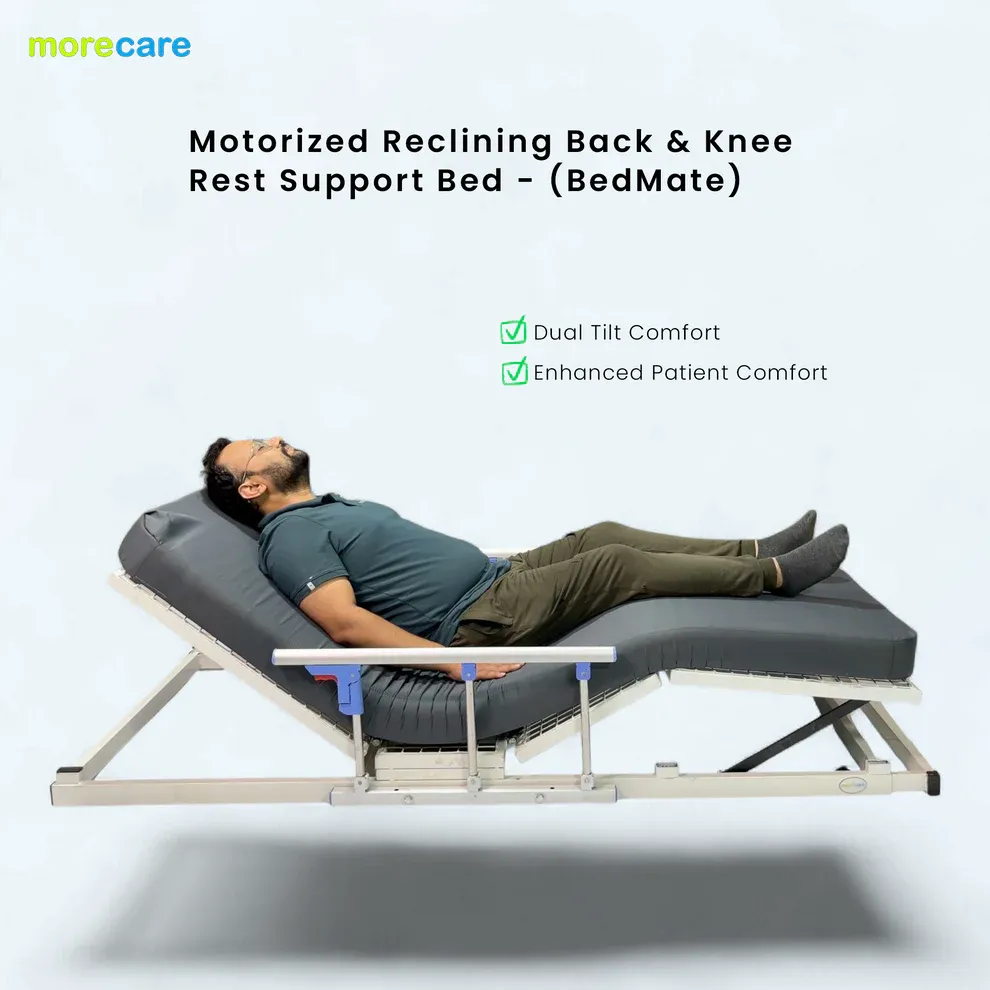
The Morecare BedMate Motorized Back & Knee Rest is designed to add electrically adjustable positioning to suitable home beds.
Its features include:
- Motorized backrest adjustment.
- Motorized knee positioning.
- Wired handset operation.
- Installation on compatible existing beds.
- An included 4-inch mattress.
BedMate allows selected resting positions to be changed without manually lifting the bed sections.
It does not raise the overall bed height, perform patient transfers or automatically turn the patient.
This makes it a potential option when positioning convenience is the main requirement—not a replacement for every function of a complete nursing bed.
How Do You Choose the Right Bed for Your Home?
The best starting point is to identify what the patient needs help with every day.
Consider an existing-bed adjustable system when:
- The current bed is structurally suitable and compatible.
- Motorized back and knee positioning is the main requirement.
- Bed-height adjustment is not necessary.
- Transfers and personal care can be managed safely with the existing setup.
Consider a complete hospital-style homecare bed when:
- The patient needs adjustable bed height.
- Caregivers require additional access or nursing functions.
- More complex positioning or transfers are involved.
- The current bed is unsuitable for the patient's needs.
Also check room dimensions, available walking space, electrical access, mattress compatibility and the assistance caregivers can provide.
Choosing a bed should not be based on price or appearance alone.
The right homecare setup provides the necessary functions without overlooking safety, comfort or caregiver requirements.