Why Do Some Adults Need Customized Wheelchairs?
Standard adult wheelchairs are manufactured around defined dimensions, adjustment ranges, seating systems and operating mechanisms.
These configurations are appropriate for many people.
However, adults with significant mobility limitations may have needs that standard models cannot adequately accommodate.
The difficulty is not always that the wheelchair cannot move.
Sometimes the person cannot operate it comfortably, maintain a suitable posture or use it effectively in their daily environment.
Limited Hand and Arm Strength
A conventional manual wheelchair requires adequate strength, movement and coordination to propel the wheels.
Even a powered wheelchair may be difficult to control when the joystick requires more force or movement than the user can reliably produce.
Poor Head and Trunk Control
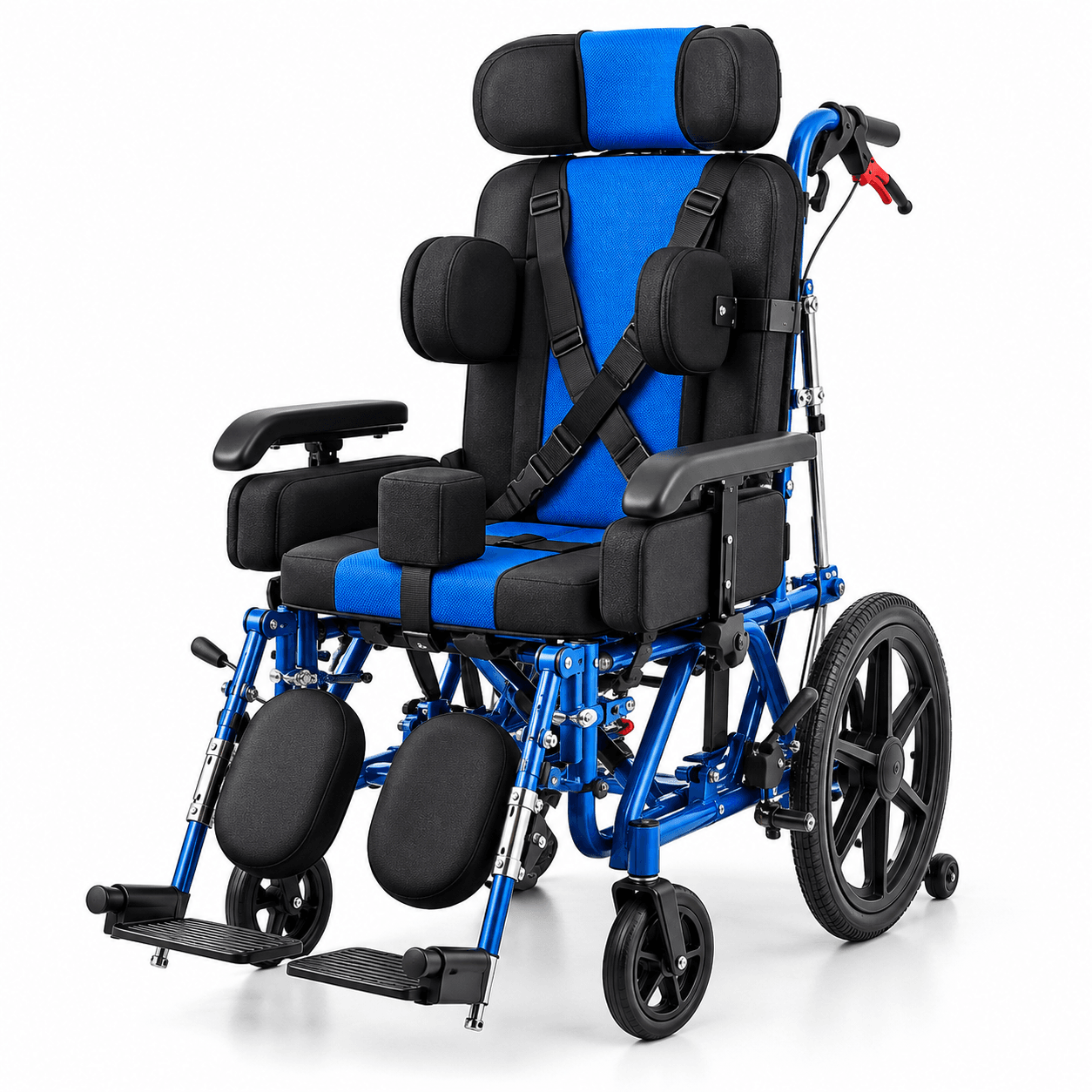
Some individuals cannot maintain a comfortable upright posture without external support.
They may require additional head, lateral trunk or pelvic positioning.
Restricted Joint Movement
Contractures or limited movement in the shoulders, elbows, hips or knees can make standard seating dimensions and support arrangements unsuitable.
Unequal Strength on Both Sides
A person with stroke-related weakness may have difficulty accessing equipment positioned on one side.
Difficulty Repositioning Independently
Some wheelchair users cannot shift their weight or adjust their posture without assistance.
These individuals may require more extensive seating and pressure-management support.
Special Home and Workplace Requirements
A wheelchair may fit the user but be impractical in a narrow home, office or other everyday environment.
Relevant considerations include turning space, doorway access and transfer arrangements.
Changing Functional Abilities
For people with progressive neuromuscular conditions, a previously appropriate wheelchair may become difficult to use as strength and movement change.
Customization should begin with identifying the exact barrier.
The solution may involve a different standard wheelchair, an adjustment to approved components or a completely different seating or control arrangement.
The objective is not to add unnecessary complexity. It is to determine whether a safe and useful modification can address the person's actual needs.
Which Medical Conditions May Require Specialized Adult Wheelchairs?
Different medical conditions can affect movement, strength, posture and mobility.
However, diagnosis alone does not determine the right wheelchair design.
The person's individual abilities, measurements, seating tolerance and goals must guide the assessment.
Duchenne Muscular Dystrophy and Other Muscular Dystrophies
Duchenne muscular dystrophy is a progressive neuromuscular condition that causes muscle weakness.
As abilities change, an individual may find it increasingly difficult to propel a manual wheelchair or operate certain powered controls.
Potential requirements may include:
Accessible joystick placement.
Suitable arm and forearm support.
Alternative powered control options where compatible.
Individualized seating and trunk support.
Powered positioning functions when clinically indicated.
Reassessment as strength changes.
These needs should be discussed with the person's neuromuscular care team and wheelchair specialists.
Spinal Cord Injury
The effects of a spinal cord injury depend partly on the level and completeness of the injury.
Some wheelchair users have good arm and hand control, while others experience substantial upper-limb weakness.
Possible requirements include specialized pressure-management cushions, trunk positioning, control accessibility and transfer-related adaptations.
People with impaired sensation require particular attention to skin protection and pressure-related risks.
Stroke and Hemiplegia
Stroke-related weakness may affect one side of the body.
Some individuals benefit from wheelchair adjustments that accommodate their stronger side or provide support to an affected arm.
Seating must also address any relevant balance, positioning or perceptual difficulties.
Motor Neuron Disease and ALS
Motor neuron disease can cause progressive changes in muscle strength and movement.
Wheelchair and assistive-technology requirements may need regular review.
A configuration that works today may require adjustment as the condition progresses.
Multiple Sclerosis
People with multiple sclerosis may experience fatigue, weakness, spasticity or coordination difficulties.
Wheelchair suitability should consider the person's current and changing functional abilities.
Parkinsonian Conditions and Other Neurological Disorders
Movement initiation, coordination, postural stability and operating controls may be affected.
The appropriate solution depends on the individual's actual abilities and safety requirements.
Complex Orthopedic and Postural Conditions
Significant scoliosis, pelvic asymmetry, contractures or unusual body proportions may make conventional seating unsuitable.
Any specialized seating should accommodate assessed joint limitations and avoid forcing the person into painful positions.
Medical conditions identify possible reasons for customization, but no diagnosis guarantees that a particular modification is necessary or appropriate.
What Parts of an Adult Wheelchair Can Be Customized?
An adult wheelchair may require changes to seating, positioning, controls or overall dimensions.
Each request must be reviewed against the wheelchair's original design and approved operating conditions.
Morecare can evaluate requirements involving the following areas.
- Seat Width and Depth
An unsuitable seat can contribute to discomfort, unstable posture or difficulty using the wheelchair.
Individual assessment may identify the need for a different seat size, cushion arrangement or wheelchair frame.
- Head and Neck Support
Users with limited head control may require an appropriately configured headrest.
Some individuals need more extensive positioning than a conventional adjustable headrest provides.
- Lateral Trunk Supports
Additional lateral support may help selected wheelchair users maintain an appropriate supported position.
Placement should avoid painful pressure and interference with breathing or arm movement.
- Pelvic Positioning
The pelvis forms the foundation of the seated posture.
A suitable cushion and pelvic-positioning system should be selected according to the person's body geometry, flexibility and pressure risk.
- Armrests and Forearm Supports
Some users cannot comfortably maintain their arms on standard wheelchair armrests.
A forearm trough, padded arm support or different armrest position may be worth evaluating.
Such components must be designed so they do not create unsafe pressure, obstruct transfers or interfere with wheelchair controls.
- Joystick Position
A person may have sufficient hand movement to operate a powered wheelchair but find the standard joystick location difficult to reach.
Changing the position, mounting arrangement or accessibility of a compatible control may be considered.
- Low-Force or Alternative Controls
Some users cannot reliably operate a standard joystick because of limited muscle strength, tremor or restricted movement.
Potential approaches may include commercially supported low-force controls or other compatible access methods.
However, availability depends on the wheelchair's controller, electrical architecture, manufacturer permissions and the user's ability to operate it safely.
Morecare should evaluate such requests rather than promise a particular control system before technical review.
- Footrests and Leg Supports
Height, angle, lower-limb positioning and clearance may require attention.
Modifications must respect joint movement and transfer requirements.
- Tilt, Recline and Powered Positioning
Some users require additional positional adjustment for comfort, posture or pressure management.
These are safety-critical wheelchair functions.
Retrofitting them to an unsuitable frame may not be feasible or appropriate.
A wheelchair originally designed for powered positioning may be the better solution.
- Overall Width and Environmental Access
Wheelchair dimensions may affect access through doorways or other spaces.
Narrowing a frame or modifying wheel geometry can affect stability and must not be undertaken without engineering assessment.
Important: These are customization requirements that may be evaluated, not a guarantee that every modification is available on every wheelchair or can be manufactured safely.
What If the Person Cannot Operate a Normal Electric Wheelchair Joystick?
A conventional powered wheelchair joystick may require movements that are difficult for someone with very limited hand or arm strength.
The problem may involve more than joystick force.
The user may struggle to reach the control, support the forearm, grip the joystick knob or make consistent directional movements.
Before considering a modification, the difficulty should be assessed systematically.
Step 1: Identify the Movement the User Can Perform Reliably
Determine which parts of the hand, wrist or arm the person can move.
The assessment should consider:
Available movement range.
Ability to initiate movement.
Movement accuracy.
Fatigue during repeated use.
Involuntary movement or tremor.
Changes in strength during the day.
Step 2: Review Arm Support
A user may control their hand more effectively when the forearm is appropriately supported.
A customized support arrangement may therefore be relevant.
However, arm support alone does not guarantee safe joystick control.
Step 3: Examine Control Position
The joystick may need to be closer, farther away or positioned differently.
Any mounting change must preserve access to safe braking and other required functions.
Step 4: Evaluate Compatible Control Options
Some powered wheelchair systems support different joystick configurations or alternative access interfaces.
Others do not.
The original control system must be identified before recommending changes.
Step 5: Assess Functional Driving Safety
The person must be able to perform essential driving tasks reliably.
This includes starting, stopping, turning and responding to obstacles.
A control that works briefly during a demonstration may still become unsafe when the person is fatigued.
Step 6: Validate the Complete System
Electrical modifications can affect speed control, braking, fail-safe behaviour and the wheelchair's approved configuration.
A qualified technical team must evaluate the controller, wiring, operating limits and emergency response.
Unauthorized changes to control electronics or braking systems should not be made.
When Is Modification Not Appropriate?
A different powered wheelchair platform, specialist drive-control system or caregiver-operated solution may be more suitable when the existing chair cannot accommodate the user's requirements safely.
The goal should be reliable mobility—not simply making the joystick easier to move.
How Does Morecare Evaluate Complex Adult Wheelchair Requirements?
Morecare Mobility & Rehabilitation Solutions provides a customization service for rehabilitation equipment, including assessment of modifications and made-to-order requirements.
The company has worked in mobility and rehabilitation equipment since 2014 and established its manufacturing operations in Jaipur in 2023.
Its published service invites individuals, families, therapists and healthcare organizations to share unusual equipment requirements for evaluation.
Start With the Functional Problem
A customer can explain the specific difficulty, such as:
The wheelchair joystick is too difficult to operate.
The user needs additional forearm support.
The seating position causes discomfort.
The headrest does not accommodate the person's posture.
The wheelchair does not fit the user's dimensions.
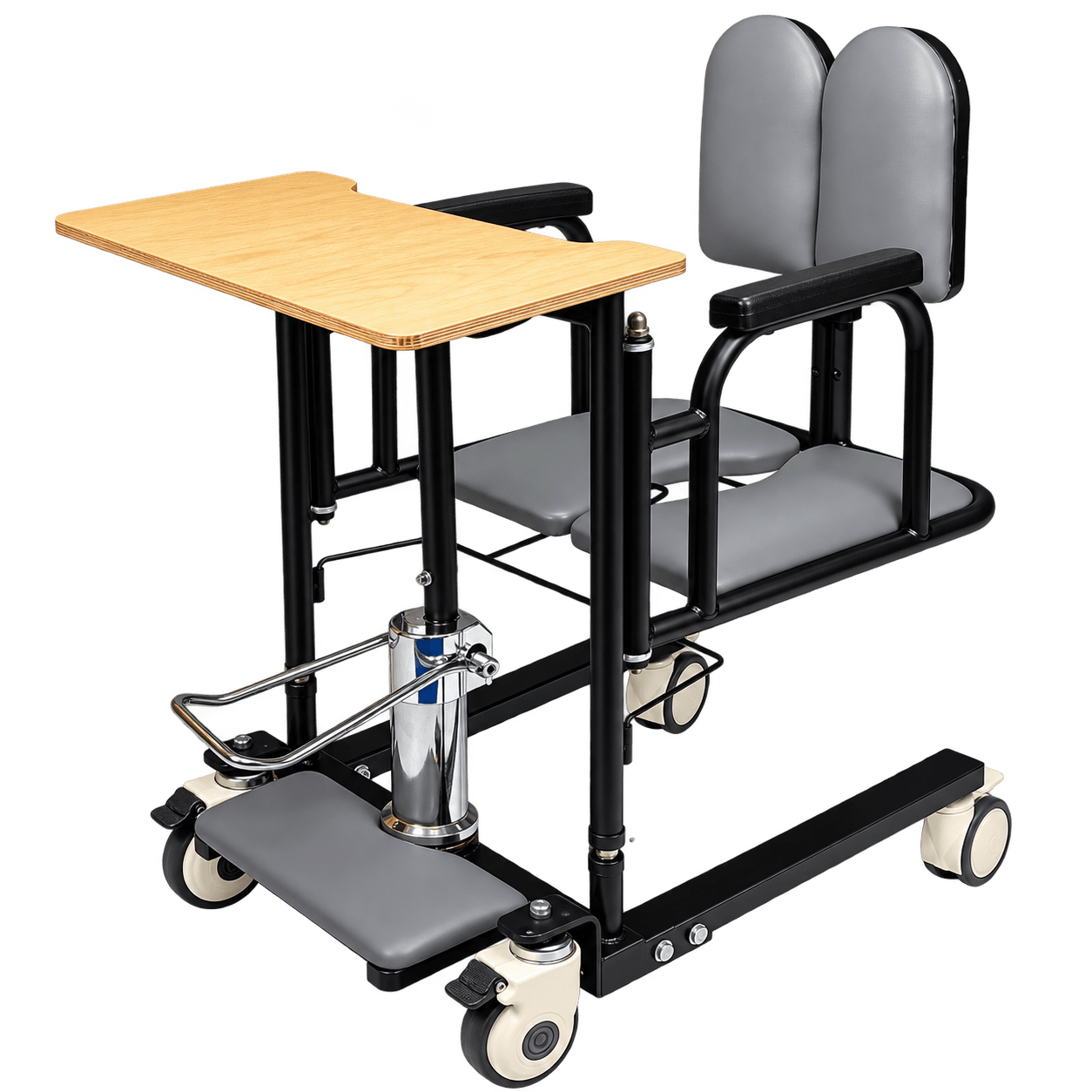
The person needs a transfer arrangement that works with their wheelchair.
An existing product lacks a particular required function.
Share the Existing Equipment Details
For an electric wheelchair, the manufacturer, model, controller type, battery system and available documentation are especially important.
For seating problems, photographs, measurements and therapist recommendations may be more relevant.
Technical and Clinical Review
Morecare can review whether the requirement might be addressed through an existing product, a compatible component change or a made-to-order solution.
Clinical input may be necessary to define safe positioning, movement and intended use.
Proposed Modification
If a solution appears feasible, the proposed scope should identify:
Which components will change.
Which functions will remain unchanged.
Any new operating or maintenance requirements.
Safety-critical limitations.
Required tests or fitting checks.
Whether further assessment is necessary.
Engineering and Manufacturing
Approved projects may involve fabrication, component adaptation, assembly or new product development.
However, powered control modifications require specific electrical and functional validation.
A custom component should never be assumed safe merely because it physically fits the wheelchair.
Inspection and User Training
The finished configuration should be inspected and tested against the agreed intended use.
The user and caregiver should receive appropriate instructions.
Complex powered modifications may require specialist operational testing and ongoing review.
After-Delivery Support
The agreed quotation should identify warranty conditions, spare-part availability, fitting responsibilities and any available follow-up assistance.
Morecare's role is to assess the problem and determine whether a suitable technical solution can be offered.
Not every request can be accepted, particularly when modification could compromise safety or when the necessary control-system compatibility cannot be established.
How Much Does a Customized Adult Wheelchair Cost, and How Can You Request One?
Customized adult wheelchair projects vary substantially in cost and complexity.
A different arm support or seating component is not equivalent to developing a new powered control system.
The price and timeline should therefore follow an individual feasibility review.
What Affects Customization Charges?
Base wheelchair
The existing wheelchair's design, quality, controller compatibility and available parts may influence what modifications are possible.
Seating requirements
Special cushions, headrests, lateral supports and forearm supports may require different materials and fabrication work.
Electrical modifications
Changes to powered controls may involve specialist components, compatibility assessment and extensive safety validation.
Structural changes
Alterations to load-bearing parts require engineering review and may be rejected if they compromise the approved design.
Prototype development
A completely new mechanism or component may require drawings, fabrication trials and revisions.
Fitting and testing
Some configurations require more detailed assessment and verification than others.
What About Manufacturing Time?
A straightforward, approved accessory modification may be completed sooner than a complex powered-control project.
However, there is no fixed timeline suitable for every custom wheelchair.
Morecare should confirm a project-specific delivery estimate after evaluating the requirement.
Can an Existing Electric Wheelchair Be Modified?
Possibly, depending on the model and requested change.
However, a third-party wheelchair may have proprietary controls, limited spare parts or restrictions on structural and electrical modification.
Morecare must review the exact product before confirming feasibility.
What Should Customers Share?
The following information can help with an initial review.
Patient's age, height and weight.
Medical condition and relevant functional limitations.
Current wheelchair type, manufacturer and model.
Photographs or videos showing the problem.
Seated body measurements and postural support needs.
Available hand and arm movements.
Details of the joystick or control system, if applicable.
Current seating or pressure-related concerns.
Therapist or rehabilitation specialist recommendations.
Intended use, location, budget and urgency.
For complex conditions such as Duchenne muscular dystrophy, the customer should share the requirements identified by the treating neuromuscular and rehabilitation teams.
Patient medical information and videos should be shared only through an appropriate authorized channel, with the individual's consent.
What Happens After the Initial Review?
Morecare can evaluate the request and discuss whether a suitable solution appears technically feasible.
If a project can proceed, the customer should receive a written proposal identifying the approved scope, charges, estimated schedule, warranty terms and limitations.
For some users, a different standard wheelchair or specialist control system may be safer and more practical than modifying an existing chair.
The purpose of customization is to find an appropriate solution—not to modify equipment unnecessarily.
Clinical and Technical References
World Health Organization. Wheelchair Provision Guidelines, 2023.
https://www.who.int/publications/i/item/9789240074521
NICE. Motor Neurone Disease: Assessment and Management (NG42).
https://www.nice.org.uk/guidance/ng42/chapter/Recommendations
Muscular Dystrophy UK. Duchenne Muscular Dystrophy (DMD).
https://www.musculardystrophyuk.org/conditions/a-z/duchenne-muscular-dystrophy-dmd/
Morecare Mobility & Rehabilitation Solutions. Customization Services.
https://morecare.in/customization-services
Morecare Mobility & Rehabilitation Solutions. Adult Rehabilitation Solutions.
https://morecare.in/adults
Medical and Engineering Disclaimer: This article provides general information about adult wheelchair customization. Seating, positioning, pressure-management and powered mobility requirements must be assessed individually by qualified professionals. Modifications to powered controls, electrical systems, braking, load-bearing frames or other safety-critical components require appropriate compatibility assessment and engineering validation. Morecare's evaluation of a project does not guarantee that the requested modification can be safely manufactured or that a particular clinical outcome will be achieved.