Check Doorway Clearance Before Choosing a Walker
A gait trainer with body supports is often wider than a basic walking frame because it needs space for the user's body, support components and wheelbase.
Measure the narrowest doorway along the intended walking route, including the clear opening when the door is fully open.
The Morecare Crab Walker requires a minimum 34-inch clear doorway opening. Additional clearance may be necessary for manoeuvring.
A walker that cannot move through the required doorway may limit rehabilitation to one room.
Identify a Safe Area for Walking Practice
Supported walking requires more than an unobstructed straight path.
Consider whether the home has adequate space to initiate steps, move forward, stop and reposition the walker with caregiver assistance.
Choose firm, level and stable flooring. Loose rugs, wet tiles, thresholds, clutter and uneven surfaces can create hazards for wheeled rehabilitation equipment.
For the initial sessions, a physiotherapist should assess the environment and establish an appropriate practice routine.
Evaluate the Patient's Weight-Bearing Ability
Not every adult who cannot walk independently is suitable for the same type of gait trainer.
Some individuals need additional trunk stability, while others require substantial assistance to support their body weight.
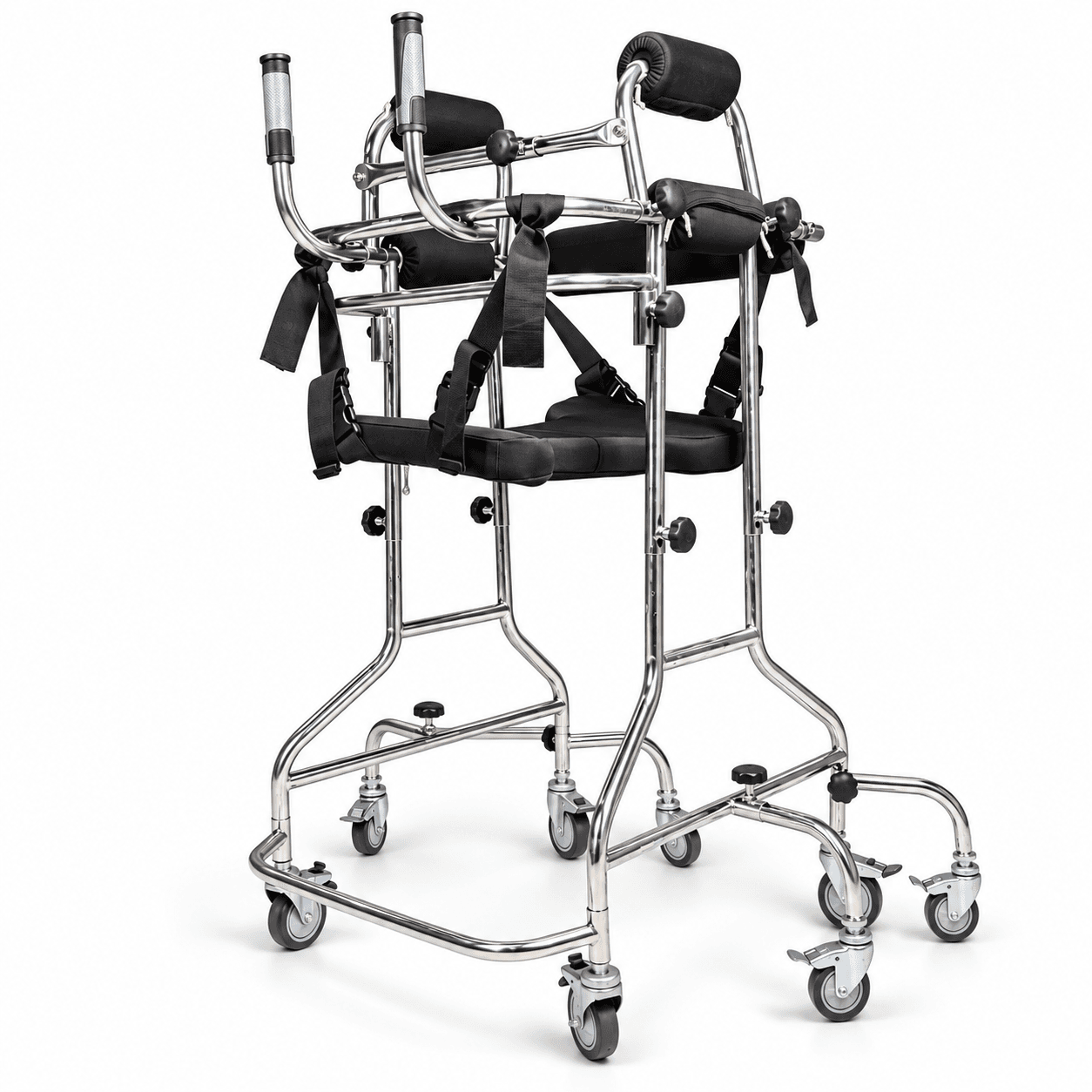
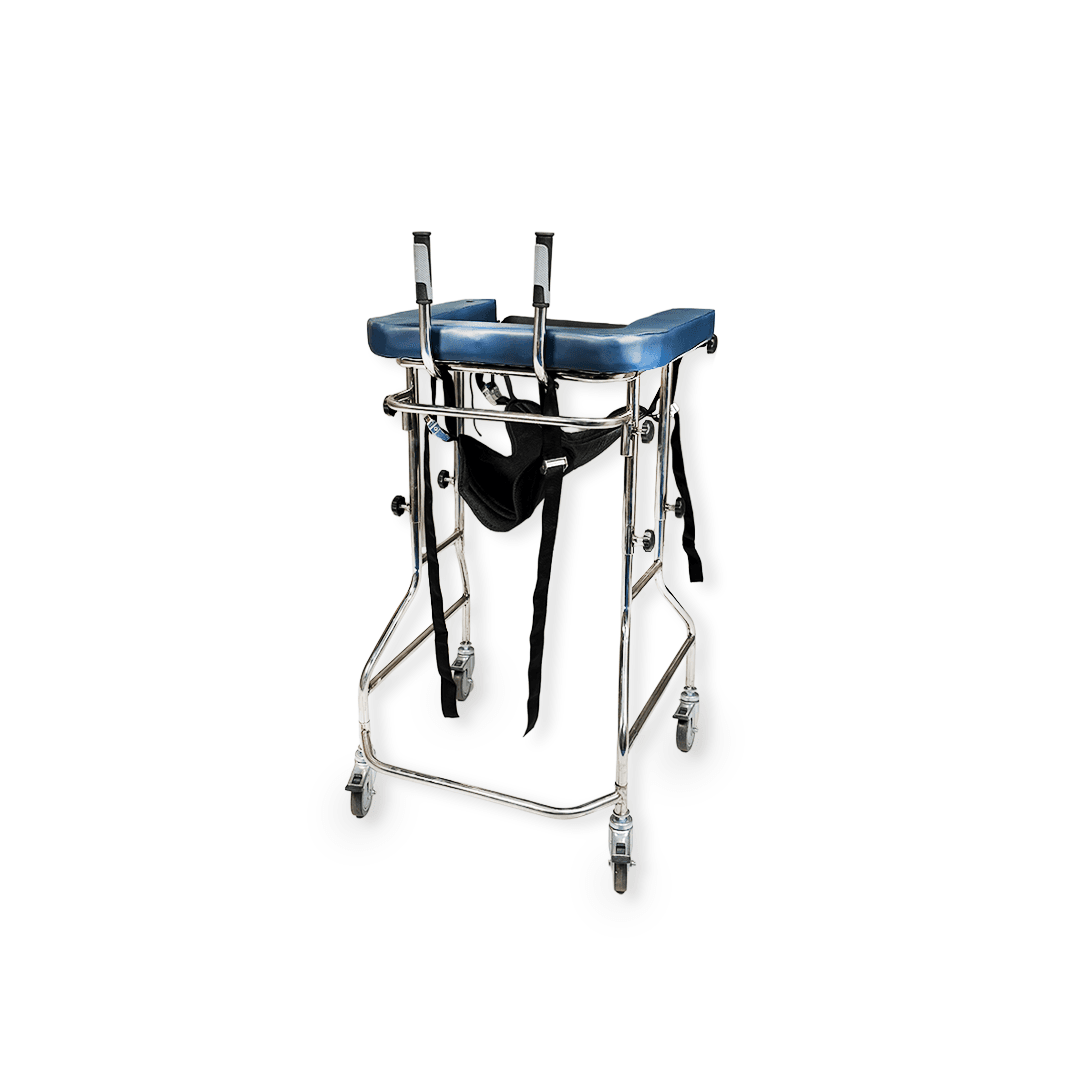
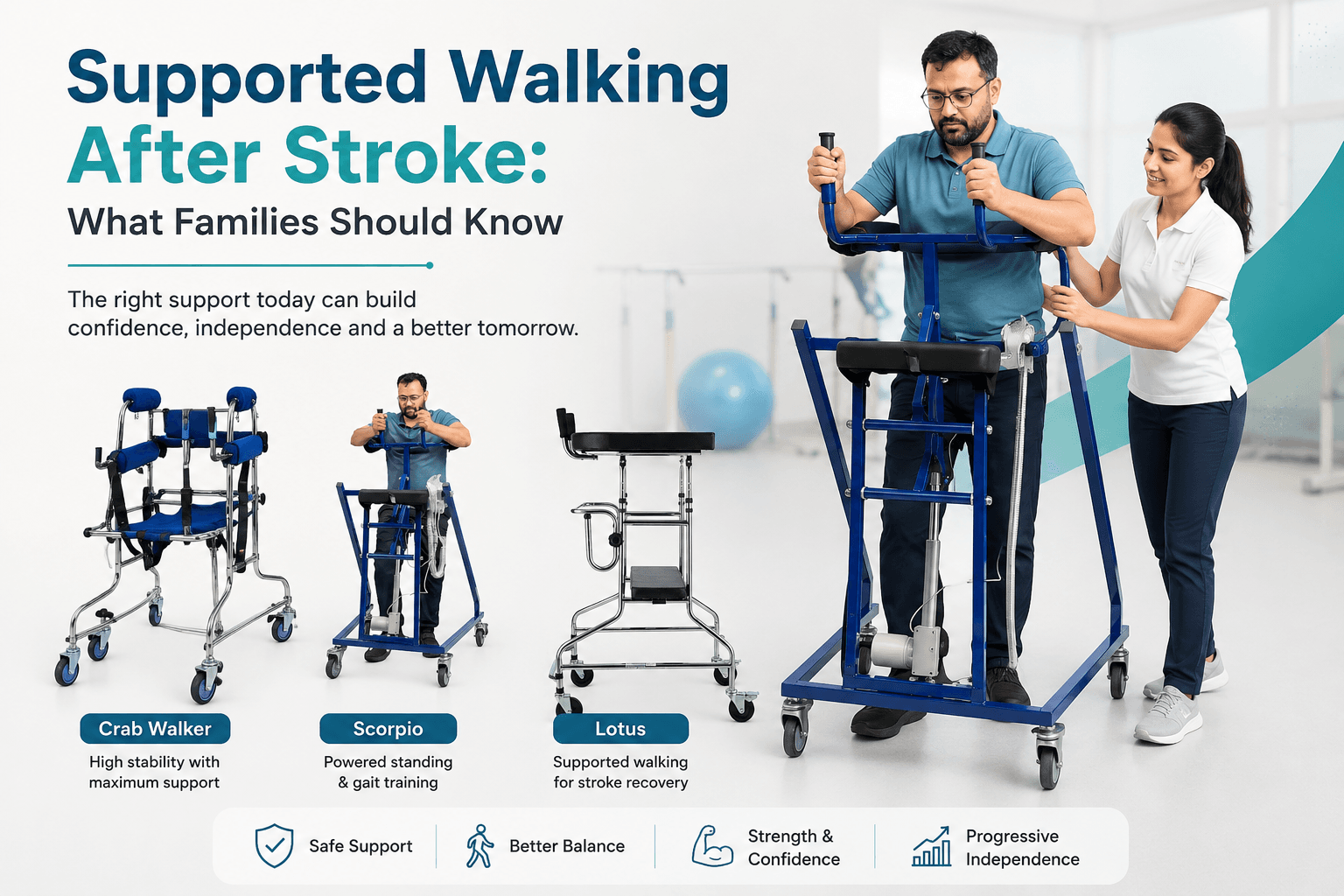
The Morecare Crab Walker provides adjustable chest and arm supports along with a pelvic sling for partial body-weight assistance.
It is not intended to fully suspend or lift a person. A rehabilitation professional should determine whether the user can safely bear the remaining weight and participate in stepping.
Plan Transfers Into and Out of the Gait Trainer
One commonly overlooked question is how the patient will enter the walker before training begins.
A person may require assistance from a bed, wheelchair or other seated position.
The caregiver must be able to position the walker, secure the required supports and assist the user without unsafe manual lifting.
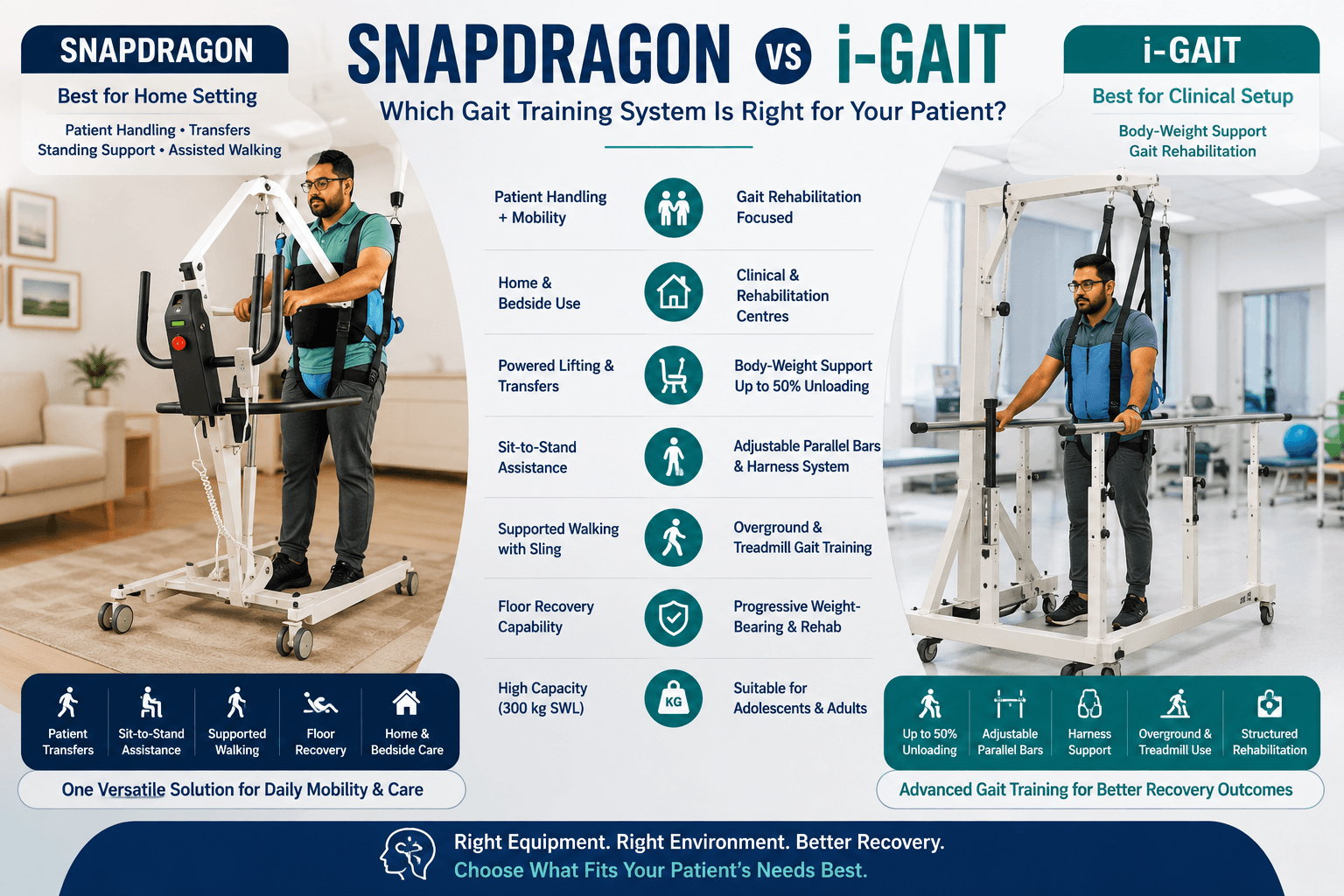
A gait trainer should never be treated as a substitute for a patient-transfer hoist. If the patient needs complete lifting assistance, the transfer method must be assessed separately.
Make Sure Appropriate Supervision Is Available
A supportive gait trainer does not eliminate the risk of falling or losing balance.
Caregivers should understand the user's standing tolerance, fatigue signs, required assistance and the equipment's braking procedure.
The Crab Walker includes eight individually lockable castors for controlled positioning. Wheel locking and release must follow the manufacturer's instructions and the rehabilitation professional's training.
Walking duration, support positioning and progression should follow an individualized rehabilitation programme rather than a fixed daily target.
Check Product Fit, Adjustability and Storage
The final step is checking whether the gait trainer can accommodate the user's body and the home's practical requirements.
The Morecare Crab Walker is designed for adults approximately 5–6.2 feet tall, subject to individual fitting, and has a maximum user-weight rating of 150 kg.
Its height-adjustable frame, padded chest support, arm supports and pelvic sling allow selected configurations to be tailored to individual needs.
The frame separates into two sections for transportation and storage, with published folded dimensions of 24 × 32 × 12 inches.
Before purchasing, share the user's measurements, rehabilitation requirements and available home space with Morecare for review.