Why Does Standard Patient Transfer Equipment Sometimes Fail in Home Environments?
Many homes are designed around conventional furniture rather than patient-handling equipment.
When a family begins caring for a person with severe mobility limitations, the available space can become a major challenge.
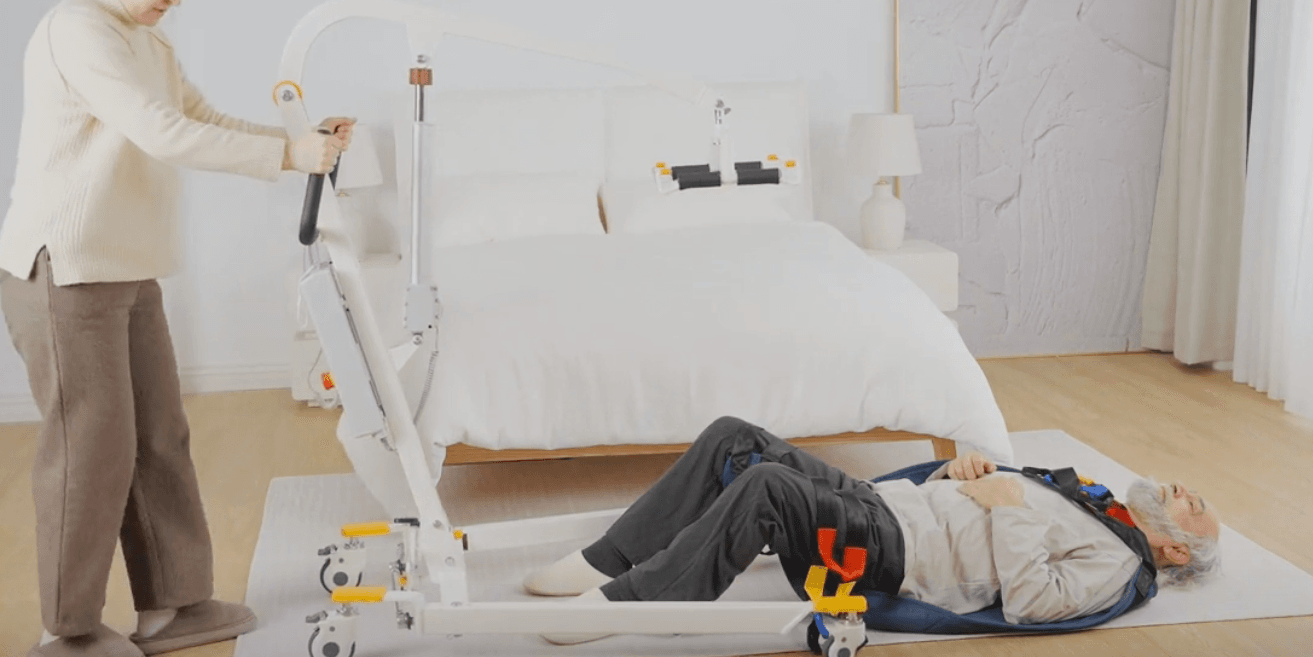
A transfer device must approach the patient, support them appropriately, lift or reposition them and reach the destination safely.
Every stage requires sufficient clearance.
Narrow Bedroom Doorways
A mobile hoist may be wide enough to operate safely inside a bedroom but unable to pass through the doorway in its required configuration.
The available doorway width must be measured at the narrowest point, accounting for door leaves, frames and other obstructions.
Limited Under-Bed Clearance
Some mobile lifts need their legs or base to move underneath a bed.
If the existing bed has a low frame or enclosed storage base, the lifting equipment may not be able to approach the patient appropriately.
High or Low Sleeping Surfaces
The height of the bed influences whether the hoist can reach the patient and provide the lifting range needed for the transfer.
A system suitable for one bed may not be appropriate for another.
Small Bathrooms
Bathroom doorways, toilet positions, washbasins and restricted turning space may prevent a wheelchair or transfer lift from reaching the required location.
A device that fits through the bathroom entrance may still be unable to complete the transfer.
Limited Space Around the Bed
A patient lift may need room to approach, turn and position the person over the destination surface.
The movement path is often more important than a single equipment dimension.
Unusual Wheelchair or Commode Dimensions
Seat height, width, armrests and footrests can interfere with the transfer.
Caregivers must be able to position the receiving equipment appropriately.
Caregiver Handling Limitations
A family member may not have the strength, mobility or training required to operate a particular device safely.
Some transfers require assistance from more than one caregiver.
The key question is whether the entire transfer can be completed safely—not simply whether the hoist fits through the doorway.
A homecare assessment should consider the patient, equipment, caregiver and environment together.
Which Medical Conditions May Require Specialized Transfer Equipment?
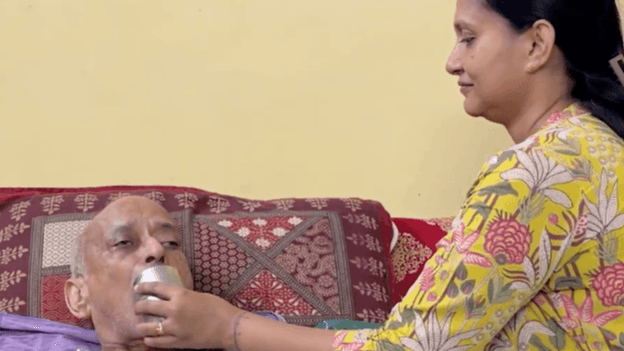
A person's medical condition can influence their ability to stand, balance, support their weight or participate in a transfer.
However, the diagnosis alone does not determine which lifting equipment is appropriate.
The patient's actual functional abilities and transfer requirements must be assessed.
Spinal Cord Injury
People with spinal cord injuries may have different levels of arm, trunk and leg function.
Some can perform transfers independently or with limited assistance.
Others need a full-body lifting system.
Specialized seating, pressure management and appropriate sling support may also be important.
Duchenne Muscular Dystrophy and Other Muscular Dystrophies
Progressive muscle weakness may reduce a person's ability to stand, pivot or assist with transfers.
A transfer arrangement that previously worked may become unsuitable as strength changes.
Families may need to reassess both the lifting system and the home environment.
Motor Neuron Disease and ALS
People with progressive neurological weakness may require increasing assistance with transfers.
Equipment should be selected according to current abilities, expected changes and the treating team's recommendations.
Stroke and Hemiplegia
Some stroke survivors experience one-sided weakness, poor balance or impaired trunk control.
A standing transfer may be appropriate for certain individuals, while others require more extensive lifting assistance.
Cerebral Palsy
Some adults with cerebral palsy need substantial assistance with transfers because of reduced postural control, muscle tone changes or restricted joint movement.
Appropriate sling positioning and handling techniques may require specialist assessment.
Parkinsonian Conditions
Balance impairment, freezing or difficulty initiating movement may affect transfer safety.
The required equipment depends on the person's abilities and reliability during the transfer.
Elderly Patients With Severe Mobility Limitations
Frailty, reduced strength, pain or multiple health conditions may make manual transfers difficult.
An assessment should determine whether a powered lift, another transfer aid or a different care arrangement is suitable.
Bariatric Patients
Patients with higher body weight may require equipment with an appropriate complete-system safe working load, suitable sling dimensions and sufficient space for transfer.
A high published capacity does not eliminate the need to assess the hoist's stability, the sling, the supporting surfaces and caregiver requirements.
Medical diagnosis identifies potential needs. The individual transfer assessment determines the equipment.
What Parts of a Patient Hoist or Transfer System Can Be Evaluated for Customization?
Patient lifting systems contain structural, mechanical, electrical and textile components.
Some modifications may be feasible.
Others could compromise safety or require substantial redesign and validation.
Morecare evaluates requests involving the following areas.
- Hoist Base Width
A customer may need a device that operates within a narrow home environment.
However, the hoist's base width directly affects its stability.
Reducing the base footprint may increase overturning risk and must never be treated as a simple fabrication change.
Where possible, selecting an appropriately designed compact product may be safer.
- Under-Bed Clearance
Families may need a lift that can approach a bed with limited space underneath.
The correct solution depends on the dimensions and design of both the bed and lifting equipment.
Modifying the hoist base, changing the bed or selecting another transfer method may have different safety implications.
- Lifting Height and Range
The patient must be raised sufficiently to clear the starting and destination surfaces without exceeding the device's approved range.
Changing the mast, boom or actuator geometry affects lifting loads and stability.
Such changes require engineering calculations and validation.
- Sling Size and Body Support
Some patients cannot be appropriately supported by a standard sling size.
Potential considerations include:
Torso dimensions.
Thigh and pelvic support.
Head and neck support.
Leg positioning.
Pressure-sensitive areas.
Contractures and asymmetry.
The intended transfer activity.
However, sling modifications must follow an approved design and validation process.
An untested change to fabric, stitching, loops or attachment geometry could cause a fall.
- Sling Attachment Configuration
Different lifting systems use different spreader bars, hooks, loops or clips.
These components are not universally interchangeable.
A proposed sling and lifting system must have documented compatibility.
- Transfer Seat Height
Some transfers involve unusually high or low beds, wheelchairs or commodes.
The equipment must accommodate the full vertical range required for safe positioning.
- Frame Width and Access
Families may request changes to the operating width or storage configuration of a transfer device.
The design must maintain adequate structural strength and stability.
- Arm and Footrest Clearance
Receiving wheelchairs and commodes may have components that obstruct a transfer.
A suitable equipment arrangement may require changes to the receiving surface rather than the lifting device.
- Electrical and Control Components
Powered lifting systems may contain actuators, batteries, controllers, handsets and emergency controls.
Alterations must preserve approved lifting behaviour, braking or holding functions and safety protections.
- Specialized Transfer Environments
Some requirements involve beds, toilets or rooms with unusual access.
The solution may require a different device category rather than modification of a conventional hoist.
Important: These are customization needs that can be reviewed. They are not a promise that Morecare can safely modify every lifting device.
Changes to safety-critical components must be approved and properly validated before occupied use.
Which Morecare Patient Transfer Products Can Be Considered?
Morecare offers different lifting and transfer equipment designed around particular patient and caregiver requirements.
The correct starting platform depends on the transfer task.
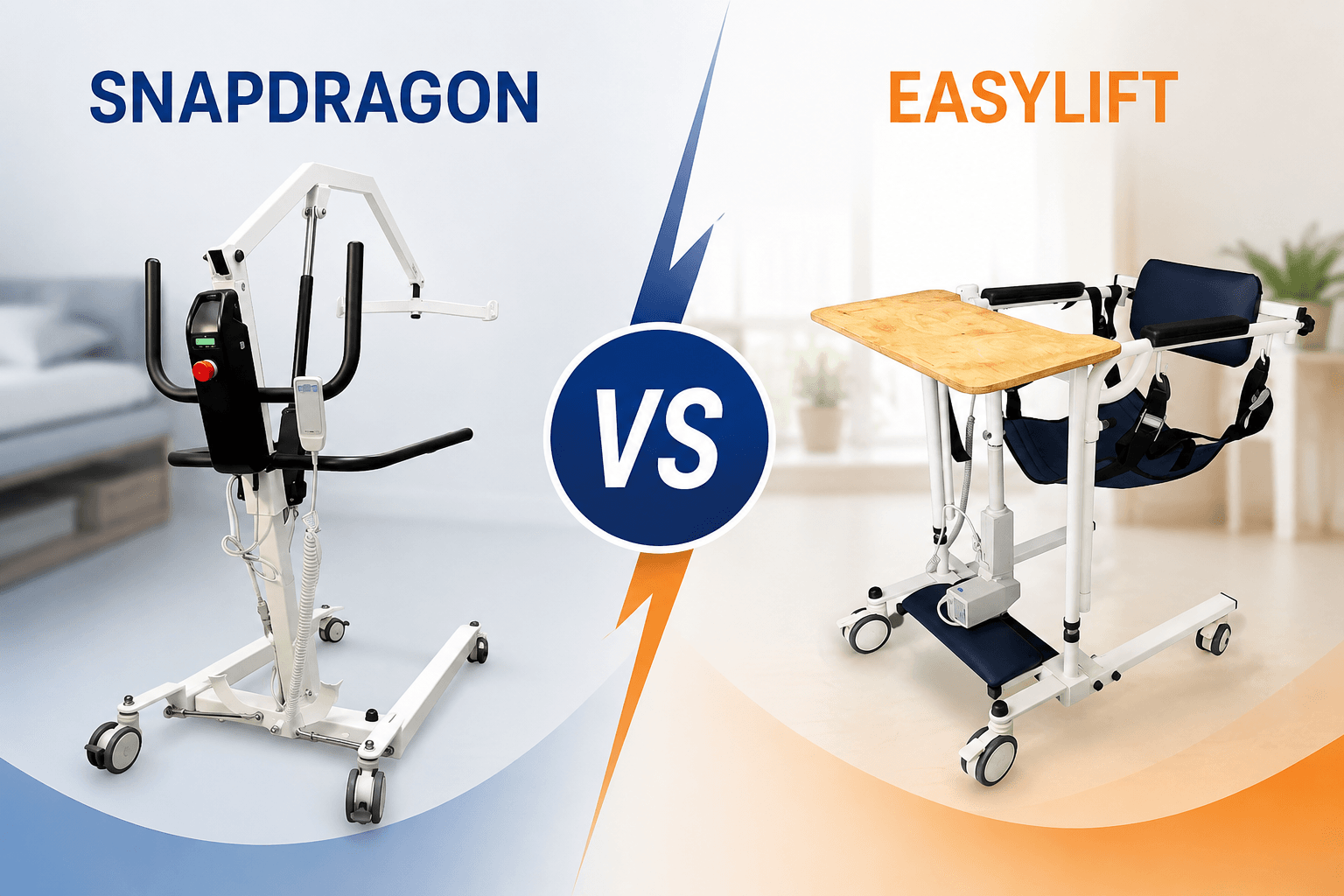
Morecare Snapdragon — Heavy-Duty Electric Patient Hoist
Snapdragon is a battery-powered patient lift designed for selected assisted transfers and rehabilitation activities.
Its published features include:
Manufacturer-rated 300 kg safe working load.
Electric lifting and lowering.
Adjustable base width.
Approximate lifting-hook height range of 2–7.5 feet.
Patient-transfer sling included.
Walking sling included for selected therapist-supervised activities.
Rechargeable battery-powered operation.
Caregiver-controlled wired handset.
Snapdragon may be worth evaluating for patients requiring substantial lifting assistance.
However, its full operating dimensions, stability requirements, sling compatibility and transfer route must be checked.
Its 300 kg rating applies to the manufacturer-approved configuration and must not be assumed to remain valid after structural modification.
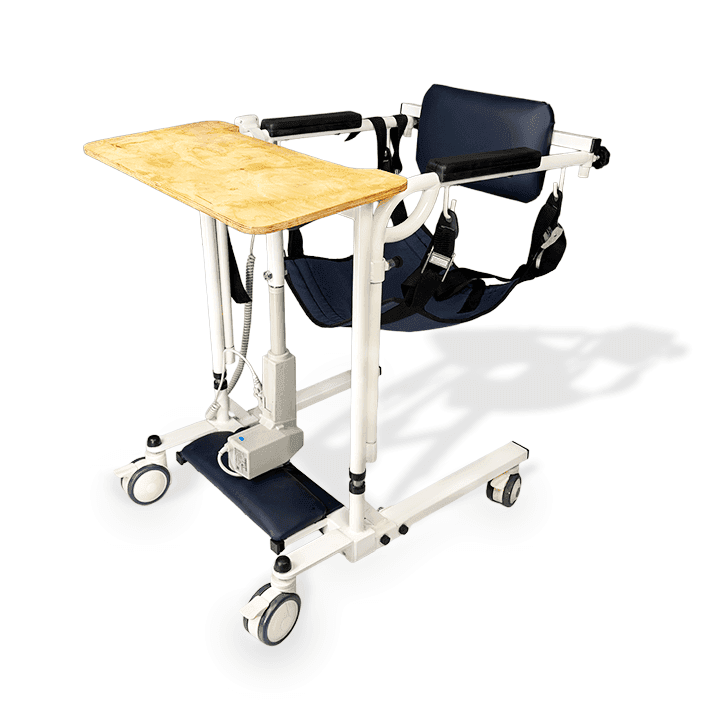
Morecare EasyLift — Compact Electric Patient Transfer System
EasyLift is a powered sling-supported transfer system designed for selected adults who cannot reliably stand or pivot before lifting.
Its current published specifications include:
Maximum user weight of 200 kg.
Approximately 22-inch operating width.
Approximately 11-inch folded width.
Minimum 6-inch under-bed clearance.
Powered lifting and lowering.
Rechargeable battery.
Wired caregiver controller.
Transfer, commode and gait-training slings supplied for their respective approved applications.
EasyLift may be considered where a compact transfer system is needed.
However, fitting inside a narrow room does not establish that the complete transfer can be performed safely.
The bed, wheelchair, commode, surrounding space and caregiver handling method must also be assessed.
Morecare Rose — Patient Transfer Sling
Rose is a nylon-mesh patient-transfer sling intended for use with compatible four-hook lifting arrangements.
Its current published features include:
Maximum rated user weight of 200 kg.
Supportive back section.
Integrated lower-body support.
Four-point lifting attachment configuration.
One standard size.
A standard Rose sling will not necessarily fit every patient.
If the person requires a different size, support arrangement or transfer position, the appropriate solution must be assessed.
A custom sling should not be manufactured or used without validated materials, construction, attachment design and compatibility with the intended hoist.
Which Product Is Better for a Narrow Home?
The answer depends on measurements and the required transfer.
An adjustable-base hoist and a compact transfer system solve different access problems.
Neither should be selected solely from the advertised folded or operating width.
For example, a device may fit through a bedroom doorway but still require more space to approach the bed, turn, lift or position the patient over the destination seat.
What If Neither Product Works?
Morecare can review the unusual requirement through its customization service.
The outcome may be:
A suitable existing product.
An approved accessory or configuration.
A change to the homecare setup.
A different lifting method or equipment category.
A technically feasible made-to-order solution.
Some situations may not be appropriate for a mobile hoist and could require a specialist installation or a different care plan.
How Does Morecare Evaluate a Custom Patient Lifting Requirement?
Patient lifting customization requires particular care because the equipment supports a person's body during movement.
A failure of the lifting system, attachment or sling can cause serious injury.
Morecare's customization service therefore begins with the customer's problem and a feasibility review.
Step 1: Understand the Transfer Problem
The family or therapist explains what is difficult.
Examples include:
The hoist cannot fit through the doorway.
The equipment cannot approach the patient's bed.
The transfer chair does not provide sufficient clearance.
The sling does not fit the patient's body.
The patient cannot stand or pivot.
The wheelchair and bed are at incompatible heights.
The bathroom is too small for the existing device.
Step 2: Identify the Complete Transfer Route
The review should cover the starting position, the movement path and the final destination.
This includes checking:
Doorways.
Bed height and under-bed access.
Wheelchair and commode dimensions.
Floor surfaces.
Turning space.
Obstacles.
Caregiver access.
Step 3: Review the Patient's Handling Needs
A qualified professional should determine:
Whether the patient can stand or bear weight.
Head and trunk support requirements.
Hip and knee positioning limitations.
Ability to cooperate with the transfer.
Pain, skin sensitivity or relevant medical restrictions.
Appropriate sling type.
Number of caregivers required.
Step 4: Evaluate Existing Equipment
Morecare reviews whether Snapdragon, EasyLift or another appropriate transfer method can meet the requirement.
A suitable standard solution should be considered before introducing unnecessary modifications.
Step 5: Engineering Feasibility Review
If customization is proposed, the technical review must address relevant structural loads, stability, geometry, electrical behaviour and component compatibility.
The project should not proceed if essential safety requirements cannot be established.
Step 6: Define the Approved Scope
The proposed solution should identify:
Transfer tasks.
User limits.
Equipment dimensions.
Required sling.
Attachment arrangement.
Operating conditions.
Safety restrictions.
Applicable inspection and testing requirements.
Step 7: Manufacture and Validate
Any approved made-to-order lifting equipment must undergo suitable engineering verification before occupied operation.
This may include load-related evaluation, structural inspection, stability checks, powered-function checks and confirmation of sling and attachment compatibility.
The required validation depends on the particular design and applicable standards.
Step 8: Train and Support
The caregiver must understand the specific handling procedure and the equipment's limitations.
Training should cover pre-use inspection, correct sling attachment, safe positioning and emergency arrangements.
The equipment should be reassessed if the patient's condition, home environment or transfer requirements change.
The aim is to deliver a solution appropriate to the real transfer task rather than simply modify a product to match a requested measurement.
How Much Does Custom Patient Transfer Equipment Cost, and What Should Customers Share?
The cost of customized patient lifting equipment depends on the actual engineering and care requirements.
A different approved accessory may be much simpler than developing a new lifting frame.
Projects involving load-bearing structures, suspension systems or electrical mechanisms need more extensive technical evaluation.
What Affects Customization Charges?
Base equipment
The project may start with a standard hoist, compact transfer lift or another suitable patient-handling system.
Required dimensions
Changes to the lifting range, frame geometry or approach clearance can involve significant engineering work.
Sling requirements
Specialized sling development may require design, materials, construction and testing.
Electrical components
Powered systems may require particular actuators, controllers, batteries or safety features.
Testing and validation
Safety-critical modifications require more verification than non-load-bearing changes.
Installation and training
Some projects may require additional fitting, site assessment or caregiver training.
How Long Does Customization Take?
There is no universal timeline for custom patient-lifting equipment.
A straightforward compatible accessory change may be assessed sooner than a new lifting design.
Structural modifications and special slings may require additional development, testing and approval.
Morecare should provide a project-specific estimated timeline after reviewing the requirement.
What Information Should Customers Send?
To begin an effective assessment, prepare the following.
Patient's age, height and weight.
Medical condition and relevant functional limitations.
Whether the patient can stand or bear weight.
Head, trunk and pelvic support requirements.
Current transfer method and its main difficulties.
Existing hoist or transfer-chair model, if any.
Photographs of the bed, wheelchair and bathroom.
Doorway widths and corridor dimensions.
Bed height and available under-bed clearance.
Wheelchair and commode seat heights.
Available space around the bed and transfer destination.
Caregiver availability and therapist recommendations.
Delivery location, budget and urgency.
A short video of the room or equipment may help explain an access problem.
However, families should not perform an unsafe transfer merely to record a demonstration.
What Should Be Confirmed Before Manufacturing?
A written proposal should identify:
The intended transfer task.
Approved equipment configuration.
Patient and equipment limits.
Required sling and attachment compatibility.
Custom dimensions.
Engineering and validation requirements.
Additional charges.
Estimated manufacturing timeline.
Warranty and after-sales conditions.
Installation and caregiver training needs.
If a requested modification would compromise stability or cannot be appropriately validated, the safer outcome may be to reject that modification and recommend an alternative.
Successful customization means solving the transfer problem without introducing an unacceptable new risk.
Clinical and Technical References
U.S. Food and Drug Administration. Patient Lifts: Safety and Best Practices.
https://www.fda.gov/medical-devices/general-hospital-devices-and-supplies/patient-lifts
UK Health and Safety Executive. Moving and Handling Equipment in Health and Social Care.
https://www.hse.gov.uk/healthServices/moving-handling/moving-handling-equipment.htm
UK Health and Safety Executive. Managing the Risks of Moving and Handling.
https://www.hse.gov.uk/healthServices/moving-handling/manage-the-risk.htm
Morecare Mobility & Rehabilitation Solutions. Customization Services.
https://morecare.in/customization-services
Morecare Mobility & Rehabilitation Solutions. Snapdragon Electric Patient Lift.
https://morecare.in/snapdragon/
Morecare Mobility & Rehabilitation Solutions. EasyLift Electric Patient Transfer System.
https://morecare.in/easylift/
Morecare Mobility & Rehabilitation Solutions. Rose Patient Transfer Sling.
https://morecare.in/rose/
Medical and Engineering Disclaimer: This article provides general information about patient lifting equipment and customization. Every transfer requires an individual handling assessment and an appropriate care plan. Patient hoists, slings, lifting attachments and powered systems must be used only in manufacturer-approved, appropriately verified configurations. Unauthorized changes to structural or load-bearing components can cause serious injury. Trained caregivers must follow the applicable operating instructions and inspection procedures. Morecare's evaluation of a customization request does not guarantee that the proposed modification can be safely manufactured.