Why Do Some Children With Cerebral Palsy Struggle to Sit Independently?
Independent sitting requires several parts of the body to work together.
A child must control their head, stabilize their trunk, maintain pelvic alignment and continuously make small adjustments to keep their balance.
Cerebral palsy can affect the brain's ability to coordinate these movements.
Some children experience muscle stiffness or spasticity, while others have low muscle tone, involuntary movements or difficulty coordinating their muscles.
As a result, parents may notice that their child:
Falls sideways when placed in sitting.
Leans forward and struggles to lift the upper body.
Cannot maintain an upright head position.
Needs both hands for balance instead of using them for play.
Becomes tired after a short period of sitting.
Requires constant physical assistance from a caregiver.
The severity of these difficulties varies considerably between children.
A physiotherapist or occupational therapist can assess the child's sitting ability, trunk control, joint mobility and positioning requirements.
Understanding the reason for poor sitting control is the first step towards choosing appropriate support.
Does Difficulty Sitting Mean a Child Cannot Participate in Activities?
Not necessarily.
Independent sitting is an important motor skill, but it is not the only way for children to participate in everyday activities.
A child who cannot maintain an upright posture without assistance may still be able to look at books, interact with toys, communicate with family members or engage in supervised play when appropriately positioned.
For example, a child may use much of their available muscle control simply trying to avoid falling sideways.
With appropriate external support, maintaining position may require less effort, allowing the child to focus on another activity.
The goal of supportive seating is not always to make the child sit independently.
For some children, it is to provide an appropriate position for participation, comfort, interaction and therapy.
A suitable seating system should be selected according to the child's current abilities and the activities they want to perform.
Why Are Trunk and Pelvic Supports Important?
The pelvis provides a foundation for sitting posture.
When the pelvis is poorly positioned, the trunk may lean or collapse, and the child may struggle to maintain their head in a functional position.
For children with limited postural control, this can affect how comfortably they participate in seated activities.
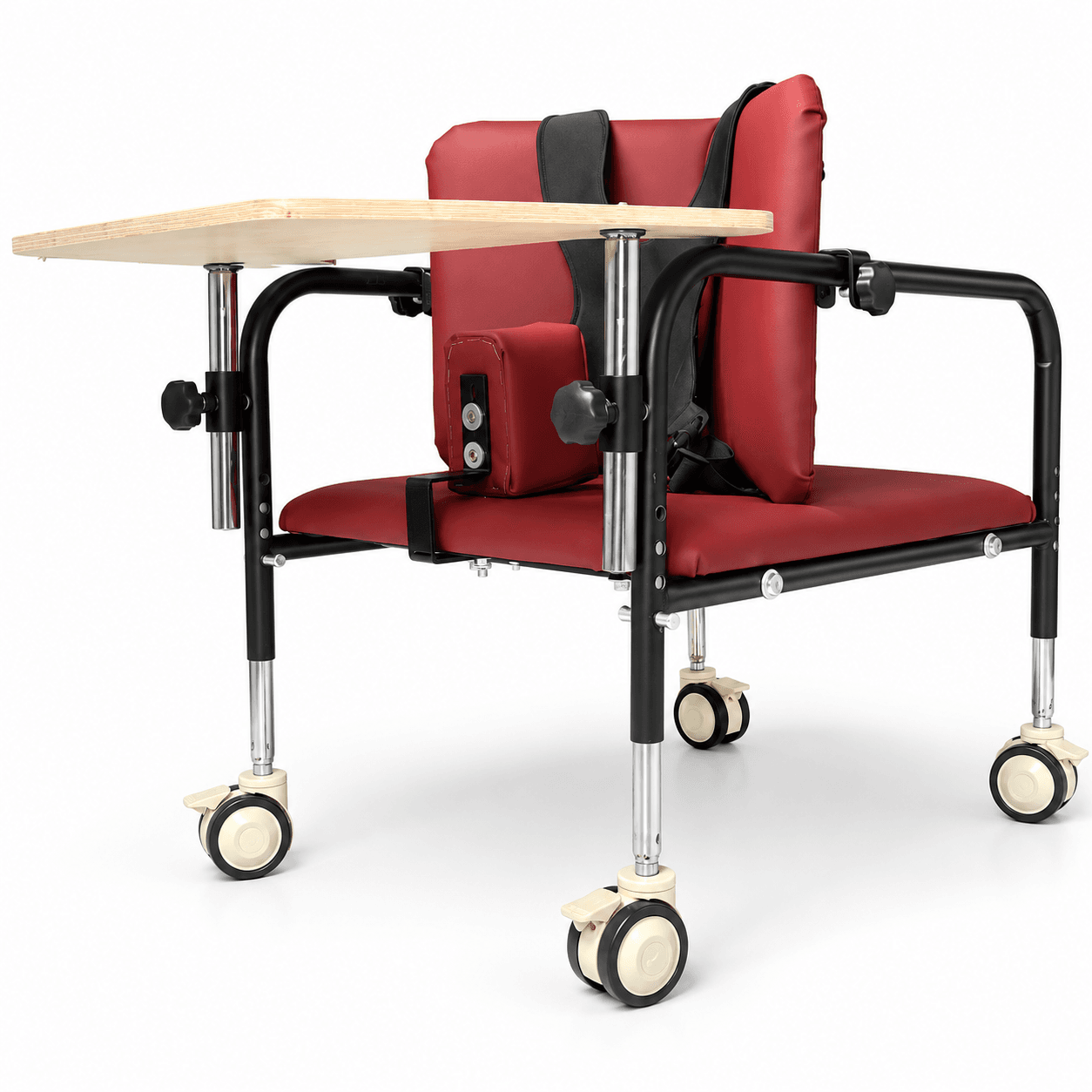
Therapeutic seating may include several support components.
Pelvic positioning support
A correctly fitted pelvic belt can help maintain the intended seated position and reduce unwanted movement of the pelvis.
Trunk support
External supports around the upper body may provide assistance when the child cannot maintain upright trunk alignment independently.
Head support
Children with limited head control may need additional support to maintain an appropriate head position.
Lower-limb positioning
A seat may include features to help position the thighs and legs according to the child's individual requirements.
These supports must be adjusted carefully.
Excessive restraint, poor alignment or unsuitable positioning can cause discomfort and may interfere with breathing, movement or circulation.
The seating arrangement should be prescribed or reviewed by a qualified rehabilitation professional.
How Can Physiotherapy and Occupational Therapy Help?
Therapy plays an important role in helping children with cerebral palsy develop functional abilities and participate in daily life.
A physiotherapist may work on postural control, active movement, balance and appropriate movement strategies.
An occupational therapist may focus on positioning for play, learning, hand activities and everyday participation.
Depending on the child's abilities, an individualized programme may include:
Assisted sitting and reaching activities.
Supported weight shifting.
Play activities encouraging head and trunk movement.
Activities involving both hands.
Position changes to encourage movement and comfort.
Practice with appropriately fitted seating equipment.
The activities should be selected according to the child's age, physical abilities, comfort and rehabilitation goals.
Supportive seating can complement these interventions, but it does not replace active therapy.
Parents should also understand that using a supportive chair does not automatically strengthen trunk muscles or guarantee future independent sitting.
Progress depends on many factors, and goals should be reviewed periodically.
How Can a Therapeutic Corner Seat Help?
A therapeutic corner seat is designed to provide additional support around a child while sitting close to floor level.
Unlike an ordinary household chair, it may include a defined back-and-side support structure, pelvic positioning and adjustable support components.
For children who struggle to maintain sitting balance, these features can help establish a more supported position during selected activities.
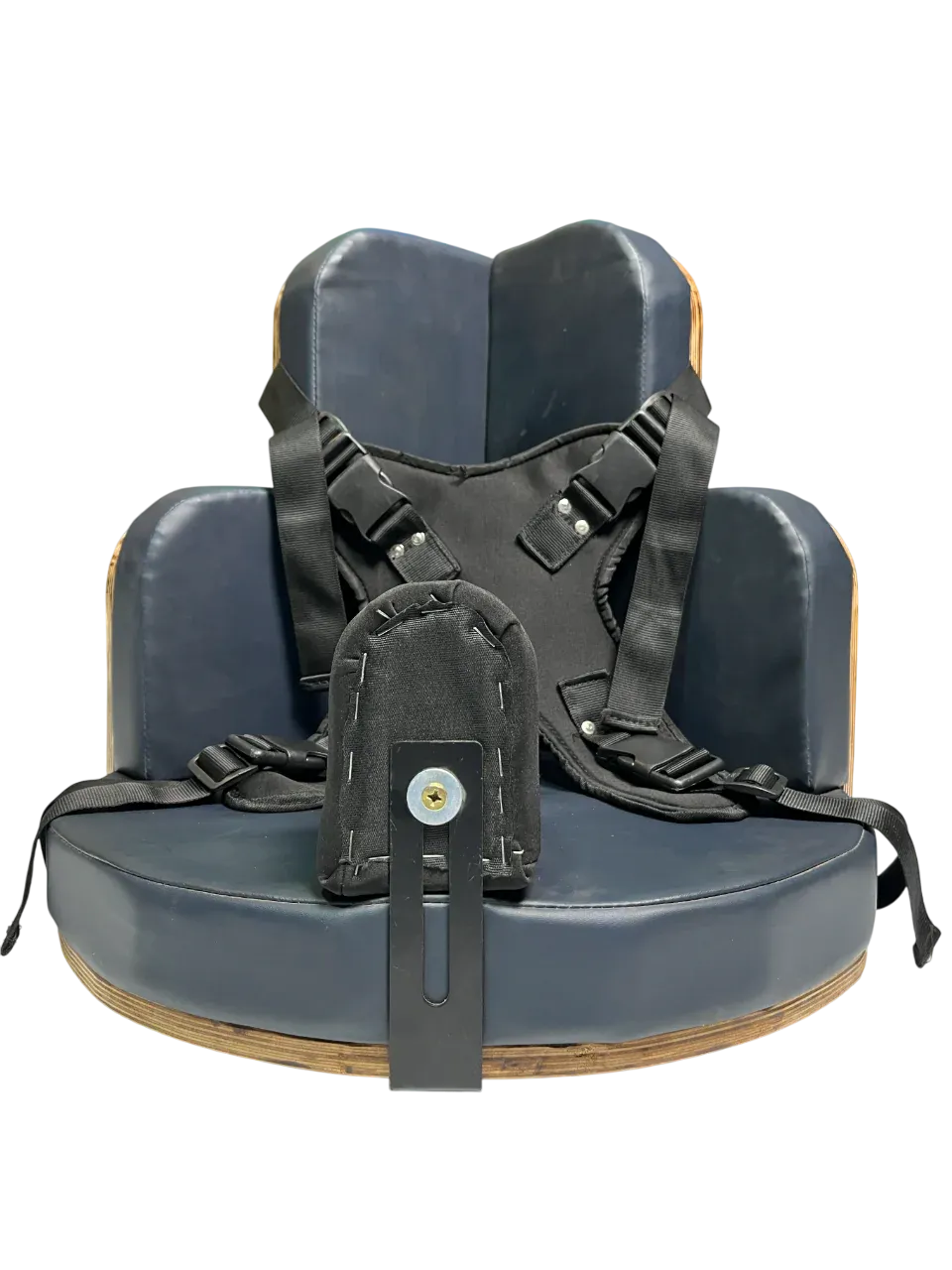
The Morecare Sunflower Therapy Corner Floor Seating System is designed for this purpose.
Its main features include:
Three-sided corner support
A padded corner structure provides support around the child's back and sides.
Adjustable headrest
The height-adjustable headrest allows positioning according to the child's individual needs.
Four-point butterfly chest harness
The padded harness provides additional upper-body positioning support when clinically appropriate.
Pelvic positioning belt
The belt helps maintain the intended pelvic position.
Removable abductor
The abductor provides an additional lower-limb positioning option when prescribed.
Padded seating surface
The system uses cushioned upholstery designed for supported sitting.
Sunflower is intended for selected children approximately 2–7 years old, subject to individual measurements and clinical suitability.
The product can be customized to accommodate different seating and support requirements.
A corner seat should never be used as a substitute for appropriate supervision. The child should not be left unattended or sleep in the seating system.
How Do You Know Whether Your Child Needs Supportive Seating?
Not every child who has difficulty sitting needs the same type of equipment.
Some children may benefit from therapy and simpler positioning arrangements.
Others require more comprehensive adaptive seating with specialized head, trunk, pelvic and lower-limb supports.
Before choosing a corner seat, consider the following questions:
Can the child hold their head upright?
Children with very limited head control may require more comprehensive positioning.
Does the child fall forward or sideways?
The direction and severity of postural instability help determine which support arrangement may be appropriate.
Can the child sit comfortably with assistance?
A therapist should assess whether the child's hips, spine and pelvis can be positioned safely and comfortably.
What activities will the child perform?
Floor play, learning, therapy and feeding each create different positioning requirements.
Does the child experience pain or stiffness?
Significant discomfort, hip problems, spinal deformity or restricted joint movement may require specialized seating assessment.
Is the equipment correctly sized?
Seat width, depth, back height and support placement should match the child's body measurements.
If the child has feeding or swallowing difficulties, a specialist assessment is essential. Supportive seating alone does not establish that eating or drinking is safe.
The right seating solution should address the child's functional requirements while allowing appropriate comfort, movement and participation.