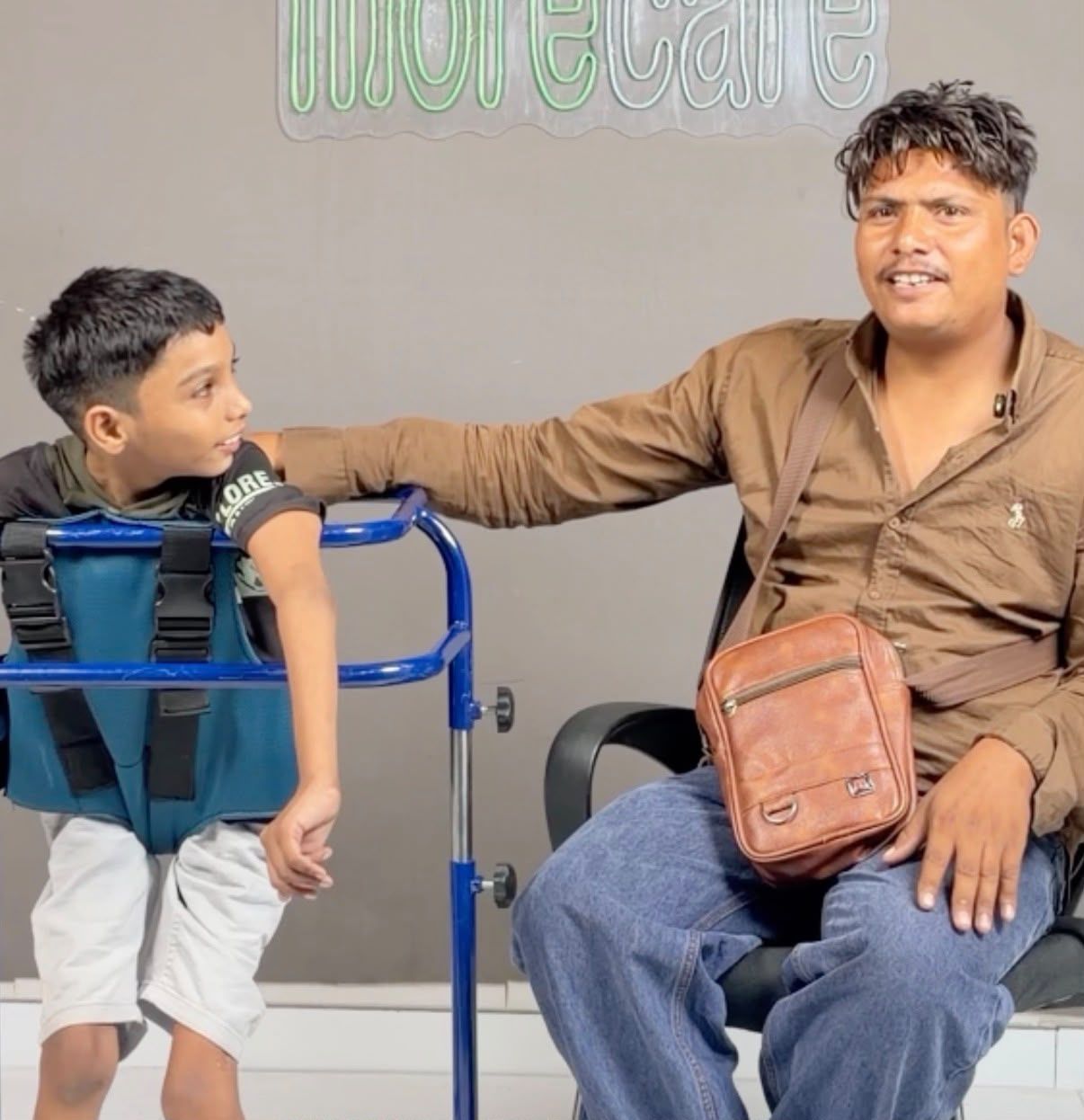
Identify what the basic walker cannot provide
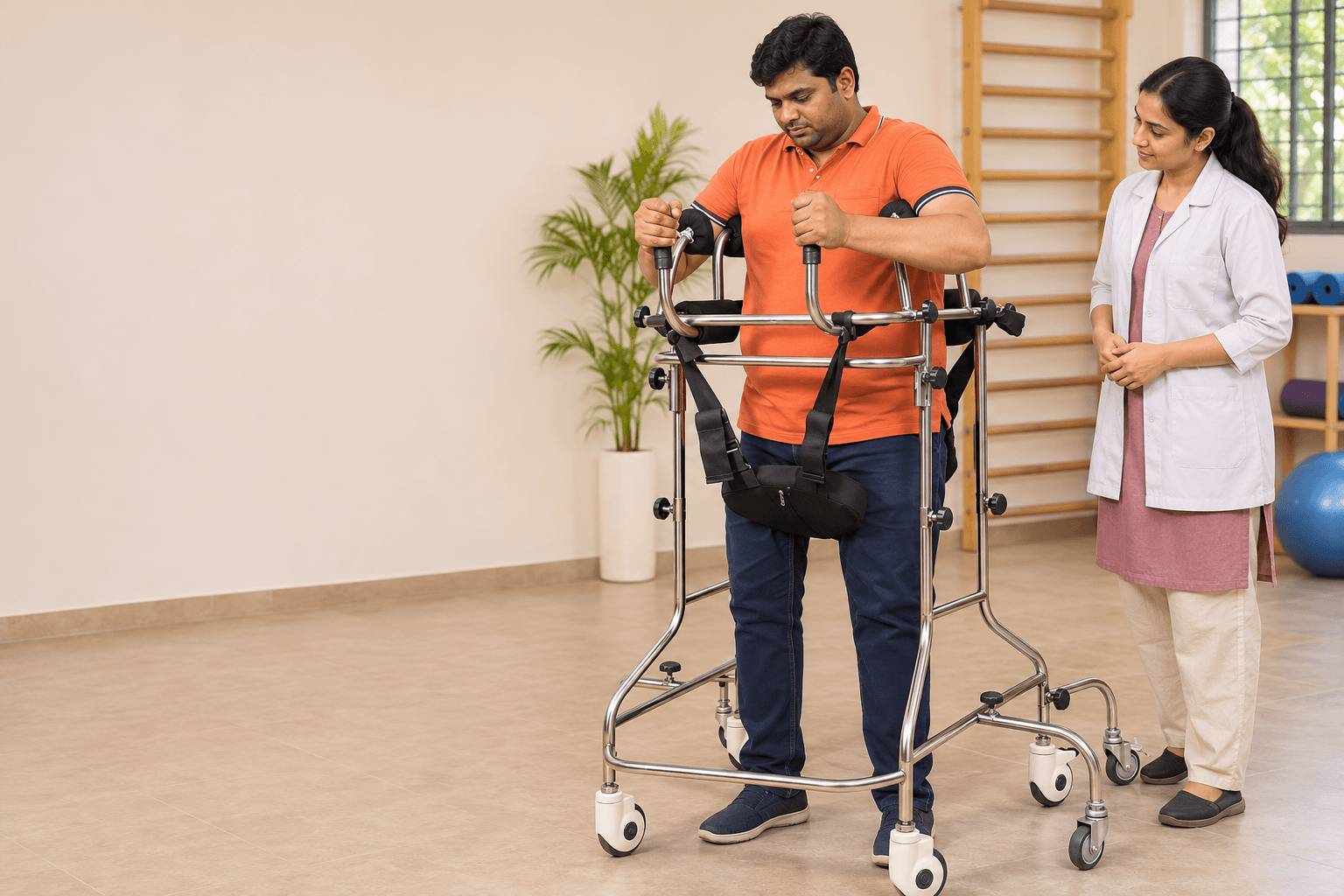
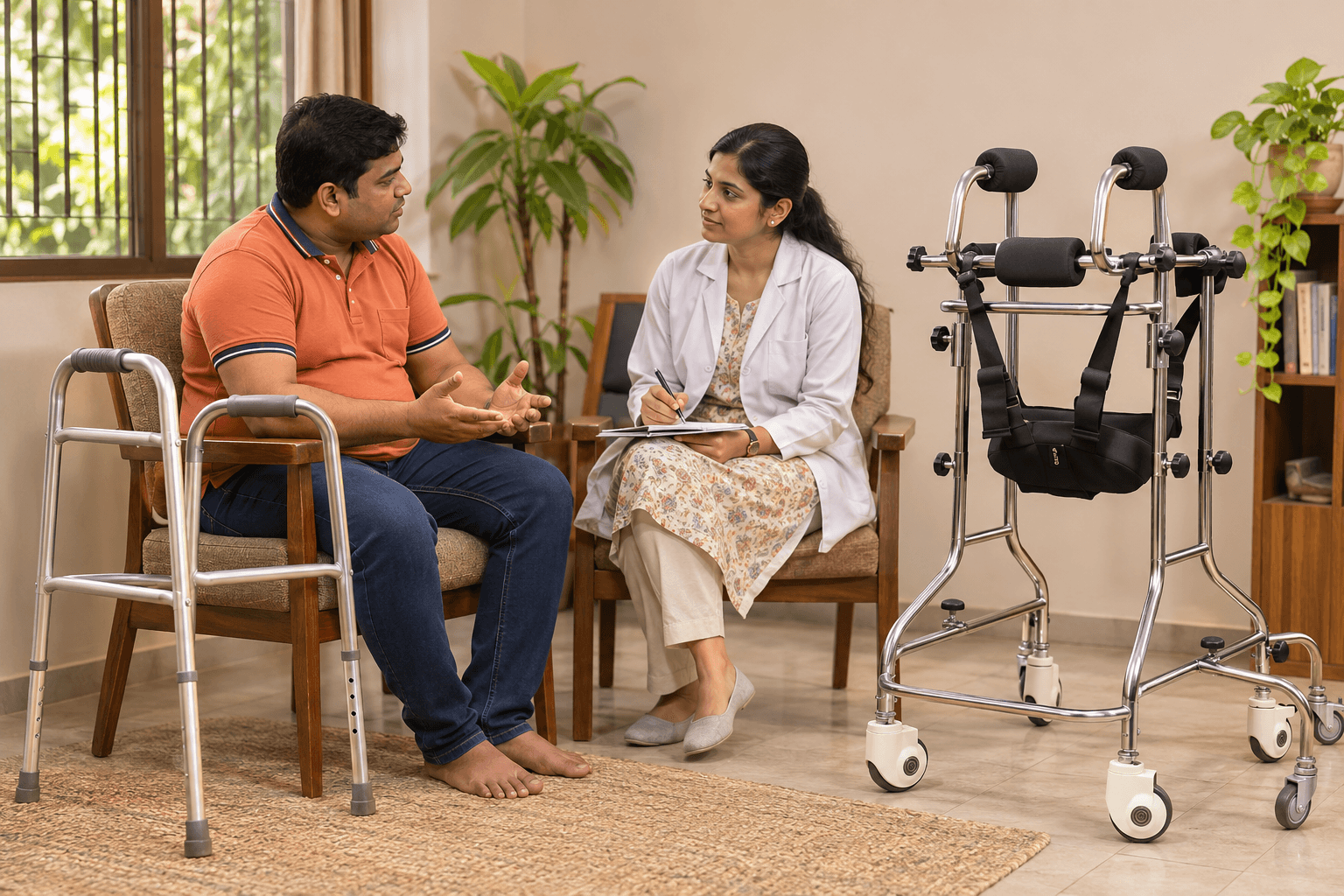
Describe what happens during ordinary use. Does the person need someone to steady their upper body? Do they struggle to manage the frame or become less controlled as they tire?
These observations help the therapist assess the difficulty. Walking-aid selection should consider abilities, permitted weight bearing, rehabilitation goals and the environment.
Understand the purpose of chest support
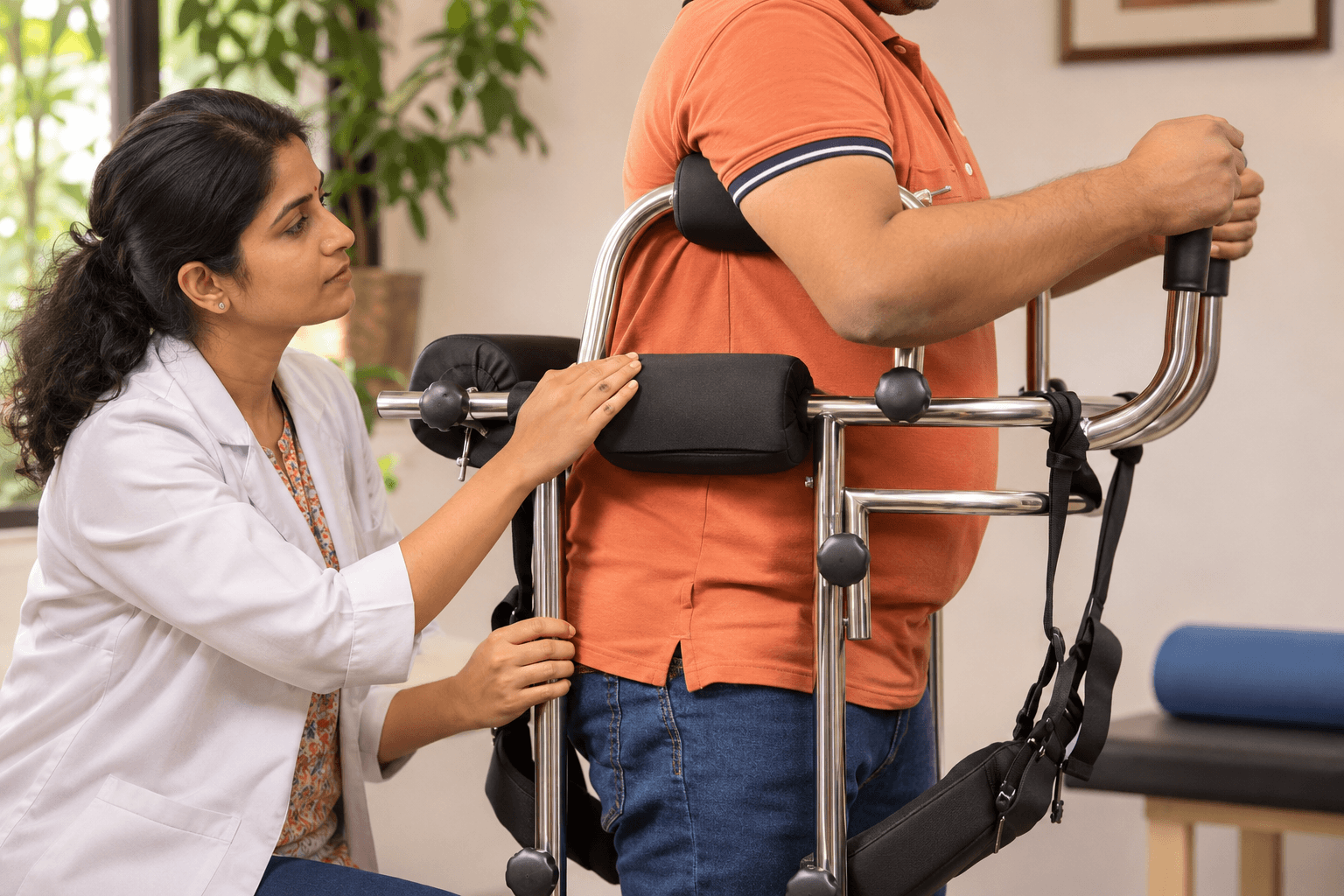
A chest support provides an additional contact point around the upper body. Its usefulness depends on the person’s posture, body dimensions and the activity being attempted.
Assess comfort and movement during fitting. A chest pad does not automatically provide enough support for every person with poor trunk control.
Assess arm support and hand use
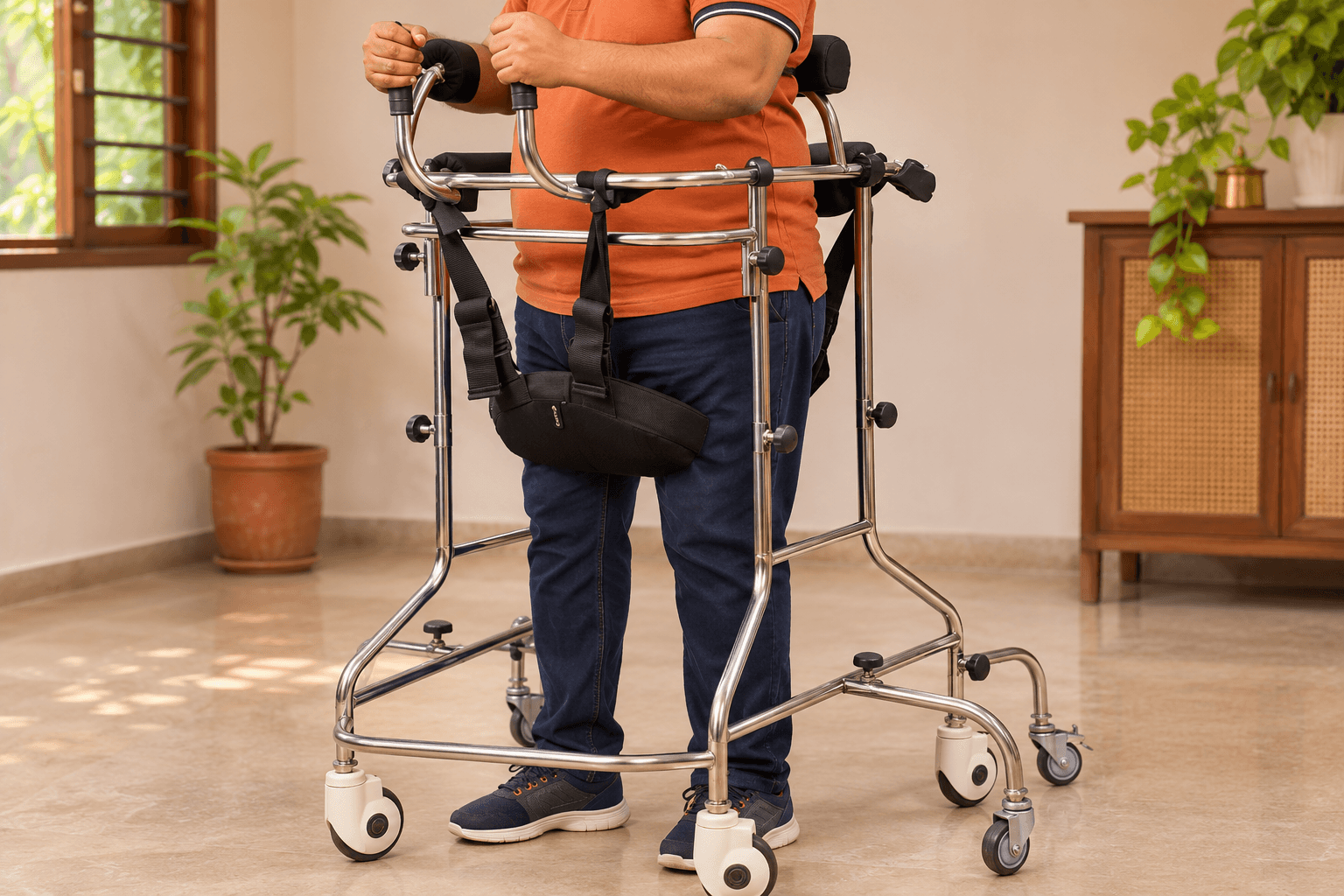
Arm supports offer a different arrangement from relying only on hand grips. Their position should be assessed alongside shoulder comfort, arm function and the ability to participate in movement.
Difficulty gripping deserves attention, but adding arm supports alone does not establish that someone can manage a wheeled gait trainer.
Clarify what the pelvic sling does
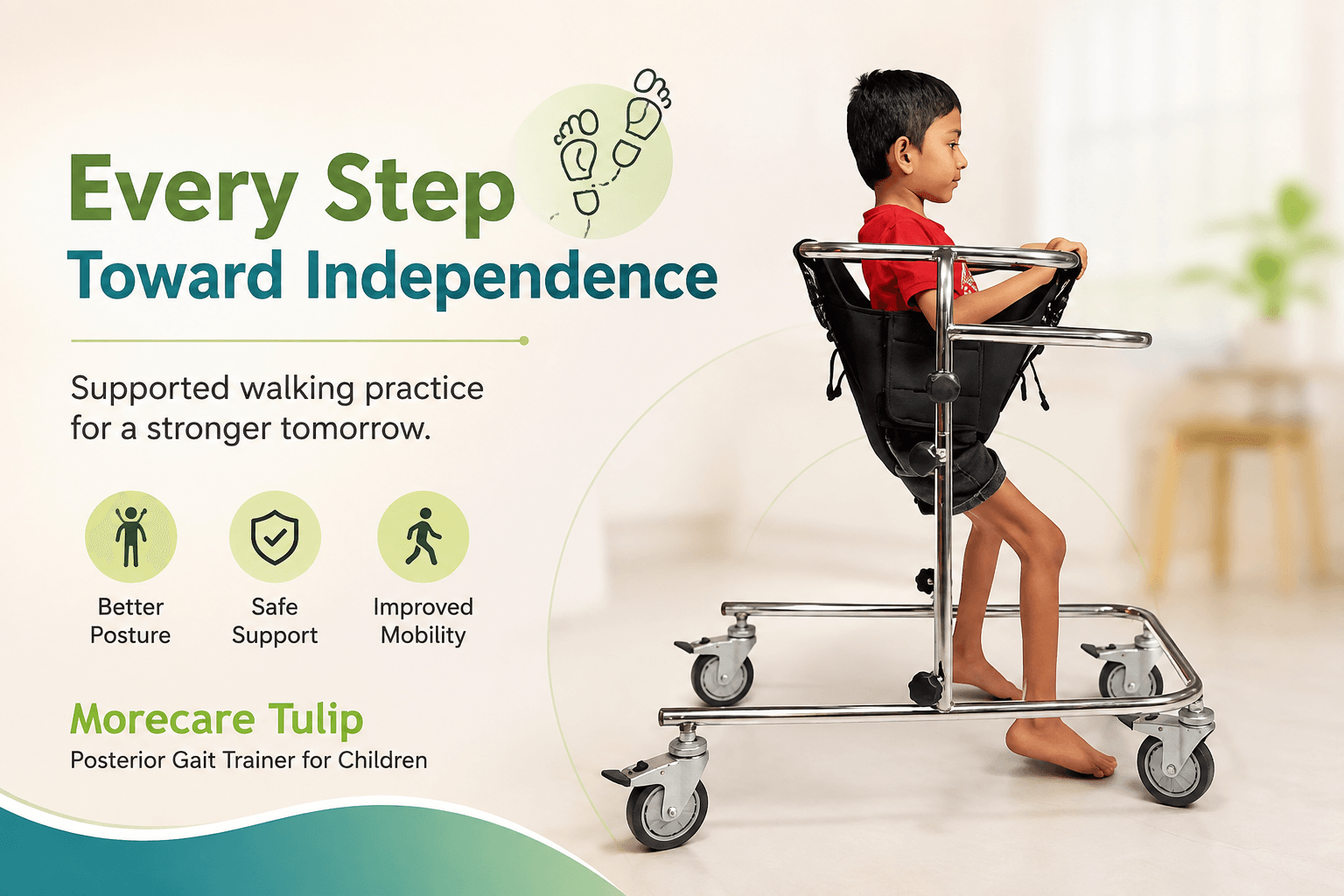
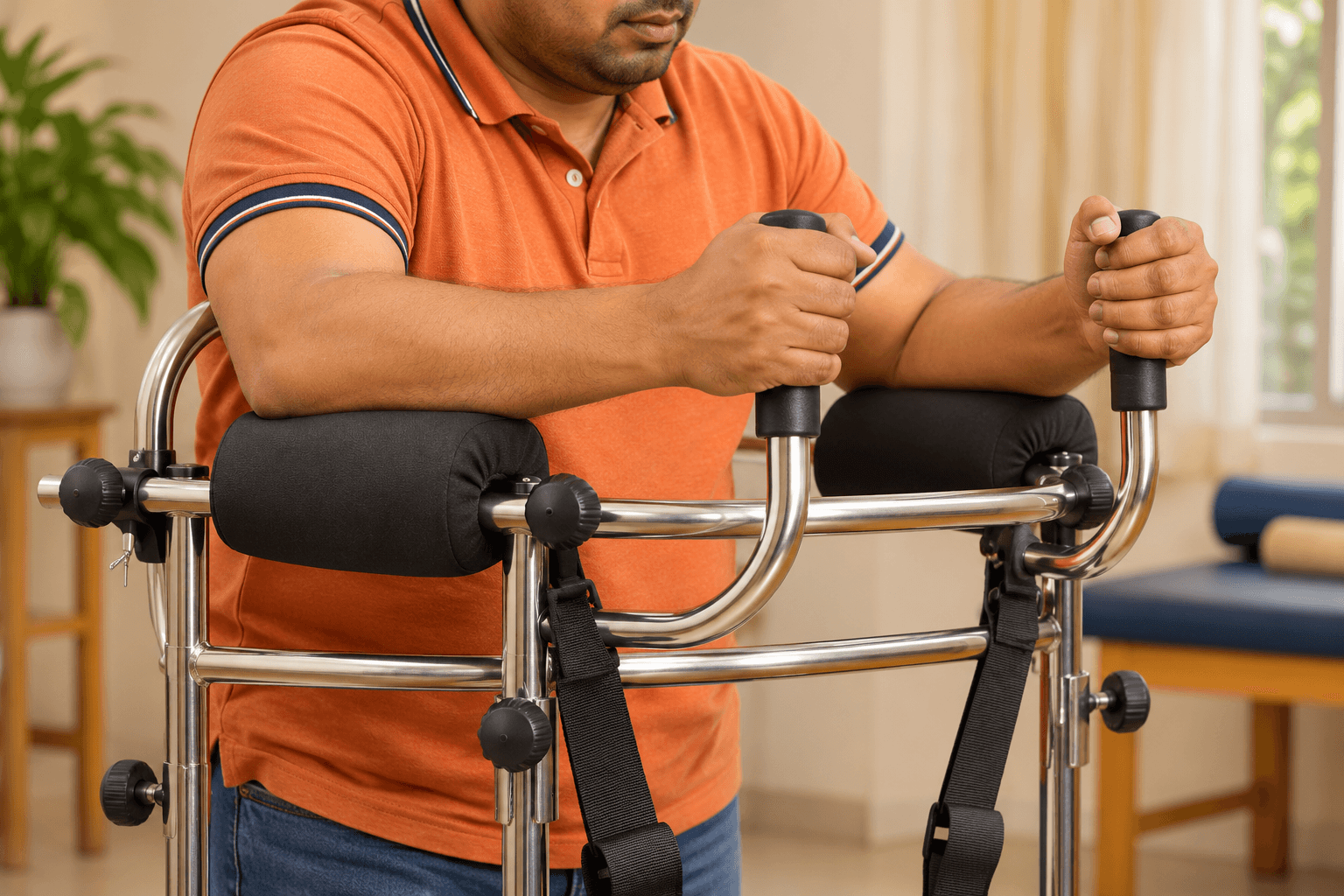
A pelvic sling may provide positioning and partial assistance during standing or stepping. It must be used according to its stated function.
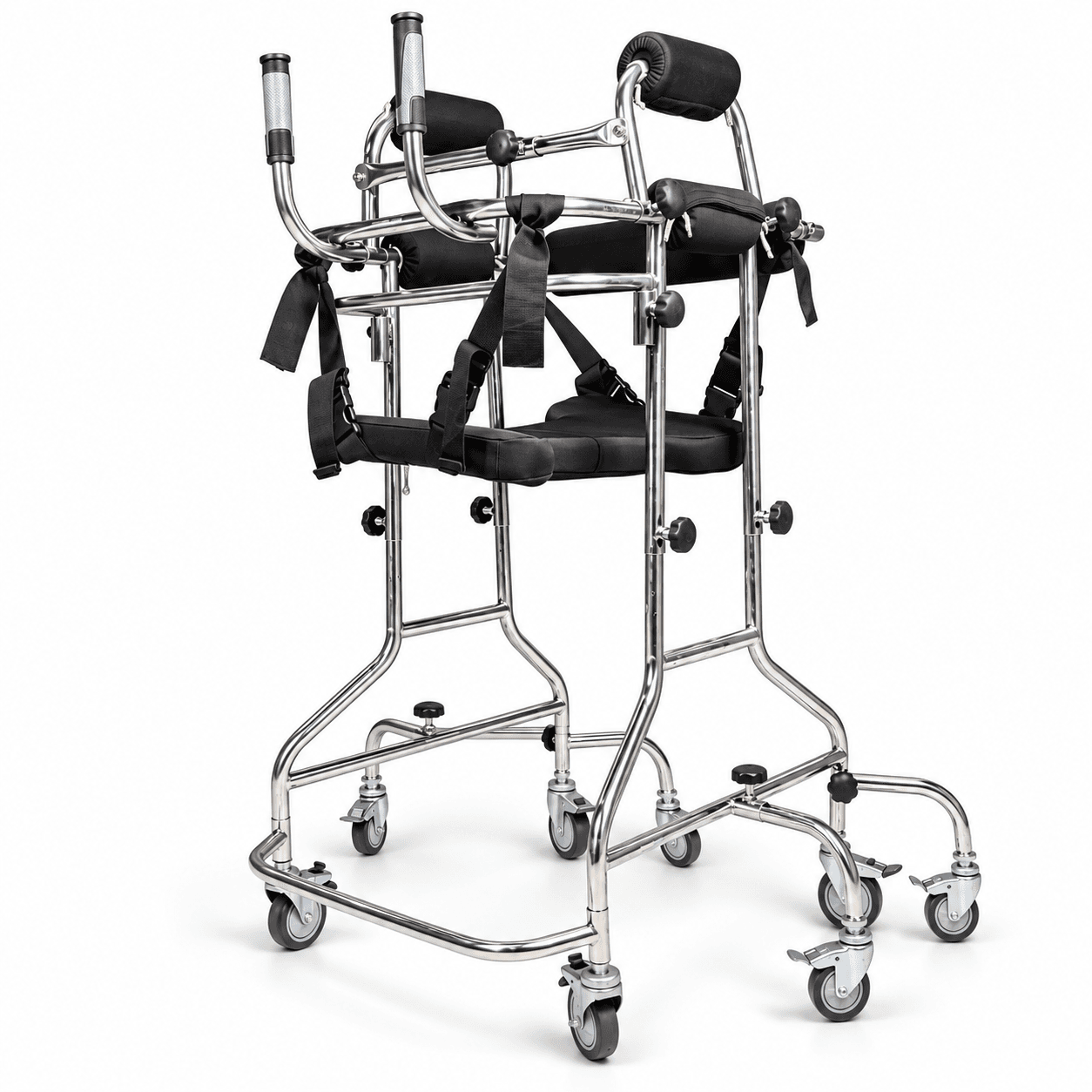
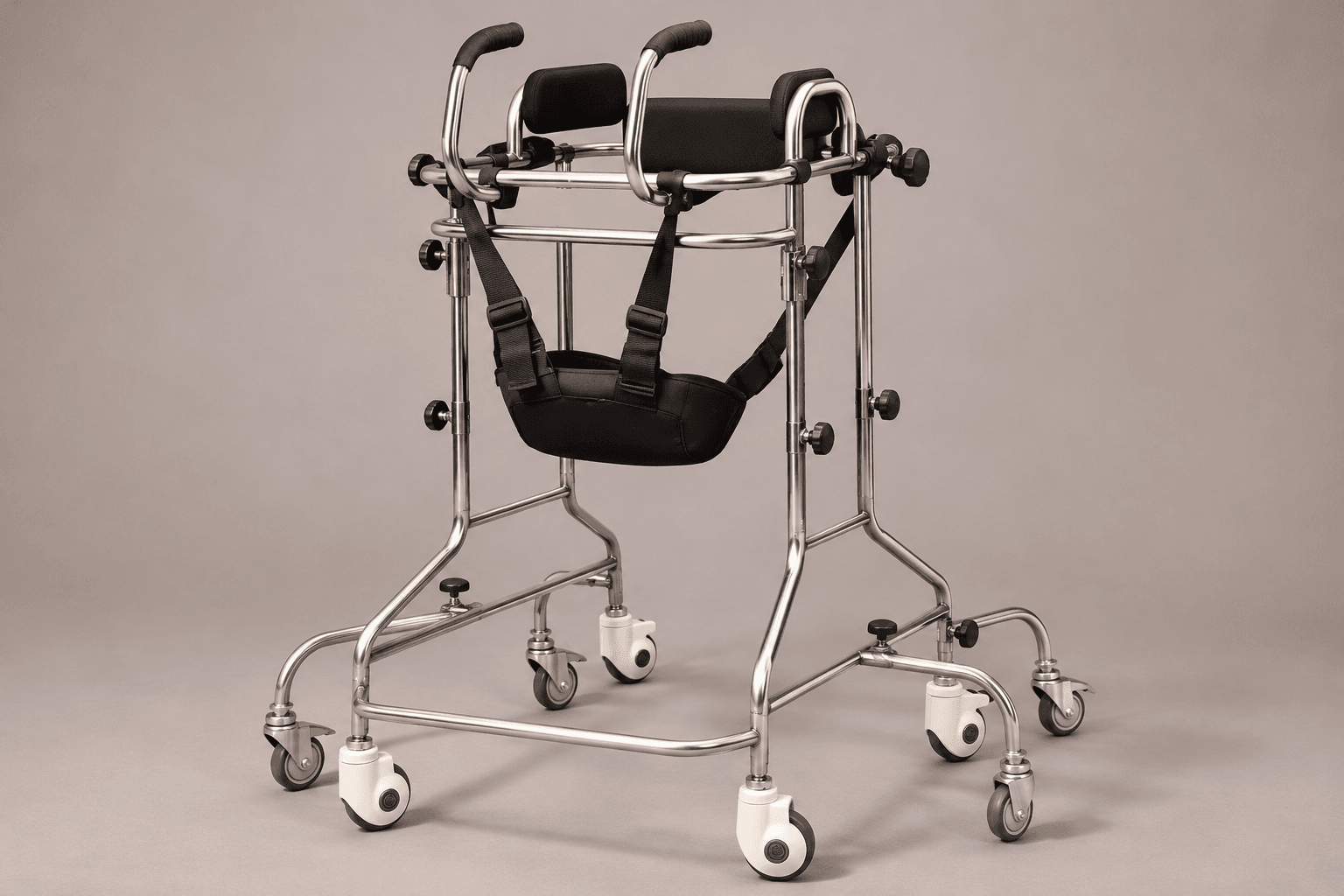
Crab Walker’s pelvic sling provides partial body-weight support; it is not intended for lifting or full suspension. The user must be assessed for the remaining weight-bearing demands.
Compare the complete support arrangement
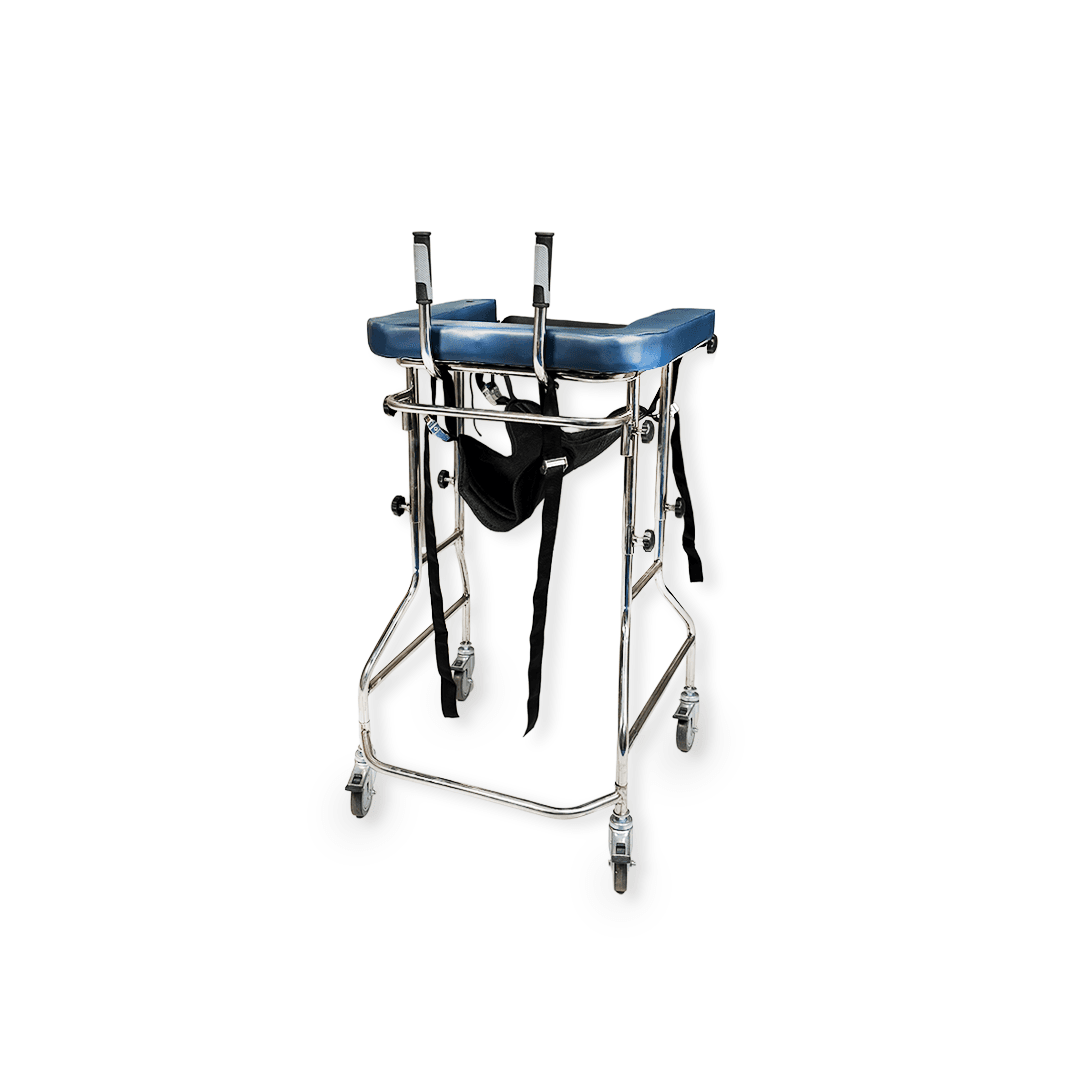
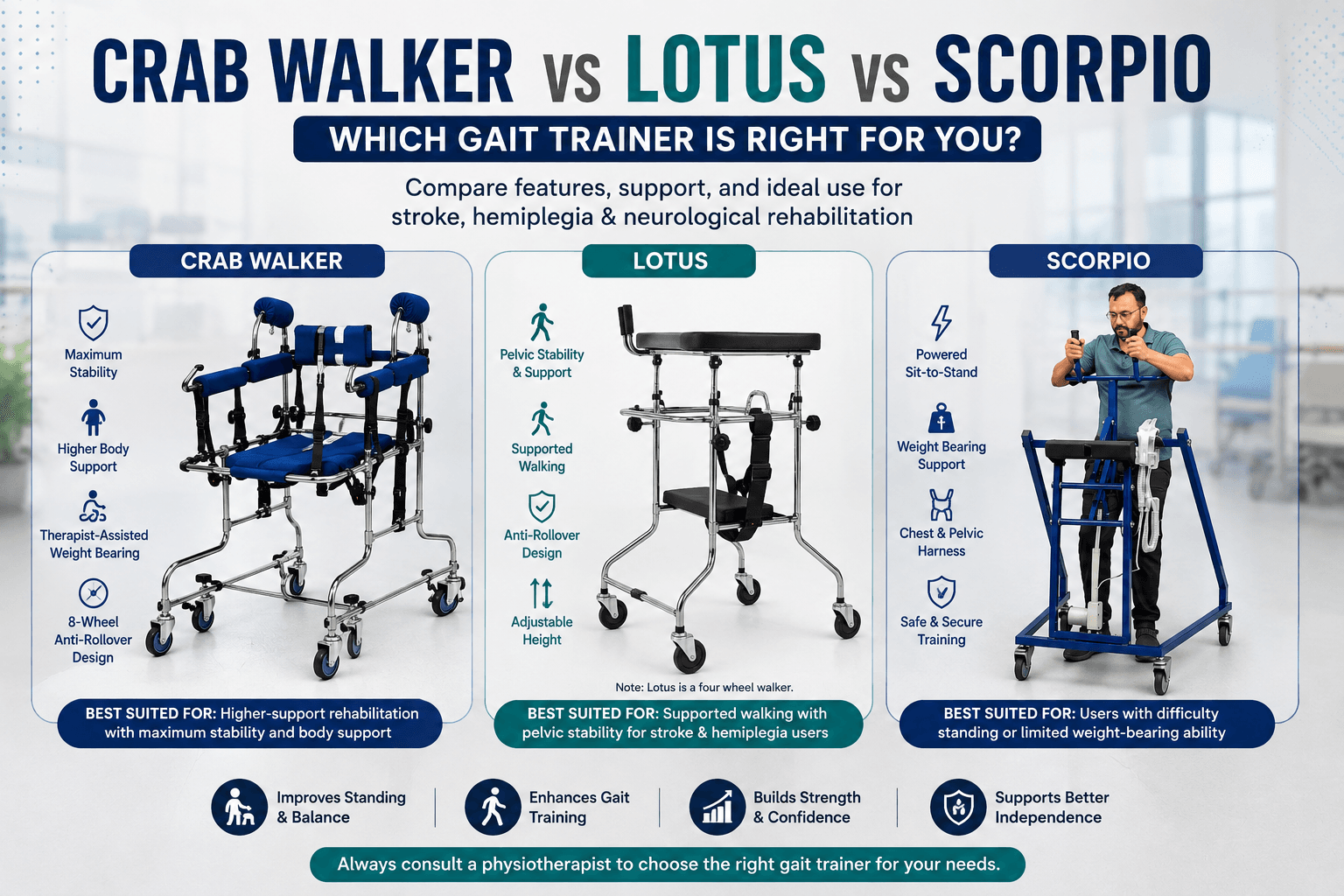
Morecare Crab Walker combines chest and arm supports with a pelvic sling on an extended eight-wheel base. It is one arrangement to assess when additional body support is needed.
A trial should examine the whole setup. More wheels or additional supports do not automatically make equipment suitable, and the base does not eliminate falling or tipping risks.
Check the complete daily routine
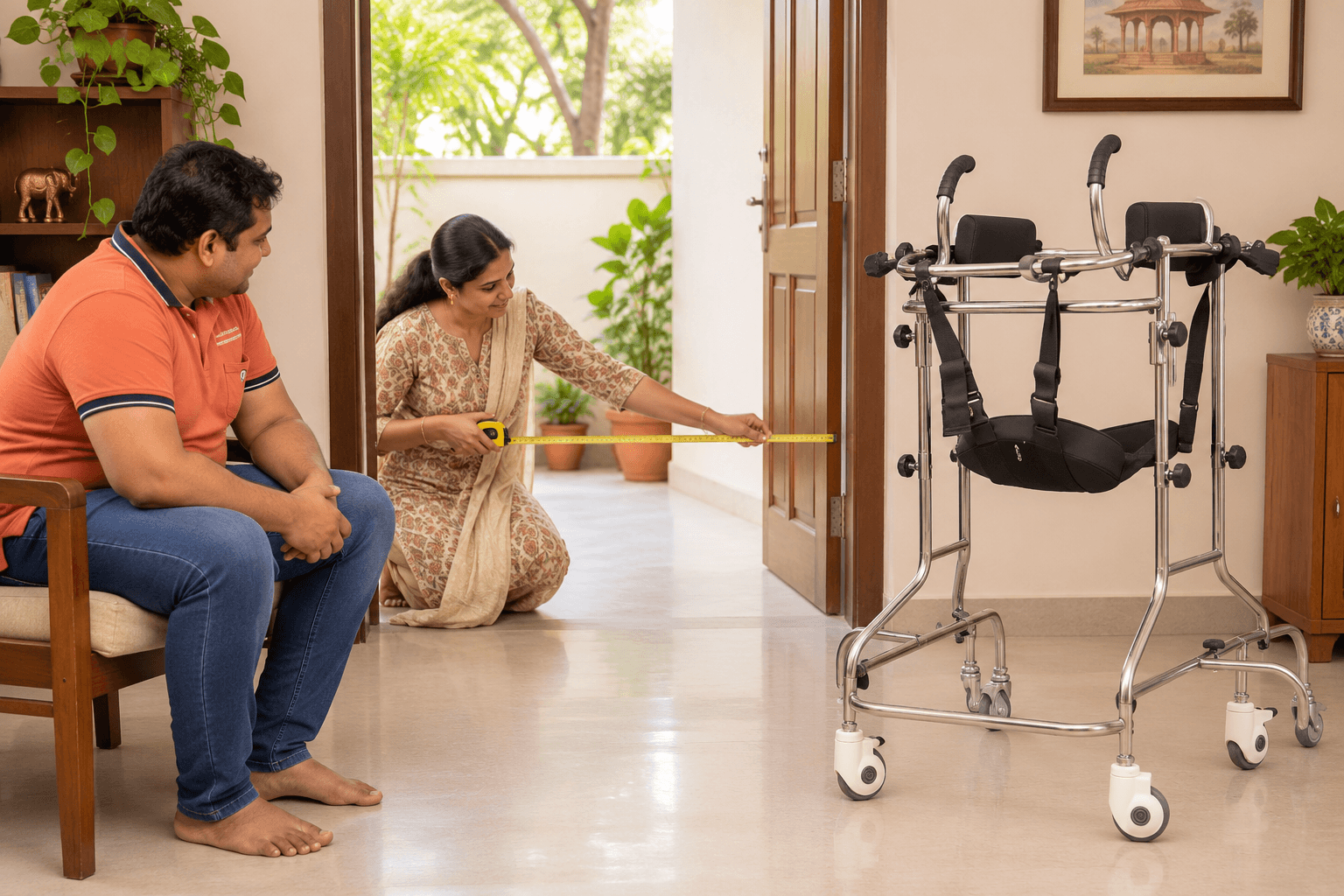
Plan how the person enters the equipment, practises the intended activity and returns to sitting. Include the caregiver who will assist.
Measure doorways and turning areas. Crab Walker’s published minimum clear doorway opening is 34 inches, with additional room needed for movement and assistance. These product details follow Morecare’s current specifications.
When a basic walker becomes difficult to use, buying a larger frame is not necessarily the next step. First establish whether the main problem involves body positioning, moving the frame, getting into standing or the demands of the activity.
Use these points to prepare for a discussion:
- Describe the assistance being given. Explain where the caregiver places their hands and when help increases. “We steady her upper body whenever she takes a step” is more informative than simply saying she needs a stronger walker. Describe existing practice; do not remove support to test what happens.
- Separate standing up from walking. Someone may need substantial help leaving a chair but a different level of assistance once upright. The assessment should cover both tasks. A walking-support arrangement does not automatically solve the transfer into it.
- Explain the intended activity. Is the goal prescribed stepping practice in one room or moving between nearby activities? Tell the therapist where and how the equipment would be used. Different tasks may call for different mobility options.
- Bring practical details. Prepare current body measurements, relevant therapist recommendations and information about the usual chair or wheelchair. Measure the narrowest access points and the area where assistance will be provided.
- Observe more than forward steps. During an appropriately supervised trial, discuss entry, stopping, turning and returning to rest. Ask how much help is needed and whether the support remains comfortable throughout the planned activity.
- Confirm the proposed configuration. Request written details of included supports, adjustment limits, permissible loads and feasible customization. Agree who will provide fitting guidance and when the arrangement should be reviewed.
For example, in a hypothetical situation, a person can move their feet while a caregiver steadies their trunk. That observation makes body support worth assessing, but it does not prove which device will work. The trial still needs to establish fit, participation and a manageable routine.