Why Are Wheelchair-to-Car Transfers Difficult When an Elderly Parent Cannot Stand?
Moving from a wheelchair into a car involves more than simply lifting someone from one seat to another.
The person must be supported while moving across a gap, passing through the vehicle doorway and settling into a suitable passenger position.
For an elderly parent, this can become difficult because of:
- Weakness following a stroke.
- Reduced ability to bear weight through the legs.
- Poor sitting or standing balance.
- Joint stiffness or restricted hip movement.
- Difficulty initiating movements.
- Dependence on a caregiver for transfers.
For example, a parent may sit comfortably in a wheelchair but be unable to stand long enough to turn towards the car seat.
Caregivers sometimes attempt to solve this by lifting the person under their arms or asking another family member to help.
However, manually lifting a dependent adult can create substantial risks for both the patient and caregiver, especially in the confined space around a car.
Before attempting a transfer, the person's actual mobility and weight-bearing ability should be assessed.
The important question is not simply whether they can sit in a car, but how they can reach the passenger seat safely.
What Are the Options for Moving a Patient From a Wheelchair Into a Car?
Different transfer methods suit different levels of mobility.
Standing or pivot transfer
Some people can rise with assistance and turn towards the vehicle seat.
This requires sufficient leg strength, balance and participation. It is not suitable for someone who cannot safely bear weight.
Transfer board
A transfer board may help selected wheelchair users move sideways between surfaces without fully standing.
However, the person usually needs suitable sitting balance, upper-body participation or assistance, and an appropriate relationship between the two seating surfaces.
Swivel seat or vehicle transfer aid
A swivel seat can make it easier for selected users to turn their body and move their legs into the vehicle.
It does not necessarily lift a person who is completely dependent.
Electric patient transfer lift
A suitable sling-based lift may support the person's weight during an assisted transfer without requiring them to stand first.
Vehicle access and the exact transfer path must still be compatible with the device.
Wheelchair-accessible vehicle
For some people, the most practical option is a vehicle designed to accommodate a properly secured wheelchair, avoiding a conventional wheelchair-to-passenger-seat transfer.
The best method depends on the person's abilities, the vehicle and the caregiver's training.
A physiotherapist or occupational therapist should help select and demonstrate the transfer method before routine use.
Why May a Conventional Transfer Chair Not Work for Someone Who Cannot Stand?
Not all patient transfer equipment lifts the person in the same way.
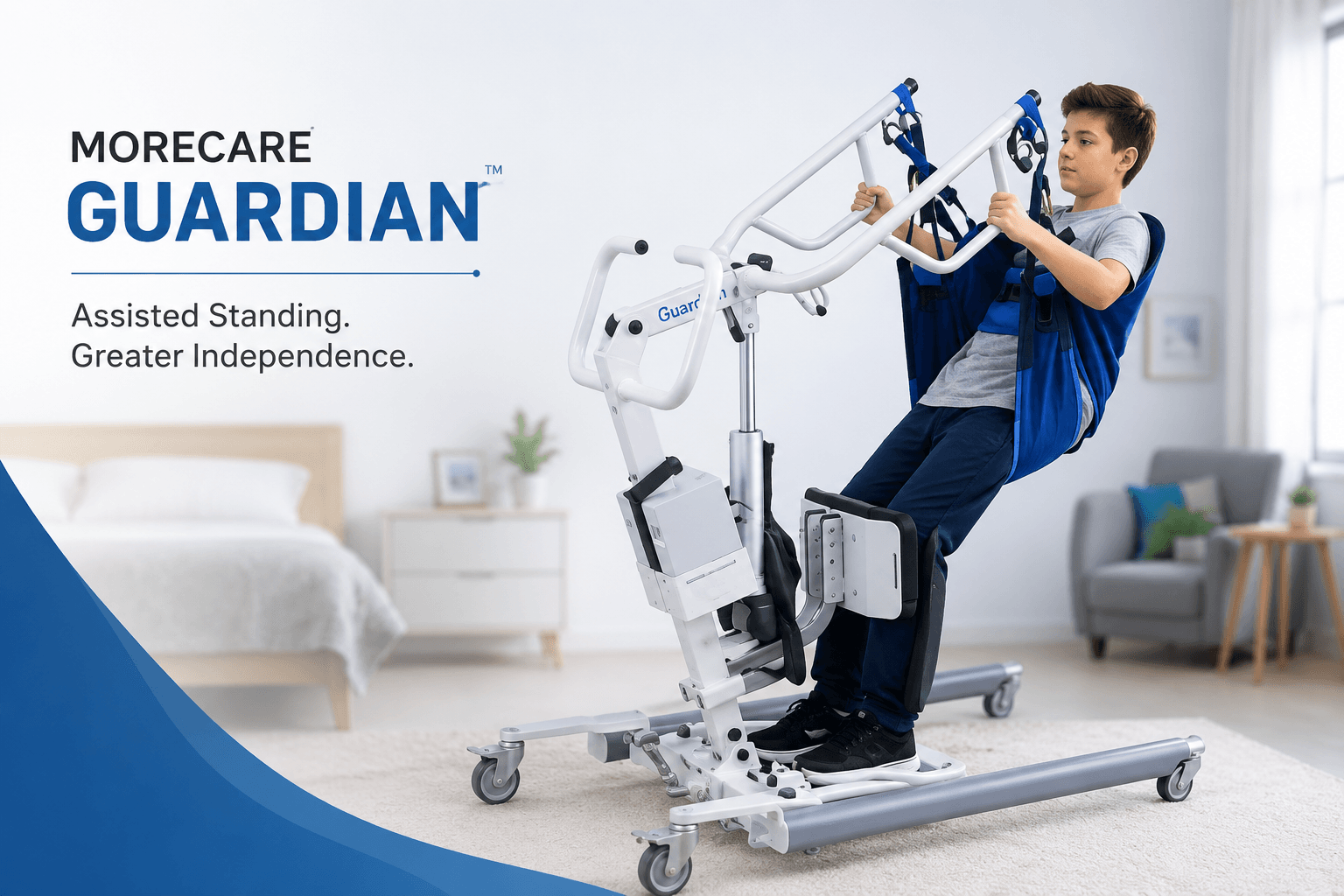
Some standing-transfer devices rely on the patient bearing part of their body weight through their legs.
These may be useful for someone who can stand with assistance but struggles to rise independently.
However, an elderly stroke survivor with substantial leg weakness may not be able to participate safely in that movement.
Other transfer chairs use an opening or split-seat mechanism that positions a seat beneath the patient.
These systems have different access and support requirements. Some are electrically operated, and not all require independent standing.
A sling-supported electric lift uses another approach.
The patient's body is supported by a fitted sling while the powered lifting mechanism assists with raising or lowering.
This may be an option when the person cannot reliably stand or pivot.
However, the lift must still be suitable for the patient's posture, body dimensions, transfer needs and surroundings.
For car transfers, the device must also have enough access around the vehicle to position the person safely.
The right transfer solution depends on how the person is supported throughout the movement, not simply on whether the equipment is called a transfer chair or patient lift.
How Can Morecare EasyLift Help With Wheelchair-to-Car Transfers?
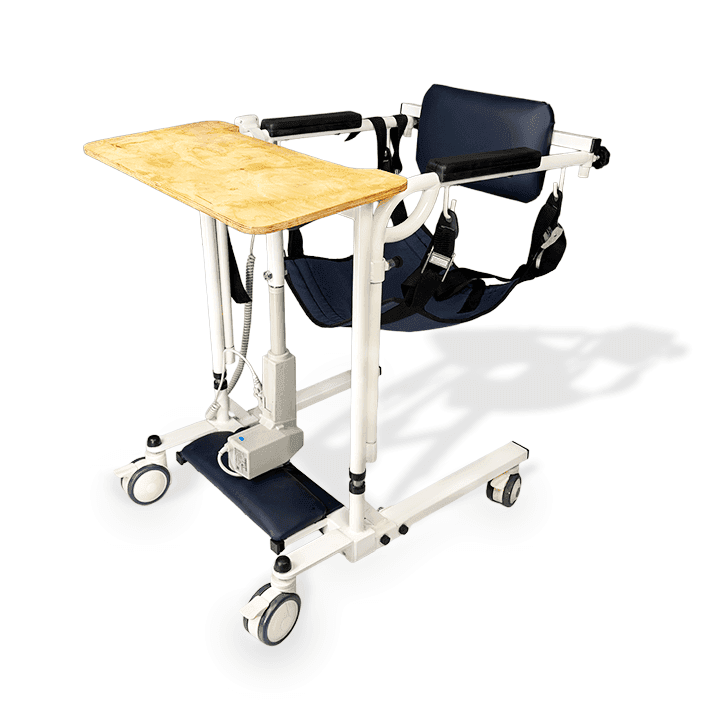
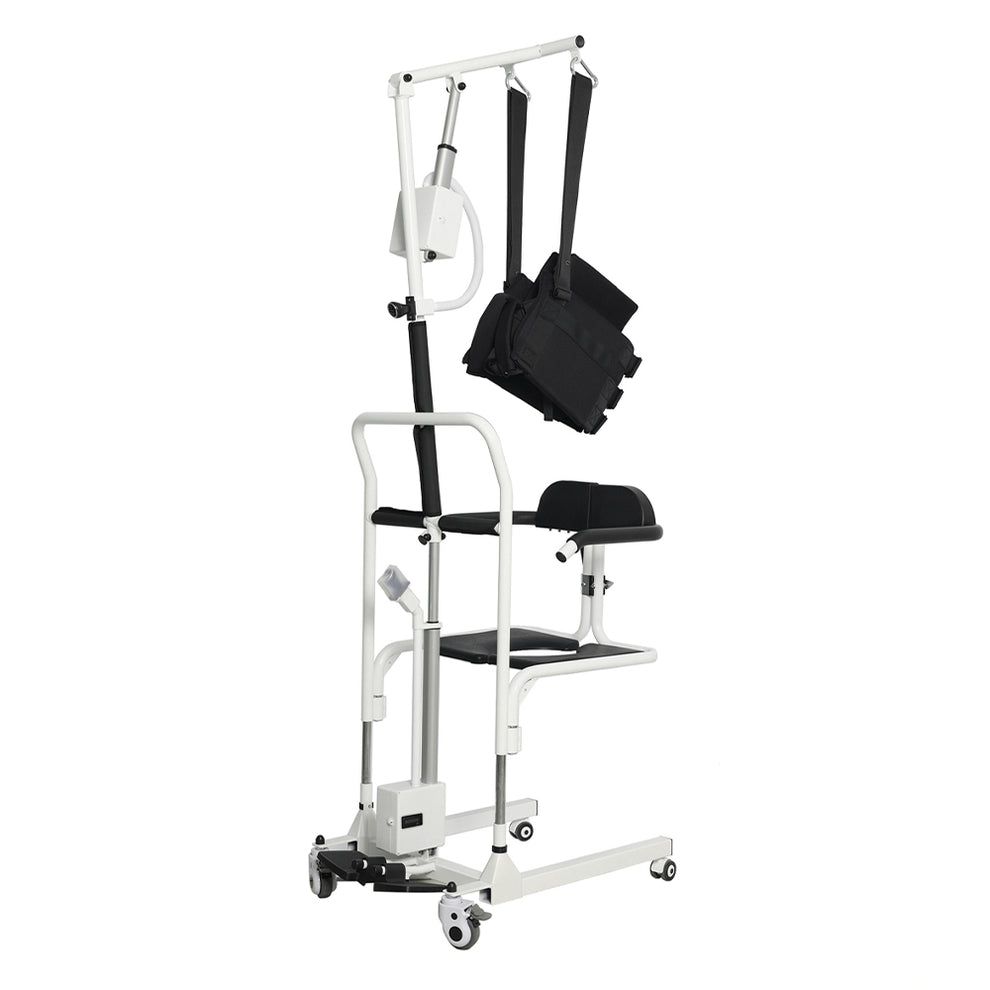
The Morecare EasyLift Electric Patient Transfer System uses a sling-supported electric lifting mechanism to assist selected adults who cannot stand or pivot safely.
Unlike a standing-dependent transfer aid, EasyLift does not require the user to stand before lifting begins.
The system includes:
Electric lifting and lowering
A 24V rechargeable battery powers an electric actuator, operated through a wired handheld controller.
Transfer sling
The fitted sling supports the user during the assessed lifting process.
Compact wheeled frame
EasyLift has a published operating width of 22 inches and a foldable frame intended for homecare handling and storage.
Adjustable lift configuration
The lifting mechanism provides powered movement for raising and lowering, within the device's specified range.
Caregiver-controlled operation
A trained caregiver operates the lift and manages the transfer route.
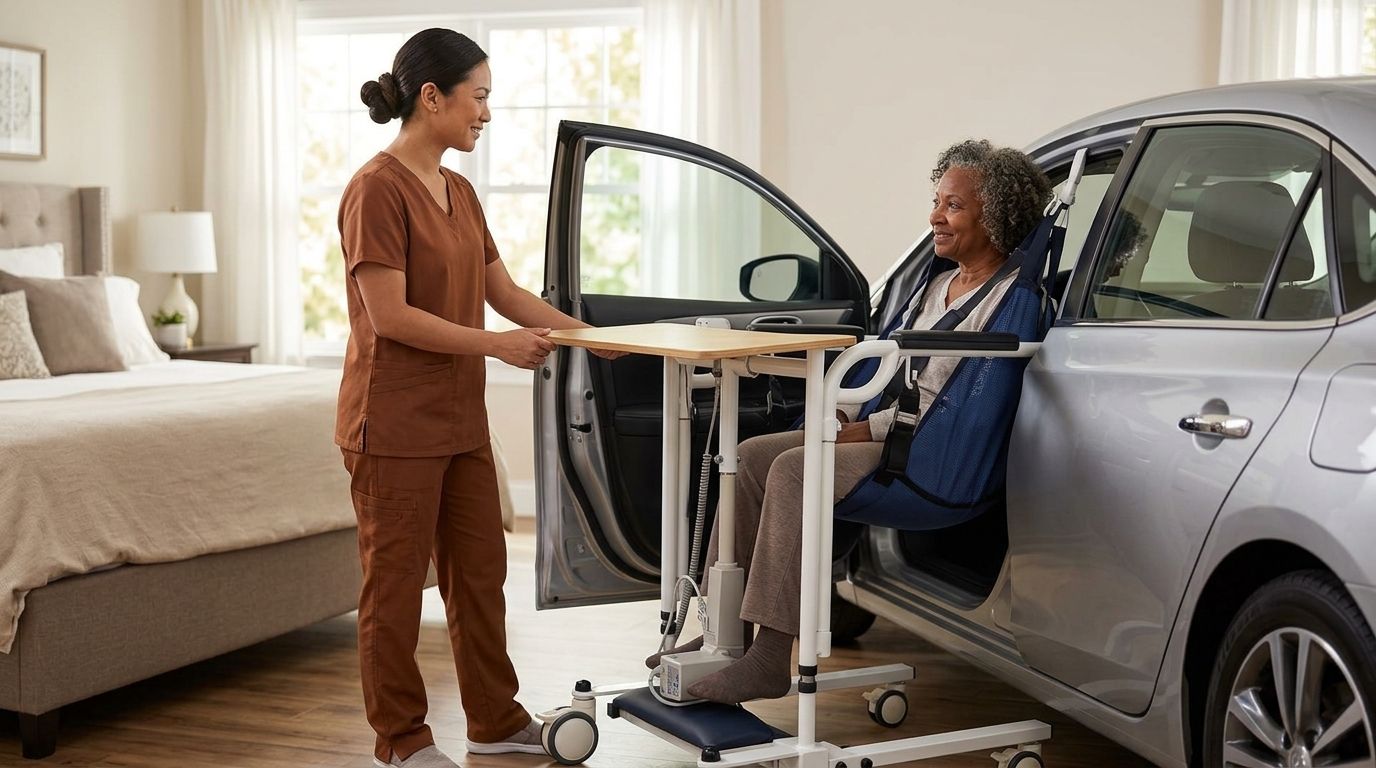
For a suitable car, these functions may help with transferring a person from their wheelchair towards an approved passenger seat without requiring them to stand first.
However, this is not possible with every vehicle.
The vehicle doorway, seat height, floor clearance, lift positioning and available space must all be checked.
EasyLift does not replace the car's passenger seat or approved seat-belt system, and it should never be used as a seat while the vehicle is moving.
The user may still need assistance with body positioning, legs, sling handling and final seating.
An individual transfer assessment and practical compatibility check are essential before using EasyLift for vehicle transfers.
What Should Families Check Before Choosing a Car Transfer Lift?
Before purchasing a patient transfer lift for car travel, check both the person and the vehicle.
1. Can the person stand or participate in transfers?
If they cannot bear weight, standing-transfer methods may not be suitable.
2. Can they tolerate sling-supported lifting?
Check sitting balance, head control, joint movement, skin condition and any medical restrictions.
3. Is the vehicle doorway wide enough?
A lift needs sufficient clearance to position the supported person through the available opening.
4. What is the passenger seat height?
The lift must be able to position the person appropriately relative to the seat. Actuator stroke alone does not establish vehicle compatibility.
5. Is there enough space beside the vehicle?
The lift and caregiver need a stable, unobstructed transfer route.
6. Is the ground suitable?
The equipment should only operate on firm, level and stable surfaces—not slopes, uneven parking areas or roadside obstacles.
7. Is the final passenger position safe?
The person must be positioned in an appropriate vehicle seat with the correct restraint. Their head, trunk and legs must be supported according to individual needs.
Families should also check the availability of trained caregivers and an alternative handling method if equipment fails.
Morecare can review the patient's measurements, wheelchair details and vehicle information to discuss whether EasyLift may be compatible.
A suitable car transfer system should match the patient's abilities and the actual vehicle—not just promise that a person can be lifted.