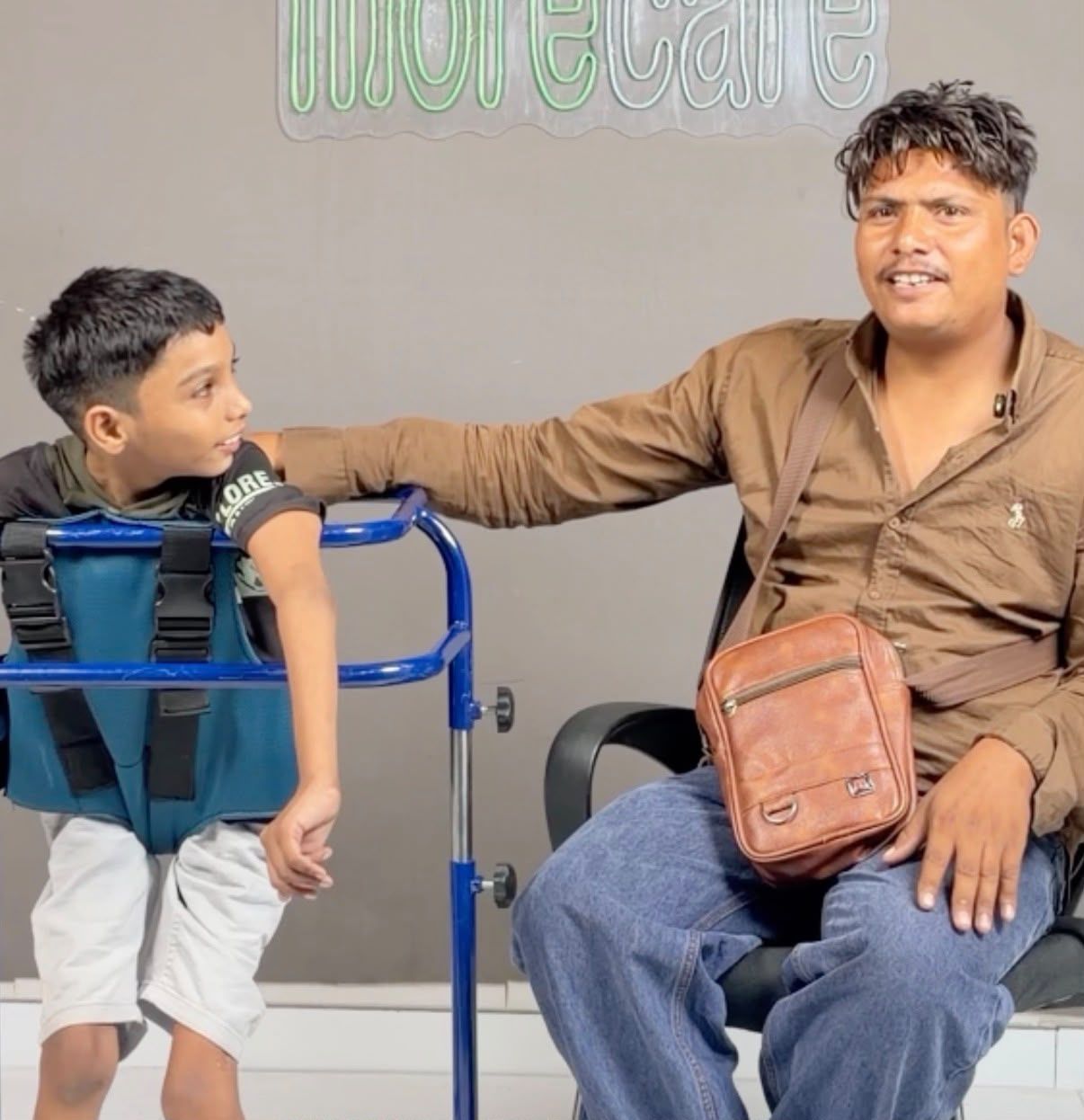
Describe the help needed during walking
Instead of saying “he cannot walk properly,” describe what happens: someone holds his trunk, helps advance a foot or steadies him when stopping. Stroke-related balance difficulties can involve weakness, trunk control, sensation and vision. These observations help the therapist identify what needs assessment.
Check the weaker arm and shoulder
Being able to hold one handle does not establish whether a two-handed walker is suitable. Ask the therapist to assess how each arm can be positioned and used comfortably. Existing shoulder pain needs assessment; padded supports alone do not establish that loading through the arm is appropriate.
Assess body support separately from foot control
A supported upright position does not show whether someone can clear their toes or control their knee during a step. If the foot catches or the knee gives way, ask for a specific assessment. NICE recommends considering an ankle–foot orthosis for selected walking difficulties after stroke.
Understand what Crab Walker provides
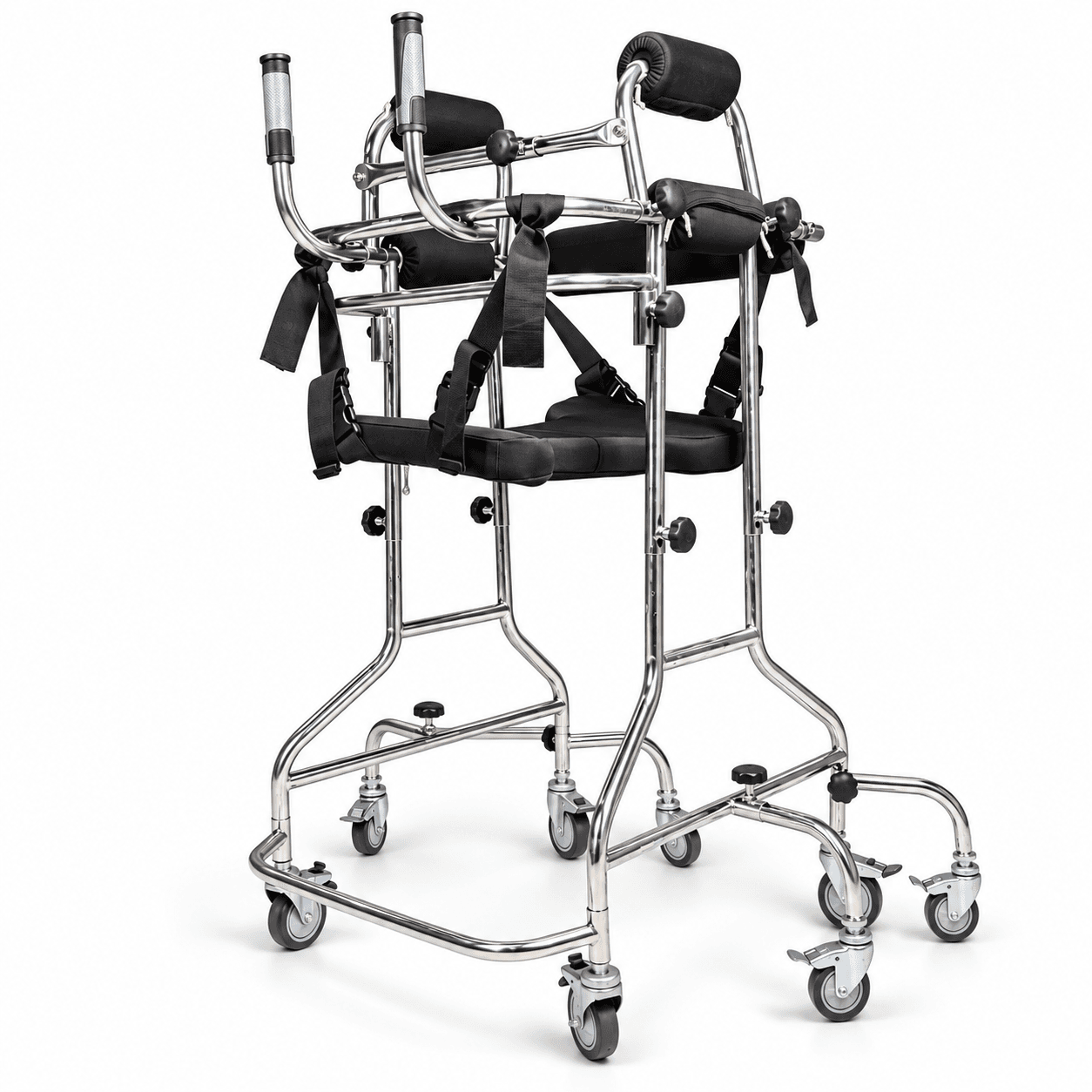
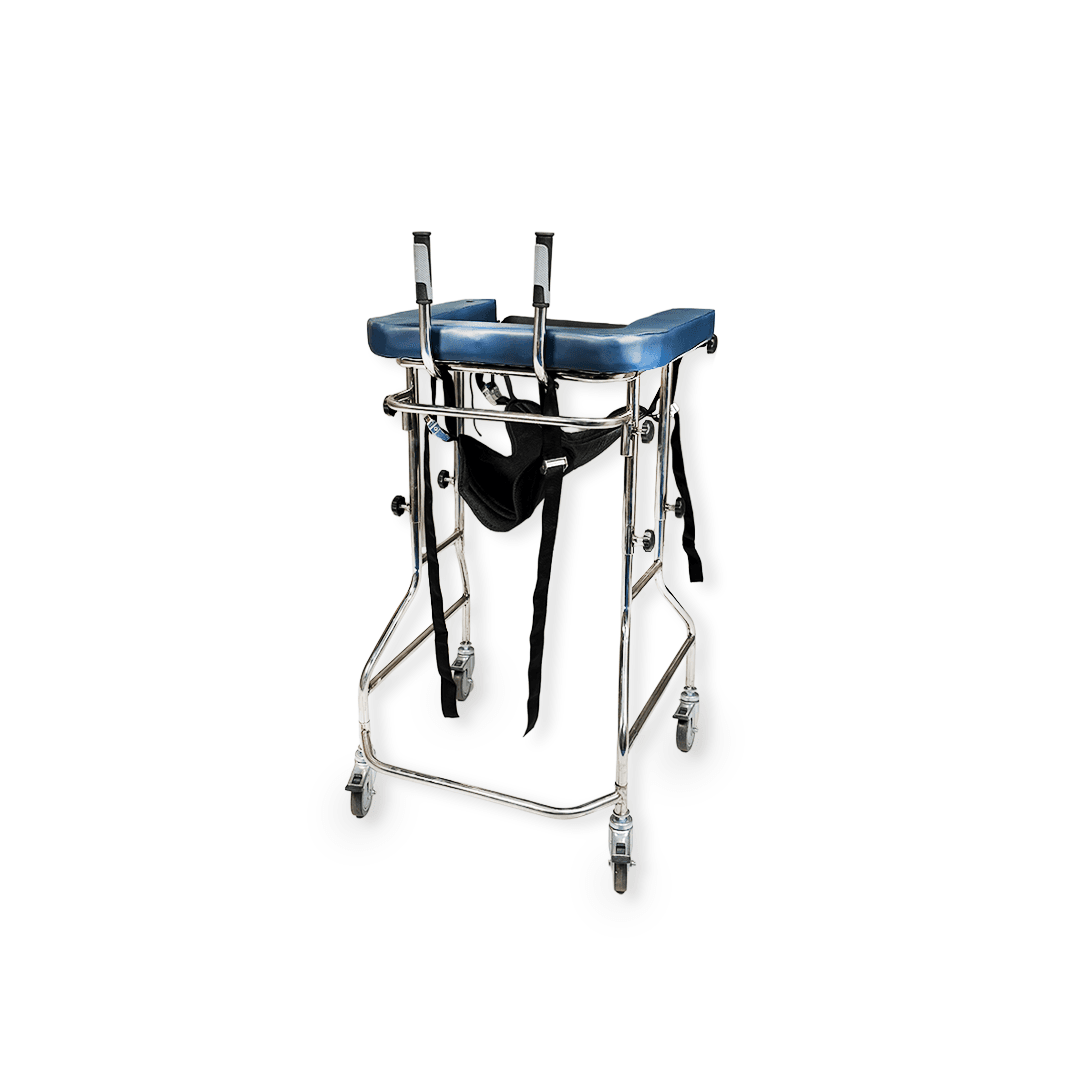
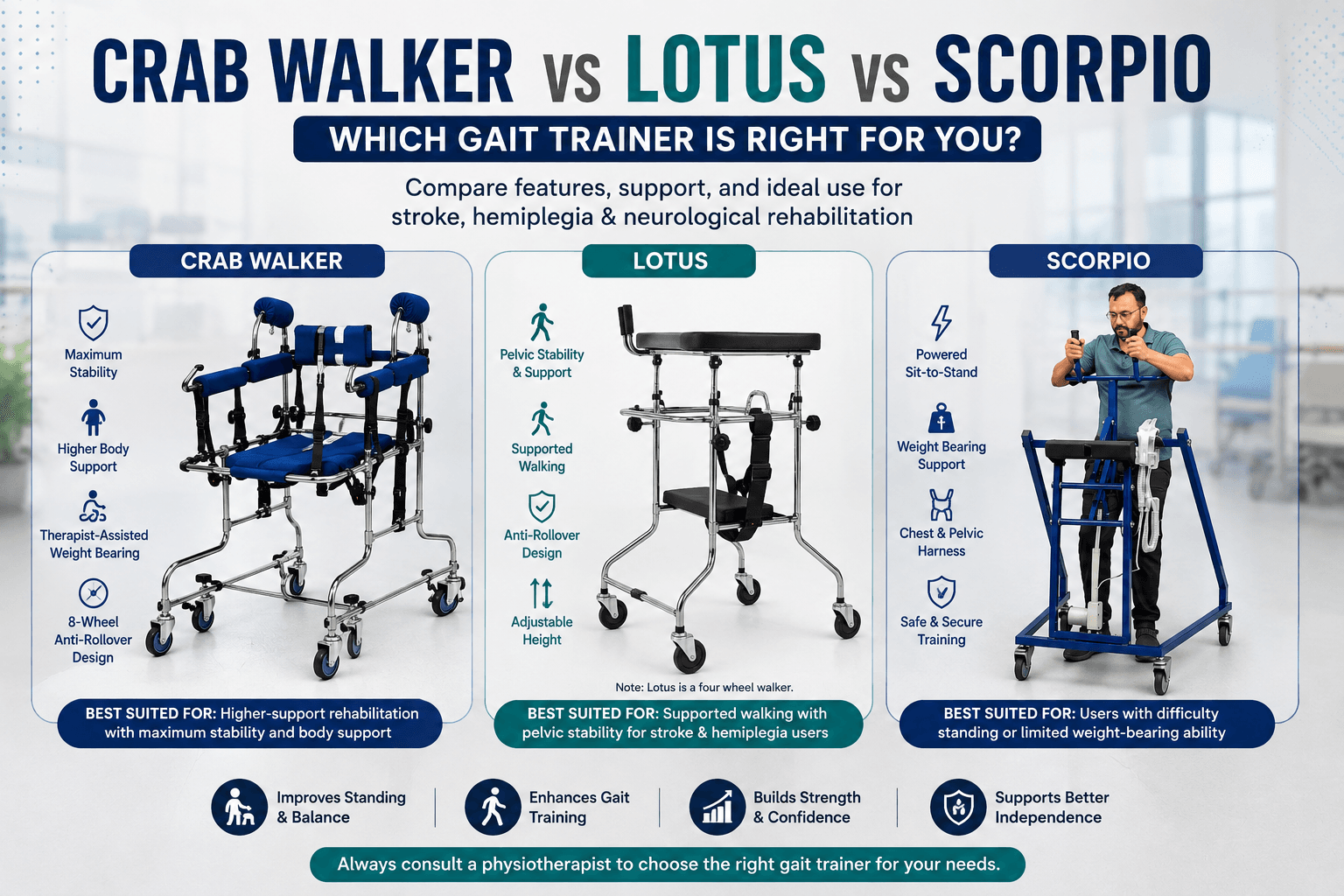
Morecare Crab Walker combines adjustable chest and arm supports with a pelvic sling for partial body-weight assistance during supervised practice. It may be considered when these supports match an assessed need. It does not lift the person into standing, provide full-body suspension or move their legs for them.
Include attention and awareness in the assessment
Some people have difficulty noticing one side of their surroundings after stroke. A larger frame does not resolve this. The assessment should consider how the person notices obstacles, responds to instructions and manages the intended activity. NICE recommends assessing how visual inattention and attention difficulties affect everyday tasks.
Plan the whole home routine
Consider getting into the equipment, fitting supports, practising, stopping and returning to a chair. Crab Walker requires a minimum 34-inch clear doorway, with extra room for turns and caregiver movement. Confirm the complete route and assistance needed before purchase; doorway width alone does not establish suitability.
An equipment demonstration is most useful when it answers a specific question about the person’s routine. Prepare a short description of their current mobility and bring it to the appointment.
Before the assessment
- Choose one meaningful goal. For example, the person may want to participate in therapist-directed stepping practice at home. This is different from needing a way to reach the bathroom independently.
- Describe current assistance. Explain what the helper actually does, including holding the body, guiding a foot or managing the walking aid.
- Bring existing instructions. Include any rehabilitation recommendations, movement restrictions and details of prescribed footwear or braces.
- Describe the home. Note the available practice area, narrowest doorway, floor surface and who would usually help.
During the supervised trial
Ask the therapist to assess the complete activity, including:
- Entry and exit: What assistance and transfer method are needed before and after practice?
- Positioning: Can the supports be fitted without uncomfortable pressure or forcing the arms into position?
- Participation: What movement does the person initiate, and what does the therapist still need to assist?
- Control: How are starting, stopping and any intended turns managed?
- Comfort and communication: Can the person communicate discomfort, and how will the caregiver recognise when a pause is needed?
Do not judge suitability only from a photograph of someone standing inside the frame.
Before taking equipment home
Request an individual plan covering:
- The agreed purpose of the equipment.
- Support settings and checks demonstrated during fitting.
- Who should assist and what training they need.
- How practice and rest will be organised.
- When to stop and seek advice.
- When the setup should be reviewed.
Hypothetical example: Someone may manage supported steps in a spacious therapy room but need considerable assistance when turning or returning to a chair. The home trial should establish whether the available space and caregiver arrangement can accommodate those needs.
Keep everyday mobility in the discussion. A wheelchair may remain appropriate for some activities while walking practice continues. Stroke guidance recommends assessment and training for suitable mobility aids, including wheelchairs. National Clinical Guideline for Stroke