Why Do Some Children With CP Slide Forward in Their Wheelchair?
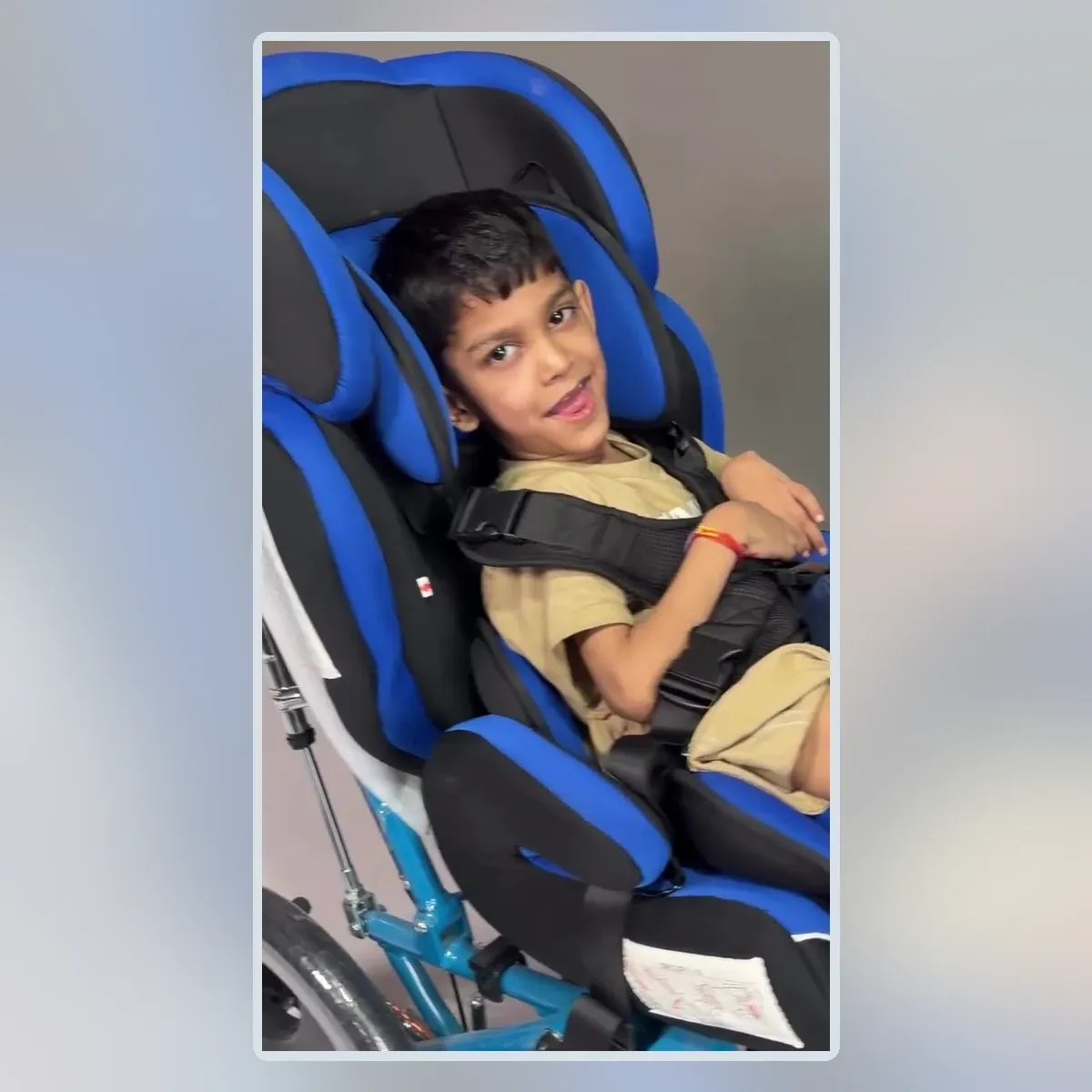
A child who repeatedly slides towards the front of their wheelchair may not have enough support to maintain a stable seated position.
In cerebral palsy, differences in muscle tone, coordination and trunk control can make this more difficult.
Other contributing factors may include:
- A seat that is too deep or does not fit the child's thighs.
- Insufficient pelvic support.
- Poor footrest positioning.
- Excessive reclining or an unsuitable seat-to-backrest angle.
- Increased muscle tone that pushes the body into extension.
- Fatigue during longer sitting periods.
One common pattern is posterior pelvic tilt, sometimes called sacral sitting. The pelvis rolls backward, the lower back becomes rounded and the child may gradually move forward in the seat.
A child might also slide to avoid discomfort or an unsuitable seating position.
Repeated sliding should not be treated simply by pulling the child backward and tightening the straps.
The underlying seating arrangement needs to be checked, particularly when the child repeatedly loses the same position.
Why Does My Child Keep Leaning to One Side?
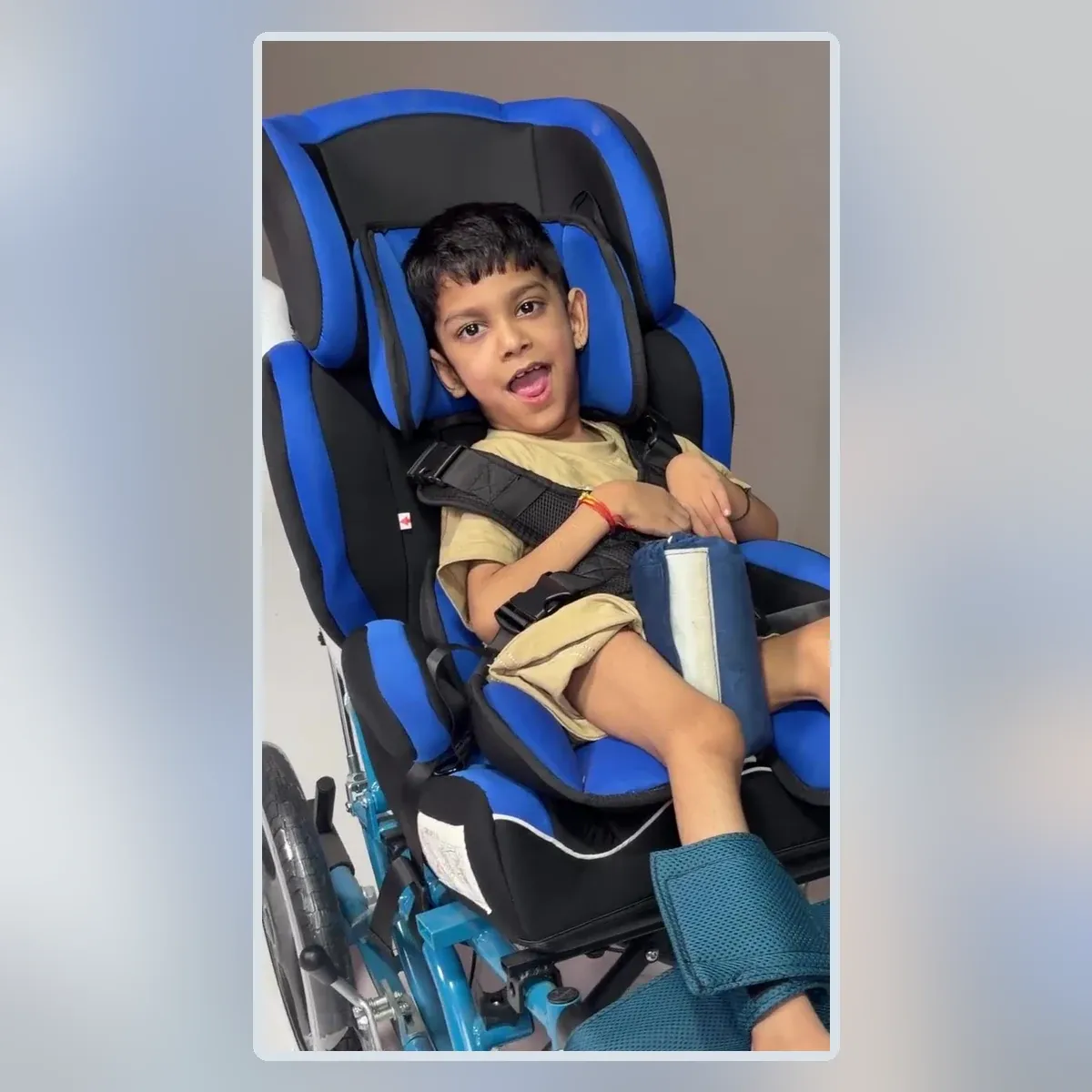
Some children with cerebral palsy find it difficult to maintain their trunk in the middle of the wheelchair.
They may consistently lean towards one armrest or require a caregiver to straighten their position.
Possible reasons include:
- Reduced trunk muscle control.
- Weakness or unequal muscle activity on either side.
- Pelvic obliquity, where one side of the pelvis is higher.
- Asymmetrical muscle tone or movement.
- Scoliosis or other structural changes.
- Unsuitable lateral support or seat dimensions.
For example, a child may appear to lean because their trunk is weak, but the underlying problem may begin with an uneven pelvic position.
Adding a cushion on the side where the child leans may not correct the problem and can sometimes create additional pressure.
A therapist should first determine whether the asymmetry is flexible or fixed.
The objective is not to force the child into a perfectly straight posture. It is to establish the most appropriate, comfortable and functional position for that child's body.
Which Seating Adjustments Can Help Reduce Sliding and Leaning?
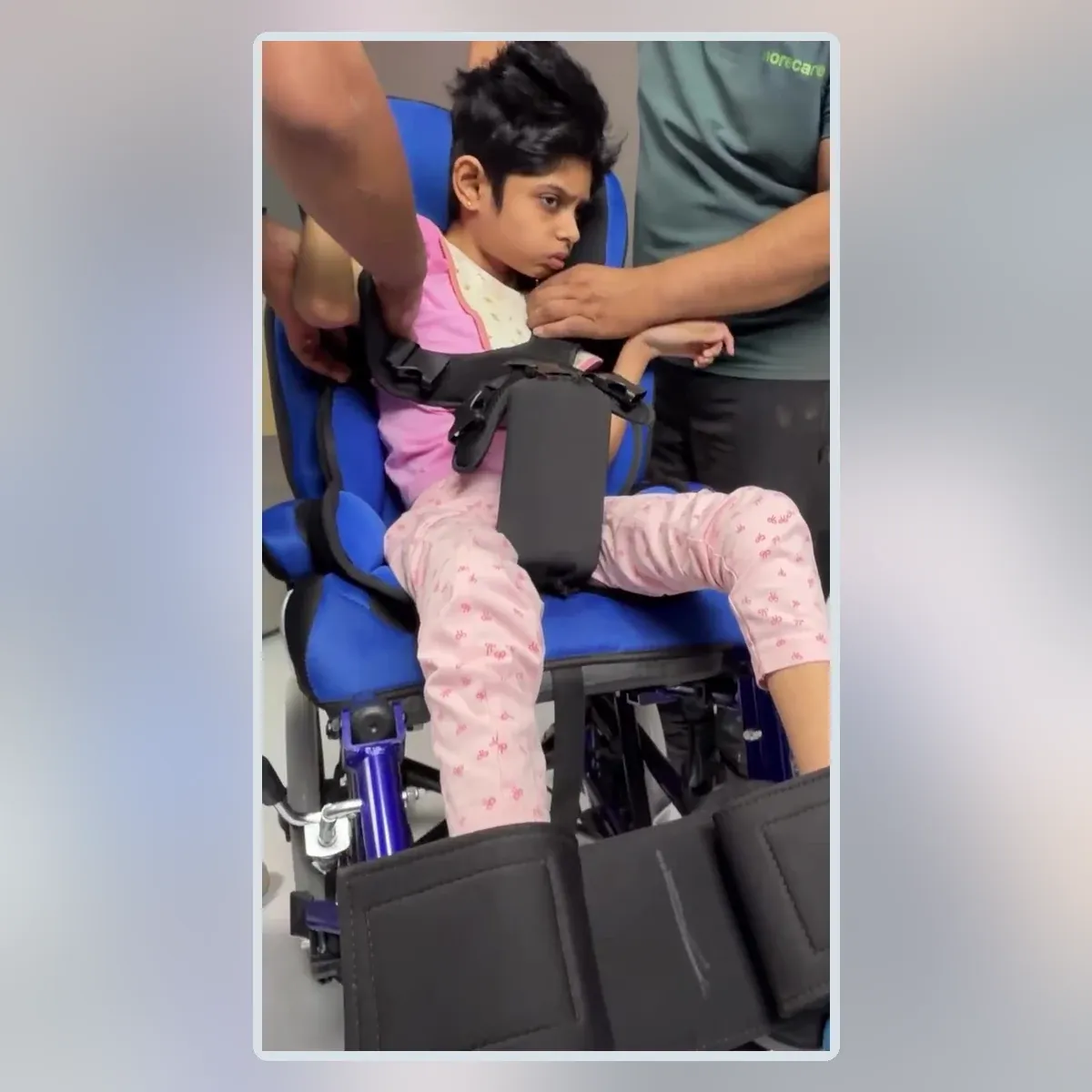
An adaptive wheelchair provides several positioning options that can be configured according to the child's needs.
Pelvic positioning
A correctly selected pelvic belt and supportive seat cushion may help maintain the child's pelvis in its assessed position.
Seat width and depth
Seat dimensions should match the child's body. Excessive width may allow sideways movement, while unsuitable depth can contribute to sliding or discomfort.
Lateral trunk supports
Appropriately positioned side supports may help children who cannot independently maintain their trunk in the middle.
Foot positioning
Supported feet help establish a stable seated arrangement and influence the posture of the legs and pelvis.
Tilt-in-space
Tilt-in-space changes the orientation of the entire seating system without changing the seat-to-backrest relationship.
For some children, an assessed tilted position may reduce the effort required to maintain posture.
Harness positioning
A chest harness may provide additional upper-body support when properly fitted, but it should not be used to compensate for inadequate pelvic support or as a restraint.
The right configuration often requires several adjustments working together.
Parents should avoid adding unapproved pillows, towels or extra cushions to a fitted wheelchair, since these can affect positioning and safety.
How Can Morecare Blueflax Help With Pelvic and Trunk Positioning?
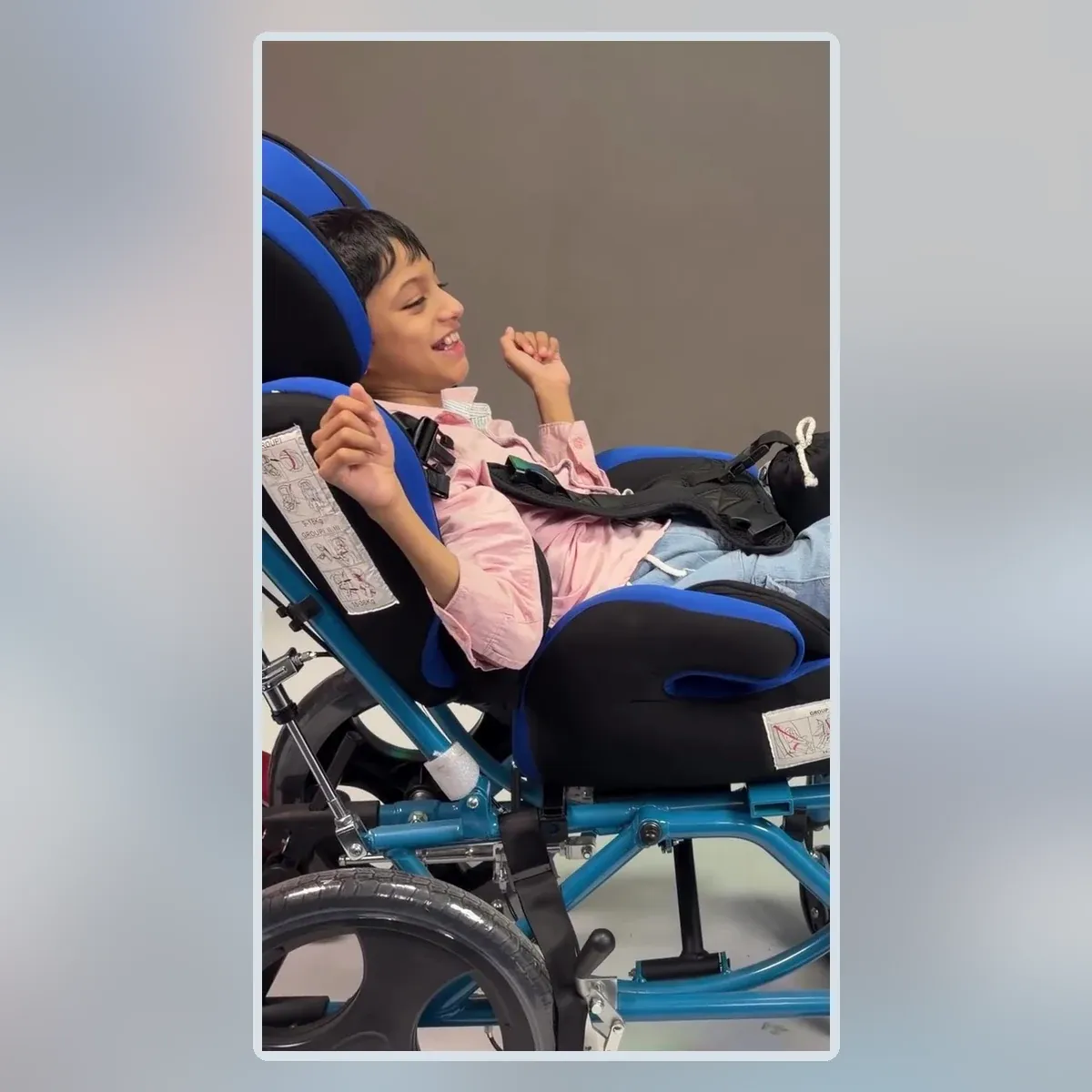
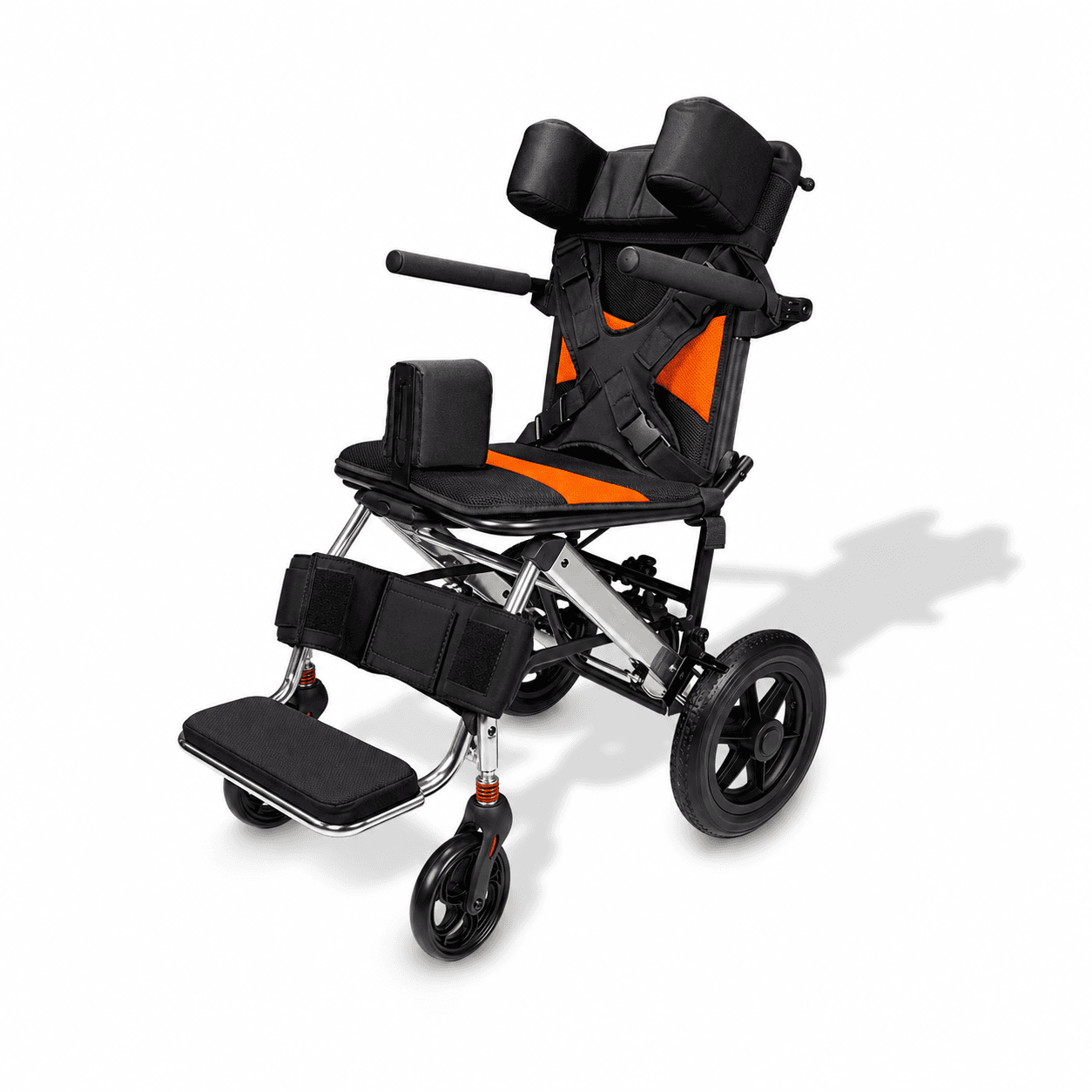
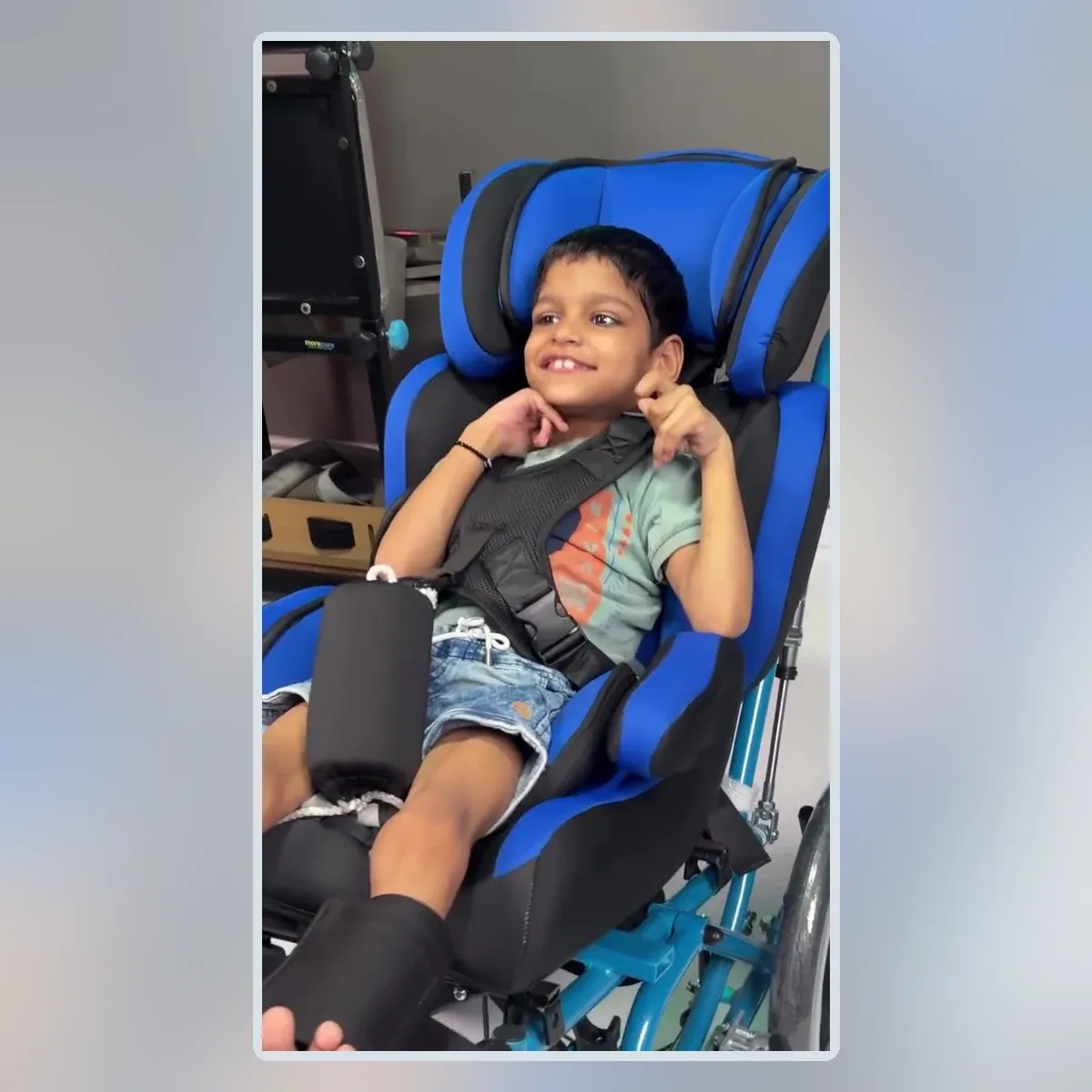
The Morecare Blueflax Tilt & Recline CP Wheelchair Cum Stroller is designed for selected children who need additional support during sitting and caregiver-assisted mobility.
Its seating configuration can include:
- Adaptive positioning cushions: Help adjust the effective seating fit within the wheelchair's structural dimensions.
- Pelvic positioning support: Helps maintain the child's assessed pelvic position.
- Lateral trunk supports: Provide additional support where independent trunk stability is limited.
- Butterfly chest harness: Offers upper-body positioning support when correctly fitted.
- Adjustable headrest: Supports the head as part of the complete seating arrangement.
- Footrests: Help accommodate the child's lower-limb positioning.
- Separate tilt and recline: Provide different seating-angle adjustments according to individual needs.
An important specification is that Blueflax has a fixed 18-inch structural seat width.
Adaptive cushions can modify the usable seating space within that width, but they cannot make the underlying frame narrower or wider.
For a child who slides forward or leans sideways, Blueflax may offer suitable positioning options when correctly configured.
However, pronounced pelvic asymmetry, fixed deformities or complex pressure-care needs may require specialist seating beyond the standard configuration.
The wheelchair should not be selected on the assumption that additional harness tension will solve all postural problems.
What Should Parents Check Before Buying or Adjusting a CP Wheelchair?
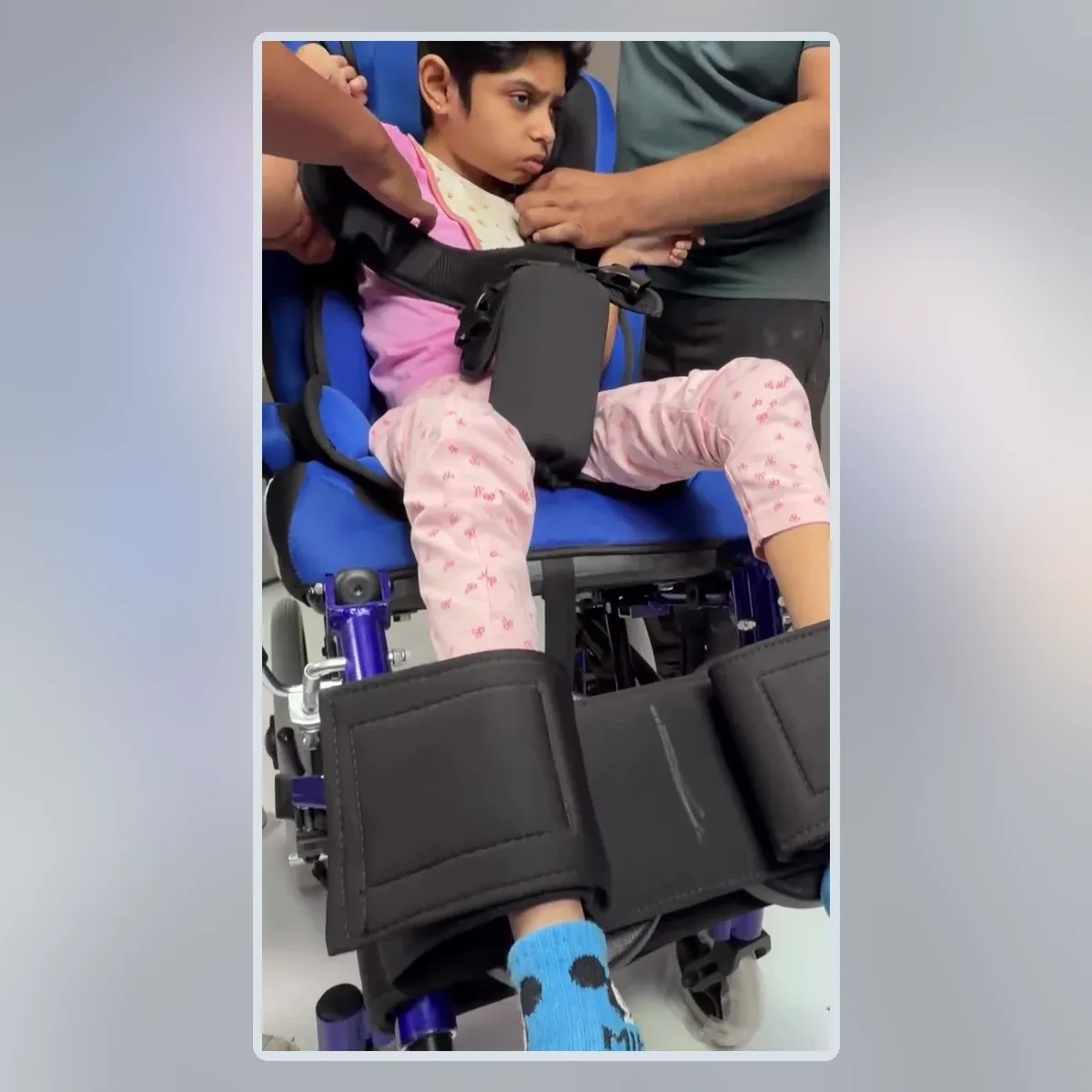
If your child repeatedly slides or leans, observe exactly what happens before changing the equipment.
1. Where does the movement begin?
Does the pelvis slide forward first, or does the trunk begin leaning sideways?
2. Can the child maintain a supported sitting position?
Notice whether the posture changes immediately or only after a period of sitting.
3. Does the seat fit their body?
Check hip width, thigh length, trunk height and lower-leg length.
4. Are the feet supported?
Look for dangling feet, uneven foot placement or uncomfortable knee positioning.
5. Are the pelvic and trunk supports appropriate?
Support belts and cushions should be individually positioned, not tightened simply to prevent all movement.
6. Does changing the wheelchair angle affect posture?
Tilt and recline should be selected according to the child's assessed needs, rather than using the most reclined position automatically.
7. Is there discomfort or skin redness?
Persistent redness, pain or pressure marks warrant prompt review of the seating system.
Before purchasing Blueflax, share your child's measurements and current sitting difficulties with Morecare and their treating therapist.
Short photographs or videos showing the child's usual posture may help communicate the problem when the family has appropriate permission to share them.
A suitable wheelchair should support the child's pelvis, trunk and head together while allowing safe, comfortable participation in everyday activities.