What Is Trunk Control, and Why Is It Important for Sitting?
Trunk control refers to the ability to maintain and adjust the position of the upper body during movement.
The trunk includes the muscles and structures around the abdomen, back, chest and pelvis.
When a child sits upright, these muscles work together to maintain balance.
Small adjustments are continuously required as the child moves their head, reaches for toys or shifts their body weight.
Children with cerebral palsy may have difficulty coordinating these adjustments.
As a result, a child may:
Lean forward while sitting.
Fall towards one side.
Struggle to return to an upright position.
Depend on their hands for balance.
Become tired while maintaining posture.
Poor trunk control does not necessarily mean the child has no muscle strength. It may also involve difficulties with timing, coordination, muscle tone or sensory processing.
A pediatric physiotherapist can assess how much control the child has at different levels of the trunk.
How Do Muscle Tone and Cerebral Palsy Affect Sitting Posture?
Cerebral palsy affects movement and posture in different ways.
One important factor is muscle tone, which describes the resistance muscles provide to passive movement.
Children with cerebral palsy may experience increased muscle tone, reduced muscle tone or fluctuating muscle activity.
Spasticity or increased muscle tone
Some children experience stiffness or increased resistance to movement.
This may make comfortable sitting difficult, particularly when the hips, knees or trunk cannot easily move into a suitable position.
Hypotonia or reduced muscle tone
Children with low muscle tone may struggle to maintain upright posture against gravity.
They may appear floppy or collapse forward or sideways when unsupported.
Dystonia or fluctuating muscle contractions
Some children experience involuntary muscle activity that changes their body position.
These movements can make maintaining a consistent sitting posture challenging.
Many children experience a combination of movement and postural difficulties.
The type of muscle tone alone does not determine which chair or support system will be appropriate.
A rehabilitation professional should assess how the child's muscles and joints behave during actual sitting activities.
Why Does Pelvic Alignment Affect Trunk Stability?
The pelvis provides an important foundation for sitting.
When the pelvis is positioned appropriately, the upper body has a more stable base from which to maintain posture and perform movements.
If the pelvis tilts excessively backward, the child may develop a rounded sitting posture.
If the pelvis tilts or rotates unevenly, the trunk may lean towards one side.
This can make it harder for the child to maintain their head position or use both hands during play.
Therapeutic seating may address these difficulties through:
Appropriate seat width and depth.
A suitable sitting surface.
Correctly adjusted pelvic positioning belts.
Individually selected trunk supports.
Lower-limb positioning where required.
The objective is to provide suitable support without forcing the child into an uncomfortable or unnatural position.
Some children have flexible postural difficulties, while others have fixed joint or spinal limitations.
These situations require different seating strategies.
Parents should avoid tightening belts or harnesses to forcibly straighten the body.
Professional assessment is important because inappropriate positioning may increase discomfort or pressure.
How Are Head Control and Trunk Control Connected?
Head and trunk movements work together during sitting.
A child needs sufficient upper-body stability to maintain and adjust their head position.
When trunk control is limited, the child may struggle to keep the head upright, particularly during reaching or other activities.
Some children tilt their heads forward, while others lean backwards or towards one side.
However, poor head control does not always result from trunk weakness alone.
Neck muscle control, vision, fatigue, involuntary movements and neurological factors may also contribute.
A therapist may recommend additional head or upper-body support when appropriate.
A correctly fitted headrest can provide positioning assistance, but it should not be used to force the head into a fixed position.
Special attention is needed when a child has significant swallowing difficulties, breathing problems or poor control of the head and neck.
The seating arrangement should allow safe breathing, comfortable positioning and appropriate participation.
How Can the Morecare Sunflower Support Children With Poor Trunk Control?
Some children require additional external support to participate in seated activities.
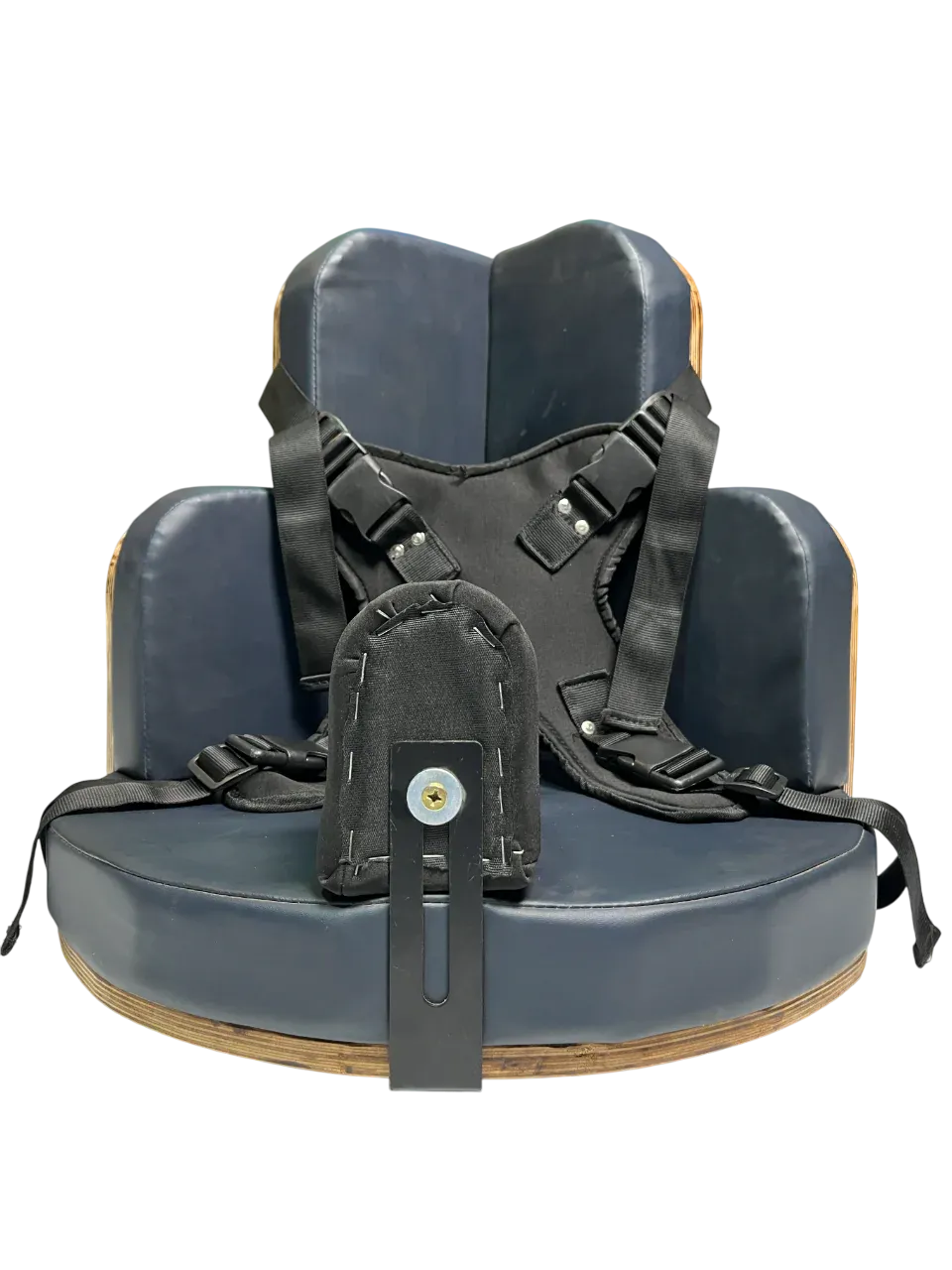
The Morecare Sunflower Therapy Corner Floor Seating System is designed for selected children who need assistance with maintaining a supported sitting position.
Its three-sided corner structure provides padded support around the back and sides.
The system also includes several positioning features.
Padded corner support
The three-sided seating arrangement provides external support around the child's trunk during floor-based sitting.
Four-point butterfly chest harness
The adjustable harness can help provide additional upper-body positioning support when correctly fitted.
Pelvic positioning belt
The belt helps maintain the intended pelvic position while the child is seated.
Height-adjustable headrest
The headrest allows individualized positioning for children who require additional head support.
Removable abductor
This provides an option for lower-limb positioning when recommended by a therapist.
Customizable seating dimensions
Seat dimensions, backrest height and selected support components can be adapted according to individual requirements.
Sunflower is generally recommended for children aged 2–7 years, subject to measurements and clinical suitability.
The seat is designed to provide positioning assistance, not to strengthen muscles automatically or guarantee independent sitting.
It should be used with supervision and an individualized positioning plan.
How Can Parents Support Better Sitting During Daily Activities?
Parents can play an important role in implementing a child's rehabilitation programme at home.
The first step is understanding the child's specific sitting difficulties.
A physiotherapist or occupational therapist may recommend activities involving supported sitting, reaching, head movement or controlled weight shifting.
Families can also review whether the child is positioned comfortably during everyday routines.
Check the sitting surface
The child should have an appropriate base of support rather than sitting on an unstable or unsuitable surface.
Observe trunk alignment
Notice whether the child repeatedly falls to one side or struggles to maintain an upright position.
Support meaningful activities
Use age-appropriate toys, books and interactive activities according to the child's abilities and therapist's advice.
Monitor comfort and fatigue
Watch for signs of discomfort, unusual pressure, increased stiffness, breathing changes or tiredness.
Review equipment fit
As children grow, their seating dimensions and support requirements may change.
Therapists should periodically review the seating system to determine whether adjustments or different equipment are needed.
The objective is not to keep the child upright for the longest possible time.
It is to provide appropriate positioning that supports comfort, participation and safe therapeutic activity.