Why Doesn't Every Patient Transfer Lift Work With Every Car?
A patient transfer lift may be capable of raising and lowering a person, but that does not mean it can position them safely inside every vehicle.
For example, a family's SUV may have a relatively high passenger seat, while a compact hatchback may have a smaller doorway and limited space beside the front seat.
The lift must accommodate several things at once:
- The patient's body in a suitable sling.
- The vehicle's doorway and roof clearance.
- The position of the car seat.
- The lift's wheels, frame and operating movement.
- Space for the caregiver to guide the transfer.
If the equipment cannot approach the passenger seat closely enough, lifting capacity alone will not solve the problem.
Likewise, if the user's head or legs cannot pass safely through the available doorway, the transfer may be unsuitable despite sufficient lifting height.
This is why vehicle compatibility should be confirmed using the actual car, not just the general vehicle category.
A car described as an SUV, sedan or hatchback cannot be considered compatible without checking its measurements and transfer arrangement.
The First Three Measurements: Door Opening, Seat Height and Doorway Threshold
Start with the car parked on firm, level ground, with the intended passenger door fully open.
Measurement 1: Usable door opening width
Measure the unobstructed opening through which the patient and lifting equipment would need to pass.
Do not simply measure the outside width of the door.
Consider the door frame, dashboard, front pillar, door panel and any other obstruction along the proposed transfer path.
Measurement 2: Passenger seat height from the ground
Measure vertically from the ground to the top of the passenger seat cushion.
This helps determine the lifting and lowering positions needed for the transfer.
However, the lift's advertised actuator stroke is not the same as its usable passenger-seat transfer range.
Measurement 3: Doorway threshold and access clearance
Examine the lower doorway, door sill and the available route beside or beneath the vehicle.
If the lift frame or its wheels need to pass through a particular space, measure the narrowest and lowest clearance along that path.
A high door sill or obstructed access can make the transfer difficult even when the seat height appears suitable.
These first three measurements help establish whether the vehicle offers a potentially workable entry path.
They do not, by themselves, confirm that the transfer is safe or compatible.
Four More Measurements: Ground Clearance, Turning Space, Headroom and Patient Fit
The remaining measurements help establish whether the equipment, patient and caregiver can complete the transfer route.
Measurement 4: Under-vehicle clearance
If the intended transfer method requires part of the lift frame to approach or extend beneath the vehicle, measure the available ground clearance along that precise route.
Do not assume the car's advertised ground clearance describes the usable opening under its side panels, sills or other components.
Measurement 5: Space beside the fully opened door
Measure the clear working area beside the vehicle.
The lift needs room to approach and be positioned according to its approved operating method.
Caregivers may also need space to guide the person and move around the equipment.
Measurement 6: Usable doorway height and passenger headroom
Measure the height of the unobstructed entry opening and consider the space between the passenger seat and roof.
The person's head, trunk and legs must pass through the opening without unsafe contact with the door frame, roof or dashboard.
A patient who is tall, has limited hip movement or cannot flex their neck may require additional clearance.
Measurement 7: Patient and receiving-seat dimensions
Record the person's height, weight, hip width, trunk dimensions and relevant sitting measurements.
Also note the passenger seat's usable width, depth and available positioning space.
A person who requires substantial trunk or head support may not tolerate the same transfer path as someone with good supported sitting balance.
Together, these seven checks provide useful information for an initial equipment review.
However, compatibility still depends on the complete lifting path, appropriate sling selection, caregiver assistance and a successful professional assessment.
How Do Morecare EasyLift's Dimensions Affect Car Compatibility?
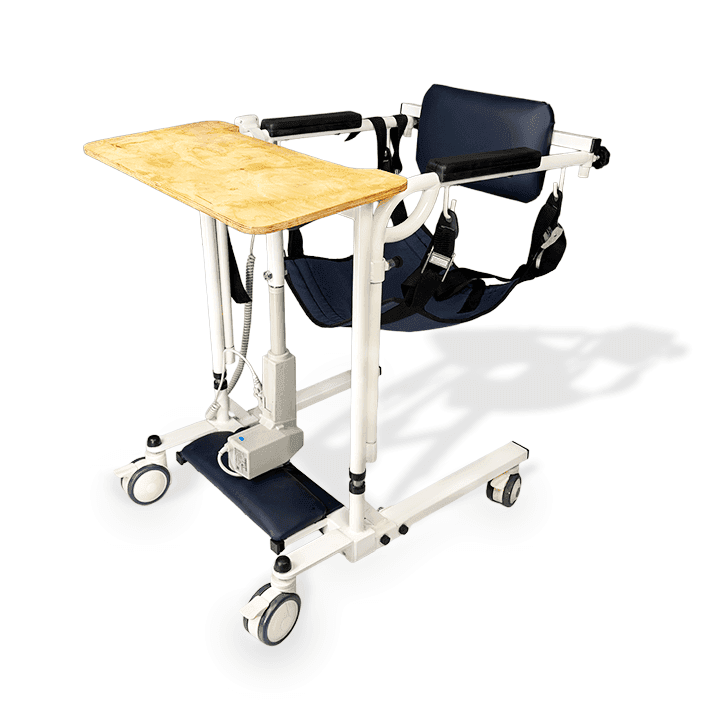
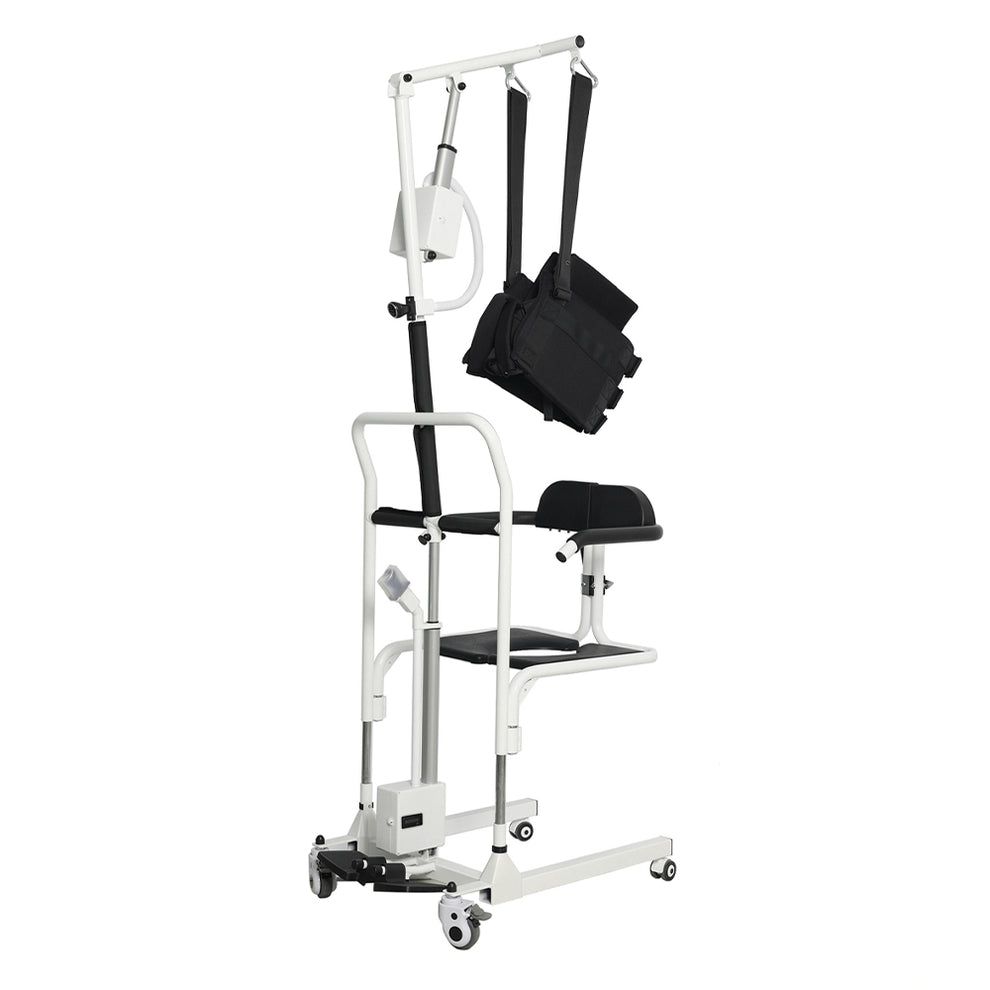
The Morecare EasyLift Electric Patient Transfer System uses a fitted sling and powered lifting mechanism to assist selected adults who cannot stand or pivot reliably.
It is designed around a foldable, compact frame rather than a conventional overhead hoist boom.
Relevant published specifications include:
- Overall operating width: 22 inches.
- Overall length: 28 inches.
- Folded width: Approximately 11 inches.
- Maximum user weight: 200 kg.
- Electric lifting: 24V rechargeable battery and wired handset.
- Actuator stroke: 12 inches.
- Published adjustable height range: 36–48 inches.
- Minimum under-bed clearance: 6 inches.
These figures describe the equipment, but they must be interpreted correctly.
The 22-inch overall width helps with assessing available space, yet it does not establish whether the lift and suspended patient can pass through a particular vehicle doorway.
The approximately 11-inch folded width is relevant to equipment storage and transport, not its working clearance with a patient.
Similarly, the 6-inch minimum under-bed clearance describes access beneath a compatible bed. It is not a universal car ground-clearance requirement.
EasyLift may support selected car transfers when the vehicle, patient, sling and transfer route are compatible.
It cannot be assumed to fit every hatchback, sedan or SUV.
Before confirming an order specifically for vehicle transfers, Morecare should review the actual car's measurements and proposed handling method.
A practical trial or verified demonstration may be necessary where measurements alone cannot establish suitability.
What Should Families Send Morecare Before Buying a Car Transfer Lift?
If you are considering EasyLift for an elderly parent, stroke survivor or another family member with limited mobility, begin with a simple compatibility enquiry.
Share the vehicle details
Provide the car's make, model, year and which passenger seat you intend to use.
Share the seven measurements
Include the usable door opening, passenger seat height, doorway threshold, under-vehicle clearance if relevant, available side space, entry headroom and patient or seating dimensions.
Send clear photographs
Photographs of the fully opened passenger doorway, car seat, lower sill and surrounding space can help explain the arrangement.
Describe the patient's abilities
Explain whether the person can maintain supported sitting, move their legs, control their head or participate in transfers.
Explain the current transfer method
Tell Morecare whether the patient is currently transferred with caregiver assistance, a standing aid, board or another lift.
Confirm available caregivers
The correct number of trained helpers depends on the user and handling method.
Before routine use, there should also be a safe backup plan for equipment or power failure.
If a conventional car transfer is unsuitable, wheelchair-accessible transport or a different lifting arrangement may be more appropriate.
The right patient transfer lift is not simply one that can raise the person's weight. It must also fit the vehicle, support the patient correctly and allow caregivers to complete the assessed transfer safely.