Why Do People With Duchenne Muscular Dystrophy Need Different Rehabilitation Equipment Over Time?
Duchenne muscular dystrophy is a genetic neuromuscular condition associated with progressive muscle weakness.
The rate and pattern of functional change vary between individuals.
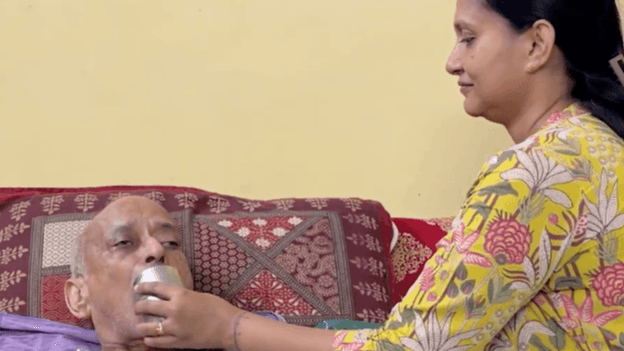
As muscle weakness progresses, everyday activities may become increasingly difficult.
Some people require assistance with walking or mobility.
Others need additional support for sitting, moving their arms, using powered controls or transferring between surfaces.
A rehabilitation device that meets a person's needs at one stage may become unsuitable later.
Changing Walking Ability
During earlier stages, a person may be able to walk but experience increasing fatigue or difficulty with certain activities.
As walking becomes less reliable, appropriately prescribed wheeled mobility may become important.
Equipment selection should be guided by the neuromuscular rehabilitation team rather than waiting until unsafe falls occur.
Reduced Trunk Stability
Some individuals develop increasing difficulty maintaining a comfortable upright sitting position.
They may require more supportive seating, lateral trunk positioning or adjustments to the wheelchair configuration.
Upper-Limb Weakness
Using the hands and arms can become difficult as strength declines.
Activities such as reaching a joystick, lifting the forearm or maintaining a comfortable hand position may require assistance.
Contractures and Joint Limitations
Some people develop restricted movement around the shoulders, elbows, hips, knees or ankles.
Wheelchair seating and supports must accommodate the person's available range of motion.
Changes in Transfer Ability
Moving between the bed, wheelchair and toilet may eventually require more assistance.
A family may need to reassess transfer methods and patient-handling equipment.
Respiratory and Cardiac Considerations
People with DMD may also have important respiratory and cardiac care requirements.
These can influence positioning tolerance, fatigue, travel arrangements and equipment planning.
The treating medical team should provide guidance on relevant precautions.
The main lesson is that equipment planning should be proactive.
Families and rehabilitation professionals should review the person's mobility and support needs periodically rather than assuming that one wheelchair or transfer system will remain suitable indefinitely.
What Wheelchair Customizations May Be Needed for DMD?
A wheelchair for a person with DMD may need to accommodate progressive weakness, reduced repositioning ability and changing postural support requirements.
Customization can involve the seating system, positioning accessories or wheelchair operating arrangements.
- Individualized Seat Dimensions
Seat width and depth should match the user's body measurements.
An unsuitable seat can contribute to discomfort or poor support.
The correct dimensions should also consider the person's posture and any relevant joint restrictions.
- Trunk and Lateral Supports
Some users require additional support to maintain a comfortable seated position.
A therapist may recommend lateral trunk components or other individualized seating arrangements.
The supports should not create excessive pressure or interfere with breathing.
- Head and Neck Support
When head control is reduced, an appropriately configured headrest may be needed.
A standard headrest is not always sufficient for complex positioning requirements.
- Pelvic Positioning and Cushioning
Pelvic positioning influences trunk stability and overall wheelchair fit.
Some users also need a specialized pressure-management cushion.
A cushion should be selected according to the complete seating assessment, not simply because it is labeled as pressure-relieving.
- Forearm and Elbow Supports
As upper-limb strength declines, standard armrests may no longer provide adequate support.
Potential adaptations include:
Padded forearm troughs.
Alternative armrest positions.
Elbow-support components.
Suitable support for hand positioning.
Compatible dynamic or mobile arm-support systems.
These options perform different functions.
A fixed forearm trough supports the arm in a chosen position, while a mobile arm-support system may assist selected movements.
Not every user benefits from the same arrangement.
- Footrests and Lower-Limb Support
Footrest and leg-support positioning should accommodate the person's joint movement and seated posture.
- Tilt, Recline and Powered Seating
Some people with DMD may require powered tilt, recline or other positioning functions as part of an individualized seating programme.
These functions must be considered during wheelchair selection.
Adding powered positioning to a wheelchair not designed for it may be technically impractical or unsafe.
- Future Adaptability
An appropriate wheelchair should be reviewed as the person's functional abilities change.
However, no custom wheelchair should be promised to accommodate every future requirement.
For some patients, modifying the existing wheelchair may be suitable.
For others, a different powered wheelchair platform may be necessary.
What If the Person Has Very Weak Hands and Cannot Operate a Conventional Joystick?
This is one of the most specific wheelchair problems families may encounter with DMD.
A person may understand how to drive a powered wheelchair and have some controlled hand movement, but struggle to operate its conventional joystick.
The problem may be related to reach, arm support, movement range, fatigue or the force required to move the control.
Before requesting a lower-force joystick, the person's available movement should be assessed.
Joystick Position
Sometimes the user cannot comfortably reach the standard joystick location.
A different approved mounting position may help selected users access the control.
Forearm Support
Weakness around the shoulder or elbow may make it difficult to keep the hand near the joystick.
A correctly designed forearm support may be useful.
However, supporting the forearm does not necessarily solve difficulties involving hand control or fatigue.
Control Sensitivity
Certain powered wheelchair platforms permit manufacturer-approved adjustments to driving parameters or control sensitivity.
These adjustments must be performed by appropriately qualified personnel according to the specific controller's documentation.
The availability of such adjustments cannot be assumed.
Alternative Control Interfaces
Specialist powered wheelchair systems may support control options such as:
Different joystick shapes or configurations.
Compatible low-force joysticks.
Switch-based controls.
Head-operated controls.
Other specialist access systems.
These are examples of technologies available within the wider assistive-technology field.
They are not a statement that every system is compatible with a Morecare or third-party wheelchair.
Fatigue During Operation
A user may operate a control successfully for a short demonstration but struggle after extended use.
Control assessment should consider the person's ability to stop, steer and respond reliably when fatigued.
Electrical Safety
A powered wheelchair controller is a safety-critical system.
Unapproved modifications can interfere with braking, speed control, fault detection and emergency operation.
The correct approach is to identify the exact wheelchair and controller platform, assess the user's abilities and determine whether a compatible, validated solution is available.
Morecare can review these specialized control-accessibility requests. Availability of a finished modification depends on the technical feasibility and safety of the specific system.
How Can Customized Transfer and Homecare Equipment Help With DMD?
As mobility and muscle strength change, transfers may become more challenging.
The family may need to reassess how the person moves between a bed, wheelchair, toilet, shower chair or other surface.
The correct solution depends on the person's abilities and environment.
Patient Hoists
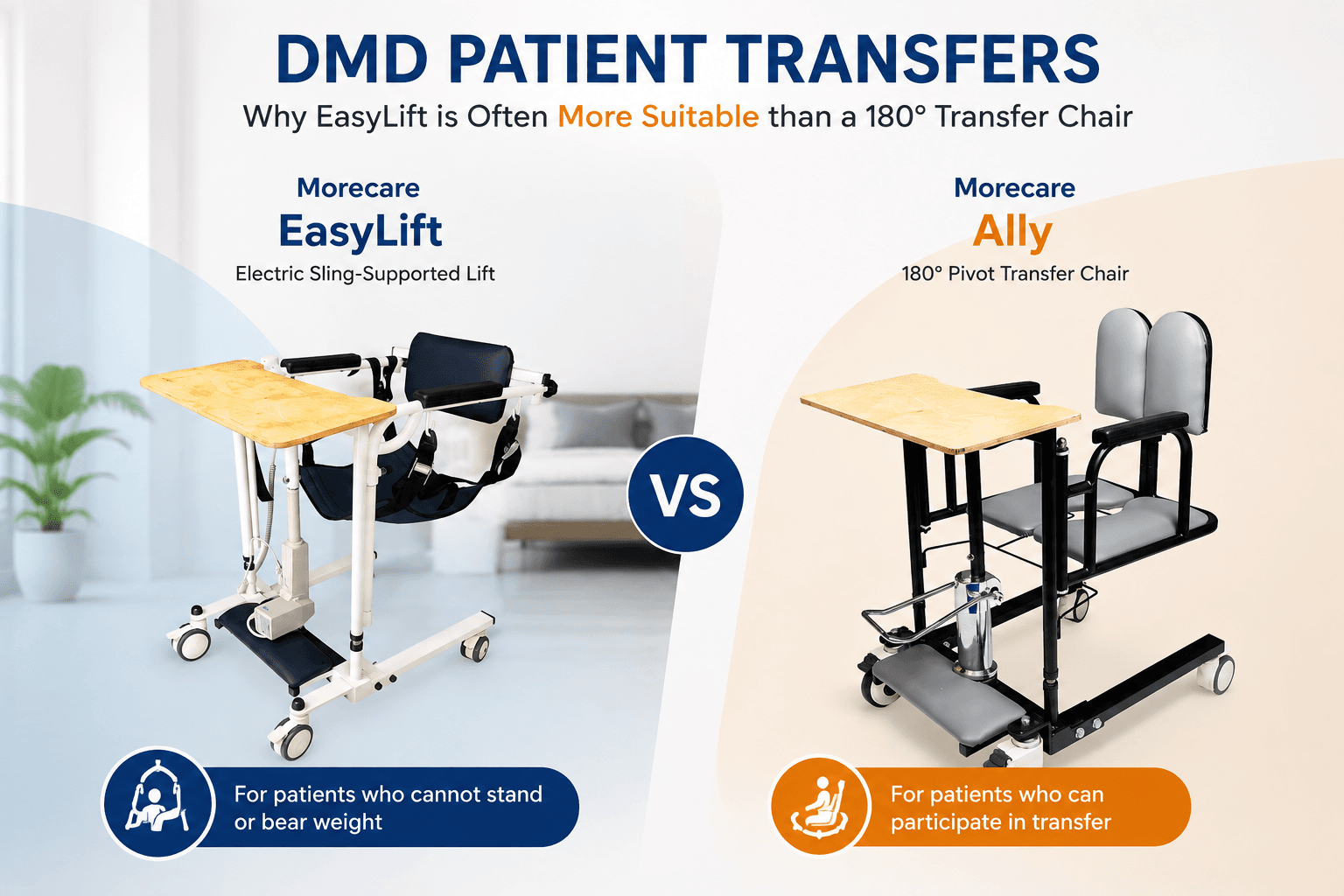
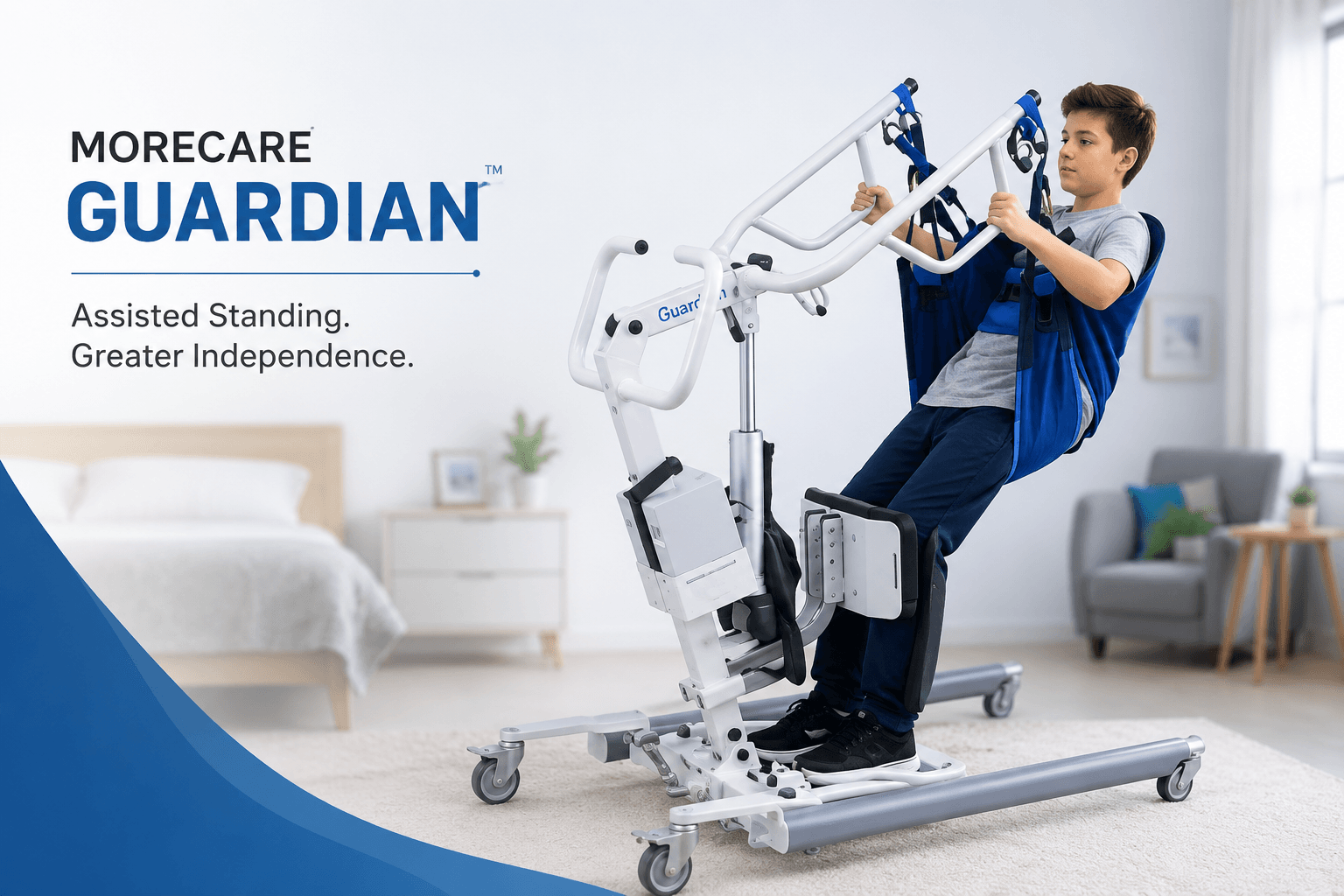
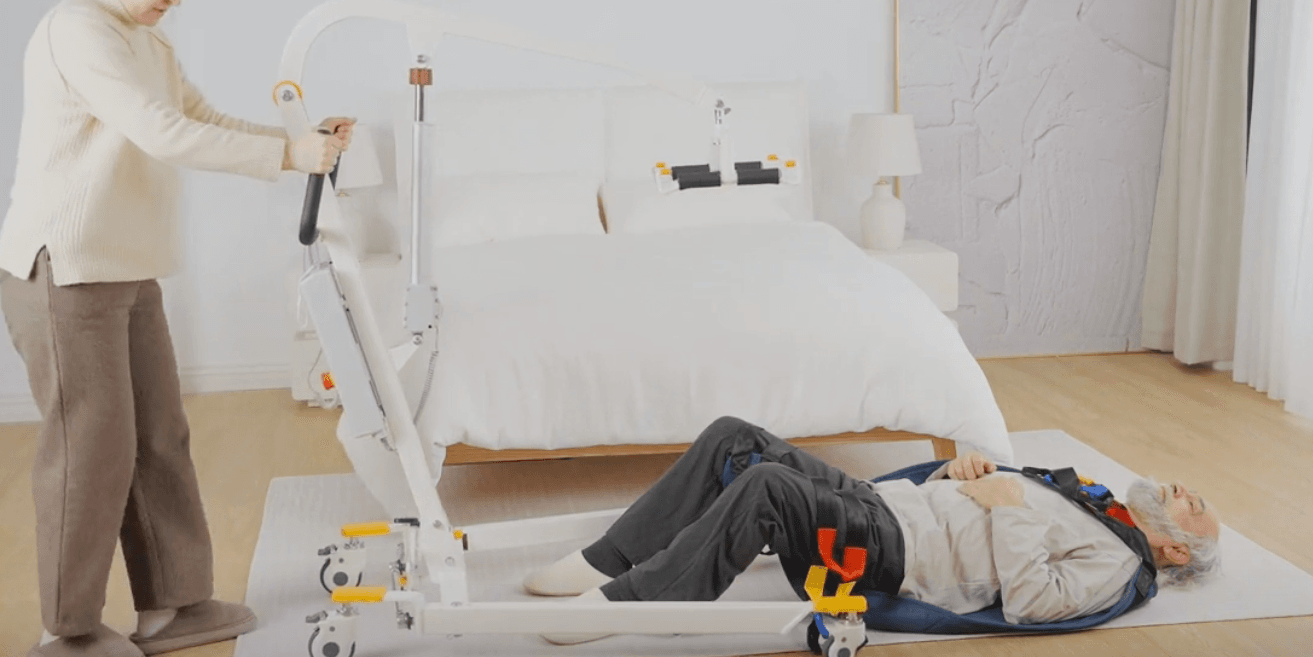
A mobile patient hoist may be appropriate when the person cannot safely stand or participate in the required transfer.
The lifting system must match the patient's weight, body support requirements and available space.
Transfer Slings
A sling must be suitable for the person's body dimensions, posture and the specific hoist.
Some people require additional head, trunk or thigh support.
Sling size and attachment compatibility must be verified.
A custom sling cannot be treated as an ordinary fabric modification because it is a load-bearing safety component.
Compact Transfer Equipment
Some homes have narrow doorways or restricted access around the bed.
A compact transfer device may be worth considering where the design matches the user's care requirements.
However, compact dimensions alone do not establish that the entire transfer can be performed safely.
Adjustable Beds
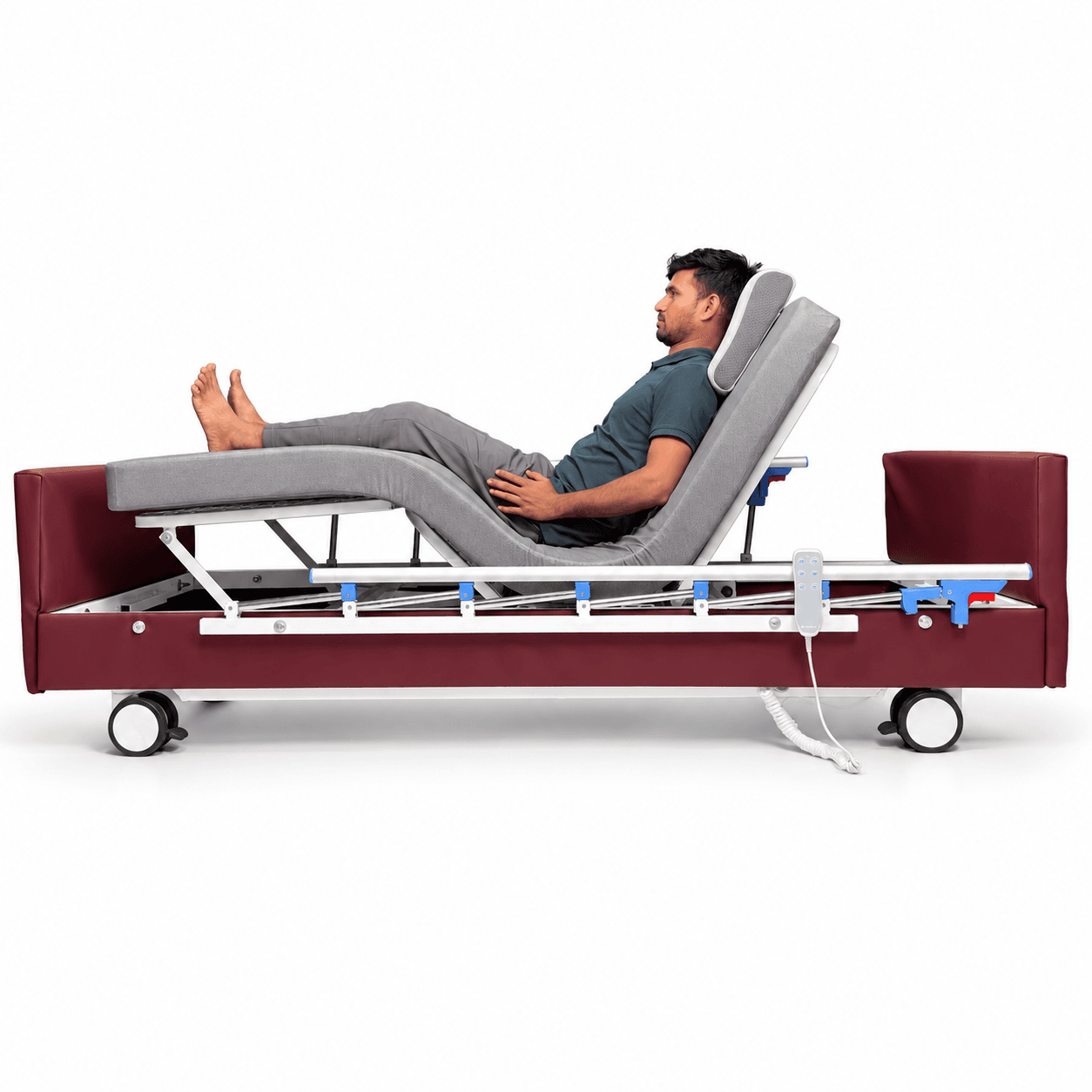
A powered bed or electric positioning attachment may help selected users change supported resting positions.
However, equipment such as Morecare BedMate does not automatically turn a person or lift them out of bed.
Caregiver Access
Caregiver requirements should be considered alongside patient comfort.
For example, a low bed or narrow room may make safe handling difficult.
Future Transfer Planning
As a condition progresses, a manual transfer method may become unsuitable.
Families should discuss potential future equipment needs with the treating team rather than relying on physically demanding or improvised lifting.
Morecare Equipment That May Be Reviewed
Depending on the assessment, Morecare can discuss existing products such as:
Snapdragon: Electric patient hoist for selected lifting requirements.
EasyLift: Compact powered sling-supported transfer system for approved applications.
BedMate: Electric backrest and knee-rest attachment for compatible existing beds.
Patient transfer slings: Options requiring appropriate sizing and lifting-system compatibility.
These products address different activities.
No single product should be assumed suitable for all individuals with DMD.
How Does Morecare Evaluate a Customized Rehabilitation Requirement for DMD?
How Does Morecare Evaluate a Customized Rehabilitation Requirement for DMD?
Morecare Mobility & Rehabilitation Solutions combines rehabilitation product experience with engineering and manufacturing operations in Jaipur.
Its customization service evaluates modifications to existing equipment, made-to-order products and unusual rehabilitation requirements.
A family does not need to prepare an engineering drawing before beginning an enquiry.
The process should start with a clearly described functional problem.
Step 1: Understand the Existing Difficulty
For example:
The person cannot move the joystick reliably.
Their forearm needs additional support.
Their trunk leans towards one side.
The current wheelchair no longer provides appropriate seating.
The footrests interfere with positioning.
Transfers are becoming difficult.
The bed and wheelchair are at unsuitable heights.
Step 2: Identify the Existing Equipment
Share the current wheelchair or equipment manufacturer, model and available specifications.
For electric wheelchairs, details of the controller and powered seating system may be essential.
Step 3: Review Functional Abilities
A physiotherapist, occupational therapist or neuromuscular rehabilitation specialist should help identify the person's current abilities and limitations.
Important considerations may include upper-limb movement, trunk stability, joint mobility, fatigue and pressure-management needs.
Step 4: Consider Future Requirements
Because DMD is progressive, the assessment should consider whether a proposed modification will remain useful if the person's abilities change.
However, future needs cannot always be predicted precisely.
Step 5: Evaluate Engineering Feasibility
Morecare reviews whether an existing product can be appropriately configured, a compatible accessory can be added or a more specialized design is required.
The team may also determine that modifying the equipment is not feasible.
Step 6: Propose a Solution
Where a project is feasible, the proposed configuration should define the intended function, components, dimensions, safety limitations and required tests.
Step 7: Confirm Charges and Timeline
The quotation should specify the agreed work, additional charges, estimated development or manufacturing time and applicable warranty conditions.
Step 8: Manufacture, Fit and Review
An approved project may proceed through manufacturing or modification, inspection and appropriate user fitting.
Specialist powered controls, load-bearing structures and transfer equipment require suitable validation before use.
Follow-up should assess whether the completed configuration remains appropriate as the person's needs change.
What Can Morecare Promise?
Morecare can offer a structured review of the rehabilitation challenge and explore technically appropriate solutions.
It should not promise that every joystick, arm-support mechanism, wheelchair or lifting system can be customized.
Some requirements will be better addressed through an existing specialist product or a different equipment platform.
The objective is to identify a practical and safe solution rather than modify equipment unnecessarily.
How Much Does Custom Rehabilitation Equipment for DMD Cost, and What Should Families Share?
There is no single price for rehabilitation equipment customized around DMD-related needs.
A simple accessory adjustment and a completely new powered-control system involve very different engineering requirements.
What Affects Customization Charges?
Existing equipment
The wheelchair or transfer device's original design affects which modifications are possible.
Type of support
A different armrest, headrest or seating component may require different materials and fabrication work.
Powered controls
A compatible joystick or alternative control arrangement may involve specialist components, installation and functional validation.
Structural changes
Modifications to load-bearing wheelchair frames or patient-lifting equipment require engineering review.
Custom development
A new mechanism may require drawings, prototypes, manufacturing and repeated testing.
Clinical fitting
Complex seating or control requirements may need specialist assessment and user trials.
How Long Does Customization Take?
A straightforward, approved component adjustment may be quicker than developing a completely new product.
Timelines also depend on component availability, manufacturing work and required testing.
Morecare should provide an estimated timeline after reviewing the actual requirement.
Is a Completely New Wheelchair Always Necessary?
No.
Some difficulties may be addressed through suitable seating components, approved adjustments or compatible accessories.
Other requirements may exceed the existing wheelchair's capabilities.
In such cases, selecting a different powered wheelchair may be safer and more effective than attempting major modifications.
What Information Should Families Send?
For an initial review, prepare:
Patient's age, height and weight.
DMD diagnosis and relevant functional limitations.
Current walking or wheelchair mobility status.
Available shoulder, arm, hand and finger movement.
Head and trunk control.
Current wheelchair manufacturer and model.
Joystick or control-system details, if applicable.
Existing seating, arm-support or footrest problems.
Current transfer method and difficulties.
Relevant medical positioning precautions.
Recommendations from the neuromuscular care team.
Photographs, measurements and equipment documentation.
Intended use, location, budget and urgency.
Any patient medical details, photographs or videos should be shared with appropriate consent through an authorized channel.
What Should the Quotation Include?
Before confirming an order, the customer should understand:
Proposed modification or product.
Technical compatibility.
Agreed dimensions and components.
Intended operating functions.
Safety limitations.
Additional charges.
Estimated delivery timeline.
Warranty and support conditions.
Required assessment, fitting or training.
For complex powered-control projects, approval should depend on documented technical compatibility and safe operation.
A successful custom solution is one that addresses a defined functional difficulty while remaining safe and appropriate for the person using it.
Clinical and Technical References
Birnkrant DJ and colleagues. Diagnosis and Management of Duchenne Muscular Dystrophy, Part 1: Neuromuscular, Rehabilitation, Endocrine and Other Care Considerations. The Lancet Neurology, 2018.
https://pmc.ncbi.nlm.nih.gov/articles/PMC5869704/
Royal Children's Hospital Melbourne. Selecting the Right Wheelchair for a Boy With Duchenne Muscular Dystrophy.
https://www.rch.org.au/uploadedFiles/Main/Content/neurology/DMD_brochure_Wheelchair.pdf
Development of the Accredited Duchenne Centers Program: A Global Program to Achieve Uniform and Up-to-Date Care for All People Living With Duchenne Muscular Dystrophy. Orphanet Journal of Rare Diseases, 2025.
https://pmc.ncbi.nlm.nih.gov/articles/PMC12224344/
Mobile Arm Supports in Duchenne Muscular Dystrophy: A Pilot Study of User Experience and Outcomes.
https://doi.org/10.1080/17483107.2020.1749892
Morecare Mobility & Rehabilitation Solutions. Customization Services.
https://morecare.in/customization-services
Morecare Mobility & Rehabilitation Solutions. Adult Rehabilitation Equipment.
https://morecare.in/adults
Medical and Engineering Disclaimer: This article provides general information about rehabilitation equipment customization for Duchenne muscular dystrophy. DMD requires coordinated specialist medical care, including appropriate cardiac, respiratory and rehabilitation follow-up. Equipment selection, seating, transfers and control accessibility must be assessed individually. Any structural, electrical, powered-control or patient-lifting modification requires appropriate engineering verification. Customized equipment does not cure DMD, stop disease progression or guarantee independent mobility.