Why Doesn't Standard Rehabilitation Equipment Work for Every Patient?
Most rehabilitation equipment is manufactured around predefined dimensions, adjustment ranges and intended functions.
This makes standard products practical for many users.
However, people with disabilities or complex rehabilitation needs may have requirements that fall outside these configurations.
Different Body Measurements
Two children of the same age may have very different seated dimensions, leg lengths or support requirements.
A standard wheelchair may be too wide, too deep or insufficiently adjustable.
Similarly, an adult may need equipment that accommodates unusual height, body proportions or joint positioning.
Complex Postural Requirements
Some individuals cannot maintain a comfortable sitting or standing position without additional external support.
A person may require specialized pelvic, trunk, head or lower-limb positioning.
A standard seat or harness may not provide the necessary configuration.
Limited Strength or Movement
Some patients cannot use conventional controls or handles because of muscle weakness, restricted movement or reduced coordination.
The equipment may need a different operating arrangement, control position or support configuration.
Unique Home Environments
Even when rehabilitation equipment fits the person, it may not fit the surroundings.
A patient hoist may be too wide for a doorway.
A wheelchair may be difficult to maneuver through a narrow corridor.
A transfer device may not provide the necessary clearance around a particular bed or toilet.
Changing Requirements
Children grow, and some neurological or neuromuscular conditions cause changes in mobility and functional ability.
Equipment that was previously appropriate may eventually require reassessment, adjustment or replacement.
The important consideration is whether a modification can be made safely without compromising the product's stability, intended function or approved load capacity.
Customization should address a clearly identified functional problem—not simply add features without a defined need.
Which Medical Conditions May Require Customized Rehabilitation Equipment?
A medical diagnosis can help explain why someone needs rehabilitation equipment, but it does not determine the exact design.
Two patients with the same condition may require completely different solutions.
Customization should therefore be based on individual physical abilities, measurements, rehabilitation goals and environmental requirements.
Cerebral Palsy
Children with cerebral palsy may have difficulties involving sitting balance, head control, trunk stability, muscle tone or walking.
Depending on the child's assessment, potential equipment requirements may include:
Modified wheelchair seating dimensions.
Additional head or lateral trunk positioning.
Adjusted pelvic and lower-limb supports.
Adapted gait-training equipment.
Standing-frame adjustments.
These modifications should follow a pediatric rehabilitation assessment, particularly when the child has complex postural limitations.
Duchenne Muscular Dystrophy and Other Muscular Dystrophies
Progressive muscle weakness can make standard mobility equipment difficult to operate or tolerate.
Some individuals may require review of:
Wheelchair control position.
Upper-limb support.
Seating configuration.
Powered positioning options.
Transfer and caregiver assistance.
Not every requested electrical or structural modification will be technically feasible or safe.
Spinal Cord Injury
People with spinal cord injuries may need individualized mobility, seating or transfer arrangements.
Requirements can depend on the injury level, remaining movement, pressure-injury risk and ability to perform transfers.
Stroke and Hemiplegia
One-sided weakness may influence how a person grips, moves, operates or transfers with rehabilitation equipment.
Selected positioning or operating adaptations may be considered after assessment.
Spina Bifida and Other Developmental Conditions
Variations in lower-limb function, joint movement or body dimensions may create specialized seating, standing or mobility requirements.
Motor Neuron Disease and Other Progressive Neurological Conditions
Changing strength and mobility may require equipment reassessment over time.
Some individuals may benefit from adaptable configurations, while others require a different product as their condition progresses.
Complex Orthopedic or Postural Conditions
Significant contractures, skeletal deformities or limited joint movement may make standard seating and standing arrangements unsuitable.
Equipment should accommodate the person's assessed limitations rather than force joints into an uncomfortable position.
Important: Custom rehabilitation equipment provides functional assistance or positioning. It does not cure these conditions, and the suitability of a proposed device requires individual clinical review.
What Types of Rehabilitation Equipment Can Be Customized?
Customization may range from relatively small dimensional adjustments to the development of a new rehabilitation product.
Morecare evaluates several categories of equipment.
- Pediatric Rehabilitation Wheelchairs
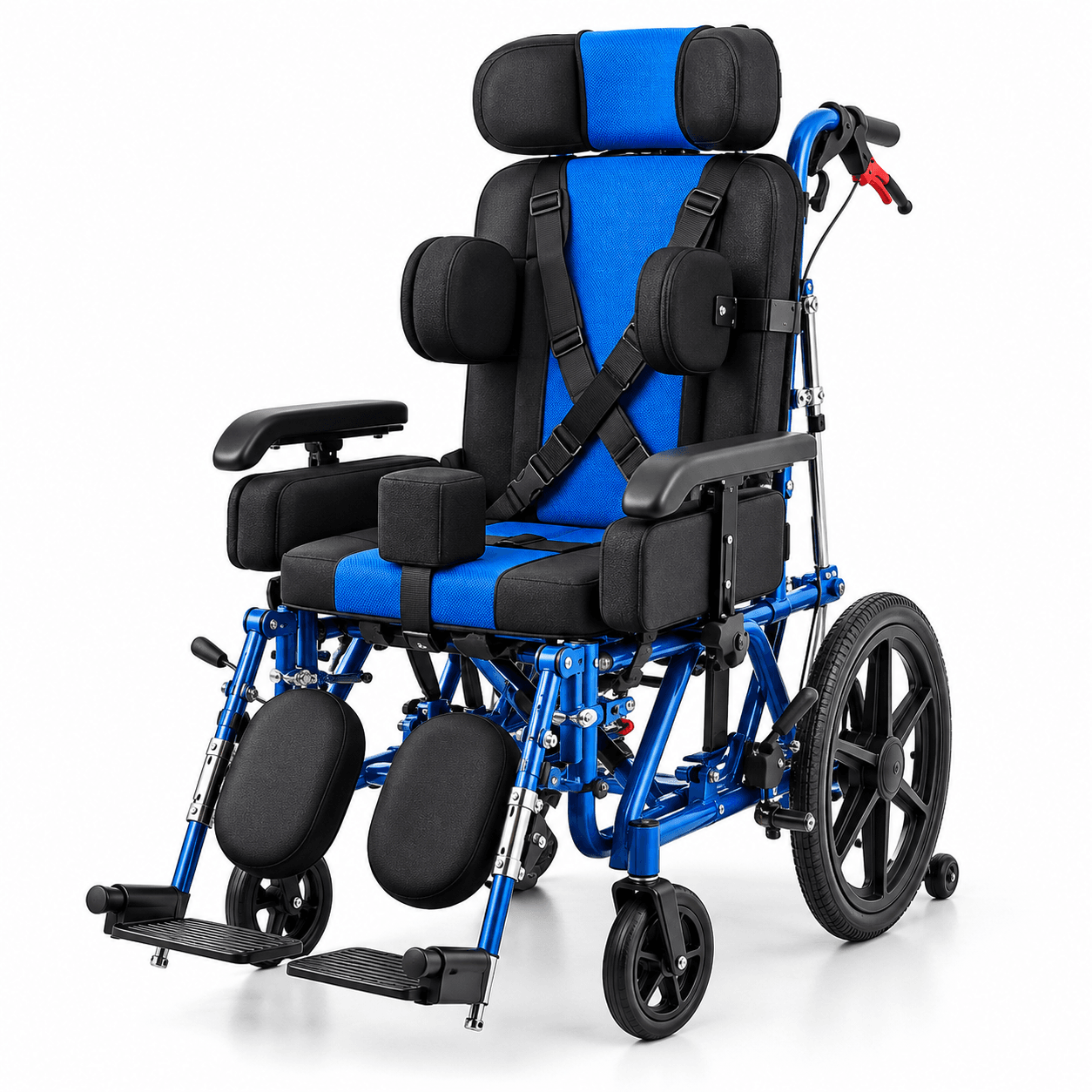
Potential requests include non-standard seat dimensions, head supports, lateral positioning, footrest arrangements and selected seating modifications.
The objective may be to improve fit or accommodate the child's assessed postural requirements.
- Adult Mobility Equipment
Adults may request specialized seating, arm support, wheelchair dimensions or altered control accessibility.
Powered control modifications require specific electrical and functional safety evaluation.
- Gait Trainers and Supported Walkers
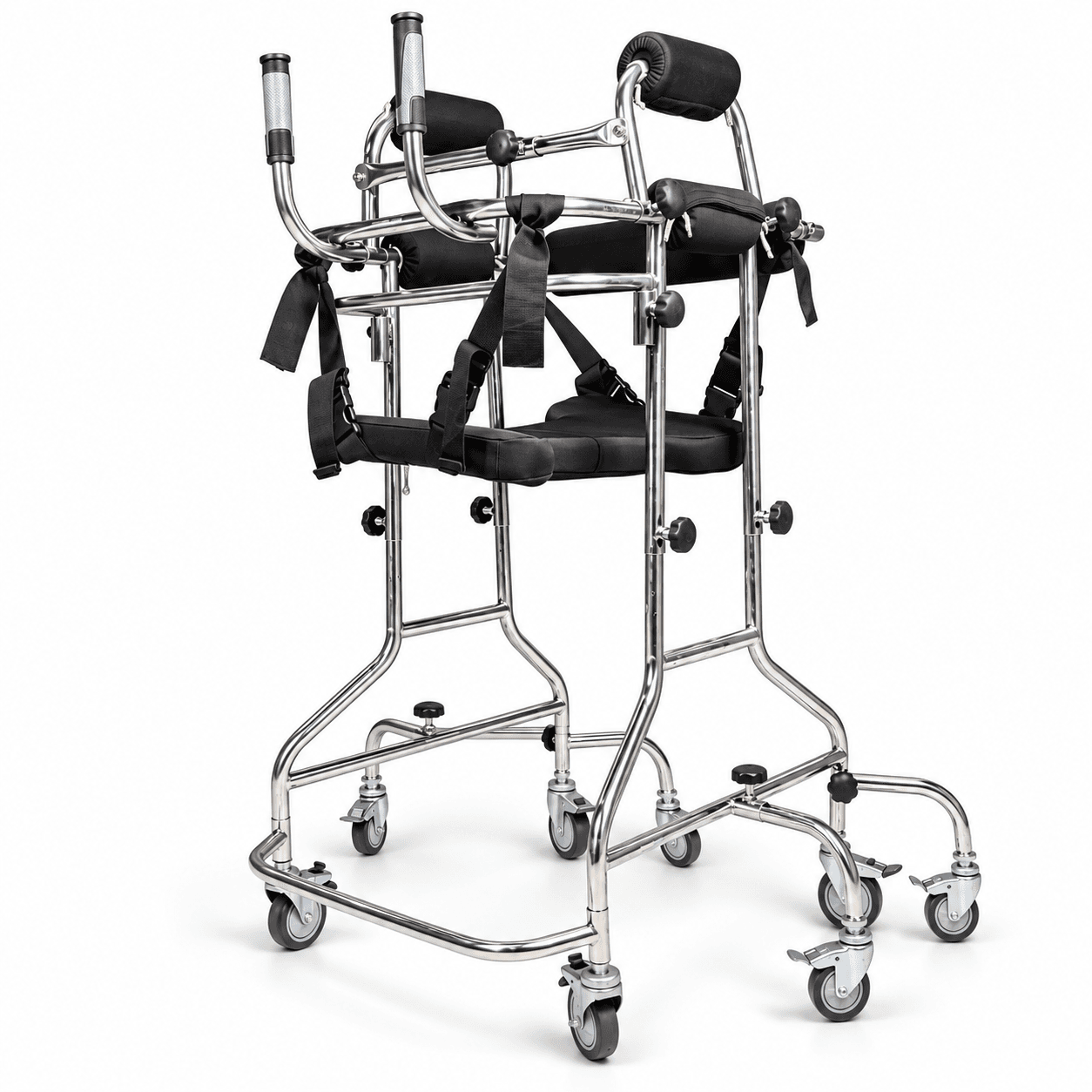
Some patients need a walking aid with a different frame height, width, harness configuration or upper-body support.
Changes must preserve the device's stability and its approved use.
- Standing Frames
A standing frame may require non-standard body dimensions, support positioning or adjustments for particular rehabilitation requirements.
Any design must be assessed for the user's posture, joint limitations and clinical standing programme.
- Patient Lifting and Transfer Solutions
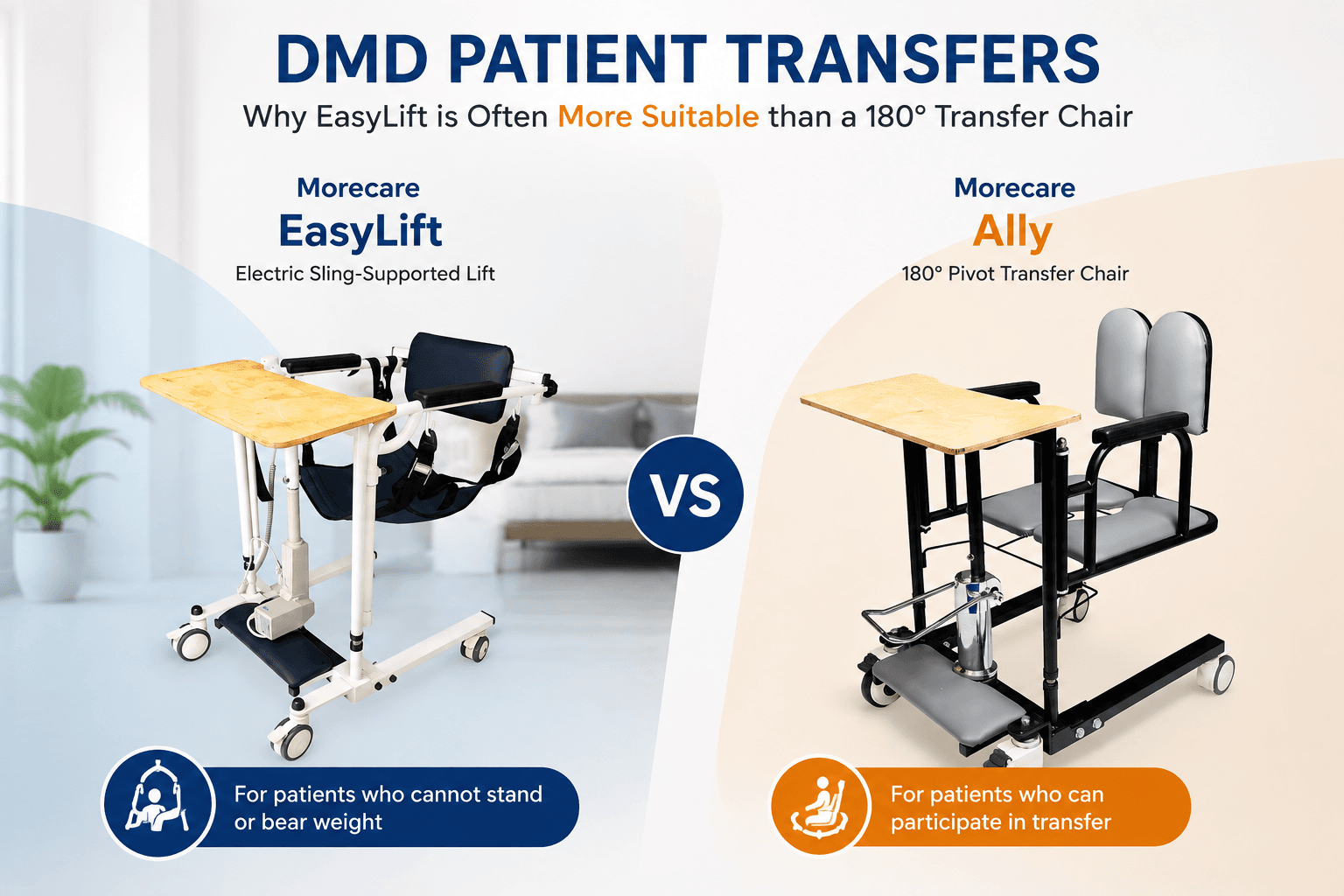
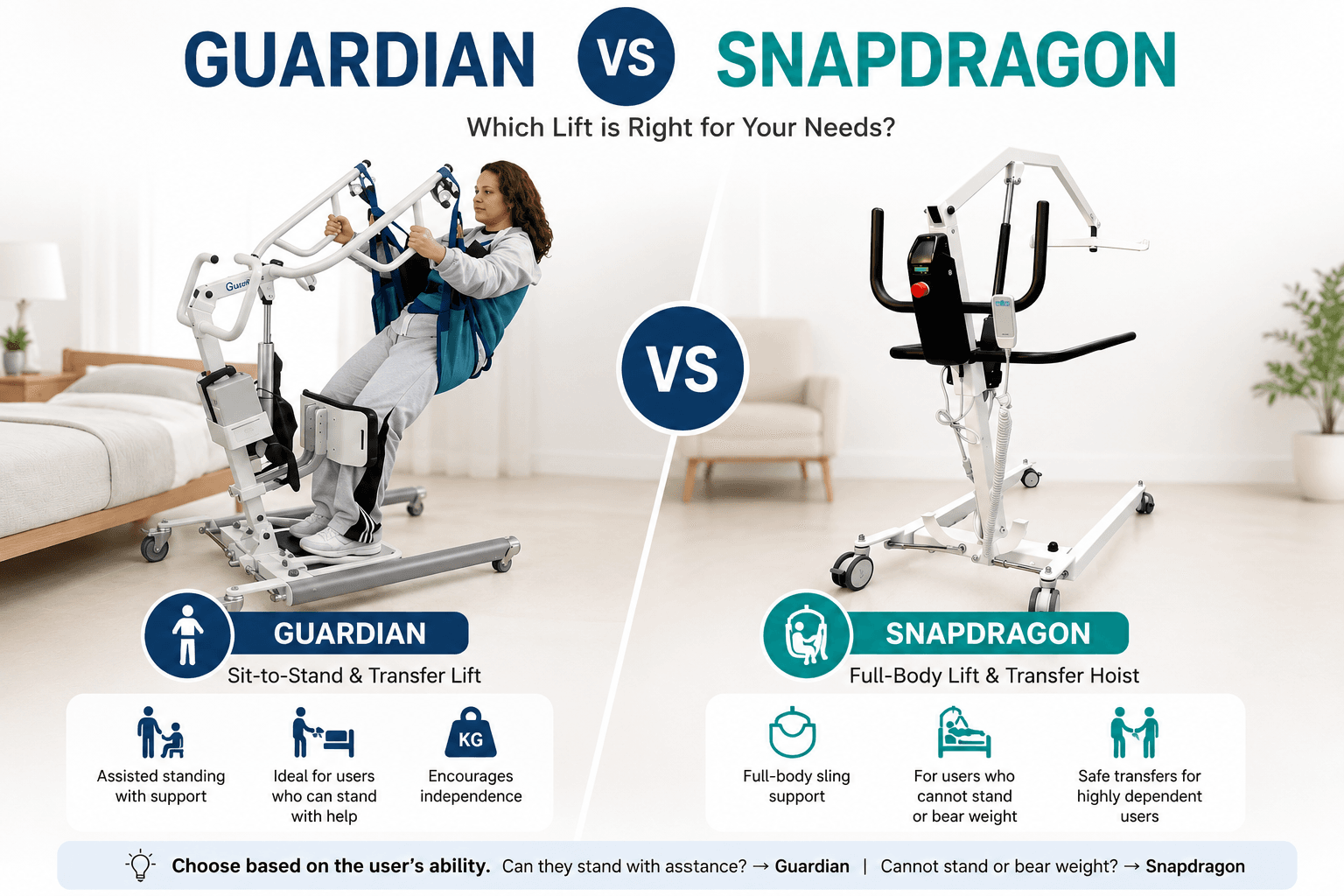
Some families face difficulties because of narrow spaces, unsuitable bed clearance or patient positioning requirements.
A modification may be considered, but changes to lifting geometry, slings, structural components or load-bearing systems require particularly careful engineering and validation.
- Homecare Bed Equipment
Selected projects may involve unusual dimensions, access requirements or customized positioning arrangements.
The supporting furniture, powered mechanisms and patient safety must all be considered.
- Specialized Rehabilitation Accessories
In certain projects, the main requirement may be a specific support, attachment, seating component or accessory rather than a complete new product.
- New Rehabilitation Product Ideas
Therapists, hospitals and families may identify a functional need for which they cannot find an appropriate product.
Morecare can review concepts, sketches or product references to determine whether a practical solution can be developed.
Not every request can be accepted.
Structural safety, clinical suitability, engineering feasibility, manufacturing capability and applicable intellectual property restrictions may limit what can be offered.
How Does Morecare Develop a Customized Rehabilitation Solution?
A successful customization project should begin with the patient's functional problem rather than with fabrication.
Morecare's customization service follows a structured process.
Step 1: Share the Problem
The customer explains what they are trying to achieve.
For example:
A wheelchair does not fit the user's body dimensions.
A child needs a different support arrangement.
A walker is unsuitable for the person's height or movement pattern.
A patient-transfer device cannot be used in the available space.
A therapist needs equipment with unusual specifications.
The customer can share photographs, videos, measurements, sketches or relevant product references.
Step 2: Requirement and Feasibility Review
The team examines the intended use, user requirements and possible technical constraints.
Depending on the project, additional measurements or input from a treating physiotherapist, occupational therapist or other qualified professional may be required.
Some enquiries can be resolved by selecting a different standard product rather than manufacturing something new.
Step 3: Propose a Suitable Approach
Where feasible, the proposed approach may involve:
Adjusting an existing product.
Adding an approved support or accessory.
Manufacturing a modified configuration.
Developing a more specialized product.
The proposed scope should identify important dimensions, intended functions, technical limitations and necessary safety considerations.
Step 4: Quotation and Project Planning
Once sufficient information is available, the project can be reviewed for material requirements, manufacturing complexity and estimated delivery time.
Morecare can provide a project-specific quotation and estimated schedule.
Additional engineering, new components or prototyping may affect the charges.
Step 5: Manufacturing and Inspection
Approved projects proceed through the relevant manufacturing and assembly processes.
Inspection and verification should be proportionate to the risks of the particular product.
For example, a load-bearing mobility device requires different validation from a non-structural accessory.
Step 6: Delivery, Setup and Follow-Up
Customers receive applicable setup and operating guidance.
Some projects may require further fitting, technical assistance or adjustments after delivery, according to the agreed scope.
The aim is to create equipment suited to the identified requirement, while recognizing that feasibility and safety must be established for each project.
What Makes Morecare a Potential Partner for Custom Rehabilitation Equipment?
When an unusual equipment requirement arises, families may first approach a local fabrication workshop or a conventional medical equipment dealer.
However, rehabilitation product customization involves more than making a frame to a requested size.
The equipment must work appropriately for the person using it.
Morecare combines rehabilitation product experience with its own manufacturing operations.
Experience in Rehabilitation Equipment
Morecare began supplying mobility and rehabilitation products in 2014.
This experience has provided exposure to the practical needs of patients, families, caregivers and rehabilitation professionals.
Manufacturing Operations in Jaipur
Morecare established its rehabilitation equipment manufacturing facility in Jaipur in 2023.
The company develops and manufactures equipment across pediatric rehabilitation, adult mobility, patient transfer and homecare categories.
Modification and Made-to-Order Projects
Morecare's published customization service includes evaluating modifications to existing equipment, individual custom products, one-off projects and small-batch requirements.
Rehabilitation-Focused Product Understanding
A rehabilitation product must account for patient dimensions, movement abilities, positioning requirements and caregiver interaction.
For clinically complex cases, treating professionals should help define the intended use and relevant restrictions.
Engineering and Manufacturing Review
Morecare's manufacturing operations cover fabrication, assembly, customization, product inspection and dispatch.
The exact development and validation process depends on the proposed equipment.
Support for Individual and Institutional Requirements
The customization service accepts enquiries from families, therapists, hospitals, rehabilitation centres, special schools and other organizations.
Product Ideas and Overseas References
Customers who have seen a rehabilitation device abroad can share photographs, specifications or product links.
Morecare can review whether an original, appropriate solution can be developed for the identified functional requirement.
However, the availability of an overseas reference does not establish manufacturing feasibility, equivalent performance or permission to copy protected designs.
A Practical Approach to Unusual Problems
The purpose of customization is not to promise that every idea can be manufactured.
It is to evaluate whether a meaningful, safe and workable solution is possible.
This distinction helps families make informed decisions before committing to specialized equipment.
How Much Does Custom Rehabilitation Equipment Cost, and How Long Does It Take?
There is no universal customization charge or manufacturing timeline.
A request to adjust one component of an existing wheelchair is substantially different from designing a new powered rehabilitation device.
Costs and schedules depend on the actual work required.
What Influences Customization Charges?
Type of equipment
Wheelchairs, standing frames, gait trainers, patient hoists and powered equipment involve different manufacturing processes.
Extent of modification
A dimensional adjustment may require fewer components than a completely redesigned mechanical system.
Materials and components
Special cushions, fabricated supports, actuators, batteries and other components can affect the cost.
Engineering development
Projects requiring new drawings, calculations, prototypes or tests may need additional engineering work.
Clinical and fitting requirements
Some users require more detailed assessment or repeated fitting than others.
Manufacturing quantity
A single made-to-order unit may have different development economics from a small production batch.
How Are Timelines Determined?
Delivery estimates can depend on:
Time needed to confirm patient requirements.
Availability of measurements and clinical recommendations.
Design complexity.
Component availability.
Fabrication and assembly.
Inspection and testing.
Required fitting or revision.
Delivery destination.
A standard product with a straightforward modification may be completed sooner than an entirely new design.
However, customers should not assume that every customization can be completed within a fixed number of days.
Is Custom Equipment More Expensive?
Sometimes.
A specialized configuration may require additional materials, engineering or manufacturing work.
In other cases, modifying a suitable existing product may be more practical than developing an entirely new device.
Morecare should provide a quotation after evaluating the actual requirement.
What About Warranty and Returns?
Customized products may have different warranty, alteration and return conditions from standard catalogue products.
These should be clearly stated in the written quotation before payment.
What Should Customers Share to Receive a Useful Quotation?
Prepare the following information:
Patient's age, height and weight.
Medical condition and relevant functional limitations.
Current equipment and its main problems.
Required function or specific difficulty to solve.
Photographs, videos and measurements where appropriate.
Recommendations from the treating therapist, if available.
Intended use at home, school, clinic or outdoors.
Relevant home dimensions or environmental restrictions.
Preferred delivery city and urgency.
An approximate budget, if established.
Only share patient medical details and images through an appropriate authorized channel, with the patient's or guardian's permission.
The first step is not placing an order. It is understanding whether a suitable solution is feasible.
Clinical and Technical References
World Health Organization. Wheelchair Provision Guidelines, 2023.
https://www.who.int/publications/i/item/9789240074521
World Health Organization. Guidelines on the Provision of Manual Wheelchairs in Less-Resourced Settings.
https://iris.who.int/bitstream/handle/10665/43960/9789241547482_eng.pdf
Morecare Mobility & Rehabilitation Solutions. Customization Services.
https://morecare.in/customization-services
Morecare Mobility & Rehabilitation Solutions. Manufacturing Infrastructure.
https://morecare.in/infrastructure
Morecare Mobility & Rehabilitation Solutions. About Morecare.
https://morecare.in/about_us
Medical and Engineering Disclaimer: This article provides general information about customization of rehabilitation equipment. Individual product suitability must be established through appropriate clinical assessment and engineering review. Modifications to load-bearing structures, patient-lifting devices, powered controls and safety-critical components require suitable validation. Morecare's evaluation of a request does not guarantee that a safe or technically feasible product can be manufactured.